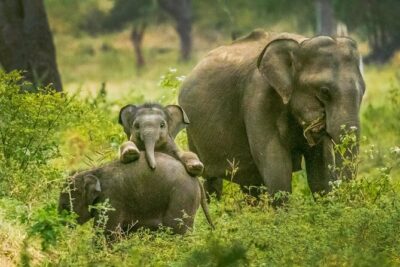
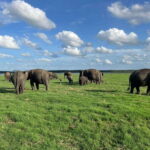
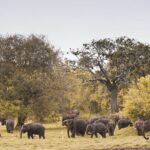
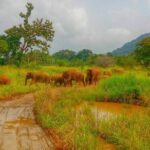
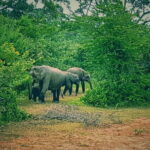
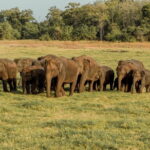
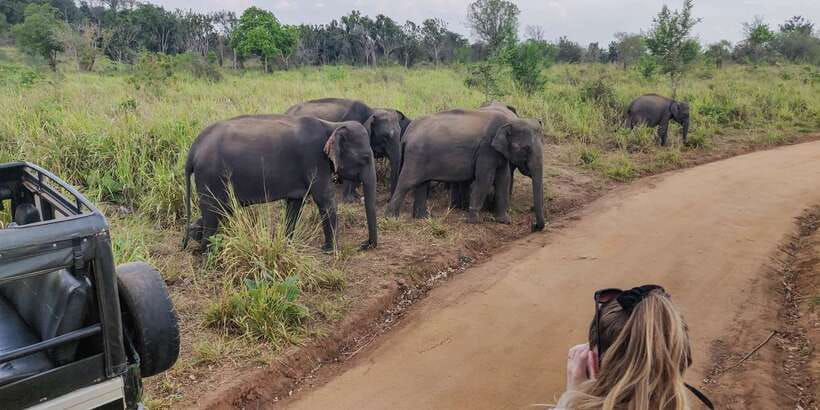
Elephants, right on the edge of Habarana. This 3-hour morning or evening Hurulu Eco Park jeep safari is built for close, calm wildlife viewing, with a driver plus a tracker to help you read the park. You’ll cruise narrow tracks through shrublands and forests, with the big prize being Sri Lankan elephants moving through their seasonal circuit.
Two things I like a lot: the open-ceiling jeep setup tends to make sightlines and photos easier, and the tracker-led searching helps you spend your time where animals are actually showing up. You’ll also get a feeling for how Hurulu Eco Park supports the dry-country wildlife around Hurulu Wewa. One consideration: sightings aren’t guaranteed on a 3-hour drive, and tracker availability can vary at entry, so plan for flexibility.
Finally, budget realistically. The price covers the jeep and guiding, but food and entrance tickets are not included, and the elephant season depends on the month.
In This Review
- Key reasons this safari works
- Where Hurulu Eco Park fits on Sri Lanka’s elephant circuit
- The 3-hour jeep safari: pace, comfort, and what you’re really doing
- Hurulu Forest Reserve and Hurulu Wewa: the main search area
- Elephants first: how the tracker helps you see them well
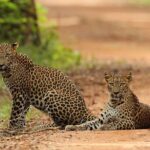
- The wildlife menu: leopards, rusty-spotted cats, star tortoise, and birds
- Value check: is $24 a good deal for a private safari?
- What to bring (and what to avoid) for a smooth safari morning or evening
- Who this safari suits best (and who should think twice)
- Should you book the Hurulu Eco Park 3-hour safari?
- FAQ
- How long is the Hurulu Eco Park safari?
- Is it a morning safari, an evening safari, or both?
- What’s included in the price?
- Do I need to buy entrance tickets?
- Is food or water included?
- How many people can fit in a jeep?
- Where is the meeting point?
- What should I bring and what’s not allowed?
Key reasons this safari works
- Tracker-guided searching: you’re not just driving the roads, you’re being guided to likely sightings
- Elephants on a seasonal migration route: Hurulu can be part of the Minneriya–Kaudulla–Hurulu rhythm in the right months
- Comfort for short time outside: a 3-hour format is ideal if you don’t want a full-day commitment
- Great photo angles from stable jeep driving: positioning and careful driving can make a big difference
- Narrow-track, real-park feel: you’re moving through the forest reserve, not stopping at a tourist strip
- Wildlife beyond elephants: leopards, rusty-spotted cats, and star tortoise are on the hunt list
Where Hurulu Eco Park fits on Sri Lanka’s elephant circuit
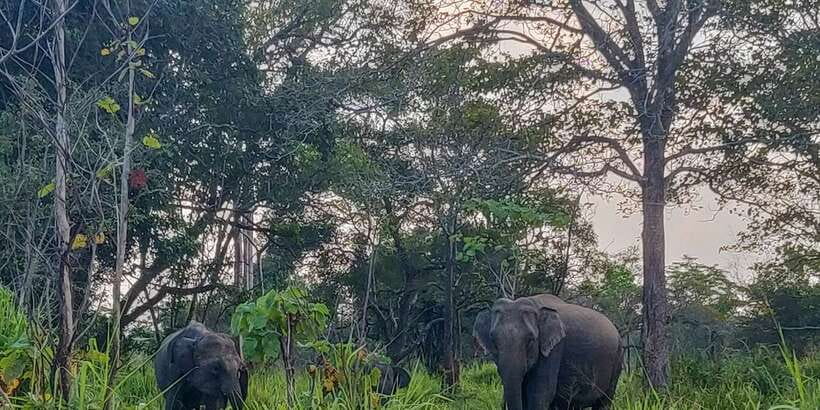
Hurulu Eco Park sits in North Central Province, and it’s part of the wider elephant movement between Minneriya and Kaudulla. The key idea for you is timing. During July to September, large groups are often found in Minneriya. Then October to November shifts things toward Kaudulla, largely because rainfall fills up the lakes and changes where elephants feed.
The final leg can bring elephants into Hurulu Eco Park during December and January. That matters because elephants aren’t predictable like clockwork. What is predictable is the pattern of habitat and water changing across the seasons, which is exactly what this park’s dry ecosystem supports.
This is also why operators commonly recommend the best park for your dates. If Hurulu is quiet for elephants while Minneriya or Kaudulla is hot, you’ll get steered to the stronger option during your stay. That sort of practical adjustment is one of the main value-adds here.
You can also read our reviews of more tours and experiences in Anuradhapura.


The 3-hour jeep safari: pace, comfort, and what you’re really doing
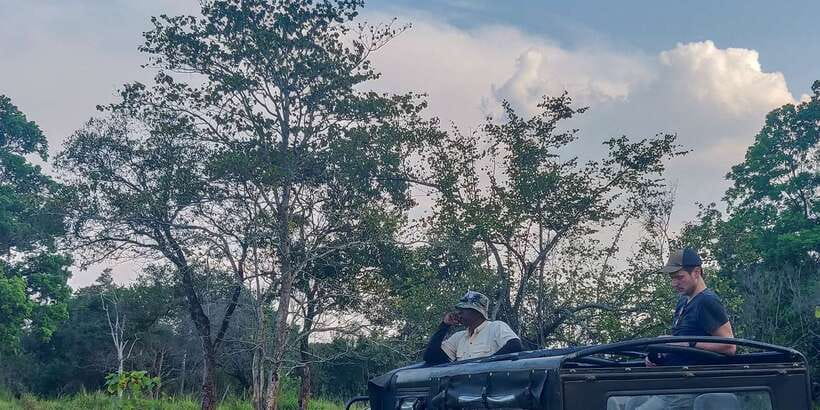
This is a short safari by design: about 3 hours from start at the gate, into the forest reserve, then back again. In that time, you’re not trying to cover every corner of the park. You’re trying to find animals efficiently, then stay long enough to observe without rushing.
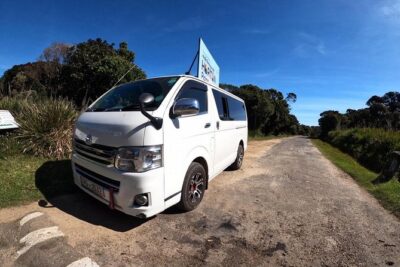
You’ll travel in a jeep that fits up to six adults, which keeps things more intimate than larger group setups. Your group is also private, which usually means less shuffling and more flexibility when the tracker calls out a promising location.
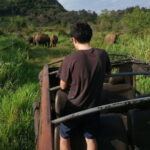
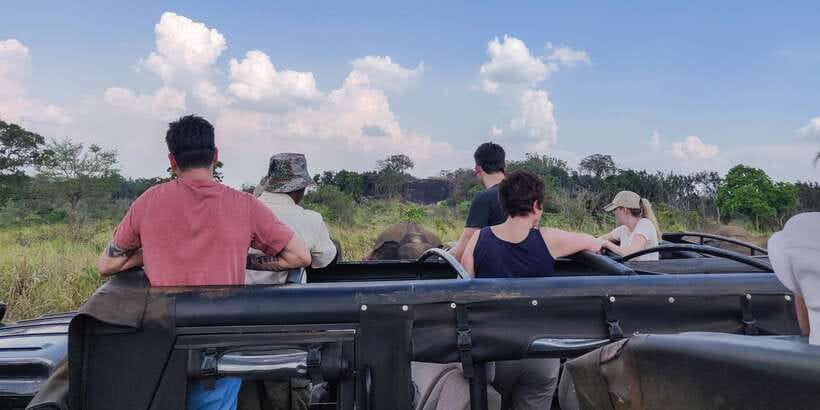
You’ll feel the rhythm of a good safari driver: stop, scan, reposition. One reason people love this kind of setup is that stable driving plus smart positioning can make a big difference for both viewing and photos. And with the open-ceiling style, you don’t feel boxed in when an animal steps into view.
One more practical note: trackers are subject to availability at entry. If you do get a tracker, the whole experience tends to feel more “found” than “hoped-for.”
Hurulu Forest Reserve and Hurulu Wewa: the main search area
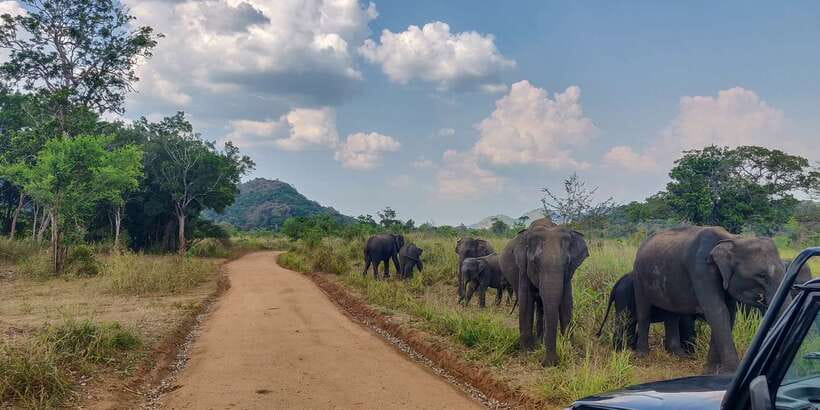
Once you’re inside, you’ll be looking across dense shrublands and forested areas that sit right in the eco system feeding off water around Hurulu Wewa reservoir. From the viewing side, this means you’re watching a mix of open sight lines and thicker cover where animals can appear suddenly.
The park is described as supporting wildlife in the dry ecosystem as an evergreen forest. In plain terms: even when the environment looks dry, the cover and food sources can still pull wildlife into predictable “movement corridors,” especially when water matters.
Expect the safari to focus on where animals might be heading rather than just where they might be right now. That approach is useful for elusive species. A leopard or rusty-spotted cat can be gone in minutes, while elephants often use routines related to water, feeding, and herd movement.
Elephants first: how the tracker helps you see them well
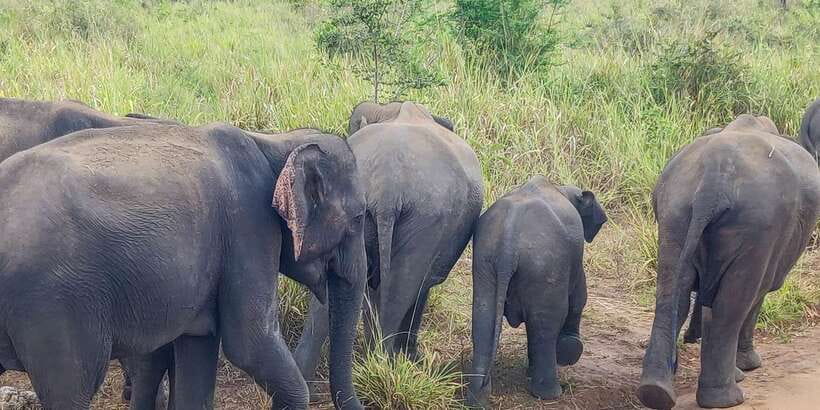
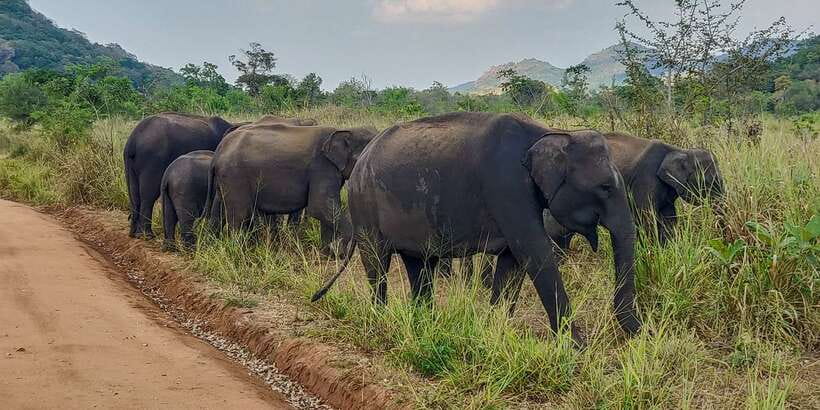
The headline animal is the majestic Sri Lankan elephant, and they’re often a very common sighting when conditions align. The best part of going with a tracker is that elephants aren’t just one thing you spot from a distance. You’re looking for the herd’s mood, direction, and spacing.
That’s also where the experience can feel different from a generic safari. A good tracker-driver team helps you arrive at the right time and angle. When an elephant group is close, you also get better chances for calmer viewing, including seeing different herd members rather than only silhouettes in the far background.
If you’re there in the months aligned with the migration cycle, your odds improve. And even if the elephants aren’t at peak density inside Hurulu on a given day, the operator’s broader knowledge of Minneriya and Kaudulla can help you avoid wasting your limited time.
Also, some elephants can mean more jeeps in general safari areas. The best operators aim to keep you positioned well for viewing and photos without constantly stacking behind other vehicles, which helps your viewing quality stay high.
The wildlife menu: leopards, rusty-spotted cats, star tortoise, and birds
Elephants are the star, but Hurulu Eco Park is also about the supporting cast. The park’s wildlife targets include:
- Leopards (rare, but possible on a focused safari)
- Rusty-spotted cats (small and secretive, so patience matters)
- Star tortoise (a memorable dry-country species)
- Jungle fowl, parrots, and hawks (birds give you action even when big mammals stay hidden)
Here’s how to think about it during your 3 hours. When you see birds actively moving or calling, it can signal food, cover, or movement corridors. When you see tortoises, it’s often because you’re in the right dry-season microhabitat. And when you get a leopard sighting, it usually comes from careful scanning plus the kind of timing a tracker is built for.
One of the practical lessons: if you get the elephant sighting, don’t “only” watch that. Keep your eyes shifting to ground level and tree edges. It’s common for short safaris to produce an elephant moment and then an extra surprise once you’re already set up in the right area.


Value check: is $24 a good deal for a private safari?
At $24 per person for a 3-hour experience, this safari can be strong value for a few reasons.
First, you get a jeep and driver and you’re not paying per person for a basic tour bus situation. Second, the safari is structured for wildlife searching within a meaningful chunk of time. Third, the included pickup/drop-off is helpful if you’re staying close to the gate, with service offered within a 5-kilometer radius from the park gate.
What you should factor in upfront:
- Entrance tickets are not included in the stated price.
- Food and drinks are not included.
In practice, you’ll typically add the park entrance fee either by arranging it as part of your booking or purchasing directly around the tour start. If you’re watching your total costs, it’s smart to check what the entrance fee is on the day and build that into your budget.
For many people, the surprise is that a short, focused safari like this can be cheaper than what you’d get when arranging drivers and jeeps one-off for the same wildlife goal. The private jeep and the chance to get well-positioned viewing can make the spending feel justified quickly.
What to bring (and what to avoid) for a smooth safari morning or evening
A safari is physical even when it’s short. You’ll be in a jeep on uneven ground and spending time scanning outside your vehicle. Bring:
- Comfortable shoes
- Sunglasses
- Sun hat
- Sunscreen
It’s also worth having water even though it’s not included. Your timing might not line up with meals, so plan simple.
And yes, there are clear rules: no pets, no smoking, and no alcohol or drugs. If you’re traveling with kids, skip anything that could become a distraction in the field.
Who this safari suits best (and who should think twice)
This safari makes a lot of sense if:
- you want elephants without committing to a full day
- you enjoy wildlife searching with a driver plus a tracker
- you want a private jeeps-only experience for your group
- you’re staying near Habarana and want a practical activity that fits your schedule
It may be less ideal if:
- you’re expecting a guaranteed leopard sighting on a short drive (wildlife doesn’t operate on your calendar)
- you hate the idea of paying the entrance fee separately
- you need food included, because this tour does not provide meals
The best mindset is simple: treat it as a focused, 3-hour wildlife hunt, not a promise of every animal on the list.
Should you book the Hurulu Eco Park 3-hour safari?
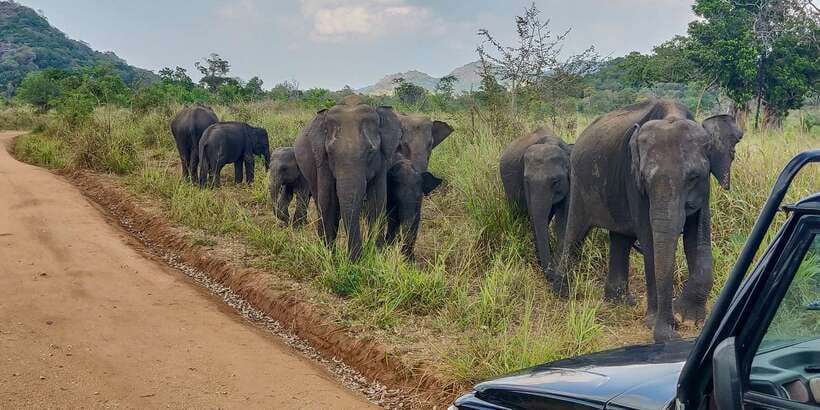
If your dates align with the elephant migration rhythm, I’d strongly consider booking. The short duration is efficient, the private jeep setup keeps things comfortable, and the tracker approach is exactly what helps you get better viewing rather than just driving around hoping.
Book it if you’re traveling with limited time and want a serious wildlife experience around Habarana without going all-day. Think twice if your schedule is set with no flexibility and you’re visiting in a month when elephants may be elsewhere in the circuit. In that case, ask what park they recommend for your dates, because getting elephants where they are is the whole point.
FAQ
How long is the Hurulu Eco Park safari?
The safari runs for about 3 hours.
Is it a morning safari, an evening safari, or both?
It’s offered as either a morning or an evening 3-hour safari, depending on availability.
What’s included in the price?
You get a jeep and driver, plus pickup and drop-off within 5 kilometers of the park gate. A tracker is included but is subject to availability when you enter the park.
Do I need to buy entrance tickets?
Entrance tickets for Hurulu Eco Park are not included, but you can add them to your booking.
Is food or water included?
Food and drinks are not included.
How many people can fit in a jeep?
A jeep can carry a maximum of six adults.
Where is the meeting point?
Meet at the entrance gate of Hurulu Eco Park, Trincomalee Road, Habarana 50150, Sri Lanka.
What should I bring and what’s not allowed?
Bring comfortable shoes, sunglasses, a sun hat, and sunscreen. Pets are not allowed, and smoking and alcohol/drugs are not allowed during the safari.