Anuradhapura rewards slow looking. This private city day tour is a smart way to see the big ancient sights without wrestling transport, thanks to hotel pickup, a licensed guide, and your own driver. I like how the pace is flexible enough to take in details instead of rushing straight through.
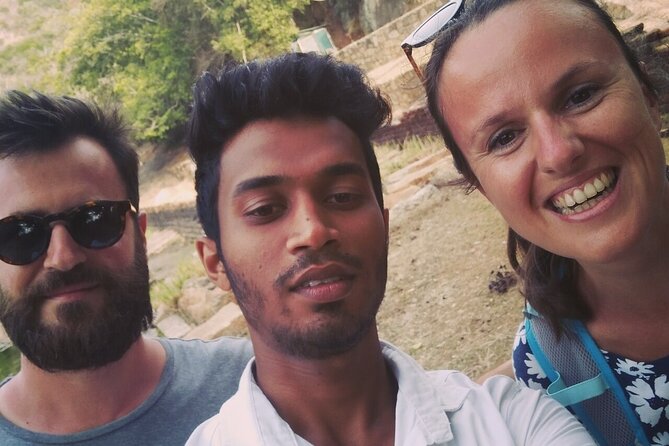
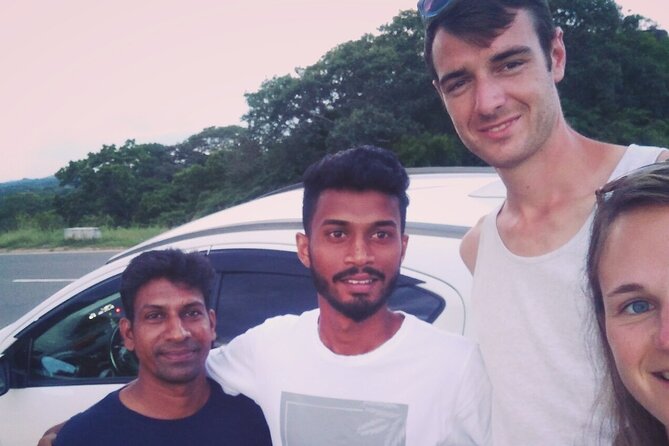
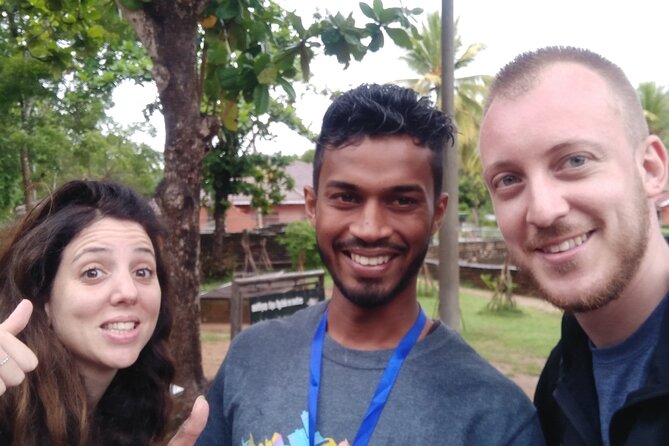
Two things I really enjoy: first, the personal guide factor. Navin (from Navin Lanka Tours) is known for clear explanations, good English, and an easygoing style that lets you ask questions and get straight answers.
One possible drawback to plan for: there’s an extra Old Town entrance fee that you pay on-site (listed as $30 per person), and temple walking can mean warm stone underfoot and shoes rules that may require socks instead of regular footwear.
In This Review
- Quick take: what you’ll feel on the ground
- Why this private half-day works in Anuradhapura
- Mahamewna Gardens: Jaya Sri Maha Bodhi’s living link
- Brazen Palace (Lowamahapaya): reading the clues in ruins
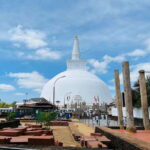
- Ruwanwelisaya: Dutugmunu’s stupa centerpiece
- Abayagiriya Stupa: the height myth that mattered
- Kuttam Pokuna (Twin Baths): stone ponds with a purpose
- Mahamevnāwa Park: Samadhi Buddha and the meditation pose
- Jethawanaramaya: when scale reaches for the sky
- Sandakada Pahana (Moonstone): the carved detail you’ll miss otherwise
- Rathna Prasadaya & Guardstone: where stone replaced wood
- Eth Pokuna (Elephant Pond): scale of a working reservoir
- Dagoba of Thuparama: the oldest stupa note you’ll keep
- Isurumuniya Temple: rock-carved storytelling in stone
- How the timing and transport actually feel
- Price and value: $30 tour fee plus the Old Town entrance
- Who should book this tour in Anuradhapura
- Should you book this Anuradhapura private city tour?
- FAQ
- How long is the Private City Day Tour in Anuradhapura?
- What is included in the price?
- What entrance fees should I expect?
- Is this tour private?
- Is hotel pickup offered?
- What if the weather is bad?
Quick take: what you’ll feel on the ground

- Hotel pickup and private transport remove the hardest part of Anuradhapura logistics.
- Navin as your guide means history, religion, and everyday context in a way you can actually follow.
- A half-day rhythm keeps the momentum while still giving each stop time to breathe.
- Expect an add-on entrance fee for the Old Town area, payable on-site by cash or card.
- Bring comfort for temple paths, including socks, since walking surfaces can run hot.
Why this private half-day works in Anuradhapura
Anuradhapura is one of those places where the main buildings look similar at first glance: stupas, carvings, garden walls, and stone details everywhere. With a guide, those shapes start to make sense. You’re not just ticking boxes—you’re learning what each site represents and why people still treat them as sacred.
This tour is designed as a 4 to 5 hour circuit with private transportation, bottled water, and a licensed guide. Because it’s private, you set the tempo. If a stupa catches your eye more than expected, you can linger a bit. If you’re temple-weary halfway through, you can keep things moving.
The “value” angle here is simple: you’re paying to save time and effort. Without a guide and transport, you’d need to arrange your own route and figure out what’s what. With this setup, you get a clear plan, less backtracking, and a human who can answer the questions you’ll naturally have while looking at ancient Buddhist architecture.
You can also read our reviews of more tours and experiences in Anuradhapura.


Mahamewna Gardens: Jaya Sri Maha Bodhi’s living link
The day often starts at Jaya Sri Maha Bodhi, a sacred fig tree (Ficus religiosa) in the Mahamewna Gardens. This isn’t just a pretty landmark. It’s treated as an important living connection associated with Gautama Buddha.
What I like about starting here is the way it frames everything else you’ll see later. When you begin with something living and sacred, the mood shifts from sightseeing to understanding why people traveled to this region for generations.
Practical note: admission isn’t included for this stop, so be ready for the on-site fees that come with the Old Town area.
Brazen Palace (Lowamahapaya): reading the clues in ruins
Next is the Brazen Palace, known as Lowamahapaya. Even though much of it is archaeological, it helps you understand how complex the monastic life once was. The site is linked to a nine-story monastic structure built in the 2nd century BC by King Dutugmunu.
Here’s what you should pay attention to: you’re not only looking at “old stones.” You’re looking at the footprint of how communities organized themselves—spaces for eating, meeting, and studying. A guide helps translate the ruins into “this is what people did here.”
This is also one of those stops where photos can trick you. From certain angles, the site looks smaller than you expect. Slow down and let someone point out what’s original versus reconstructed or broken.
Ruwanwelisaya: Dutugmunu’s stupa centerpiece
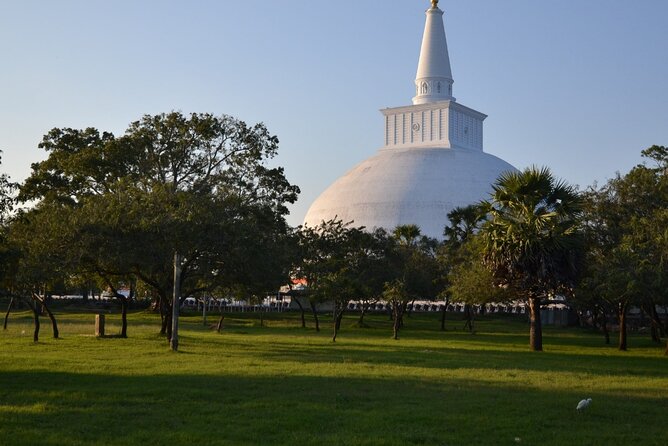
At Ruwanwelisaya, you’re stepping into one of Anuradhapura’s signature Buddhist monuments. Built by King Dutugamunu and completed by his younger brother, this stupa anchors the city’s religious story.
If you’re wondering why guides spend time on stupas instead of only temples and palaces, here’s your answer: stupas are not “just memorials.” They’re statements of belief, power, and devotion. Looking at Ruwanwelisaya with context makes the size, design, and location feel intentional rather than decorative.
Time here tends to be short in a half-day format, so use it well: take a few minutes to circle, then focus on one area of carvings or layout. That way you leave with at least one clear mental image.
Abayagiriya Stupa: the height myth that mattered
Then comes Abayagiriya Stupa. At about 122 metres (400 ft), it’s famous for being the world’s tallest stupa at the time it was built, and the third tallest structure in the world during its era.
This is one of the best stops for “size literacy.” Without explanation, it’s easy to think, yes, it’s big. With explanation, you understand why height mattered—how it symbolized authority, faith, and ambition. A licensed guide can also help you understand how ancient builders planned massive structures with limited technology.
If you like architectural facts, this one will keep your attention. If you prefer stories, it still works—height becomes a story of what rulers wanted people to feel.




Kuttam Pokuna (Twin Baths): stone ponds with a purpose
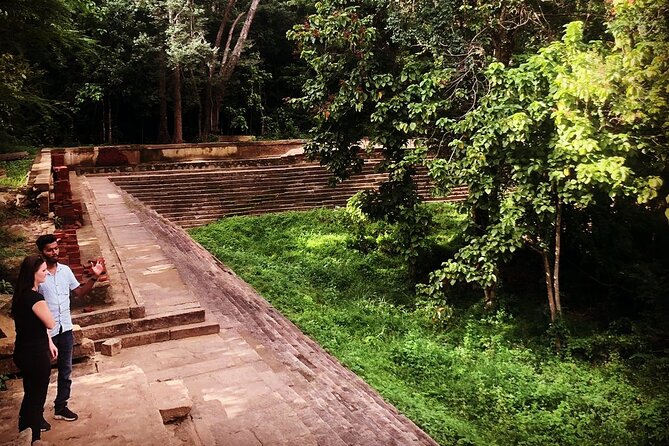
After towering stupas, you get a calmer stop at Twin Baths (Kuttam Pokuna). These are well-preserved ancient bathing tanks or ponds from the Sinhalese period in Anuradhapura.
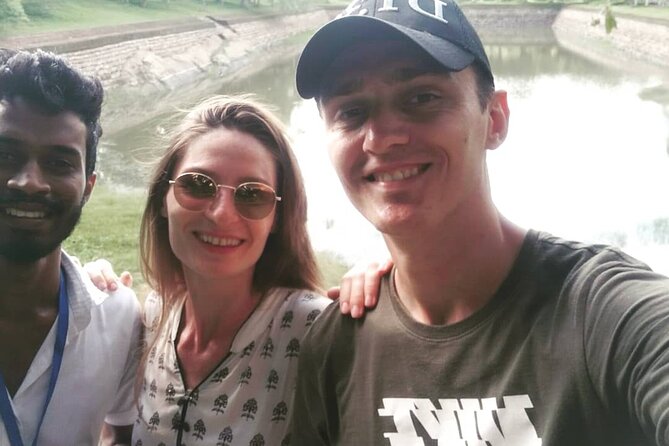
This stop is a breather, and that matters. Temple-heavy days can blur together. Water sites like Kuttam Pokuna give you a chance to reset and notice the stonework style—edges, steps, and how the ponds were shaped for daily use.
In a private tour, you can spend a little extra time here if you want quiet, not just monuments. It’s also a good pause point if you’re traveling with kids.
Mahamevnāwa Park: Samadhi Buddha and the meditation pose
At Mahamevnāwa Park, you’ll find the Samadhi Statue, a Buddha figure shown in the Dhyana Mudra, the meditation posture linked to his early teachings.
This stop works well when you want more than dates and dynasties. It’s about how Buddhism is expressed through gesture and symbolism. When someone explains the meaning behind the hands and posture, the statue becomes a lesson you can carry with you.
Also, this is a useful contrast to the stupa stops. Stupas shout at you across a landscape; statues speak more quietly up close.
Jethawanaramaya: when scale reaches for the sky
Jethawanaramaya Stupa is another high-impact site. It was once over 120 metres tall and ranked among the tallest brick structures ever.
This is where you’ll feel how Anuradhapura was built to impress. And if you’ve been to other major Buddhist sites in Sri Lanka, you’ll notice a pattern: the city’s sacred architecture was engineered to inspire both awe and routine worship.
Because the tour is structured as a half-day, you’ll get a set amount of time, but you can still make it count. Look for how people move around the monument and where most viewing happens. That tells you what the space is designed for.
Sandakada Pahana (Moonstone): the carved detail you’ll miss otherwise
Not everything important here is huge. Sandakada Pahana, also called moonstone, is an elaborately carved semi-circular stone slab—usually placed at the base of staircases and entrances.
If you’re the kind of traveler who loves small design details, this is your moment. The moonstone is easy to overlook because it’s at ground level. A guide can point out patterns and the architectural logic of where it appears.
This stop is also a reminder: in ancient sites, the “main event” isn’t only the biggest structure. It’s also the carefully designed pieces that connect everything.
Rathna Prasadaya & Guardstone: where stone replaced wood
Next is Rathna Prasadaya & Guardstone, including the related concept of murugala/guard stones and the broader stonework tradition. Over time, builders used stone instead of wood because it lasts longer.
What you can learn from this stop is how technology and materials influence culture. Stonework is not just sturdier—it lets traditions persist for centuries. When you see guard stones and related architectural features, you get a clearer picture of how the Anuradhapura kingdom emphasized permanence.
It’s also a good place to ask questions, because this is where explanations often turn from facts into interpretation.
Eth Pokuna (Elephant Pond): scale of a working reservoir
Then you’ll reach Eth Pokuna, the Elephant Pond, an ancient reservoir built during the Anuradhapura Kingdom. It’s listed at approximately 159 metres in length, with additional dimensions provided in the tour description.
You might not expect a pond to be as interesting as a stupa, but it’s part of the same story: sustaining a city. Ancient Anuradhapura wasn’t only sacred space—it was also practical infrastructure for people living nearby.
If you pay attention to the size and shape, you start to understand how city planning supported daily life, not only ceremonies.
Dagoba of Thuparama: the oldest stupa note you’ll keep
At Thuparamaya Stupa, you’re looking at what’s considered one of Sri Lanka’s oldest stupas, dating back to the 3rd century BC. Built by King Devanampiya Tissa, it enshrines a sacred relic, described as the Buddha’s collarbone in the tour information.
This stop is for the history-minded. Even if you don’t memorize dates, you’ll remember the sense that Anuradhapura’s sacred tradition reaches far back.
It’s also a powerful moment for first-timers because it gives you a time anchor. Once you understand this site’s age, the rest of the circuit feels even more layered.
Isurumuniya Temple: rock-carved storytelling in stone
The final stretch often includes Isurumuniya Temple, a rock temple known for intricate stone carvings. It’s described as a 3rd-century BC sanctuary for Buddhist monks, with a strong emphasis on the carvings.
This is one of the places where you can slow down, because carvings reward close looking. Even in a half-day format, you can choose one or two panels and spend time comparing details.
If your feet start to feel tired, this is still worth it. The carvings help you finish on a human, visual note rather than another big monument.
How the timing and transport actually feel
A major advantage here is that transportation is private and built into the plan. In Anuradhapura, distances between key sites can add up fast, especially if you’re also factoring in heat and walking on uneven or hot stone surfaces. Having a driver means you spend your energy on looking, not on route math.
A licensed guide also changes how you experience the day. You’ll likely spend around 25 minutes at each stop in this kind of structured circuit. That’s enough time to understand the point of the place, take photos, and walk the key viewing areas—without feeling rushed all the way.
One extra practical point from what many people say about this style of temple visit: expect that shoes may not be permitted inside some areas, and bring socks accordingly. In hot weather, thick socks can be a real comfort saver.
Price and value: $30 tour fee plus the Old Town entrance
The tour price is listed at $30.00 per person, and the structure includes private transportation, bottled water, and a professional licensed tourist guide. On the face of it, it’s not a “budget only” option.
But the value math looks better when you break down what you’re paying for:
- You’re paying for time (a tight half-day plan).
- You’re paying for interpretation (a guide who can connect the dots between sites).
- You’re paying to avoid the friction of arranging transport and figuring out what to prioritize.
The main cost addition is the Old Town entrance fee, also listed at $30 per person, payable on-site. If you’re booking as a single person or a small group, that extra fee matters. If you’re traveling in a group, the combined cost still makes sense for a guided, private circuit, especially if it’s your first time in Anuradhapura.
Who should book this tour in Anuradhapura
This tour is a strong match if:
- You want the highlights of Anuradhapura without spending hours planning routes.
- You care about Buddhism and Sri Lankan history and want clear explanations while you’re standing in front of the monuments.
- You’re traveling as a couple, family, or small group and prefer your own pace.
- You like guides who are friendly and responsive, with enough flexibility to answer questions instead of rushing you through.
It may be less ideal if you want ultra-slow, hours-long time at one site. This circuit is built to cover many major locations in one go.
Should you book this Anuradhapura private city tour?
If you only have half a day in Anuradhapura, I’d book it. The combination of private transport + a guide like Navin makes the city much easier to understand, and the pacing works well for first-timers. Add the fact that you can ask questions and get explanations in plain language, and you end up seeing more than you’d manage on your own.
The decision hinge is cost and comfort: you’ll pay the on-site Old Town entrance fee, and you should prepare for temple walking with proper socks. If you’re okay with those trade-offs, this is one of the most practical ways to experience Anuradhapura’s major Buddhist sites in a single morning or afternoon.
FAQ
How long is the Private City Day Tour in Anuradhapura?
The tour duration is listed as approximately 4 to 5 hours.
What is included in the price?
The tour includes private transportation, bottled water, and a professional licensed tourist guide.
What entrance fees should I expect?
Admission fees are not included. The Old Town entrance is payable on-site (cash or card) and is listed as $30.00 per person.
Is this tour private?
Yes. It’s a private tour/activity, and only your group participates.
Is hotel pickup offered?
Yes, hotel pickup is provided for ease.
What if the weather is bad?
The experience requires good weather. If it’s canceled due to poor weather, you’ll be offered a different date or a full refund.