One hot-breath afternoon can teach you more than a whole guidebook. This private tuk-tuk tour covers 14 major Anuradhapura sites in a half day, with an audio guide that helps you understand what you’re looking at. My only caution: the tour price doesn’t include the UNESCO site entry tickets, and the walking is on searing sand and tile, so protect your feet with socks.
I like that you get picked up and dropped off from your hotel (or the railway station), so you’re not wasting time hunting for transport or negotiating in the heat. The route is built for short visits—so you see a lot—yet the audio guide keeps it from feeling like a mad dash.
In This Review
- Key Points Before You Go
- Why a Private Tuk-Tuk Beats Walking Around Anuradhapura
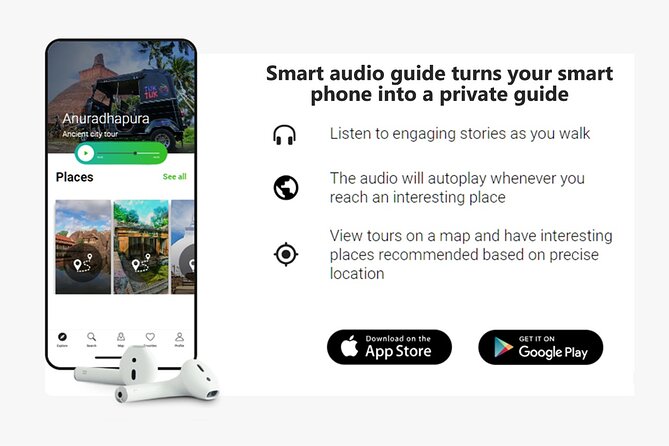
- What You Really Get From the Audio Guide App
- Price and Value: The Tour Fee vs UNESCO Entry Tickets
- Stop 1: Isurumuniya Temple and the Carving-Focused Start
- Stop 2: Ranmasu Uyana (Magul Uyana) for the Sacred Park Feel
- Stop 3: Mirisaveti Stupa and a Short Burst of Big Meaning
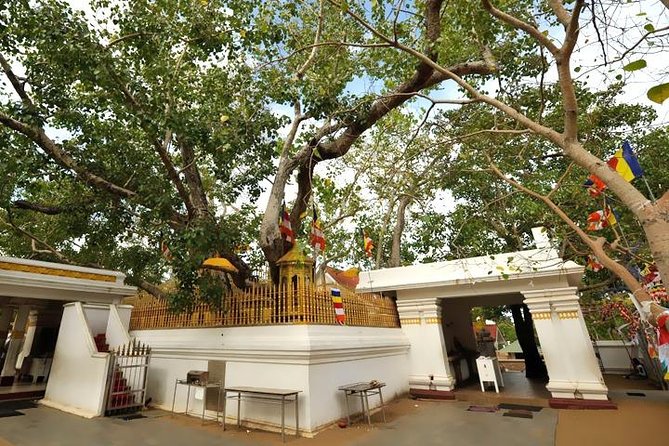
- Stop 4: Sri Maha Boodhi Temple and the 2,300-Year-Old Fig
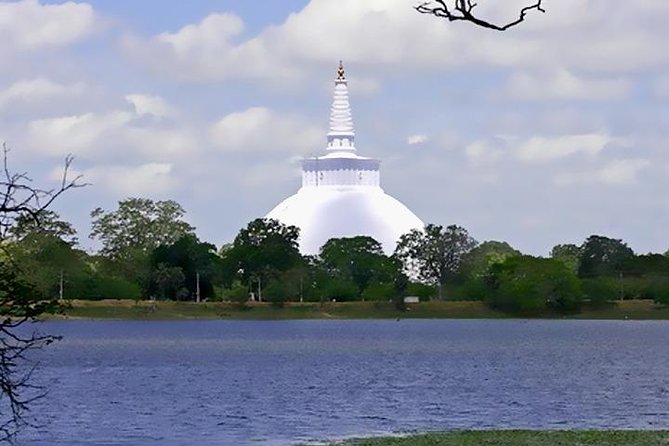
- Stop 5: Ruwanwelisaya and the Giant Sacred Stupa Moment
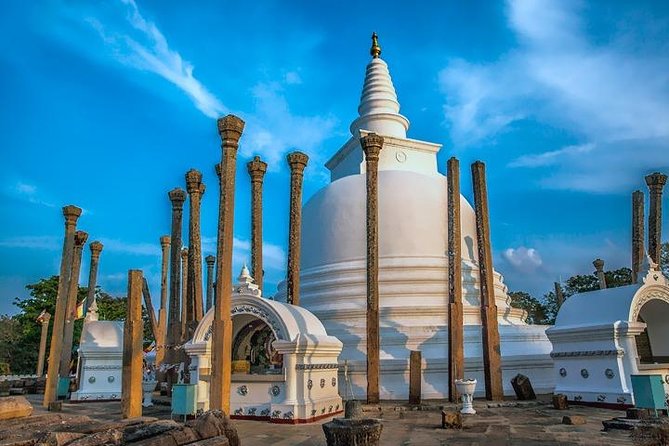
- Stop 6: Dagoba of Thuparama (Bell-Shaped) for a Different Form
- Stop 7: Lankarama Sthupa and King Valagamba’s Legacy
- Stop 8: Moonstone (Sandakada Pahana) and the Art You Walk Over
- Stop 9: Rathna Prasadaya and Guardstone for Prosperity Symbols
- Stop 10: Abhayagiri Monastery Main Refectory (Alms Hall Ruins)
- Stop 11: Abhayagiri Dagaba and the Scale of a Monastic Center
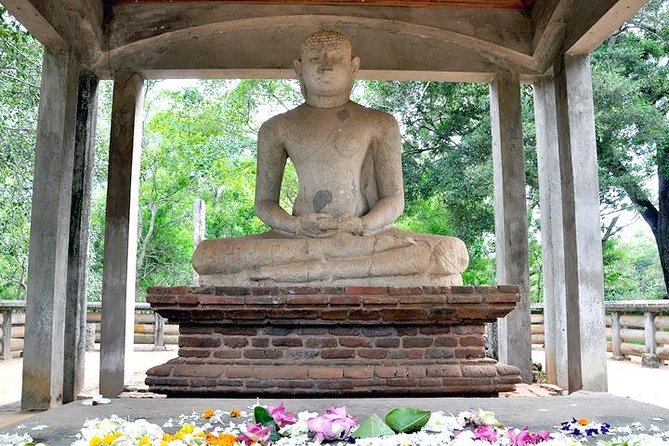
- Stop 12: Samadhi Statue at Mahamevnāwa Park
- Stop 13: Twin Baths (Kuttam Pokuna) for Ancient Water Engineering
- Stop 14: Jethawanaramaya (Jetavana) and the Big Stupa Finish
- Who This Tour Suits Best (and Who Might Want a Different Plan)
- Quick Booking Checklist (So Your Day Feels Easy)
- Should You Book This Anuradhapura 14 Sites Tuk Tuk Tour?
- FAQ
- What’s the duration of the Anuradhapura 14 Ancient City Sites tuk tuk tour?
- Is pickup offered, and where can they drop me off?
- Is this tour private or shared?
- How many sites will I visit?
- Is an audio guide included?
- Are entrance tickets included in the tour price?
- What’s included besides the driver and audio?
- How flexible is cancellation?
Key Points Before You Go
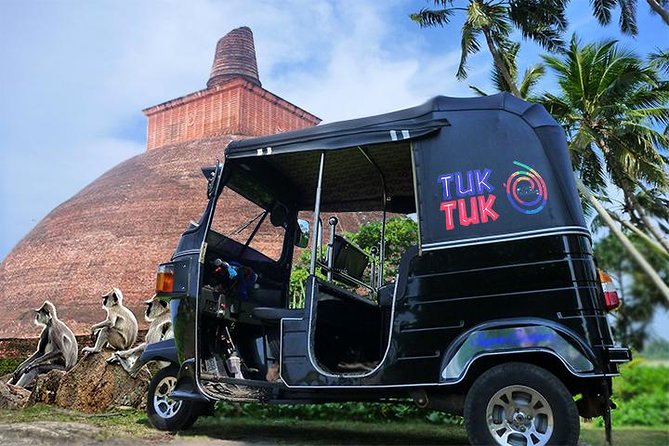
- Hotel/railway-station pickup and drop-off means you start sightseeing fast.
- 14 stops in 4–6 hours is a practical way to cover Anuradhapura without burning a full day.
- Audio guide for every site helps the carvings and monuments make sense.
- UNESCO entry tickets are extra (8 sites), so plan for the add-on cost.
- Bottled water and parking fees included cut down on the little frictions.
- Bring socks—some areas involve bare-foot customs or uncomfortable surfaces.
Why a Private Tuk-Tuk Beats Walking Around Anuradhapura
Anuradhapura is spread out. Even if you’re a strong walker, the time cost adds up fast—especially when the heat is high and you’re trying to connect one sacred spot to the next. A tuk-tuk tour solves that with an efficient route, and because it’s private (only your group), you don’t get stuck matching someone else’s pace.
For me, the real win is control. You can linger for a few extra minutes at a carving, take a longer look at a stupa front, then roll on without the pressure of waiting for a whole bus. The tour runs about 4 to 6 hours, which is long enough to feel satisfying but short enough to stay comfortable.
Also, being picked up and dropped off from your hotel or railway station matters. You lose less time at the start and end, and that’s where half-day tours often either feel great—or feel stressful. This one is set up to feel like a planned excursion, not a scramble.
You can also read our reviews of more tours and experiences in Anuradhapura.


What You Really Get From the Audio Guide App
The audio guide is what turns “I saw a stupa” into “I know what I’m looking at.” You’ll have audio for each stop, so you’re not stuck reading tiny info boards in places where the lighting is bad and the crowd flow is confusing.
At the religious sites, the difference is huge. For example, at Isurumuniya Temple, the highlights aren’t just buildings—they’re the carvings. The audio helps you catch details like the Isurumuniya lovers, the elephant pond, and the royal family carvings, which otherwise can blur together when you’re moving quickly between monuments.
The audio guide also helps when you’re visiting sites with a lot of similar shapes—stupas and dagobas can start to look alike if you’re just scanning visually. The app gives you context, so each one feels like its own stop instead of “another ancient pile.” And because you’re in a private vehicle, you’re not constantly hearing other groups’ questions and getting distracted.
Price and Value: The Tour Fee vs UNESCO Entry Tickets
The tour is $46.40 per group (up to 3 people). That’s good value if you can share, because the group rate is what matters—not the number of passengers. If you’re traveling with one or two people, your effective cost per person drops quickly.
But here’s the key reality check: entry tickets are not included. You’ll pay $30 per person for entry to the 8 UNESCO World Heritage sites included in the circuit. That doesn’t make the tour bad—it just means the real price is the tour fee plus your UNESCO entry.
Add those together and plan for a meaningful total, especially if you’re going solo. Still, for many people, this format is a smart deal because you’re covering a lot of ground with a driver and audio guidance, instead of trying to stitch together multiple visits on your own.
Stop 1: Isurumuniya Temple and the Carving-Focused Start
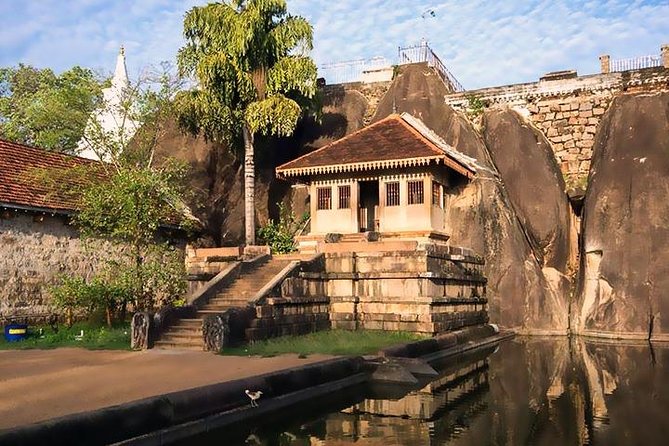
You begin at Isurumuniya Temple, a Buddhist temple near Tissa Wewa. This stop is only about 20 minutes, so you’ll want to focus. The main draw is its carved elements—especially the Isurumuniya lovers and other named carving groups.
Even in a short visit, you can walk away with a sense of why this place gets attention: it’s not only about the shrine space, it’s about the stories told in stone. The audio guide is particularly helpful here because it points out what to look for and helps you understand the carvings as more than decoration.
One practical consideration: if you’re visiting during peak heat, spend your energy on details. In a quick stop, it’s easy to rush. Instead, pick one carving set, look closely, then move on. That’s how this temple becomes memorable even when time is tight.
Stop 2: Ranmasu Uyana (Magul Uyana) for the Sacred Park Feel
Next is Ranmasu Uyana, near Isurumuni Vihara and Tissawewa. You’ll have about 40 minutes, which is a bit longer than several other stops, giving you breathing room to slow down.
This part of the circuit is a change of pace. Instead of focusing on one single stupa or hall, you’re in a park area tied to the ancient Magul Uyana. The main value here is atmosphere: the sacred-city feeling starts to settle in when you’re not just moving from monument to monument.
If you’re the type who likes to notice how places relate to each other—water nearby, sacred zones close together—this stop helps you connect the dots of Anuradhapura’s layout.






Stop 3: Mirisaveti Stupa and a Short Burst of Big Meaning
You’ll stop at Mirisaveti Stupa for about 10 minutes. The audio guide frames it with a specific story: King Dutugamunu built the stupa after defeating King Elara, and the plan included placing Buddha relics in a sceptre.
This is a classic example of why the audio matters. Without context, a stupa can feel like a shape you’ve already seen. With context, it becomes a marker tied to a historical turning point, even if your time on site is brief.
If you tend to rush through small stops, try not to here. Take one minute to notice the stupa’s form, then let the audio story guide your eye.
Stop 4: Sri Maha Boodhi Temple and the 2,300-Year-Old Fig
At Sri Maha Boodhi Temple, you get about 20 minutes. The centerpiece is a sacred fig tree, a 2,300-year-old bo-tree (Ficus religiosa) said to be the oldest tree planted by humans rather than natural seeding.
This is one of those places where you can feel the calm even though you’re in a busy religious area. The value isn’t just the age—it’s that the site is living, continuing, and actively meaningful. When you pair that with the audio guide, you’re not just looking at a tree. You’re understanding why people come here and what the tree represents.
If you’re sensitive to sun, this is a good time to pace yourself and take a slower look. You’ll likely want a moment to stand still and watch how the space feels.
Stop 5: Ruwanwelisaya and the Giant Sacred Stupa Moment
Ruwanwelisaya is next, about 20 minutes. It’s a hemispherical stupa considered sacred to Buddhists worldwide, built by King Dutugemunu around 140 B.C. according to the description.
This is a “big stop,” even if your time is moderate. The audio guide helps you focus on what makes this stupa significant, which keeps the visit from feeling like a quick photo stop. As you walk around and view the structure from different angles, it’s easier to appreciate why stupas like this became central anchors in sacred cities.
Tip for comfort: this is where socks are extra important. If you’re walking on tiles or heat-baked surfaces, your feet will remember it later. Plan ahead so you don’t turn sightseeing into discomfort.
Stop 6: Dagoba of Thuparama (Bell-Shaped) for a Different Form
You’ll visit Dagoba of Thuparama for about 10 minutes. This dagoba is built in the shape of a bell, and the description notes it was destroyed and later restored during the reign of King Agbo II.
This short stop can be surprisingly satisfying if you focus on shape. Bell-like stupas have a different visual feel, and the audio context gives weight to why the structure exists in its present form.
In a circuit full of stupas, this one breaks the pattern just enough to keep your eyes awake.
Stop 7: Lankarama Sthupa and King Valagamba’s Legacy
Next is Lankarama Sthupa, about 10 minutes. It was built by King Valagamba, and not much is known about the stupa’s ancient original form, with later reconstruction mentioned in the description.
Because your time is short, the goal here is attention, not completion. Look for what’s visible now, then let the audio explain how the site’s story includes change over time.
This stop works best if you enjoy architecture and the way sites evolve across centuries. If you don’t enjoy details, the audio will still help you avoid the “I’ve already seen this” feeling.
Stop 8: Moonstone (Sandakada Pahana) and the Art You Walk Over
Moonstone or Sandakada pahana takes about 10 minutes. It’s a semi-circular stone slab carved with recurring design patterns. In the center is a half lotus, enclosed by several concentric bands.
You may not think a “stone slab” is a highlight, but it’s one of the most rewarding stops in an efficient tour, because it’s art you can actually study close up. The audio guide helps you notice the design logic—how the carvings repeat across sandakada pahana and how the half lotus fits into the layout.
Also, this is a place where you’re likely to be standing close to the ground surfaces. Again: socks can be the difference between enjoying the moment and rushing through because your feet hurt.
Stop 9: Rathna Prasadaya and Guardstone for Prosperity Symbols
This stop is about 10 minutes at Rathna Prasadaya & Guardstone (poḥoy ge): specifically the guardstones that supported a heavy stone balustrade. Over time, the guardstones began to be carved with symbols representing prosperity and protection.
This is one of those tours that helps you see the smaller details. It’s easy to miss guardstone carvings if you’re walking without context, so the audio is doing real work here.
If you like symbolic design—what people believed they were protecting—this short stop gives you a concentrated dose.
Stop 10: Abhayagiri Monastery Main Refectory (Alms Hall Ruins)
At Abhayagiri Main Refectory of Abhayagiri Monastery, you’ll have about 20 minutes. This is a ruined building described as the daily alms-hall location in the monastery premises.
Ruins can sometimes feel like “just stones.” But here, the value is the way the audio helps you imagine what the structure’s purpose was. An alms hall connects you to the daily rhythm of monastic life, not only royal monument building.
In a half-day tour, this stop gives you a different kind of understanding: it’s less about relic grandeur and more about how the community worked.
Stop 11: Abhayagiri Dagaba and the Scale of a Monastic Center
Next is Abhayagiri Dagaba, around 30 minutes. The description frames Abhayagiriya as a great monastic center and a royal capital, with monasteries rising multiple stories, roofed with gilt bronze or tiles glazed in bright colors.
This stop is longer, and you’ll probably want it. When you’re in the Abhayagiri area, it’s easier to let your mind fill in what those roofs and multiple stories might have looked like. The audio guide helps you focus on the significance rather than just the emptiness of the ruins.
If you’re someone who hates being rushed at ruins, this is one of the better sections of the itinerary for you.
Stop 12: Samadhi Statue at Mahamevnāwa Park
The Samadhi Statue stop is about 10 minutes. The Buddha is depicted in Dhyana Mudra, the posture associated with meditation.
This one is brief, but it gives a nice mental pause. You’re not only absorbing monuments; you’re getting a reminder of what the religious practice looks like in visual form.
If you’re traveling with anyone who values spiritual symbolism over architecture, this stop is a good fit.
Stop 13: Twin Baths (Kuttam Pokuna) for Ancient Water Engineering
Kuttam Pokuna (Twin Baths / Twin Ponds) takes about 20 minutes. This is described as one of the best specimens of bathing tanks in ancient Sri Lanka, built as a pair by the Sinhalese in an ancient kingdom.
This stop is a fun change because it’s practical, not just ceremonial. Water management tells you something about daily life—how people built for cleanliness, ritual washing, and human comfort in a hot climate.
If you like “how did they do this” moments, you’ll probably spend extra time looking at how the pools are arranged.
Stop 14: Jethawanaramaya (Jetavana) and the Big Stupa Finish
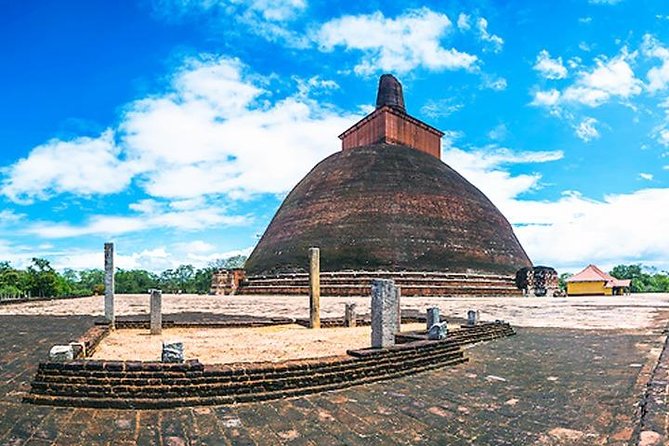
You end at Jethawanaramaya, also tied to the ruins of Jetavana monastery. You’ll have about 20 minutes, and the description notes it was the world’s tallest stupa at 122 metres (400 ft).
This is your grand finale. Even without going into heavy academic detail, that scale communicates power and ambition. The audio guide helps you connect the structure to the broader Jetavana monastery setting.
And because your day is still “half-day,” you can enjoy the ending instead of arriving exhausted. In other words: you should leave feeling like you completed something, not like you just survived a sprint.
Who This Tour Suits Best (and Who Might Want a Different Plan)
This tour is ideal if you want maximum “big sights” in a manageable time window. It’s also a good choice if you don’t want to figure out transport between scattered sites, especially when the streets are hot and you’d rather focus on meaning than logistics.
You’ll likely enjoy it most if you:
- like audio-guided structure
- don’t want to spend a full day on transport and repeated ticket lines
- enjoy temples and stupas, plus carved details
What might not fit perfectly:
- If you hate short stops, you’ll feel that some sites are only 10–20 minutes.
- If you’re planning a budget trip, the UNESCO entry tickets add a noticeable chunk.
- If you’re sensitive to heat or walking on hot surfaces, come prepared with socks and plan your pace.
Quick Booking Checklist (So Your Day Feels Easy)
Before you go, I’d do three small things:
- budget for $46.40 tour + $30 per person UNESCO tickets (for the 8 UNESCO sites)
- bring socks for tiles/sand conditions you might face
- plan for a 4–6 hour window with a lot of stops, so keep water handy (you’ll get bottled water)
The tour includes a mobile ticket and uses a digital audio guide for each stop, which makes the experience smoother once you’re on the ground.
Should You Book This Anuradhapura 14 Sites Tuk Tuk Tour?
If you want an efficient, guided way to see Anuradhapura’s biggest monuments without turning the day into transportation stress, I think this is a smart booking. The private setup, hotel/rail pickup, and audio guide create the feeling of a real guided experience rather than a collection of scattered landmarks.
Book it if your priority is coverage with context. Consider an alternative if you prefer slow, long museum-style visits or you don’t want any extra planning around entry tickets.
FAQ
What’s the duration of the Anuradhapura 14 Ancient City Sites tuk tuk tour?
It runs about 4 to 6 hours.
Is pickup offered, and where can they drop me off?
Yes. Pickup and drop-off are offered from your hotel or the railway station in the surrounding area.
Is this tour private or shared?
It’s a private tour, and only your group participates.
How many sites will I visit?
The tour covers 14 ancient city sites.
Is an audio guide included?
Yes. You’ll use a digital audio guide for all the sites.
Are entrance tickets included in the tour price?
No. Entry tickets are not included for the UNESCO World Heritage sites, listed as $30 per person for 8 sites.
What’s included besides the driver and audio?
The tour includes bottled water and parking fees.
How flexible is cancellation?
You can cancel for a full refund up to 24 hours in advance, and the experience requires good weather (it can be rescheduled or refunded if canceled due to poor weather).