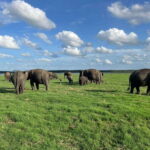
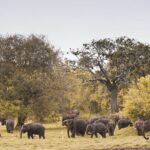
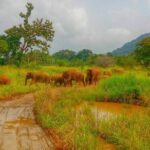
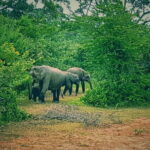
Elephants can turn the morning into theater. This Hurulu Eco Park private safari is built around respectful, close-up wildlife drives in Sri Lanka’s elephant country, with a driver-tracker who actively searches the reserve for the next movement line.
I especially like the small-group 4×4 setup (max 6 per jeep), which keeps viewing more personal when animals surface. I also like that pickup and drop-off are included within 5 km of the park gate, plus you get water bottles for the drive.
One thing to plan around: the admission ticket isn’t included for jeep-only bookings, and park entry fees are paid in cash unless you upgrade to include them.
In This Review
- Key things to know before you go
- Hurulu Eco Park: the elephant corridor you’ll actually drive
- 7:00 am or 2:00 pm: how timing changes your odds
- Inside the private safari jeep: what the 4×4 + tracker setup really does
- The drive itself: what you might spot besides elephants
- Hurulu’s terrain: why dry forests and waterways matter
- Getting to the gate: pickup radius and what to double-check
- Park entry fees: the part people forget until it’s time
- Practical comfort: rain, time, and how to feel good during the drive
- Value check: is $27 per person worth it?
- Who should book this private Hurulu Eco Park safari
- Should you book it? My decision guide
- FAQ
- What is the duration of the Hurulu Eco Park Private Safari?
- What time do safaris start?
- Is hotel pickup included?
- How many people are in each safari jeep?
- Are park entrance fees included?
- What if weather is poor or I need to cancel?
Key things to know before you go
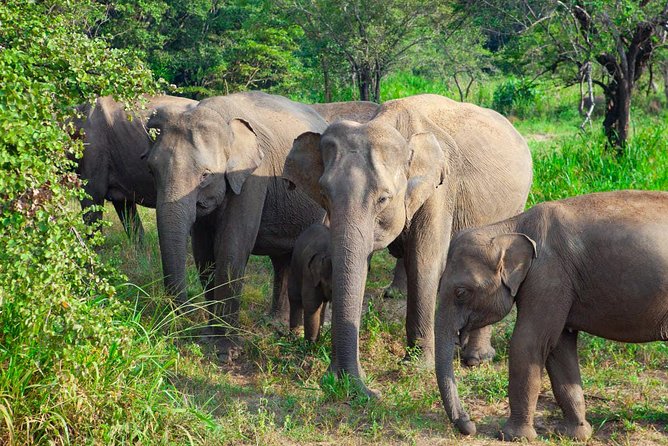
- Private jeep, max 6 passengers means less crowd pressure and easier elephant viewing from your own side of the vehicle
- Driver-tracker searching with you focuses on where animals are moving next, not just passing through hoping for luck
- Two departure windows (7:00 am or 2:00 pm) give you a choice based on your day’s pace and weather
- Hurulu’s mix of habitats (dry forests, grasslands, waterways, older cultivation areas) shapes what you’ll see and where
- Entrance fees may be extra if you don’t choose the park-entry upgrade, so bring cash planning
- Three-hour drive format keeps it focused, not exhausting, with the best chance at elephant activity early in the route
Hurulu Eco Park: the elephant corridor you’ll actually drive
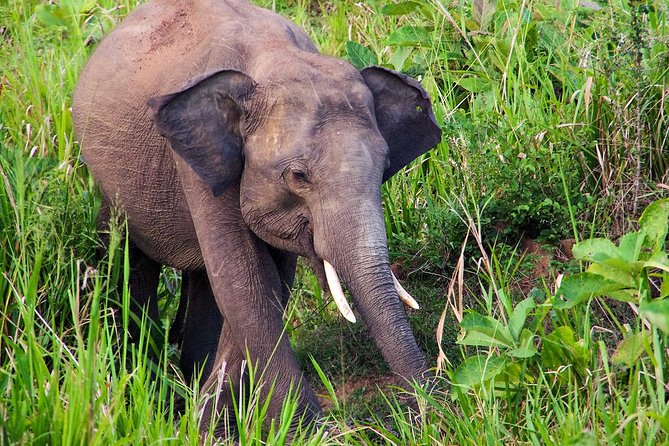
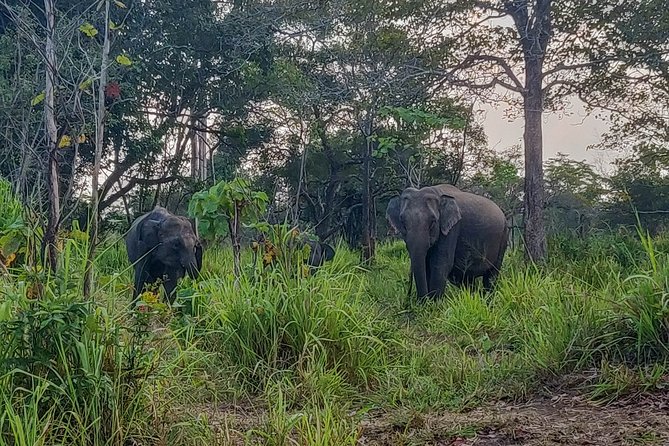
Hurulu Eco Park sits in the Hurulu Forest Reserve near Habarana, in the same broad wildlife neighborhood as Kaudulla and Minneriya. What that means for you is simple: this is not a random patch of trees. It’s an area of over 10,000 hectares with multiple habitat types that pull elephants and other animals into overlapping routes.
On the route, you pass through the kind of terrain elephants use day to day: dry evergreen forests, grasslands, waterways, and some abandoned cultivation lands. There are also cultivation areas where farmers still use shifting cultivation inside the reserve area. That human activity is part of why elephant encounters happen here in the first place, and it’s also why you can occasionally get human-elephant conflict in the wider region. So the whole park approach is about living alongside wildlife rather than pretending you’re in a sealed-off movie set.
This context matters because it affects your expectations. You’re not going to see wildlife like it’s in a zoo enclosure. You’re going to see wildlife as it moves through its real workday—feeding, traveling, and responding to weather and people.
You can also read our reviews of more tours and experiences in Anuradhapura.


7:00 am or 2:00 pm: how timing changes your odds
You start from the park gate at either 7:00 am or 2:00 pm, and that choice can shape what your drive feels like.
Morning tends to be the “fresh start” slot. When you’re on an early safari, you’ll usually get more patient time to scan edges of forest and watch for animals that step into open sightlines. Afternoon has its own rhythm too. The second departure can fit better if you’re touring other sites earlier in the day around Anuradhapura/Sigiriya/Habarana, and it can also be a better match if you don’t want a very early morning.
Two practical notes that can help you get more satisfaction from whichever time you pick:
- Rain affects sightings, and this experience needs good weather. If it’s wet enough to change driving conditions, you might not get the full “elephant parade” vibe.
- This safari is only about 3 hours, so you want a time window that keeps you fresh, not one that forces you to rush from a long day tour.
If you’re choosing between the two start times and you’re flexible, I’d go with the slot that best matches your overall itinerary and weather plan. You’ll see more wildlife when you’re not stressed and your driver can work the route calmly.
Inside the private safari jeep: what the 4×4 + tracker setup really does
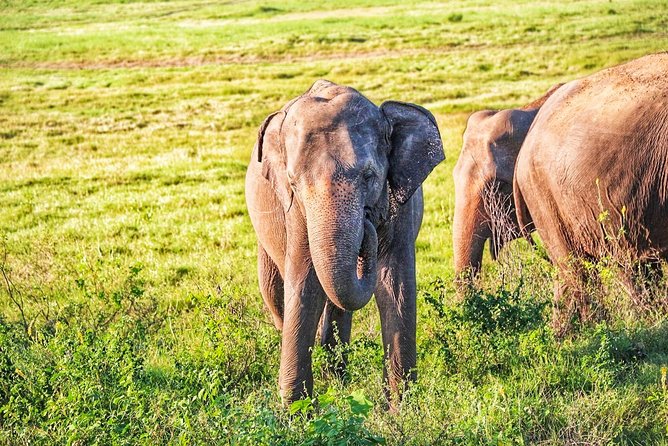
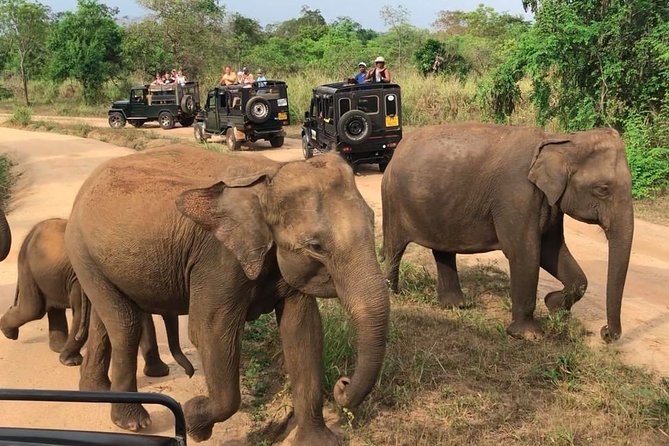
The core of this tour is a 4×4 safari jeep with a driver who also acts as your tracker. Each jeep holds up to 6 passengers, so you get a tighter viewing circle than bigger shared buses.
That small size is more than comfort. When elephants come close enough to matter, positioning matters. With fewer people, it’s easier to keep a steady viewing angle, stand or shift your weight without turning it into crowd management, and follow where the driver wants you to look.
From real safari days with this operator, some guides have been especially good at reading elephant movement rather than waiting for animals to walk into the open. Drivers such as Mayura and Nadeesha have been praised for tracking elephants’ next steps and finding more secluded moments away from other vehicles when possible. You can think of the difference like this: some safaris are about “finding.” This one is about “anticipating.”
You’ll also get a water bottle per person. That sounds minor, but on a wildlife drive you’re often stuck watching for long stretches. It helps you stay comfortable without needing to rummage for supplies.
The drive itself: what you might spot besides elephants
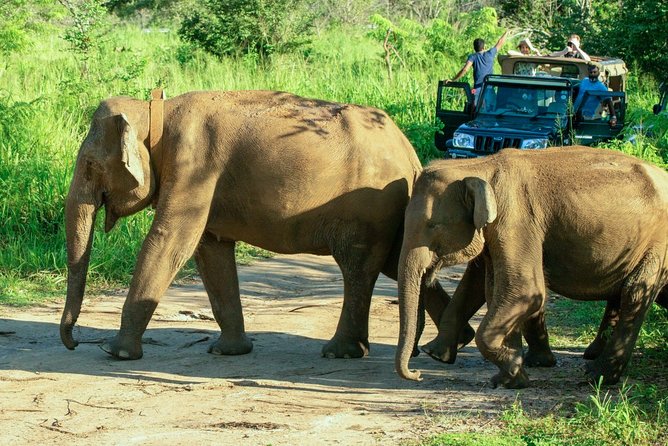
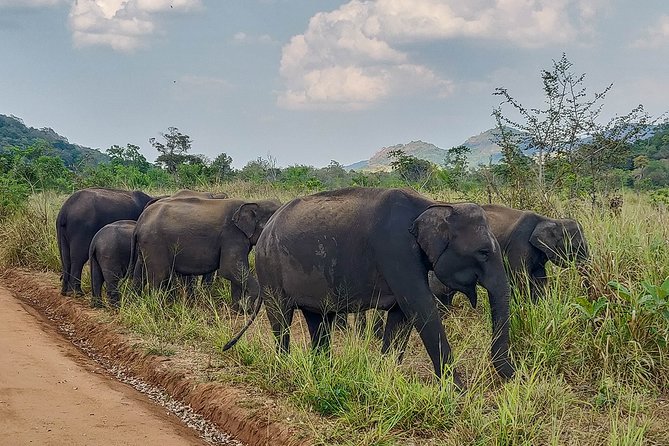
Yes, elephants are the big reason people book Hurulu Eco Park. The park is designed around elephant movement through the reserve, and the whole safari drive is built to search for them in that rhythm.
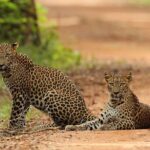
But you’re not only looking for elephants. As you roll along, keep your eyes open for:
- Leopard
- Rusty-spotted cats
- Junglefowl
- Tortoise
- Other native species that surface when the drive hits the right habitat pocket
Here’s the reality check that helps you enjoy the day: with only a 3-hour outing and a weather-dependent schedule, the menu of sightings can vary. If it’s a quieter wildlife day or rain slows visibility, you may still see elephants, but you might miss some of the smaller, harder-to-see animals.
Still, this safari gives you an advantage most self-guided drives don’t: an experienced driver-tracker who’s actively scanning and choosing routes that fit animal behavior.
Hurulu’s terrain: why dry forests and waterways matter
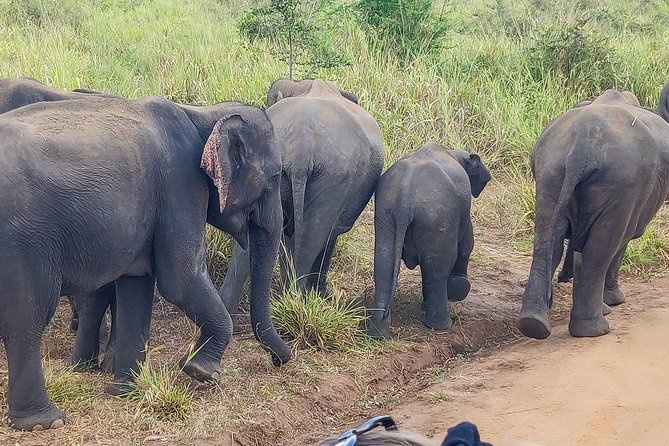
Elephants don’t move randomly across a reserve. They follow food, water, cover, and the paths created by daily travel. Hurulu’s mix of habitats gives you different viewing moments on the same drive.
You’ll move between:
- Dry evergreen forests, where animals can appear suddenly at the forest edge
- Grasslands, where you have wider sightlines but more heat and visibility pressure
- Waterways, where animals might linger longer
- Older cultivation areas, which can act like feeding zones depending on conditions
This habitat variety is exactly why the route feels like more than “a single straight road.” A good driver can use terrain changes to increase the chance of a close sighting. You’ll also notice that safaris often start slower while the tracker sets the plan, then move more actively once elephants’ movement direction becomes clear.



Getting to the gate: pickup radius and what to double-check
The tour includes free pickup/drop-off from any location within 5 km of the park gate. If you’re staying farther away, hotel pickup/drop-off isn’t included as part of this specific set of inclusions.
That’s where you’ll want to pay attention. The experience offers private transfers from select hotels and locations, but the guaranteed, clean “included” promise is the 5 km radius from the gate. If your hotel is outside that band, plan for the extra transport cost or arrange your own ride to the meeting point.
Meet at the gate at 7:00 am or 2:00 pm, and you’ll begin the safari drive from there.
Park entry fees: the part people forget until it’s time
Admission can be the confusing piece, so let’s make it plain.
For jeep-only bookings, entrance fees are not included and are paid in cash. That means you’ll want cash available when you arrive at the gate.
There’s also an option to upgrade to include park entry, which can save you from that cash moment and reduce last-minute friction.
If you’re trying to travel light and avoid awkward payment delays, I recommend thinking through this before you go. The easiest day is the one where you don’t have to scramble at the gate.
Practical comfort: rain, time, and how to feel good during the drive
This safari requires good weather. That doesn’t mean you should cancel the moment clouds show up, but it does mean your day’s value depends on conditions. If it’s truly poor weather, the experience may be canceled and you’ll be offered another date or a refund.
For your own comfort during a 4×4 drive through varied terrain, I suggest you plan for:
- A light rain layer (even if you hope you won’t need it)
- Sun protection, since grassland sections can mean stronger light
- Closed-toe shoes that handle uneven ground when you’re stepping around the jeep area
Your physical needs are listed as moderate fitness level. That typically means you’ll be on uneven surfaces and possibly standing for viewing. If you know you’ll struggle with that, choose comfort-first footwear and be honest with yourself about what standing will feel like.
Value check: is $27 per person worth it?
At $27.00 per person, the price can feel like a steal or like a “wait, what’s missing?” depending on what you expected.
Here’s what you’re paying for:
- A 4×4 safari jeep (private, with max 6 passengers)
- An experienced driver-tracker
- Free pickup/drop-off within 5 km of the gate
- Water bottle per person
What you’re not getting automatically:
- Entrance fees if you didn’t upgrade (paid in cash for jeep-only bookings)
- Food and beverages
- Tips/gratuities
So the value equation is really about your priorities. If you want a focused wildlife drive with professional searching and you’re staying near the gate (within the 5 km pickup zone), the cost-to-experience ratio looks strong.
If you’re already paying for park entry elsewhere in your trip and you don’t mind carrying cash, you can still make it work. But if you prefer everything handled cleanly in advance, the upgrade that includes park entry is worth considering.
Also, a booking detail that can help your planning: this is commonly booked about 28 days in advance on average. That’s a clue that this safari time slot and jeep availability can move quickly in peak seasons.
Who should book this private Hurulu Eco Park safari
I’d point you toward this safari if you:
- Want elephants in natural habitat with a guide who actively tracks movement
- Prefer small-group comfort over big shared tours
- Like practical structure: a clear start time, a focused route, and a return window that fits your day
- Want private time with your group (only your group participates)
This safari might be less satisfying if you:
- Need a guaranteed list of multiple species beyond elephants in every weather condition (wildlife doesn’t run on calendars)
- Are counting on long roaming time on foot (this is a drive-focused experience)
- Are staying well outside the pickup radius and don’t want the extra coordination
Should you book it? My decision guide
Book it if your main goal is a high-likelihood elephant safari drive with a small private jeep and a driver-tracker who can read the reserve. The combination of 4×4 access, short 3-hour focus, and private, max-6 seating is a good fit for most people doing Sri Lanka wildlife without wanting a full-day commitment.
You should think twice about it only if you’re sensitive to the possibility that the day’s wildlife variety depends on weather and on where animals are moving at that moment. On rainy days, the “how many and how close” factor can change.
If you want elephants and you’re okay with nature running on nature’s schedule, Hurulu Eco Park is a strong choice.
FAQ
What is the duration of the Hurulu Eco Park Private Safari?
It lasts about 3 hours (approx.).
What time do safaris start?
You meet at the park gate at 7:00 am or 2:00 pm.
Is hotel pickup included?
Pickup and drop-off are included free within 5 km of the park gate. Hotel pickup/drop-off is not included if you’re outside that radius.
How many people are in each safari jeep?
Each 4×4 jeep has a maximum of 6 passengers.
Are park entrance fees included?
Not always. For jeep-only bookings, entrance fees are not included and you pay in cash. You can also upgrade to include park entry.
What if weather is poor or I need to cancel?
The experience requires good weather. If it’s canceled due to poor weather, you’ll be offered a different date or a full refund. You can also cancel for a full refund up to 24 hours before the experience starts.