Anuradhapura rewards the curious. This small-group day links Sigiriya Rock Fortress with major Buddhist landmarks, with stress-free round-trip transfers starting right from your chosen Sigiriya address. It’s interesting because you’re not just ticking off sites, you’re moving through a living spiritual landscape of stupas, monasteries, and sacred trees.
I also like the max-three travelers setup, which keeps the pacing human and the conversations easy. One caution: entrance fees are not included, so you’ll want to budget extra for each stop, and the full day runs about 8–10 hours.
In This Review
- Quick takeaways
- Why This Sigiriya to Anuradhapura Day Trip Feels More Personal
- Price and Value: What $120 Covers (and What It Doesn’t)
- Your Day at a Glance: Sigiriya First, Then the Anuradhapura Circuit
- Stop 1: Thuparamaya and the Early Dagoba Story (About 30 Minutes)
- Stop 2: Ruwanwelisaya Stupa for Relics and Scale (About 1 Hour)
- Stop 3: Jaya Sri Maha Bodhi, the Sacred Fig Tree (About 1 Hour)
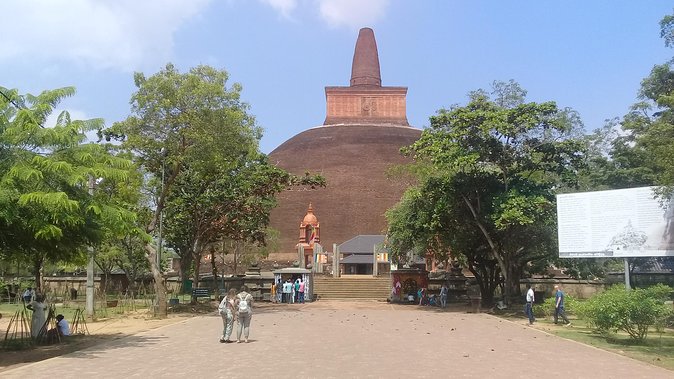
- Stop 4: Abayagiriya Stupa (Jetavanaramaya Ruins) and That 122-Meter Scale (About 30 Minutes)
- Stop 5: Isurumuniya Temple, Ravana, and the Star Gate (About 1 Hour)
- Stop 6: Twin Baths (Kuttam Pokuna) for Ancient Water Engineering (About 30 Minutes)
- Stop 7: Anuradhapura Moonstone (Sandakada Pahana) at Stairways (About 30 Minutes)
- Stop 8: Abhayagiri Dagaba Ruins and a Multi-Tradition Monastery Site (About 1 Hour)
- Stop 9: Mihintale (Missaka Pabbata) for the Mountain Peak Close By (About 1 Hour)
- What to Pack and How to Pace the Day Without Getting Beat Up
- Who This Tour Suits Best (and Who Might Want a Different Pace)
- Should You Book This Day Trip to Anuradhapura?
- FAQ
- How long is the Sigiriya to Anuradhapura day tour?
- What is included in the price?
- Do I need to pay entrance fees at the stops?
- How many people are in the group?
- Where does the tour start and end?
- What happens if the tour is canceled due to weather or if I cancel?
Quick takeaways
- Max 3 travelers keeps the day feeling personal instead of crowded
- Door-to-door transfers in Sigiriya remove the hardest part of planning
- Mobile ticket makes check-in easier
- Bottled water (2 bottles) is included for the long hot hours
- Religious sites across Anuradhapura give you variety: stupas, tanks, carvings, and ruins
- Entrance fees are extra, so carry cash and plan for multiple ticket payments
Why This Sigiriya to Anuradhapura Day Trip Feels More Personal
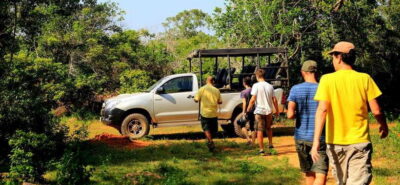
The biggest win here is the size. This tour runs with a maximum of three travelers, meaning you don’t have to fight for time, attention, or a clear view at the stops. For a day packed with big names like Thuparamaya and Ruwanwelisaya, that small group matters.
You also get round-trip transfers direct from your chosen address in Sigiriya, then back again at the end. That’s not glamorous, but it’s practical: it saves you from figuring out rides between dispersed ancient sites. A mobile ticket helps too, so you’re not scrambling for paperwork mid-day.
Finally, the day is built around contrasts. Sigiriya brings the dramatic fortress story; Anuradhapura brings the sacred-city feel. You’re seeing two sides of Sri Lanka’s ancient world in one long stretch.
You can also read our reviews of more tours and experiences in Sigiriya.


Price and Value: What $120 Covers (and What It Doesn’t)
At $120 for roughly 8–10 hours, this tour is priced more like a guided transfer + site circuit than a cheap bus day. You’re paying for the convenience: pickup from your Sigiriya address, transportation between stops, and bottled water.
Here’s what’s not included: all fees and taxes. That means each temple/stupa/ruins stop can cost extra, and you should assume you’ll pay multiple times across the day. If you’re the type who gets annoyed by surprise ticket costs, this is the part to plan for.
The value gets better if you want both locations without the hassle. Instead of stitching together separate trips—Sigiriya one day, Anuradhapura another—you get one connected itinerary that makes sense geographically and logistically.
Your Day at a Glance: Sigiriya First, Then the Anuradhapura Circuit
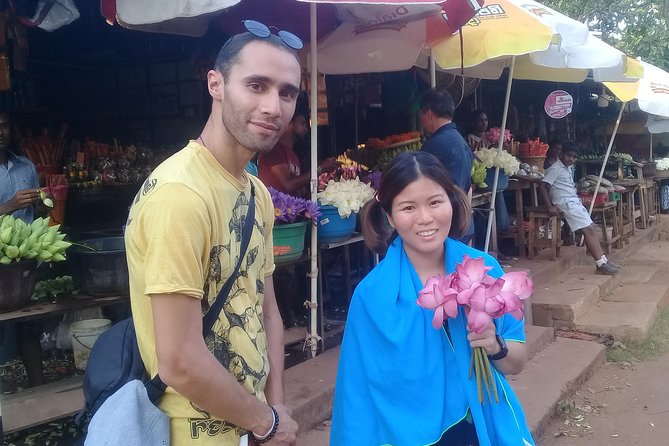
The tour is designed as a pair: Sigiriya Rock Fortress plus a full Anuradhapura day. The Anuradhapura portion is structured into short, focused blocks—some stops are 30 minutes, others are around an hour—so you keep momentum without spending half the day waiting around.
Sigiriya is the workout section. Reviews emphasize that the climb takes effort and that comfortable shoes help a lot. One common tip from past feedback: starting early (around 6:30am was mentioned) can make the fortress experience more comfortable, especially because it’s a big climb and the sun can turn serious later.
Also note the comfort reality. One review specifically pointed out that for international visitors, Sigiriya entrance fees can feel steep and toilet facilities can be basic. You can’t fix that, but you can plan for it: aim to use facilities before the uphill stretch, and don’t assume there will be convenient breaks mid-climb.
Stop 1: Thuparamaya and the Early Dagoba Story (About 30 Minutes)
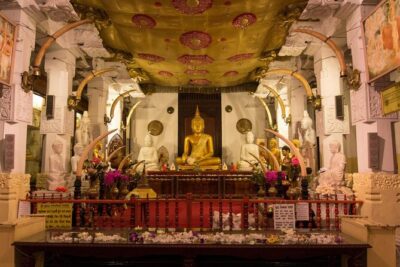
Thuparamaya is treated as the first Buddhist temple in Sri Lanka, and the stop is compact—about 30 minutes. What makes it meaningful is the historical anchor: the Thuparamaya stupa is described as the earliest dagoba on the island, dating back to the reign of King Devanampiya Tissa (247–207 BC).
Why this matters for you: starting with an early structure sets the tone for the whole day. When you later see larger, later stupas, monasteries, and sacred trees, you’ll understand how the sacred city evolved rather than just collecting random monuments.
The only downside is time pressure. In a 30-minute stop, you’re not going to linger like you would at a museum. Go in with a simple goal: find the stupa focus and take a few quiet minutes to read the basics around it.
Stop 2: Ruwanwelisaya Stupa for Relics and Scale (About 1 Hour)
Ruwanwelisaya is a stupa with a hemispherical form, and the key point is that it contains relics and is considered sacred far beyond Sri Lanka. The background here is specific: it was built by King Dutugemunu around 140 B.C. after he became king of all Sri Lanka.
This stop is your “wow, that’s huge” hour. Even if you’re not a monument-spotter, the sheer presence of a relic stupa changes your mood fast. It’s one of those places where your photos won’t be dramatic like a fortress view, but your sense of importance will be.
The practical consideration: allow time to slow down. An hour is generous for a stupa stop, but it still goes by quickly if you treat it like a checklist.




Stop 3: Jaya Sri Maha Bodhi, the Sacred Fig Tree (About 1 Hour)
Jaya Sri Maha Bodhi is not a building—it’s a living sacred fig tree in the Mahamewna Gardens. The information shared for this stop connects it directly to the famous historical Sri Maha Bodhi at Buddha Gaya in India, described as its southern branch.
You’ll likely feel the difference immediately. Trees like this don’t work like monuments. They pull your attention toward calm, repetition, and ritual space. If you like spiritual sites that feel less staged and more continuous, this is a highlight.
Give yourself the full hour here. If you rush, you miss what makes sacred trees special: the atmosphere. The site’s importance isn’t in details you can zoom in; it’s in the sense that this place has mattered for a very long time.
Stop 4: Abayagiriya Stupa (Jetavanaramaya Ruins) and That 122-Meter Scale (About 30 Minutes)
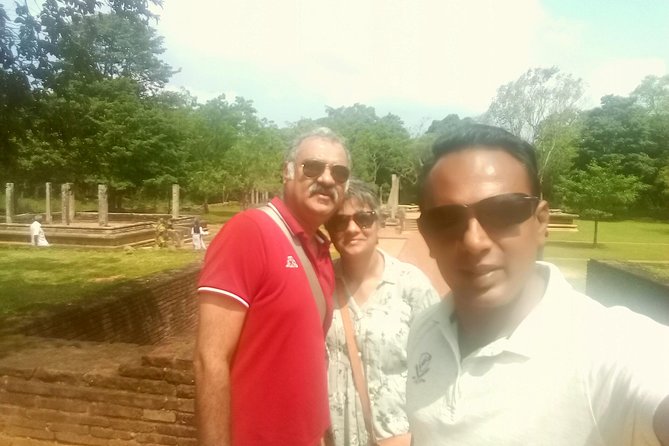
Stop four is listed as Abayagiriya Stupa, but the description you get points to Jetavanaramaya in the ruins of Jetavana monastery. That’s important because the facts here are striking: it was associated with a stupa once described as the world’s tallest, at about 122 meters (400 ft).
For you, the practical takeaway is this: ruins can be hard to “read” if you’ve never seen them before. A short stop isn’t ideal for deep interpretation, but the wow factor comes from scale. Even if it’s not fully intact today, your brain can still picture the original ambition.
If you’re the type who likes understanding what you’re seeing, ask questions when you can. If you don’t, still take 10 quiet minutes just to notice angles, distances, and how the site fits into Anuradhapura’s sacred core.
Stop 5: Isurumuniya Temple, Ravana, and the Star Gate (About 1 Hour)
Isurumuniya Temple is a mix of legend, archaeology, and architecture. The stop description links it to Pulasthi Rishi, where he lived, and to the story that King Ravana was born here. You’re also told the place has written history of about 5000 years.
Then there’s the architectural detail that makes it memorable: it’s described as one of three star gates in the world. That’s the kind of phrase that makes you slow down and look harder, because you expect something unusual—and likely you’ll find it at the gate area.
This is also a strong hour stop because you get room to walk and absorb. The main drawback is that you might feel pulled between legend and stone. If that happens, choose one focus for your hour: either the star gate and structure details, or the myth-and-place connections.
Stop 6: Twin Baths (Kuttam Pokuna) for Ancient Water Engineering (About 30 Minutes)
Kuttam Pokuna, the Twin Baths, is one of the best specimens of ancient bathing tanks or pools in Sri Lanka. The stop description is clear: it’s a pair of pools built by the Sinhalese in Anuradhapura’s ancient kingdom.
This is a smart inclusion because it shifts the day away from only religious structures. Baths show daily life—cleaning, water use, and the practical side of a sacred city. Even if you think ancient architecture is all about temples, this stop adds the missing piece: how people lived around those temples.
Because the stop is about 30 minutes, don’t plan on a long study. Focus on the layout of the twin pools and the craftsmanship you can actually see today.
Stop 7: Anuradhapura Moonstone (Sandakada Pahana) at Stairways (About 30 Minutes)
The Moonstone, or Sandakada pahana, is one of those details that’s easy to miss if you’re rushing. It’s described as a semicircular stone slab with elaborate carving, usually placed at the bottom of staircases and entrances.
Why you should care: those carvings aren’t random decoration. They frame the act of entering important places, turning a doorway into a ritual threshold. If you’ve got a good eye for symbolic design, you’ll enjoy this stop. If you don’t, at least use it as a breather—30 minutes that’s more about appreciation than climbing.
It’s also a good photo target if the light is right. Just be respectful of any worship or movement around the entrance areas.
Stop 8: Abhayagiri Dagaba Ruins and a Multi-Tradition Monastery Site (About 1 Hour)
Abhayagiri Dagaba is described as a major monastery site connected with Mahayana, Theravada, and Vajrayana Buddhism. It’s also called one of the most extensive ruins in the world and one of the most sacred Buddhist pilgrimage sites.
This stop can give you a turning point in your understanding of Anuradhapura. When a site is linked with multiple traditions, it often means the sacred city had a broader role than one narrow school. Even if you don’t study doctrine, you’ll notice how the ruins feel different from a single-style temple complex.
Give it a full hour. Ruin sites can feel samey if you move too fast, but with time you can start to see how large and varied the complex is.
Stop 9: Mihintale (Missaka Pabbata) for the Mountain Peak Close By (About 1 Hour)
The day ends with Mihintale, about eight miles (12.875 km) east of Anuradhapura. The description places it near the Anuradhapura–Trincomalee Road and identifies the peak as the Missaka Pabbata, roughly 1000 feet (300 m).
This is a good end point because it changes the setting from stupa-and-tank closeups to open-air elevation. If you like seeing how sacred sites relate to geography, Mihintale delivers that.
The only thing to watch is your energy. By the time you reach Mihintale, you’ve already been walking through multiple stops. Treat it like a final stretch: pace yourself, take breaks, and keep your feet happy.
What to Pack and How to Pace the Day Without Getting Beat Up
This is a long day with real walking. Past feedback on Sigiriya specifically suggests comfortable shoes and being in your best physical shape because the hike is big. Even if Anuradhapura stops are shorter, you’ll still be on your feet for hours.
Water is included—two bottles of bottled water are provided. That said, for a warm day and a long schedule, I’d treat that as a minimum, not a guarantee. If you know you drink a lot, bring extra on your own.
Sun and timing matter too. One review mentioned starting Sigiriya around 6:30am as a good time. You might not control every minute of the schedule, but you can still plan for the idea: early is easier on your body and usually more comfortable for sightseeing.
And don’t ignore the practical complaint about toilets at Sigiriya mentioned in review feedback. If international facilities are limited, it’s smart to use them before you commit to the uphill climb.
Who This Tour Suits Best (and Who Might Want a Different Pace)
This is a strong match for:
- You want Sigiriya Rock Fortress plus Anuradhapura in one day without arranging separate transport.
- You prefer a small group and less waiting around.
- You like variety: stupas, sacred trees, bathing tanks, carved moonstones, and monastery ruins.
It may be a tougher fit if:
- You hate extra costs, since entrance fees are at your own expense for stops.
- You don’t handle stairs and climbing well, because the Sigiriya fortress experience is physically demanding based on past feedback.
The good news in the info you’re given: the tour says most travelers can participate. So if you’re generally comfortable with day-long walking, this should work.
Should You Book This Day Trip to Anuradhapura?
Book it if you want a practical way to connect Sigiriya and Anuradhapura with a small-group setup and door-to-door transfers. This tour is built for people who value convenience and pacing, not just a checklist.
Think twice if your budget is tight or you don’t want to manage multiple site ticket payments. Since entrance fees are not included, your final total can climb.
Also, keep weather in mind. The experience requires good weather, and if it’s canceled due to poor conditions, you’ll be offered a different date or a full refund. If you’re traveling during a rainy stretch, build flexibility.
If you want one day that blends drama (Sigiriya) with calm sacred spaces (Anuradhapura), this is a solid way to do it.
FAQ
How long is the Sigiriya to Anuradhapura day tour?
The tour lasts about 8 to 10 hours.
What is included in the price?
You get bottled water (2 bottles) and stress-free round-trip transfers from your chosen address in Sigiriya. You also receive a mobile ticket. All fees and taxes are not included.
Do I need to pay entrance fees at the stops?
Yes. Entrance fees are at your own expense, and all fees and taxes are not included in the tour price.
How many people are in the group?
The tour has a maximum of 3 travelers.
Where does the tour start and end?
It starts in Sigiriya, Sri Lanka and ends back at the same meeting point.
What happens if the tour is canceled due to weather or if I cancel?
You can cancel for a full refund up to 24 hours before the experience starts. The tour also requires good weather, and if it’s canceled due to poor weather, you’ll be offered a different date or a full refund.