Night air, big eyes, and a jungle you can’t see in daylight. This Sigiriya-area loris night hike turns Pidurangala’s dark trails into a real wildlife search, led by a conservation-focused crew, with a strong shot at seeing lorises. I love the combination of serious loris-search skills and an approach that keeps animal behavior front and center. I also like the small group setup, which makes it easier to stay quiet and follow instructions.
The main drawback is simple: nighttime wildlife is still wild. A full moon, rain, or lorises being deeper in the trees can change what you see and how close you get.
In This Review
- Key takeaways before you go
- Why Pidurangala at night feels different from typical Sigiriya sightseeing
- Price and value: why $64 for up to 2 can make sense
- Starting at Rocko’s Vegetarian Cafe: briefing before the trail
- The night walk itself: how a 1.5-hour search really plays out
- What you’re actually looking for: loris behavior in the canopy
- Weather, full moon, and why the jungle changes the odds
- More than lorises: other nocturnal finds you might notice
- Ethics and conservation: what Back of Beyond is aiming for
- Gear check: what to wear so you don’t suffer in the dark
- Who this night hike suits best (and who might not love it)
- Should you book the Sigiriya loris night hike?
- FAQ
- Where does the hike start?
- How long is the experience?
- What’s the cost?
- What should I wear to the tour?
- Is there an English guide?
- Can I cancel or change plans?
Key takeaways before you go
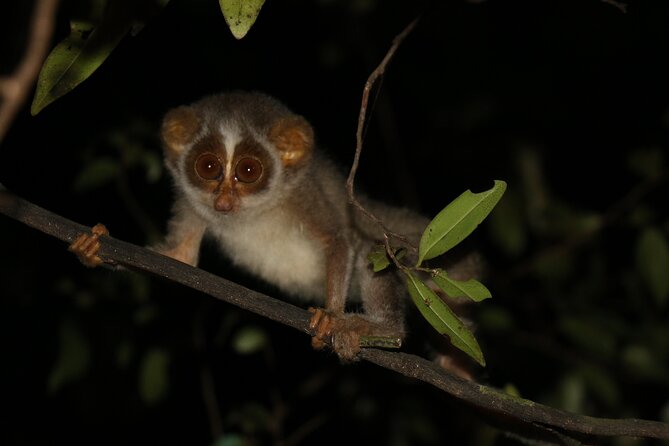
- Over 90% success goal for spotting lorises means you’re not just paying for a walk.
- Small group (max 8) helps you move quietly and gives the guides room to find animals.
- Headlamps and night-watching gear are provided, so you can focus on being in the moment.
- Conservation-first approach with Back of Beyond and habitat-supporting goals.
- Money-back guarantee if you don’t spot a loris takes some of the risk off the table.
- Weather can shift the odds, including rain and moonlight.
Why Pidurangala at night feels different from typical Sigiriya sightseeing
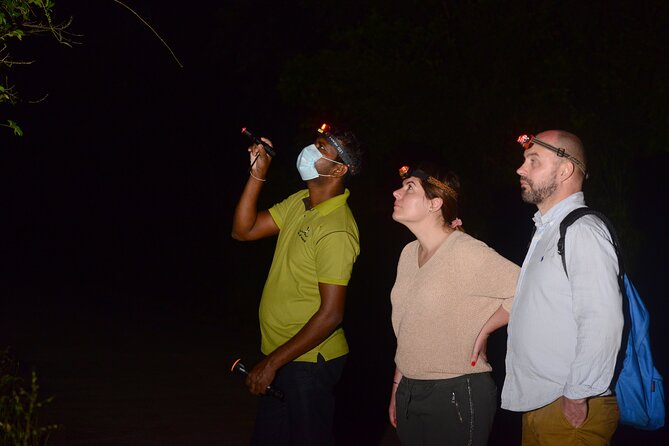
Sigiriya is famous for day views. Pidurangala, nearby, feels like a different world after dark. The big change is sound and attention: instead of crowds and viewpoints, you get crickets, owls, frogs, and that constant rustle of the jungle canopy. It’s the kind of setting where even a short hike becomes its own event because you’re watching for motion in the branches, not just walking through scenery.
This tour also puts you in the right mindset. You’re not doing a long trek or chasing a checkpoint photo. You’re going into the forest at active loris hours and letting your guides do the animal-finding work. That matters because lorises are nocturnal and elusive by nature. You’re basically borrowing expertise for the night, not just renting shoes and a headlamp.
I also like that the experience is built around respecting the animals and their habitat. You learn why the loris is hard to spot in the first place, and you get practical guidance on how to observe without pushing or disrupting.
You can also read our reviews of more tours and experiences in Sigiriya.

Price and value: why $64 for up to 2 can make sense
The price is $64 per group up to 2, which is worth analyzing in real-life terms. If you’re traveling solo, it can feel less like a budget activity and more like paying for a focused, guided conservation night search. If you’re two people, it becomes more reasonable per head because the guide effort, gear, and small-group setup are shared.
What you’re paying for isn’t just entry into the jungle at night. You’re paying for:
- A naturalist-led guide and an actual plan to locate lorises
- Gear provided for night viewing (not just a walking stick and hope)
- A high chance of success paired with a money-back guarantee if no loris is spotted
- The fact that a portion of the money supports conservation and habitat protection goals
Even the time matters. The experience is short enough that you’re not stuck dragging through the dark for hours. You get that focused window where lorises are most active, plus time for a proper briefing so you know what you’re looking for once the headlamps are on.
Starting at Rocko’s Vegetarian Cafe: briefing before the trail
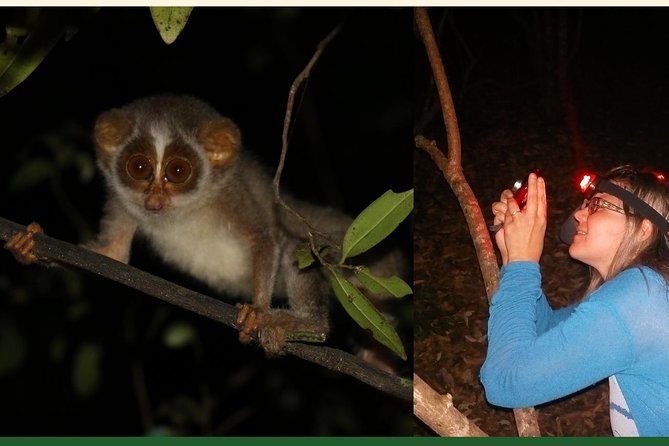
You start at ROCKO’S Vegetarian Cafe in Pidurangala. That’s an easy, practical meet-up point, and it also signals the tone of the outing: you’re not headed straight into darkness. There’s a setup step first.
From the way the experience is described, you should expect a short orientation about lorises and the kind of nighttime wildlife you may encounter. People also mention getting headlamps and learning what the guides are watching for before you step out. This is smart. If you walk into a dark forest without context, you tend to rush, wave light around, and miss the slow movements that give lorises away.
You’ll then head out with a guide (and often two guides in the field). The goal is to keep the group calm and controlled so your light and movement don’t spook animals or make the guides fight for visibility.
The night walk itself: how a 1.5-hour search really plays out
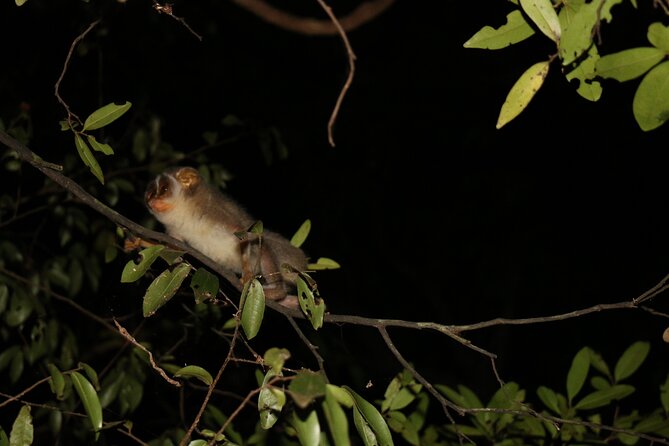
Expect a short, guided hike through jungle trails. This isn’t a fast hike. It’s a careful search. Your guides control the pace because lorises move slowly, they stay in trees, and they can be hidden even when they’re nearby.
A typical pattern looks like this:
- you walk slowly, often with pauses
- you scan branches and trunks while keeping your group quiet
- you follow the guide’s direction on where to focus light and when to stop
The experience lasts about 1.5 hours, which is long enough for real searching but short enough that most people can stay alert without getting cold or exhausted. In the field, you might also notice other night animals or signs—sleepy birds, insects, and sometimes nests—because the guides don’t just chase lorises. They understand the whole night ecosystem and share what’s happening as you go.
If you’re the kind of person who loves wildlife but hates “tourist safari” behavior, this is the sweet spot. The guides do the animal spotting, and you do the patient looking.
What you’re actually looking for: loris behavior in the canopy
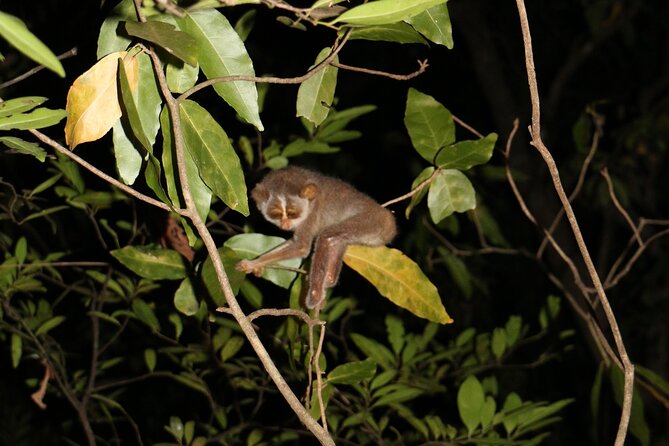
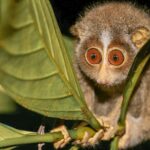
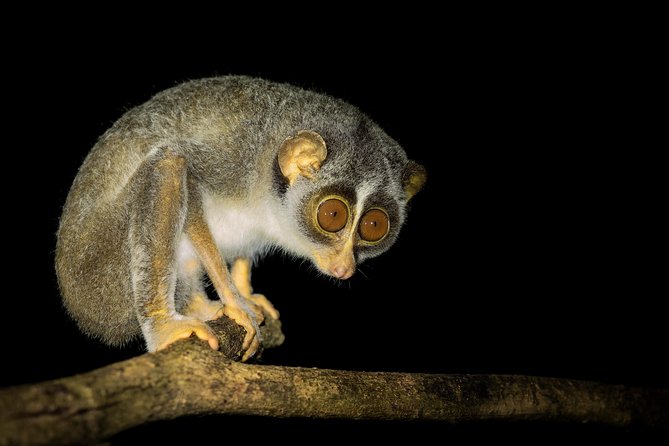
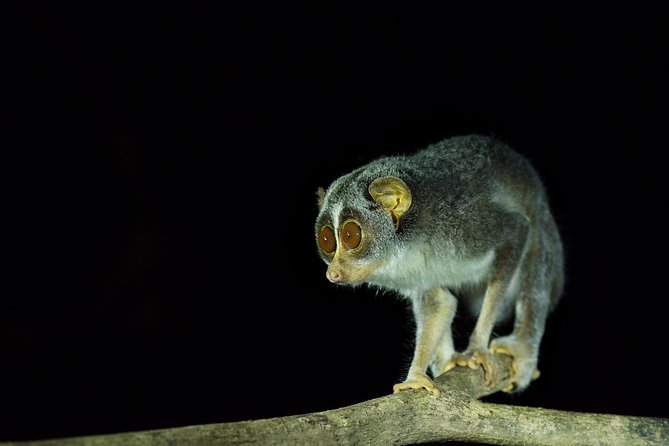
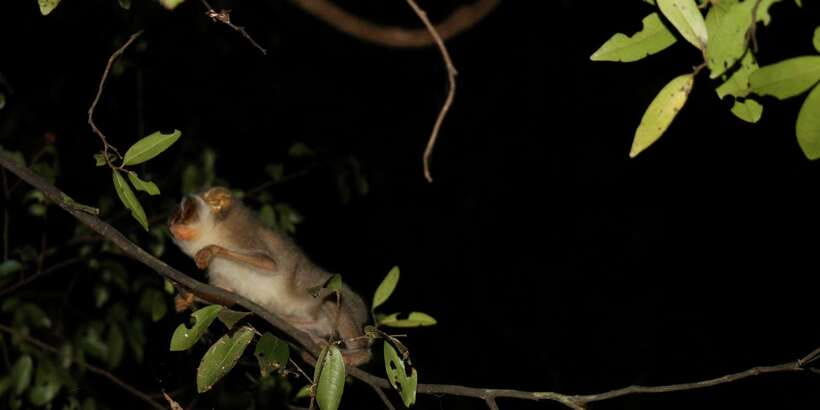
The loris is the star. It’s a small primate with big eyes, and it’s active at night. You’re likely to spot it:
- in a tree
- holding still or moving slowly
- foraging or shifting position among branches
Some people report very close sightings. Others see fewer lorises but still have strong moments because the experience is built around seeing an animal in its habitat, not just checking a box.
My practical advice for when you spot something:
- Stop moving. Don’t shuffle your feet or lean forward.
- Keep light steady and low. You want to help your eyes, not flood the scene.
- Watch the guide. If they pause, there’s a reason—often the loris is adjusting or about to move.
The big eye-catching moment is usually motion plus stillness. Lorises don’t behave like fast monkeys. They’re gentle, and their presence can feel almost unreal because you see something tiny and alive where darkness told you nothing was there.





Weather, full moon, and why the jungle changes the odds
Night wildlife watching isn’t one-size-fits-all, and your best planning tool is flexibility. Two factors show up clearly in real experiences: rain and moonlight.
- Rain: In wet conditions, lorises may hide deeper or stay tucked away. One group still managed an excellent result after rain and a delayed start caused by road issues. That’s encouraging, but it’s also a reminder that weather can shift where animals are willing to show.
- Full moon: Brighter nights can affect where lorises feel safe. With more light in the forest, they may retreat to darker spots where you’ll see them less clearly—or not as close as you hoped.
So, if you want the highest odds, go in prepared to accept that the forest sets the terms. Wear what you’re told, keep moving only when the guide says so, and don’t treat the night like a timed event you can win by trying harder.
More than lorises: other nocturnal finds you might notice
Even if lorises are the goal, the guides are tuned to nighttime life. People mention seeing things like:
- sleepy birds
- bioluminescent insects
- unique nests
- reptiles such as a kangaroo lizard
- a gecko
- even a mouse deer (adult and baby, in at least one experience)
You’re not guaranteed any of those extras. But if your brain lights up at the idea of an entire nighttime ecosystem, you’ll get more than just loris spotting. The guides tend to explain what you’re seeing and what those clues mean in terms of habitat and behavior.
And yes, the sky can be part of it too. Starry skies get mentioned when the night clears. In a place like this, seeing constellations above while you’re hearing the forest below is one of those small travel moments that sticks.
Ethics and conservation: what Back of Beyond is aiming for
This is where I think the experience earns its value. It’s not just about finding a rare animal and leaving. The guiding vibe is conservation-focused, and people specifically mention that the tour company is more of a conservation organization than a typical outdoor operator.
You also get signals that animal welfare matters:
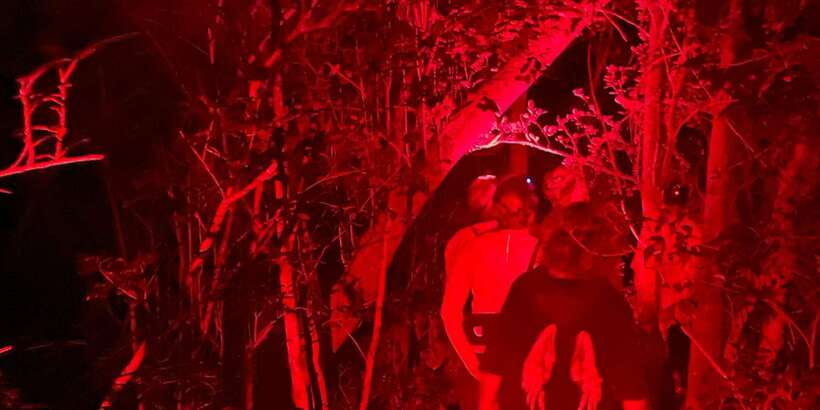
- the way the guides handle viewing (quiet, controlled movement)
- the focus on habitat and behavior, not harassment
- the idea that money helps protect lorises and their environment
The clearest reassurance is the money-back guarantee if you don’t spot a loris. That’s not just a marketing line—it aligns the company’s incentives with your goal. You go out expecting a real chance at seeing lorises, and if nature doesn’t cooperate, you’re not left feeling like you paid for a swing-and-miss.
Gear check: what to wear so you don’t suffer in the dark
The tour instructions are straightforward. Bring:
- long-sleeved shirt
- long pants
- closed-toe shoes
That’s not just for comfort. It helps you handle jungle conditions safely and reduces skin exposure while you’re moving at night. People also mention headlamps being provided, which is a big deal because it keeps your lighting controlled and reduces the chaos of strangers using whatever flashlights they brought.
If you’re tempted to go light on clothing because it’s warm, don’t. The jungle at night can feel cooler under tree cover, and you’ll be happier if you’re not constantly worrying about bugs, scratches, or discomfort.
Who this night hike suits best (and who might not love it)
This is a great fit for:
- wildlife lovers who like ethical watching
- people who enjoy listening and scanning rather than speed-walking
- anyone who wants a conservation-leaning experience near Sigiriya without the daytime crowds
- couples or small groups thanks to the max 8 participants size
You might want to rethink it if:
- you hate being in the dark (the walk is at night, after all)
- you only want guaranteed close-up animal photos
- you expect a long hiking day—this is short and focused, built around a search window
The tradeoff is simple: the shorter, quieter approach gives you a better chance at real sightings, but wildlife behavior still rules the outcome.
Should you book the Sigiriya loris night hike?
If your top goal is a nighttime wildlife experience that takes loris behavior seriously, I’d book it. The combination of small group size, naturalist-led guidance, and a high success goal with a money-back guarantee is a strong package for the cost.
Book it especially if you’re going to be near Sigiriya and you want something that feels like you stepped into the night world, not just a checklist of famous daytime sights. Go prepared for changing conditions, and bring patience. When the loris finally appears, it’s usually the kind of moment that makes the whole night feel worth it.
FAQ
Where does the hike start?
The meeting point is ROCKO’S Vegetarian Cafe in Pidurangala.
How long is the experience?
It lasts about 1.5 hours total, with the night hike/walk happening during that window.
What’s the cost?
The price is $64 per group up to 2.
What should I wear to the tour?
Wear long-sleeved shirts, long pants, and closed-toe shoes.
Is there an English guide?
Yes, the tour includes a live guide in English.
Can I cancel or change plans?
You can cancel up to 24 hours in advance for a full refund, and you can reserve now and pay later.