Sri Lanka can feel endless. This 12-day circuit makes it feel possible. You’ll move from ancient rock sites and Buddhist temples to elephant country, then down to beach time and Galle’s fort walls, with extra emphasis on village life and sunsets.
I especially like how the plan mixes big-ticket sights with small, hands-on moments. In Sigiriya you get countryside village experiences like a bullock cart ride and a traditional cooking session, not just photos at a viewpoint. I also like that you aren’t stuck only in temples or only in nature: Minneriya for elephants, Yala for safari, and Mirissa for whale watching gives you variety without feeling random.
One thing to consider: many stops list admission tickets not included, so you’ll want to budget extra on the spot. Also, tipping is expected for guides and drivers, so factor that into your final cost.
In This Review
- Key highlights worth planning for
- Why Negombo makes sense as your Sri Lanka starting point
- Value check: what’s included in the price, and what you’ll pay extra
- Day 1: Sigiriya rock fortress, Dambulla caves, and village life by afternoon
- Day 2: Polonnaruwa ruins, Pidurangala views, and Minneriya elephants
- Day 3: Spices, the Temple of the Sacred Tooth, and a Kandy tuk-tuk loop
- Day 4: Arthur’s Seat views, Peradeniya gardens, Ambuluwawa tower, and tea-country stops
- Day 5: Ella by scenic train, then Nine Arches Bridge
- Day 6: Little Adam’s Peak, Nil Diya Pokuna, and Ravana Ella Falls
- Day 7: Yala safari, Buduruwagala statues, Tissa Wewa, and Kataragama
- Day 8: Mirissa coast time, whale watching, and Coconut Tree Hill
- Day 9: A longer Coconut Tree Hill day for calmer exploring
- Day 10: Galle Lighthouse, Koggala lagoon, and Jungle Beach relaxation
- Day 11: Galle Dutch Fort walls and the Kosgoda sea turtle project
- Day 12: Colombo temples and seaside parks to close the loop
- Guide quality: what you should look for with Travel With Asa
- Who should book this Sri Lanka circuit (and who might want something else)
- Should you book 12 Days 11 Nights Nature Culture & Beauty Of Sri Lanka?
- FAQ
- Are pick-ups included for this Sri Lanka tour?
- Is this a private tour or will I share it with other people?
- What ticket format do I get?
- Are admission tickets included in the price?
- Are meals for the driver included?
- What are the available hours to book or start the experience?
Key highlights worth planning for
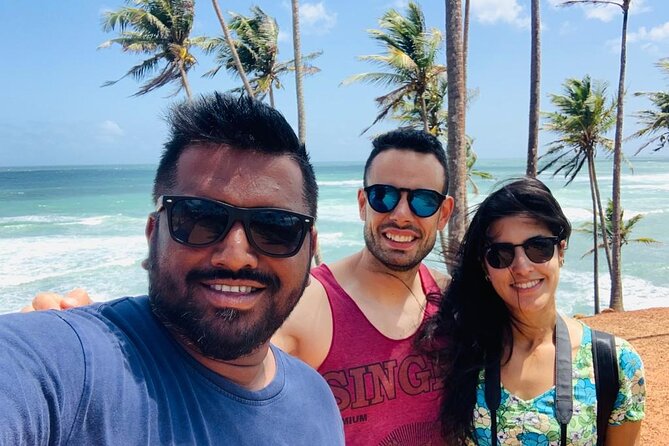
- Private tour for your group: you won’t share the schedule with strangers.
- Air-conditioned vehicle and passenger insurance: long days stay more comfortable and low-stress.
- Village life in Sigiriya: bullock cart, lake ride, chena cultivation, and cooking are built in.
- Elephant day at Minneriya: timed around the well-known elephant gathering at the reservoir.
- Hill country by rail toward Ella: the Hatton–Haputale stretch is flagged as the most scenic.
- South coast wind-down: Mirissa beaches plus whale watching, then Galle Fort and sea turtles.
Why Negombo makes sense as your Sri Lanka starting point
This tour is based out of Negombo, and that matters because it often helps you ease into the country with less friction on day one. You also get pickup offered, so you’re not left trying to figure out local transport while jet-lagged.
From there, the itinerary is a classic Sri Lanka loop: early culture and heritage in the north-central triangle, then tea country and hiking in the center, safari in the southeast, and beaches in the south and west. It’s a lot of ground, but the day structure is built around specific regions so you don’t keep repeating the same type of scenery.
You can also read our reviews of more tours and experiences in Negombo.

Value check: what’s included in the price, and what you’ll pay extra
At $1,480 for about 12 days (11 nights), the value comes from what’s already covered—not just the sightseeing list. Your tour includes an air-conditioned vehicle, fuel surcharge, parking fees, and passenger insurance, plus the driver’s meals and accommodation. You also get unlimited mileage per day, listed as not limited to a strict 8–5 schedule, which helps when routes shift or when you want to slow down.
What’s not included is where your “final total” can change. The big one: admission tickets are not included for many stops (Sigiriya, Polonnaruwa, most temple and park entries depending on the day, Nine Arches area stops, and several others). Tipping is also expected for guides, restaurants, and hotel lobby.
If you like tours where you show up and the logistics are handled—while still choosing how much time you want at each place—this format tends to work well. It’s also a good fit if you want to avoid constant transfers between taxis.
Day 1: Sigiriya rock fortress, Dambulla caves, and village life by afternoon
Your first day builds momentum with two heavyweight heritage stops and then a calmer, more human-scale experience.
Sigiriya is first: the ancient rock fortress and palace complex of King Kashyapa, with engineered stonework and mural walls. You’re given about 3 hours, but expect the climb and the viewing areas to take some attention—this is the kind of site where you’ll want a slower pace to really read the details.
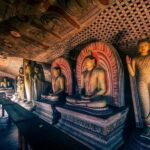
Next is Dambulla, the cave temple complex. It’s listed as free for this stop and includes time for exploring the caves over about 2 hours. Dambulla is the kind of place where the scale hits you once you’re inside—bright wall artwork and temple spaces carved into rock.
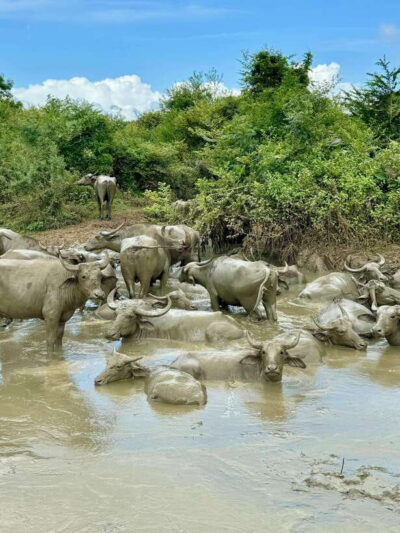
Then comes the standout “this isn’t just sightseeing” portion: a Sigiriya countryside village tour for about 3 hours. You’ll see paddy fields, ride in a bullock cart, take a traditional catamaran ride on a lake, visit chena cultivation, and get traditional cooking included. If you care about how people live outside the main tourist lanes, this is a great way to start.
Day 2: Polonnaruwa ruins, Pidurangala views, and Minneriya elephants
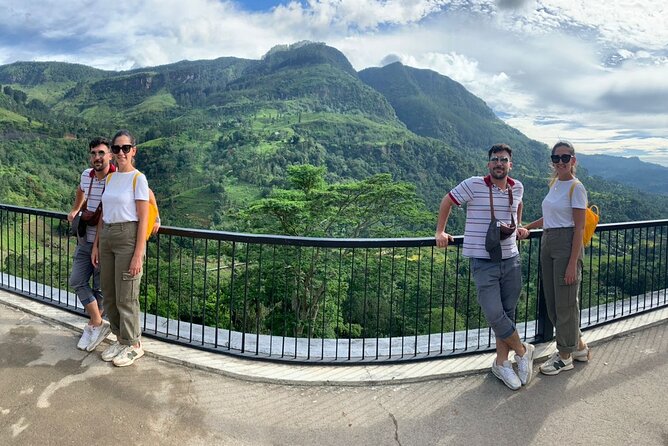
Day two keeps the heritage thread going, then trades it for wildlife drama.
At Polonnaruwa (about 3 hours), you’ll explore the second capital area after the destruction of Anuradhapura. It’s a ruins day, so it’s best when you’re in the mood for walking, reading signboards, and absorbing how different reigns shaped the city.
Then you head to Pidurangala Rock, a massive rock formation near Sigiriya. You get about 2 hours here, and it’s tied to the history around Sigiriya—so it feels like a companion stop rather than an unrelated viewpoint.
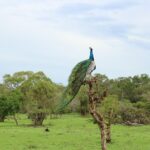
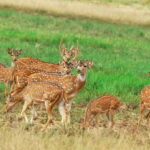
The day’s emotional payoff is Minneriya National Park for about 4 hours. This part is built around “the Gathering,” the seasonal elephant congregations near the Minneriya Reservoir. Even if you’ve seen elephants in other countries, Sri Lanka’s dry-season concentration can feel special because it’s not just one animal—it’s groups moving through the same water-and-grass rhythm.
Day 3: Spices, the Temple of the Sacred Tooth, and a Kandy tuk-tuk loop
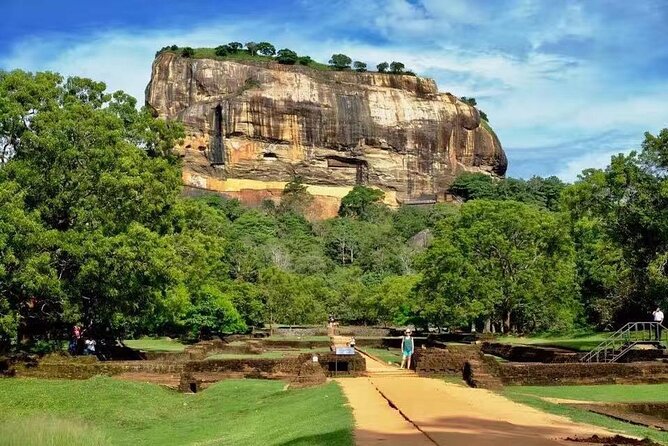
Day three is all about Kandy’s cultural center, with a mix of senses: smell, ritual, music, and city views.
First is Sirilak Spice & Herbal Garden (about 1 hour, listed as free). This is the sort of stop that helps Sri Lanka feel more practical. Spices like Ceylon cinnamon, pepper, cloves, cardamom, and more aren’t just names—you get a grounding for what you’ll see in markets later.
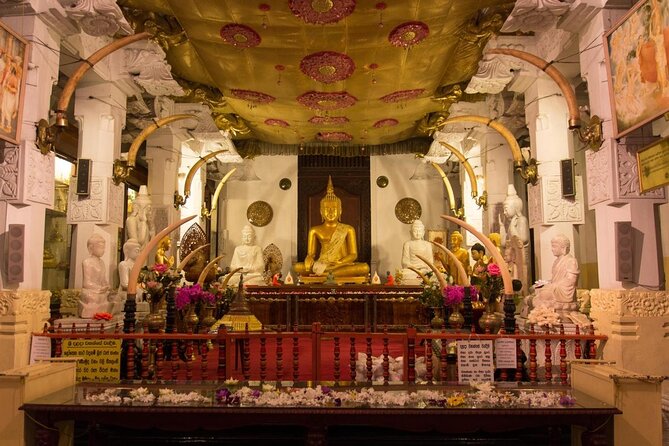
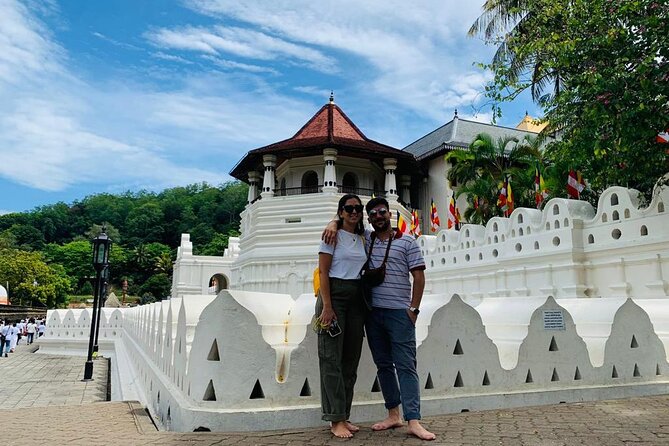
Then you go to the Temple of the Sacred Tooth Relic in Kandy (Sri Dalada Maligawa). It’s about 2 hours, and entry is listed as not included. This is one of those sites where you should plan for quiet focus. Give it time for the details instead of rushing the rooms.
After that you have Kandyan dance (Avanhala) for about 1 hour. It’s a direct window into local tradition from the Udarata region, which is a big reason people love this day—because you don’t just read about culture; you watch it.
You also end with Kandy Lake (about 1 hour) on a private tuk-tuk tour. The point isn’t only the photos. It’s the easy way of seeing the city from street level while your guide points out what matters.


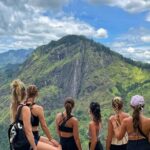
Day 4: Arthur’s Seat views, Peradeniya gardens, Ambuluwawa tower, and tea-country stops
This day is stacked with stops in a single arc: Kandy viewpoints, then botanical space, then big panoramas, then waterfall and tea-hill atmosphere.
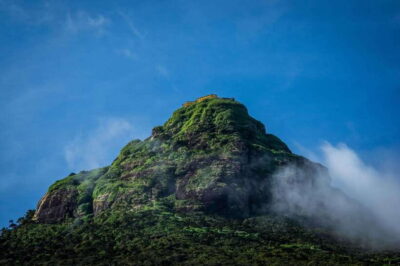
Start with Kandy View Point at Arthur’s Seat, about 30 minutes. It’s a short stop, but it’s built for a reason: a quick lift to see the city and the lake layout.
Then you go to the Royal Botanic Gardens in Peradeniya for about 2 hours. The area is famous for visitors from both locals and abroad, and it’s near the Mahaweli River. If you like gardens that feel organized rather than chaotic, this tends to be a comfortable break between cultural and hiking days.
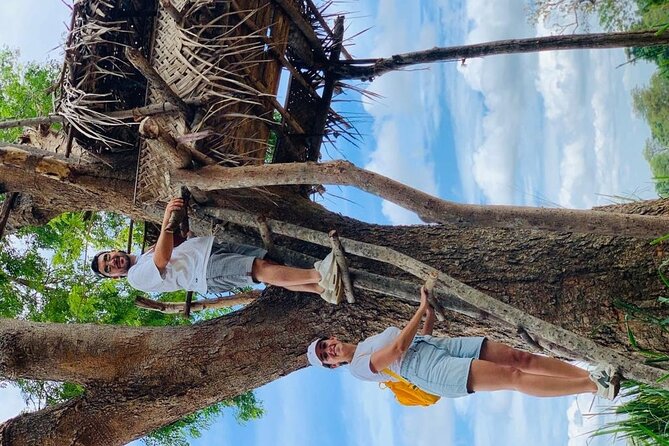
Next is Ambuluwawa Tower (about 2 hours). It’s noted for its climbing-to-views concept, which makes it a good “reset” stop when you want something active but not physically punishing.
Then it’s onward to Ramboda Waterfall (about 1 hour). You’ll get the waterfall stop framed by its height and position on the A5 route, so it’s also easy to understand where you are as you travel through the hills.
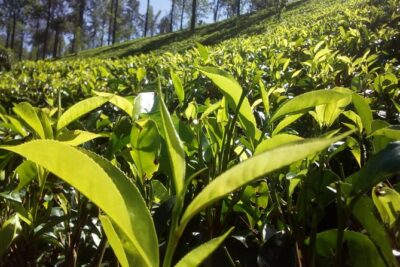
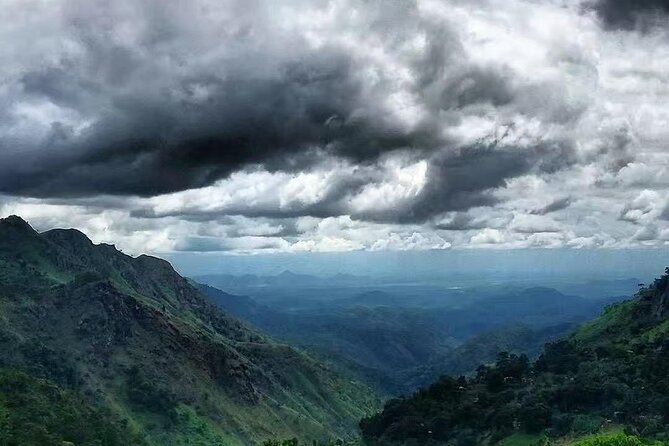
After that, the itinerary shifts into tea-country feel with Nuwara Eliya (about 1 hour, listed as free) and then Gregory Lake (about 1 hour). Nuwara Eliya is described as a tea-hill city with gardens like Hakgala nearby, plus a Hindu temple connection. Gregory Lake adds a calmer pause—another “walk and look” moment before you head into Ella.
Day 5: Ella by scenic train, then Nine Arches Bridge
This is one of the most practical days in the trip because the scenic payoff comes from the mode of transport itself.
You take a train from Colombo Fort Railway Station toward the hill country, reaching Nanu Oya and continuing to Ella. The itinerary flags the Hatton to Haputale stretch as the most scenic part, so this is the day to watch the windows and not just your phone.
Once in the Ella area, you visit the Nine Arches Bridge for about 2 hours. It’s described as a colonial-era viaduct, sometimes called the Bridge in the Sky. The nice thing is you’re not only looking at it once—you typically get enough time to move around and find angles.
If you’re worried about motion sickness on rail days, it’s smart to plan for it here since you’ll be in motion for a good chunk of the day. Otherwise, the train is a key reason Ella feels so different from the earlier parts of Sri Lanka.
Day 6: Little Adam’s Peak, Nil Diya Pokuna, and Ravana Ella Falls
Day six is built for views and legends, with a mix of short climbs and cave-site curiosity.
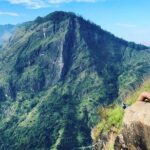
You start at Little Adam’s Peak (view point) in Ella (about 2 hours). Since Ella is described as a hiking hotspot, this stop is your “stretch your legs” moment with payoff at the top.
Next is Nil Diya Pokuna, an underwater pond inside a cave or tunnel complex (about 3 hours). The itinerary notes it lies around 80 meters deep inside a mountain cave and is connected to the King Ravana story. Even if you don’t know the legend before you arrive, the place itself feels like a cool change from open-air temples and viewpoints.
Then you visit Rakkhiththa Kanda Aranya Senasanaya (about 2 hours). It’s a Buddhist temple in the Uva region near a forest reserve, so it keeps the day tied to place and quiet atmosphere.
Finally, Ravana Ella Falls (about 30 minutes). It’s shorter, but it’s right-sized for an active day. You also get the Ravana cave story attached to the waterfall’s name.
Day 7: Yala safari, Buduruwagala statues, Tissa Wewa, and Kataragama
Day seven balances wildlife with culture, which is a good combo because you don’t want a safari to be your entire day.
At Yala National Park you get about 4 hours. It’s described as Sri Lanka’s most visited and second largest national park, with different ecosystems ranging from monsoon forest to wetlands and ocean-border areas. This is the day you go in with a flexible mindset—wild animals follow their own schedule.
After safari you stop at Buduruwagala Temple for 30 minutes. The complex is said to include seven statues dating back to the 10th century, with a gigantic Buddha statue. Short but memorable if you like ancient sculpture.
Then Tissa Wewa for about 30 minutes, a reservoir linked to irrigation and the ancient story of paddy lands and water supply in the Ruhuna region.
You end at Kataragama Temple (about 2 hours), a complex dedicated to both Buddhist and Hindu worship. It’s described as one of the few Sri Lanka sites venerated by both communities, including the guardian deity Kataragama deviyo and the Hindu war god Murugan. This is a great ending because it gives spiritual context to the region you’ve been traveling through.
Day 8: Mirissa coast time, whale watching, and Coconut Tree Hill
Day eight is your south-coast shift: fewer ruins, more sea air.
Start with Coconut Tree Hill in Mirissa (about 2 hours). It’s described as a lateritic headland near the ocean with a coconut plantation, so it’s both scenic and farm-connected rather than just a city viewpoint.
Next is Mirissa Beach for about 2 hours. It’s a straightforward beach stop—time to breathe, walk, and watch light change along the shore.
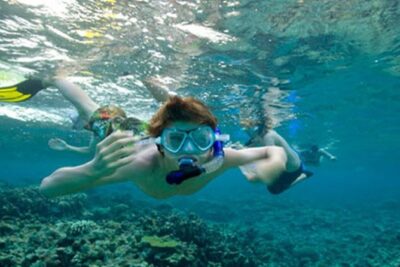
Then you go whale watching in Mirissa (about 3 hours). The itinerary frames it as a top activity, often with whales and dolphins spotted, including blue whales. If animals are one of your travel priorities, this is where the day earns its “main character” status.
Day 9: A longer Coconut Tree Hill day for calmer exploring
Day nine basically gives Coconut Tree Hill a second chance, and this time the time block is much longer: about 6 hours, listed as free.
The description notes it’s a private coconut estate with a nearby temple and a cliff overlook. That longer window is useful because you’re not forced to treat it like a quick photo stop. You can take your time with the overlook and slow down for the temple area.
A day like this also helps you recover. After safari and whale watching, it’s nice to have a day that doesn’t rush you from one “major stop” to the next.
Day 10: Galle Lighthouse, Koggala lagoon, and Jungle Beach relaxation
This day keeps the focus on the southwest coast, moving from heritage to calmer water settings to straight-up rest.
You start at Galle Fort Lighthouse for about 2 hours. It’s described as one of Sri Lanka’s oldest light stations and tied to the Pointe de Galle Light. Even if you’re not a lighthouse nerd, it’s a good way to understand Galle’s coastal edge.
Then it’s Koggala Lake (about 3 hours). Koggala is framed as a coastal town at the edge of a lagoon, bounded by a reef, and part of the Galle District area. This stop feels like a break from stone walls and busy streets.
Then you head to Jungle Beach for 3 hours. It’s described as a compact sandy beach with a tiki-style beach bar/seafood spot, plus a relaxing vibe. This is your simplest day on paper—and often the one you’ll remember most because nothing is demanding your attention.
Day 11: Galle Dutch Fort walls and the Kosgoda sea turtle project
Day eleven is split between strong architecture and conservation-focused animal time.
First is Galle Dutch Fort for about 4 hours. The fort is described as a car-free old city area founded by Portuguese colonists and expanded by the Dutch, with architecture mixing European influence and sea-wall defenses. Walking the fort streets gives you a sense of how the ocean shaped the city’s design.
Next is Kosgoda Sea Turtle Conservation Project for about 2 hours. The itinerary highlights that sea turtles help environmental balance and that the project addresses threats to survival. If you like tourism that has a clear conservation angle, this is a meaningful shift from “look only” sightseeing.
Day 12: Colombo temples and seaside parks to close the loop
Your last day brings you back to the city rhythm without ending the trip on a rushed note.
Start with Gangaramaya Buddhist Temple in Colombo (about 2 hours). It’s described as an important temple combining modern architecture and cultural essence, completed in the late 19th century, and located by Beira Lake.
Then you go to Galle Face Green (about 1 hour), a 5-hectare ocean-side urban park with a long promenade history. It’s perfect as a final “walk and watch” stop—something to do with your feet after all the travel days.
Finally, you visit Viharamahadevi Park (about 1 hour), described as the oldest and largest park in Colombo with British-era roots near the Town Hall. It’s a gentle, green finishing touch before you wrap up the Sri Lanka circuit.
Guide quality: what you should look for with Travel With Asa
This tour is run by Travel With Asa, and the strongest pattern in the provided feedback is how guides handle the human side of travel: safe driving, good pacing, and planning that can adjust.
Some guides named in past experiences include Asa, Shan, Asantha, and Prasa. The common thread: they were described as confident, friendly, and able to shape the trip so it stays enjoyable, not just packed. That matters on a tour like this where you’re switching settings every couple of days.
When you book, I’d ask your operator one simple question: how do you handle pace when someone wants more time at a site or needs a slower day? With a private format, you want that flexibility to be real—not just a marketing line.
Who should book this Sri Lanka circuit (and who might want something else)
This is a strong match if you want a one-pass overview of Sri Lanka’s major regions. You’re getting rock fortresses, cave temples, Kandy culture, tea-hill viewpoints, safaris, and a genuine south-coast beach block including Mirissa whale watching.
It also suits couples and groups who like a private driver and don’t want to constantly re-plan transportation. The plan is shaped around distinct regions, which helps the days feel coherent even when the driving adds up.
If you hate long days in a vehicle or you dislike paying extra for entry fees, this route might feel too “schedule-heavy.” Many core sights list tickets as not included, so your enjoyment will depend on how comfortable you are budgeting for on-site admissions.
Should you book 12 Days 11 Nights Nature Culture & Beauty Of Sri Lanka?
If your goal is to see a lot of Sri Lanka with a plan that balances heritage, wildlife, hills, and beaches, I think this is an easy yes. The best part is the mix: Sigiriya village life and Kandyan dance add texture, and the safari plus elephant day keep it from becoming only temple-and-bridge tourism.
Before you book, do two quick checks:
- Budget for admission tickets at the stops marked as not included.
- Plan for tipping expectations for guides and support.
If you’re good with that, you’ll end up with a trip that feels like Sri Lanka in multiple moods—ancient rock, elephant gathering, tea views, and a south-coast exhale that actually has time to land.
FAQ
Are pick-ups included for this Sri Lanka tour?
Yes. The tour indicates that pickup is offered.
Is this a private tour or will I share it with other people?
It’s listed as a private tour/activity, meaning only your group will participate.
What ticket format do I get?
The tour includes a mobile ticket.
Are admission tickets included in the price?
No. Many stops list admission tickets as not included, while a few are listed as free. You should expect to pay entry fees for several sites.
Are meals for the driver included?
Yes. Driver meals and accommodation are included.
What are the available hours to book or start the experience?
The listed opening hours are Monday through Sunday from 12:00 AM to 11:59 PM.