Weligama is where your surfing clicks. This private intermediate lesson pairs real coaching with Weligama’s consistent waves, so you can work on the skills you already have and clean up the parts that hold you back. It’s built for surfers who can already paddle out and catch rides, then want sharper wave selection, smoother take-offs, and more confident turns.
Two things I’d put at the top: you get one-to-one attention and you’re training the exact moves that matter for intermediate waves—paddling out beyond the breaking zone, priority rules and etiquette, and riding open wave faces instead of just surviving whitewater. You also get board and rash vest supplied, which means less hassle and more time focused on getting the right wave and making the turn.
One possible drawback: the lesson works only with suitable conditions. Weligama can be friendly and consistent, but you still need good weather (and decent surf) for the school to run it.
In This Review
- Key highlights if you care about results
- Weligama’s waves: why intermediates get better here
- The private lesson format: what you’re really paying for
- Where it starts at Ama Surf School in Weligama
- The first big skill: paddling out and reading the break
- Catching unbroken waves and taking off clean
- Riding open wave faces: left, right, and turn profiles
- The “whitewater to green wave” drill you should watch for
- Coaching you’ll recognize from the lineup
- Price and value: does $20 make sense for 1.5 hours?
- What you should do to get the most from the lesson
- Practicalities in Weligama: timing and weather reality
- Should you book this private intermediate lesson?
- FAQ
- How long is the private intermediate surfing lesson?
- Where does the lesson take place?
- What’s included?
- Is it a private lesson or shared with others?
- What level is this lesson for?
- What do I need for the lesson to run?
- What’s the cancellation window?
Key highlights if you care about results
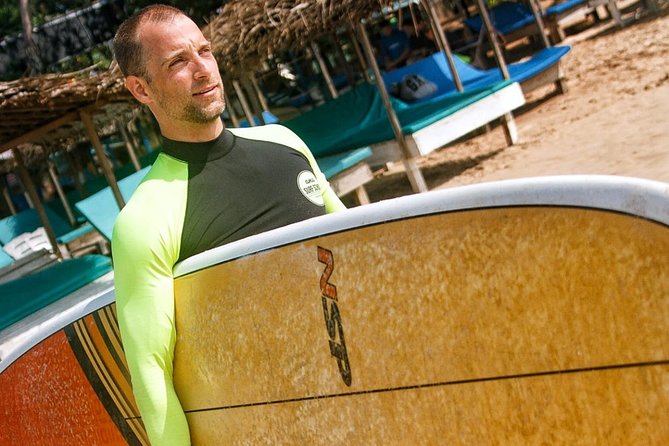
- Private intermediate coaching that targets your turns, positioning, and paddle-out skills
- Board + rash vest provided, so you can focus on technique
- Surf etiquette and priority system taught alongside the water work
- Practice on unbroken waves and open green wave faces, not just close-to-shore basics
- Left and right riding with specific turn profiles and carrying speed
- Instruction names you might hear in-house: Dinu, Rohan, Sammy, plus the team around Ama, including Sippu and Akila
Weligama’s waves: why intermediates get better here
Weligama is famous for being a surf training ground, and the intermediate lesson makes that idea practical. The waves here are often steady enough that you can repeat the same skill without getting totally reset by bad timing. That repetition matters when you’re trying to polish your positioning and get consistent take-offs.
The coaching focus is also well matched to Weligama’s setup. You’re not just asked to catch anything that comes along. You work on the sequence: paddling out beyond the breaking waves, understanding where you should be, then catching unbroken waves and riding open faces. In other words, you’re training the parts that separate an okay surf session from a session where you actually improve.
And you’re doing it in a “nice day at the beach” kind of setting, not a cold, distant training facility. The goal is simple: more quality rides in the same amount of time, with feedback that helps you change what you do next.
You can also read our reviews of more tours and experiences in Galle.

The private lesson format: what you’re really paying for
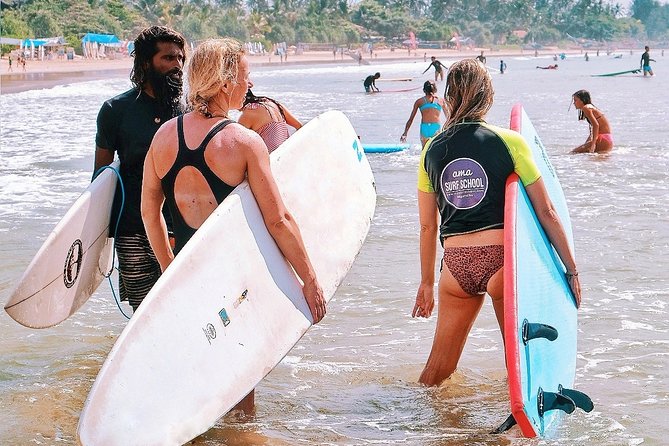
The headline is Private 1.5-hour surfing lesson for intermediate surfers, and for $20 that’s a pretty clear value proposition. You’re not paying for a big group lesson where you become background noise. You’re paying for an instructor to watch your setup, call out what’s wrong, and help you adjust in real time.
You also get the equipment included: a surfboard and a rash vest. That’s more than convenience. When equipment is handled for you, you spend less energy fiddling with gear and more time on the actual skill chain: positioning, take-off timing, and turning.
The lesson is built around the kind of intermediate problems that show up fast:
- You’re paddling, but you’re too shallow or too far inside.
- You can pop up on whitewater, but you miss the clean take-off on a green wave.
- You can ride, but your turns stall or lose speed.
- You don’t feel fully confident paddling into bigger sets.
This program is designed to hit those gaps directly, with instruction that covers the priority system and surf etiquette too. That may not sound like “fun,” but it matters. If you understand who has priority and how to avoid the chaotic scramble at the peak, you’ll get calmer rides and fewer near-misses.
Where it starts at Ama Surf School in Weligama
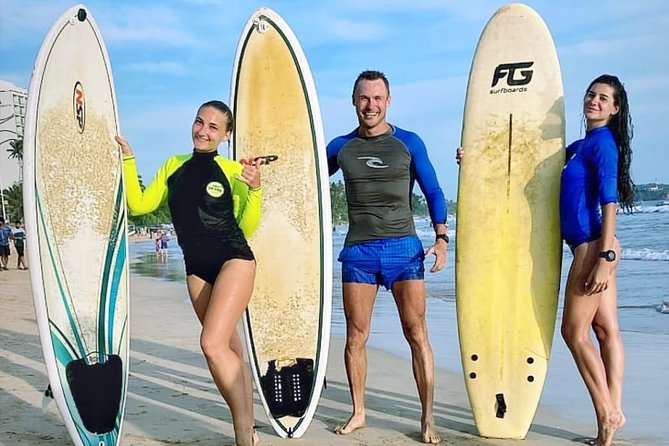
Your meeting point is Ama Surf School, Weligama By Pass Rd, Weligama 81700. The activity ends back at the meeting point, so you’re not dealing with a weird drop-off and a scramble to get back.
Opening hours run daily from 7:00 AM to 5:00 PM. That helps if you’re planning a day around other Galle-area sights. And since it’s near public transportation, you’re less stuck if you’re not hiring a driver for every hop.
You’ll use a mobile ticket, and it’s a private activity, meaning only your group participates. That privacy usually shows up in the coaching style: fewer distractions, more individual adjustments, and less waiting your turn.
The first big skill: paddling out and reading the break
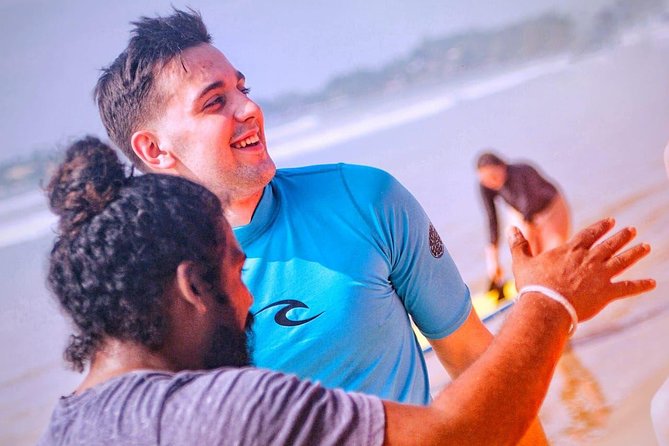
Before you ever stand up, the lesson emphasizes how to get out beyond the breaking waves. That’s a core intermediate step. You can’t practice green-wave take-offs if you’re stuck fighting the whitewater zone or paddling with the wrong angle.
You also work on positioning and wave selection. The goal isn’t just to chase waves. It’s to place yourself so you’re catching the right part of the set. That includes learning what to look for and how to choose your next attempt based on what’s actually arriving, not what you hoped would show up.
Then comes surf etiquette and the priority system. This is one of those “silent game changers.” When you understand the priority rules, you stop thinking only about your board. You start thinking about the whole lineup flow. That creates space for clean attempts and helps you avoid the peak chaos that can ruin a session.
In short: this lesson tries to fix the invisible stuff that quietly drains good surfers. If you want faster improvement, this is where you’ll feel it.
Catching unbroken waves and taking off clean
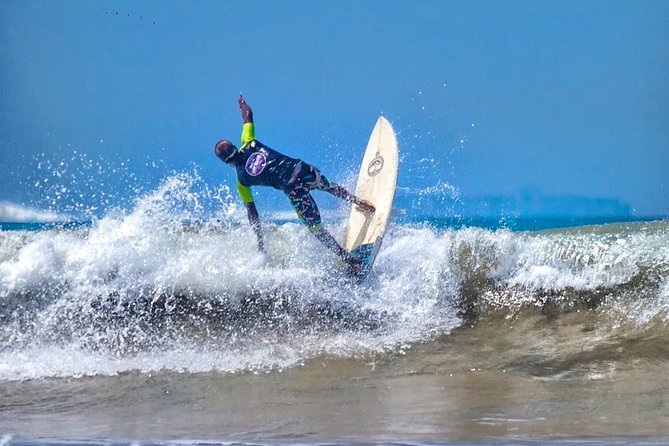
Once you’re out where you need to be, the lesson shifts to catching and taking off on unbroken waves. That phrase matters. Intermediate surfing is often about clean commitment: you’re trying to ride the wave face while it’s still forming, instead of dropping in too late and getting stuck in the messy transition.
You’ll practice take-off timing that matches the wave’s shape—especially as conditions shift from whitewater into more usable green face. The training includes learning how to position and be confident paddling into and taking off on bigger waves, which is where many intermediate surfers get stuck: they can ride, but they hesitate at the exact moment that decides whether the ride is good.
If you’re used to surfing “near the chaos,” this part will help you move up a level. You start catching rides that actually let you turn and maintain flow, instead of rides that force you to survive.



Riding open wave faces: left, right, and turn profiles
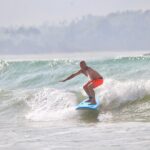
This intermediate lesson isn’t just about standing up. It’s about staying on an open wave face long enough to do something with it.
You’ll learn how to ride left or right on the open face, which is huge if you’ve been strong on one direction and weaker on the other. Many surfers plateau because they keep picking the easiest side. A coach pushing both directions helps you build symmetry and control.
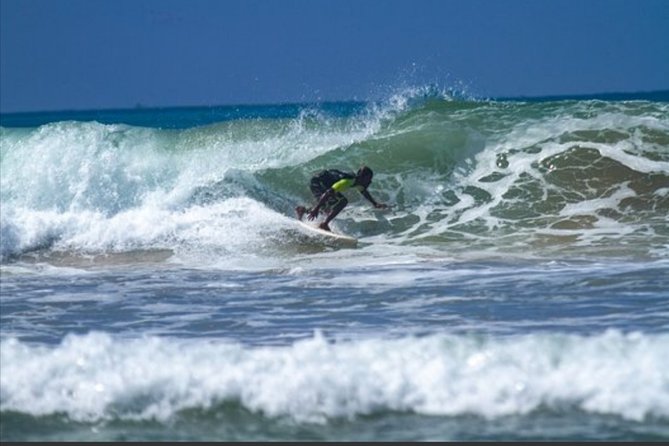
Then you work on wave positioning, turn profiles, and carrying speed through maneuvers. That’s the stuff that makes turns look intentional rather than accidental. Carrying speed is especially important in Weligama-type conditions, because if you bleed speed after the turn, the wave stops being your friend fast.
You’re basically training three things at once:
1) where you are on the wave,
2) how you set up the turn,
3) how you move so the board keeps speed.
When you get those linked, your surfing starts to feel more like a sequence and less like a series of frantic recoveries.
The “whitewater to green wave” drill you should watch for
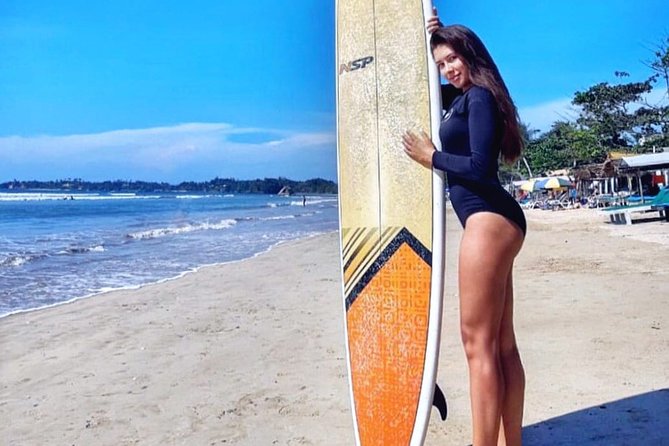
A standout detail in the lesson description is the idea of a whitewater take-off turning into a green wave as it travels down the lagoon. Even if you don’t fully visualize it before you go, it’s a smart concept for intermediate surfers.
Why? Because it teaches you to bridge two worlds:
- You learn to start in manageable whitewater conditions.
- Then you transition into the part of the ride that becomes truly rideable green face.
That transition is where confidence is won. It also trains timing and positioning so you can catch the wave at the right moment, instead of popping up too early, too late, or in the wrong spot.
And because you’re working on waves that are consistent, you can repeat the setup and feel the cause-and-effect. That’s how intermediate improvements happen quickly. Not by one lucky ride, but by several rides where your decisions get better.
Coaching you’ll recognize from the lineup
The quality signals here are strong in the kind of direct, human ways you want in an instructor. The coaching team includes instructors named Dinu and Rohan, and there are mentions of Sammy as a trusted teacher for kids. That last point matters even if you’re an adult: it suggests the school emphasizes safety and clear instruction, not just “go catch waves and good luck.”
There are also repeated mentions of Ama and the team being professional, friendly, and generous, with Sippu and Akila called out for kindness and good teaching. That kind of staff culture matters because intermediate surfers can get frustrated when they feel stuck. A coach who stays in a good mood and keeps the feedback clear helps you keep trying the right thing.
So if you care about learning without chaos, this school’s vibe seems aligned with that.
Price and value: does $20 make sense for 1.5 hours?
At about $20 for 1 hour 15 minutes, this lesson has a value advantage that’s hard to ignore. Even without doing fancy math, the structure is what you want for the price:
- Private coaching rather than a packed class
- Equipment included (board and rash vest)
- A lesson plan that targets a list of intermediate upgrades, from paddle-out technique to turning and carrying speed
The only time value can fade is if the conditions are poor and the session can’t happen as scheduled. Since the experience requires good weather, you should treat this like a surf session that depends on nature, not a guaranteed “always on” activity.
But when conditions cooperate, you’re paying for focused time in the water, not a long logistics buffer.
What you should do to get the most from the lesson
This is the part you can control. To make the most of the 1.5 hours, come in with a clear idea of what you want improved. The lesson description makes it easy: focus on the skills you want to hone, from turns to positioning and paddling out.
If you’re struggling with paddling out and line selection, speak up. If your turns lose speed, say that too. Intermediate coaching works best when your instructor isn’t guessing which problem to fix first.
Also, let the etiquette part matter. The priority system and surf etiquette aren’t filler. If you follow the guidance, you’ll spend less time negotiating the lineup and more time practicing the exact skills the lesson is designed to polish.
Finally, don’t chase quantity at the expense of quality. The program is set up for repeat practice of key skills like take-off on unbroken waves and riding open faces. That’s how you walk away feeling you leveled up, not just that you got wet.
Practicalities in Weligama: timing and weather reality
This experience is tied to weather. If surf and conditions aren’t suitable, it can be canceled due to poor weather, and you’ll be offered a different date or a full refund.
That means planning with a little flexibility helps. Weligama can be a great surf spot, but ocean conditions move around. If you’re in town for multiple days, you’re in a better position to match the lesson to the best surf window.
The school’s day runs from morning to late afternoon, which gives you some scheduling room. Still, think of it as “watch the forecast, then lock the lesson when conditions look right.”
Should you book this private intermediate lesson?
Book it if you’re already comfortable catching waves in Weligama-style conditions and you want a coach to fix the intermediate stuff: paddling out beyond the break, priority and wave selection, clean green-wave take-offs, riding open faces both directions, and turning with speed.
Skip it or consider something else if you’re not yet confident on basic take-offs, because the lesson is explicitly for intermediate wave work. Also, if you hate weather-dependent plans, keep one backup day in your schedule. Surf is surf.
For most intermediate surfers in the Galle/Weligama area, this looks like a strong deal: private time, gear handled for you, and a lesson plan built around the exact skills that help you progress fast.
FAQ
How long is the private intermediate surfing lesson?
The lesson is about 1 hour 15 minutes.
Where does the lesson take place?
The lesson is at Weligama Beach in the Galle area, with the meeting point at Ama Surf School on Weligama By Pass Rd.
What’s included?
You get a supplied surf board and a rash vest, plus one-to-one instruction.
Is it a private lesson or shared with others?
It’s private. Only your group participates.
What level is this lesson for?
It’s for intermediate surfers.
What do I need for the lesson to run?
The experience requires good weather, and it may be canceled if conditions are poor.
What’s the cancellation window?
You can cancel for a full refund up to 24 hours before the experience starts. If you cancel less than 24 hours before, the amount paid is not refunded.