History gets easier when you walk the walls.
This Galle Fort loop is led by local guide Madawa Galagedara, and what I like most is his mix of bastion-top history with day-to-day Sri Lanka context you can actually use, plus he keeps the tone relaxed so you can ask questions as you go. The main drawback to plan for is the heat on the ramparts, so bring your sun gear and water.
You’ll start at the Galle Fort clock tower, move through signature Dutch-era landmarks, and finish near Pedlar’s Corner Cafe in about 1.5 hours. It’s also good value for $15 because your guide covers the key sights and includes entrance where needed, so you’re not paying again at each stop.
In This Review
- Key things that make this walk worth it
- Why Galle Fort works best on foot
- Meeting under the clock tower and getting oriented fast
- Moon Bastion, then Star and Sun Bastions: the fort’s high ground
- Ramparts walk: iconic hotels, church, and a cinnamon storage story
- Court Square to the Dutch hospital: how the fort served people
- Lighthouse and Flag Rock Bastion: the coastal edge
- Lighthouse Street, the drainage detail, and Pedlar’s Street
- Price, timing, and value of a $15 guided loop
- Comfort notes that matter on the ramparts
- Who should book this Galle Fort walk
- Should you book it
- FAQ
- Where is the meeting point for the Galle Fort walking tour?
- How long is the tour?
- What does the tour cost?
- What’s included in the price?
- Are refreshments included?
- Is the tour guide available in English?
- What should I bring?
- Is the tour suitable for everyone?
- What is the cancellation policy?
Key things that make this walk worth it
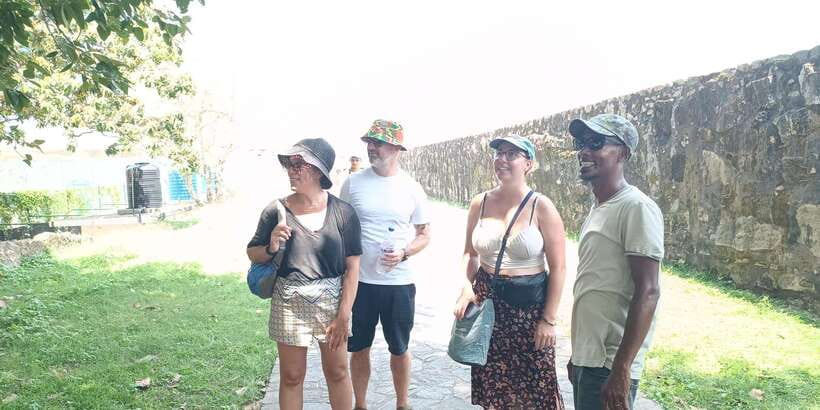
- High-wall views at Moon, Star, and Sun Bastions for fast context and photo angles
- Dutch-era landmarks tied to stories, not just dates
- A guide who answers your questions about Galle and wider Sri Lanka
- Practical pacing that leaves time to look closely at details like drainage features
- Multiple “photo stops” without turning the walk into a photo sprint
Why Galle Fort works best on foot
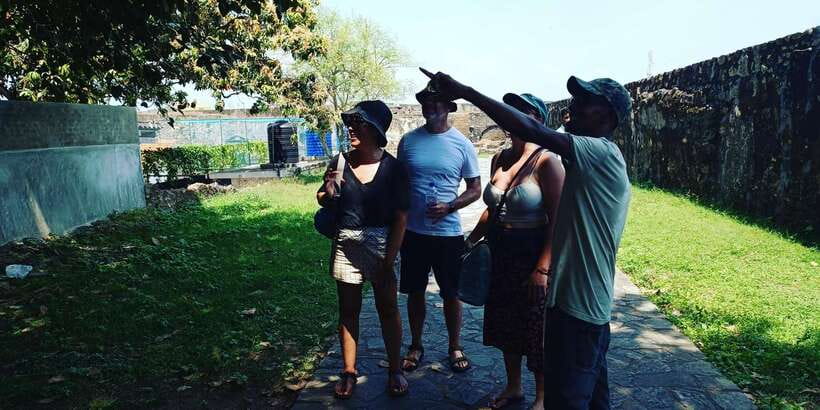
Galle Fort feels like two places at once. Up on the ramparts you read the coast like a map, then down in the streets you see how colonial walls now sit beside everyday life.
A guided walk helps because you’re not just looking at big structures. You’re learning how the fort’s design and the Dutch buildings fit together, and why details you’d normally skip end up making sense once someone points them out.
You can also read our reviews of more tours and experiences in Galle.


Meeting under the clock tower and getting oriented fast
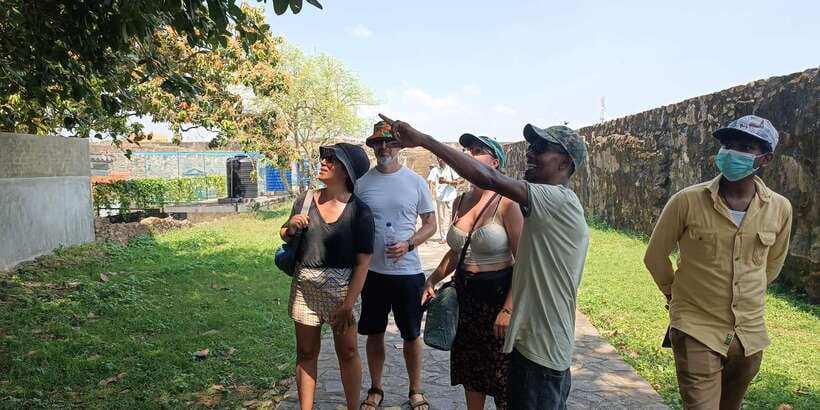
Meet under the Galle Fort clock tower—specifically when you enter the fort from the new entrance, look to the right for the clock tower. This is one of those meeting points that’s hard to miss, and it cuts down the usual stress of finding a starting spot in a busy heritage area.
The tour is in English with a live guide, and the pace is meant to be easy enough that you can listen, look around, and still move steadily along the perimeter. If you’re the type who likes to ask follow-up questions, this structure works well because you’re not trapped in a museum-style one-and-done explanation.
Moon Bastion, then Star and Sun Bastions: the fort’s high ground
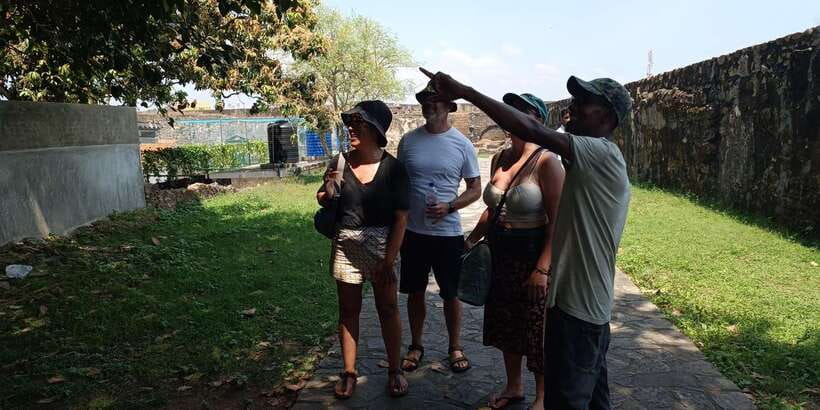
The tour starts at the higher elevation of Galle Fort at Moon Bastion, where the guide sets the stage for what you’re about to see. This is the point where the fort stops being a collection of buildings and starts feeling like a system: defense, sight lines, and how the walls shape movement.
From there, you visit the Star Bastion and Sun Bastion. Expect the guide to connect these bastions to how the fort operated and what makes each one distinct in the bigger layout. If you time your visit well, this section is also where the rampart views make the history feel real—coastline and sea air included.
One practical note: bastions mean stairs and exposed walkway. If you’re sensitive to heat, take slow breaths and use the shaded spots when they appear.
Ramparts walk: iconic hotels, church, and a cinnamon storage story
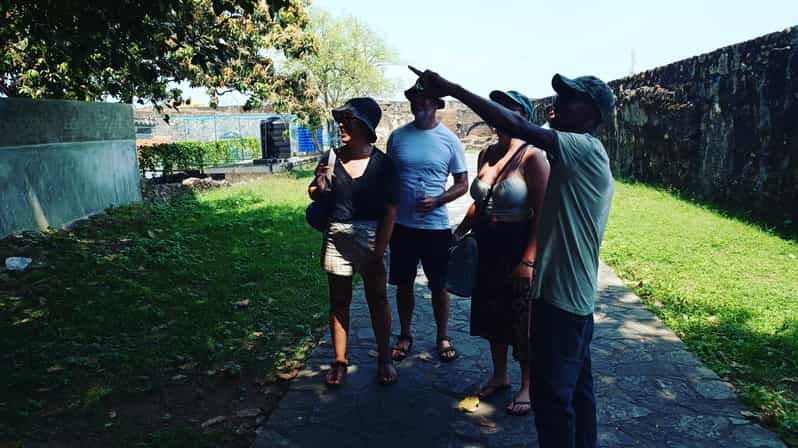
After the high points, you move along the ramparts and the surrounding streets, with stops that anchor the Dutch period in recognizable landmarks.
You’ll see the Amanhgalla hotel from the ramparts area, plus the Dutch Reformed Church. Even if you’re not there for architecture, these stops help you understand how the fort wasn’t only about defense—it also held institutions and community life.
Then you’ll head to the Dutch cinnamon storage building. This kind of stop is why a guided tour beats a self-walk: cinnamon isn’t just a commodity in a textbook. A good guide connects it to why coastal forts were economically important, which changes how you read the built environment you’re standing in.
If you care about photos, this section offers good angles. If you hate standing in the sun while everyone looks at one wall, keep your water handy and pace yourself.
Court Square to the Dutch hospital: how the fort served people
Next comes Court Square, where the tour shifts from landmark viewing to how the fort worked day to day. Square spaces are usually where you learn how power, planning, and public life connect—so it’s a smart mid-walk anchor.
From there, you move toward the Dutch hospital and learn the history of that area along with the other sites you’ve just visited. The value here is context: you begin to see the fort as a living place shaped by Dutch control, not a frozen stage set.
This part tends to work well for question-driven visitors. If you’ve been wondering how colonial systems affected ordinary life in Sri Lanka, this is where the guide’s broader Sri Lanka knowledge becomes useful.





Lighthouse and Flag Rock Bastion: the coastal edge
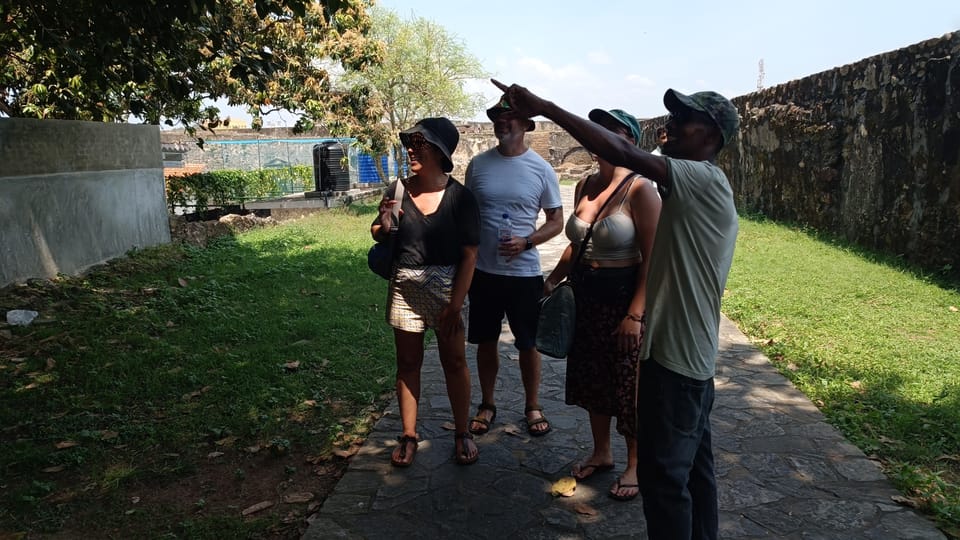
The walk continues to the lighthouse and Flag Rock Bastion. This is where the fort’s coastal logic clicks. You’re no longer imagining what ships, weather, and navigation required—you can stand there and look at how the coastline meets the fort walls.
The guide’s stories here tend to feel practical. You’ll hear how these coastal points fit into the fort’s overall role, and you’ll likely get extra context that ties past events to the present.
As a timing tip: if you’re planning your day around photos and cooler air, evening or early morning slots often feel better on the ramparts. One highlight people described is the atmosphere when the heat cools down.
Lighthouse Street, the drainage detail, and Pedlar’s Street
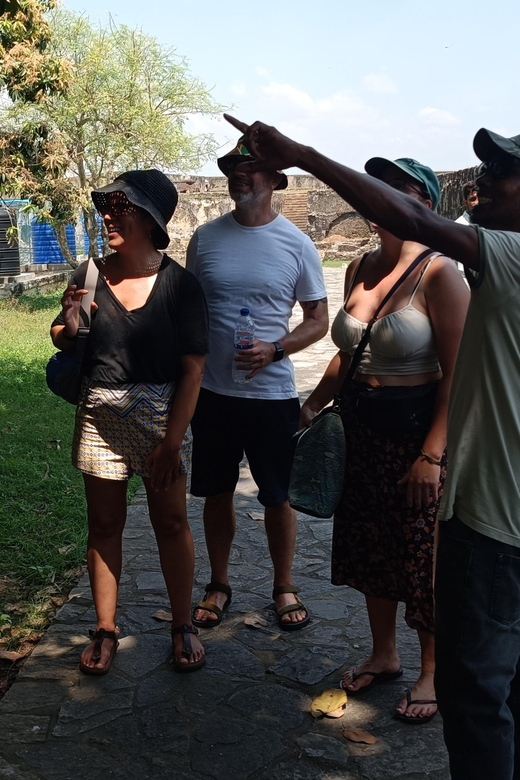
From the lighthouse area, you’ll move along Lighthouse Street, where the tour includes the Ian drainage system. A drainage system sounds like a technical footnote until someone explains why it matters in a coastal fort. Expect the guide to connect water management to daily life and the practical realities of building and maintaining structures in a humid, rainy environment.
Then you’ll head to Pedlar’s Street. This section shifts the mood from military perimeter to street-level fort living. It’s also a nice way to end, because you’re seeing the fort not just from above, but through the actual routes people walk.
The tour finishes at the end of Pedlar’s Street near Pedlar’s Corner Cafe, which makes it easy to continue your day without hunting for a new starting point.
Price, timing, and value of a $15 guided loop
At $15 per person for about 1.5 hours, this is the kind of tour that makes sense if you want history without turning the whole morning or afternoon into a chore. You’re paying for a local guide who connects the sites, plus the inclusion of entrance free stops means you’re not hit with surprise add-ons for access to key points.
Is it expensive? No. Is it “just a walk”? Also no. The guide’s strength is the linking—bastions to Dutch buildings, Dutch buildings to Sri Lanka context, and the fort to how people understand the country today.
What you should watch for is comfort value. The fort’s ramparts can feel sun-heavy, and the tour is outdoors. If you show up without water or sun protection, you’ll feel the cost in your legs and your mood, not in your wallet.
Comfort notes that matter on the ramparts
Bring a hat, sunscreen, and water. This isn’t generic advice; the walk includes exposed areas on the walls and bastions where shade doesn’t always appear on schedule.
Shoes also matter. You’ll be walking on uneven historic surfaces in and around the fort. Choose something with grip.
Also note the age limitation: it’s not suitable for people over 95 years. If you’re close to that threshold or have mobility limits, ask your tour seller what pace and terrain you should expect before booking.
Finally, group size can affect how calm the experience feels. One person flagged group size as a minor negative. If you prefer quiet and personal attention, consider choosing a time slot that’s less crowded.
Who should book this Galle Fort walk
Book it if you want:
- A smart, story-led tour that helps you connect what you see to Sri Lanka today
- A question-friendly guide who can explain more than just fort facts
- A solid introduction to Galle Fort’s Dutch-era sites, without spending all day inside
Skip it if:
- You hate walking outdoors in sun and exposed areas
- You’re looking only for quick photo spots with minimal talking
- You need a fully accessible route and want to avoid stairs and uneven ground (terrain is not described as tailored)
Should you book it
If you like your travel with context—and you want your Galle Fort visit to feel more meaningful than a self-guided wander—this is an easy yes. The time length is short enough to fit any schedule, and the guide’s strength is making the fort’s details understandable, including broader Sri Lanka stories you can carry with you after you leave the walls.
If you’re sensitive to heat, book a time when the air cools down, and come prepared. Do that, and you’ll likely leave with a much clearer picture of why Galle Fort looks the way it does.
FAQ
Where is the meeting point for the Galle Fort walking tour?
You meet under the Galle Fort clock tower. When you enter Galle Fort from the new entrance, the clock tower is on the right side.
How long is the tour?
The duration is 1.5 hours.
What does the tour cost?
The price is $15 per person.
What’s included in the price?
Included: a professional tour guide and all entrance free.
Are refreshments included?
No. Refreshments are not included.
Is the tour guide available in English?
Yes. The live tour guide speaks English.
What should I bring?
Bring a hat, sunscreen, and water.
Is the tour suitable for everyone?
It is not suitable for people over 95 years.
What is the cancellation policy?
Free cancellation is available up to 24 hours in advance for a full refund.