First waves feel like chaos. This private beginner surf lesson for couples turns that chaos into clear steps and real wave time. You start with surf safety on land, then work on footwork, stance, and core balance before you ever paddle out.
The best part is how the teaching stays practical: you practice the basics you actually need (paddling technique, turns, pop-up/jump-up), then you finish with a run at catching waves. One thing to keep in mind: this lesson is weather-dependent, and the early start (6:30am) means you’ll want to be ready to move fast.
In This Review
- Key highlights worth your attention
- Weligama Beach: a smart place to start surfing
- Private couple lesson for $34: what that value really means
- The 6:30am start: why timing is part of learning
- Land training first: safety, stance, and the drills that prevent wipeouts
- Foam board first, fiberglass later: the board strategy that keeps you upright
- Paddling technique and turns: the skill people skip (and then regret)
- Catching unbroken waves: how the lesson builds confidence
- Instructors at Ama Surf School: patience is the real upgrade
- What to bring (and how to avoid the common beginner problems)
- Who this surf lesson suits best
- Should you book this private beginner surf lesson?
- FAQ
- Where does the private surf lesson start?
- What time does the lesson begin?
- How long is the session?
- Is this a private lesson or shared group?
- What surf boards are used for beginners?
- Do you switch to different boards during the lesson?
- What skills are covered during the lesson?
- What if the weather is poor?
- What is the cancellation policy?
Key highlights worth your attention
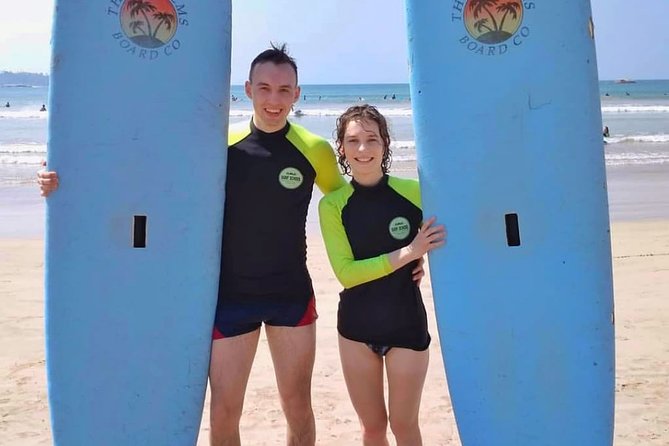
- Surf safety before you hit the water: land-based rules and technique first, so you get out there smarter.
- Private, couple-focused coaching: one group only, so you’re not sharing attention with strangers.
- From pop-up drills to riding unbroken waves: the lesson targets the full chain, not random standing practice.
- Foam board learning, fiberglass later: beginners start on softer boards, with the option to move up as you progress.
- Instructor styles that blend patience and professionalism: names like Rati, Sammy, Santa, Seneth, and Sippu come up again and again.
- Weligama as a beginner-friendly starting point: you’re learning where conditions are well suited for first rides.
Weligama Beach: a smart place to start surfing
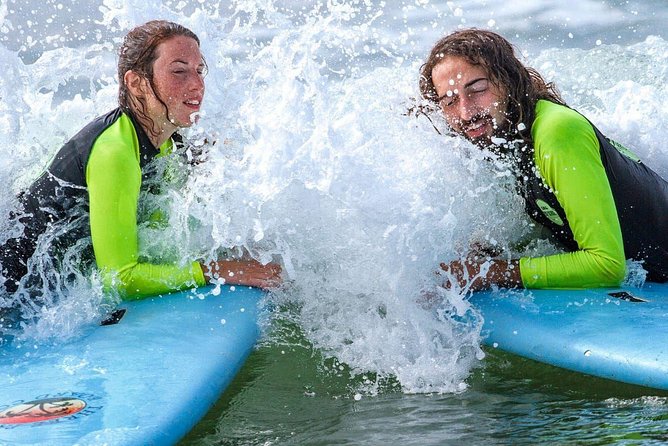
If you’re brand-new to surf, location matters more than people think. Weligama (and the wider south coast area) is often where beginners start because you can build skills without immediately getting thrown into the most punishing conditions. The bay format helps you focus on the fundamentals: balance on the board, paddling timing, and catching a wave cleanly.
In this lesson, the location is Weligama Beach, and the session is designed to move from land basics to ocean practice in one smooth arc. That matters because surf learning has a “memory problem”: if you wait days to connect what you practiced on land with what happens in the water, your brain scrambles the lesson. Here, you go from drills to wave attempts in the same window.
You can also read our reviews of more tours and experiences in Galle.



Private couple lesson for $34: what that value really means
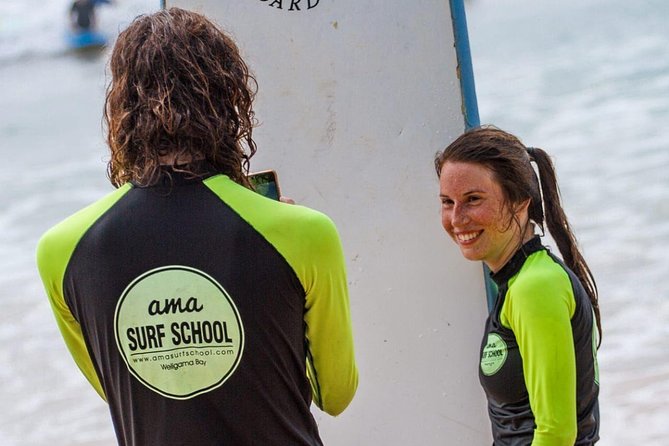
A private lesson for two that lasts about 1 hour 15 minutes is not just a comfort upgrade. It’s a value upgrade. You’re paying for faster feedback, fewer delays, and less time guessing what to fix.
For beginners, that feedback loop is everything. You can watch someone stand on a board all day, but your body still needs the right sequence: paddling rhythm, turning the board the right way, popping up at the correct moment, and holding a stable stance. In a small, private setup, the instructor can correct your form right when it breaks down.
Also, the lesson includes the full “starter syllabus”:
surf safety, jump-up/pop-up technique, footwork and stance, core balance, turning the board, paddling out and efficient paddling, paddling technique, and catching and riding unbroken waves.
That’s not just a list. It’s the difference between feeling busy and actually progressing.
And yes, you’ll see a lot of extremely positive results attached to this school: a consistent theme is patience and professionalism, even when someone is brand-new or someone else in the pair already surfs at an intermediate level.
The 6:30am start: why timing is part of learning
You meet at Ama Surf School at Weligama By Pass Rd, with the lesson starting at 6:30am. The activity ends back at the meeting point. That early start isn’t random.
Surf learning is easier when you can get enough good attempts before conditions change. Morning timing typically gives you a better shot at usable surf for a first lesson, especially for beginners learning paddling and pop-up timing. For you, it means: plan your morning like a training session, not a vacation nap.
If you’re thinking, I’ll just show up whenever, this isn’t that kind of class. You’ll get the most out of it if you’re awake, wearing the right gear, and ready to do repeat practice quickly.
Land training first: safety, stance, and the drills that prevent wipeouts
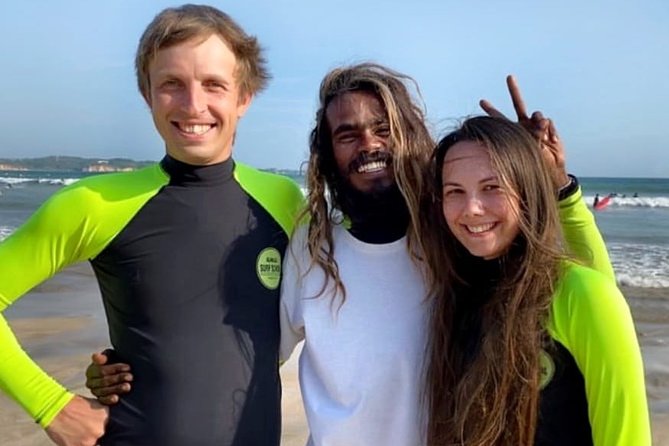
The lesson starts with surf safety on land before you get into the water. That’s not a “nice to have.” It reduces the scary moments and protects your energy.
You’ll work on the basics that transfer instantly to the ocean:
- Footwork and stance: how your feet should sit when you pop up and stabilize.
- Core balance techniques: how to hold position instead of collapsing the moment you feel movement.
- Jump up techniques: a practiced sequence so your body knows what to do when the wave gives you that brief opening.
In other words, you’re training your muscle memory early, not later. One of the reasons people rate this school so highly is the way instructors blend theory with quick practice. You’ll often see instruction that includes a theoretical part—then immediate drills for pop-off/jump-up mechanics—so you understand what you’re doing and why.
If you’re lucky enough to be taught by someone like Sammy (known for being careful with the theoretical part and pop-up exercises), you’ll appreciate that the lesson isn’t just “go paddle.” It’s structured.
Foam board first, fiberglass later: the board strategy that keeps you upright
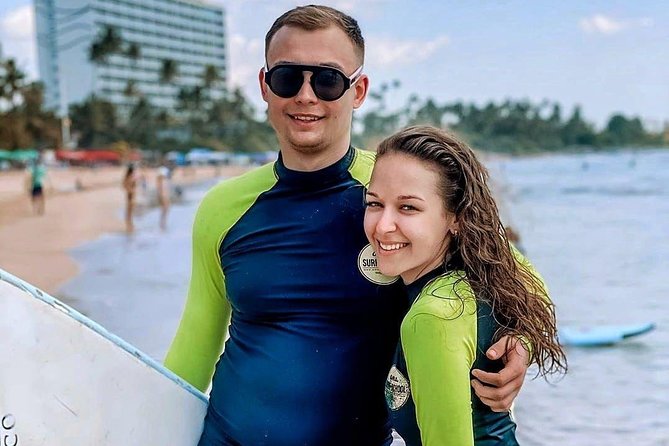
For total beginners, you start with soft surf boards (foam boards). The idea is simple: foam helps you learn without fighting the board’s unpredictability. Balance comes first. If the board is too unforgiving too early, you spend your whole lesson struggling instead of building timing.
Then, you move onto fibreglass boards later—depending on your progress. You’re not being rushed. You’ll usually be shifted when your basic control improves enough to handle the change in feel.
Here’s what that means for you:
- Early on, foam boards help you focus on paddling and pop-up timing.
- Later, fiberglass helps you transition to a real surf feel, with more responsiveness once you’ve got the fundamentals.
That board progression is one reason this lesson works for mixed situations, like a couple where one person is brand-new and the other already knows how to surf. You don’t have to hold your partner back, and you don’t get bored if you’re slightly ahead.






Paddling technique and turns: the skill people skip (and then regret)
A lot of beginner surfers spend too much time trying to stand on the board and not enough time making the board go where they need it to go.
This lesson addresses that directly.
You practice:
- Paddling techniques (so you’re not burning your arms doing it wrong)
- Efficient paddling (so you can stay positioned instead of exhausting yourself before the wave arrives)
- Turning the board (so you’re oriented correctly and ready to catch instead of drifting or spinning)
Turning sounds small, but it’s huge. If you can’t point the board the right way, you can paddle like a champion and still miss the takeoff window.
And efficient paddling matters just as much for beginners. When you’re tired, your pop-up falls apart. When your pop-up falls apart, the lesson feels like a comedy routine nobody rehearsed.
The instructors at Ama Surf School are repeatedly praised for being careful with safety and technique, and for teaching in a way that keeps the vibe fun. Names that show up in that pattern include Santa, Seneth, Sammy, and Sippu—each described as patient and professional, with a focus on learning mechanics rather than just chaos.
Catching unbroken waves: how the lesson builds confidence
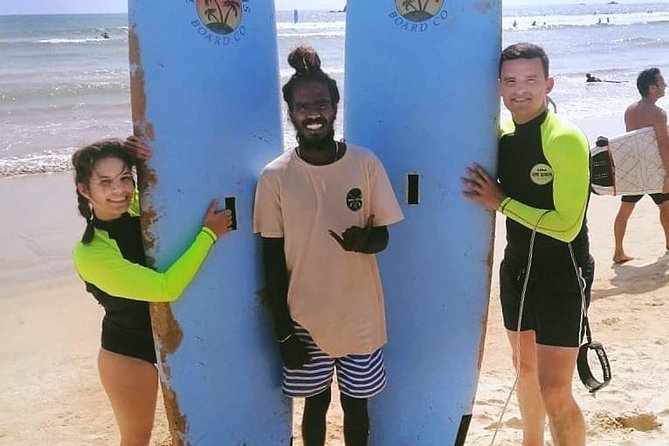
The final part of the lesson is where you catch waves and ride them. The goal is catching and riding unbroken waves, which is a smart target for first-time surfers.
Unbroken matters because it means:
- You made the takeoff cleanly
- Your stance held long enough to ride
- You didn’t just pop up and immediately step off
For many absolute beginners, the shift from fear to confidence happens quickly once they feel even one successful ride. The lesson is built to give you multiple attempts across the session, not one lucky moment.
Also, the instruction style is designed to push you forward while still keeping you safe. If you’re a total beginner, you’ll likely start with easier attempts, then try to catch waves on your own with guidance and quick corrections. If you’re already intermediate, you can still work on form and consistency, rather than just going through the motions.
That’s a great match for couples with different comfort levels. You keep progressing without feeling like one person is dragging the other.
Instructors at Ama Surf School: patience is the real upgrade
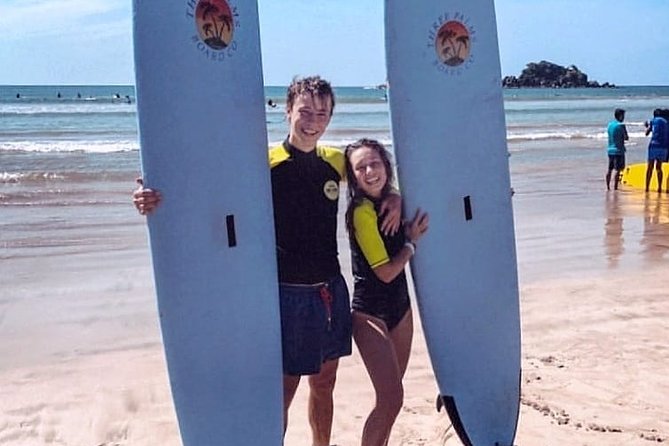
The standout theme across teaching styles is patient, professional instruction. When a school puts safety and technique first, you usually feel it in how they talk to you during mistakes.
You’ll see instructor names come up often:
- Rati: praised for super patience with a beginner while still teaching an intermediate partner.
- Seneth: described as friendly, patient, and professional—especially helpful for kids, which hints at how well they explain things.
- Sammy: noted for careful theoretical coaching and structured exercises for pop-off.
- Santa: mentioned for safety-focused, skill-focused teaching that’s also fun.
- Sippu: highlighted for doing a great job with people starting from zero experience.
You don’t control which instructor you’ll get. But you can control what you bring: a willingness to listen, repeat drills, and stay calm when the ocean is doing ocean things.
A good instructor makes the whole experience feel less like random luck and more like you’re learning a sport.
What to bring (and how to avoid the common beginner problems)
Your exact gear needs aren’t listed in detail, but for surf lessons, you can plan around the standard basics. Here’s what you’ll want so you’re not wasting class time:
- A swimsuit or swim shorts you can move in
- Towel
- Sunscreen (and yes, you’ll probably need it again)
- Water bottle
- Flip-flops or sandals for moving around the beach and getting to the meeting area
Beginner pain points that often come from technique, not effort:
- Sore legs from repeated stance practice
- Arm fatigue if paddling form isn’t corrected early
- Wipeout stress if you don’t follow the safety rules
That’s why I like that this lesson starts with surf safety on land and includes core balance and stance training. You’re building the body habits that reduce wipeouts and keep you riding longer.
Who this surf lesson suits best
This is a great fit if:
- You and your partner are both beginners, or one of you is beginner and the other is at least some level.
- You want a private lesson so you get focused coaching.
- You prefer structured teaching: safety first, then drills, then waves.
It may be less ideal if:
- You’re expecting an all-day surf adventure or a relaxed beach hang. This is about a tight 1 hour 15 minutes of technique and wave attempts.
- You’re not able to follow instruction quickly. Some of the learning is repeat practice and listening during coaching.
- You don’t plan around weather. The lesson requires good weather, and poor weather can trigger a different date or refund.
Should you book this private beginner surf lesson?
Book it if you want the fastest path from first-time fear to a real wave ride, with private coaching and safety baked into the start. The value for $34 is strongest if you’ll use the lesson structure—land drills for stance and pop-up, then paddling and turns, then unbroken wave attempts.
Skip it (or consider a different option) if you can’t handle an early 6:30am start, or if you only want a casual try-without-instruction setup. This class is teaching a sport, not just playing in the water.
If your goal is to leave Weligama feeling like you actually learned something you can repeat, this is the kind of surf lesson that makes that happen.
FAQ
Where does the private surf lesson start?
The lesson starts at Ama Surf School, Weligama By Pass Rd, Weligama 81700, Sri Lanka.
What time does the lesson begin?
The start time is 6:30am.
How long is the session?
The lesson lasts about 1 hour 15 minutes.
Is this a private lesson or shared group?
It’s private. Only your group participates.
What surf boards are used for beginners?
Beginner surfers use foam/soft surf boards at first.
Do you switch to different boards during the lesson?
Yes. For total beginners, you start on soft surf boards and may move onto fibreglass boards later as you progress.
What skills are covered during the lesson?
You learn surf safety, jump up/pop-up techniques, footwork and stance, core balance, turning the board, paddling out and efficient paddling, paddling technique, and catching and riding unbroken waves.
What if the weather is poor?
This experience requires good weather. If it’s canceled due to poor weather, you’ll be offered a different date or a full refund.
What is the cancellation policy?
You can cancel for free up to 24 hours in advance for a full refund. If you cancel less than 24 hours before the start time, the amount paid is not refunded.