Polonnaruwa feels like time travel by car. This private day tour from Sigiriya takes you straight into the UNESCO World Heritage ruins, with pickup from Sigiriya, Dambulla, or Habarana, plus photo stops and a written guide you can use at your own pace.
What I like most is how calm the day feels. The flexible timing means you can linger at the good viewpoints, and the driver (including Shahiru from Sinhagiri Tours) keeps things smooth and friendly without turning it into a race.
One thing to plan for: entrance fees and lunch are not included, and if you want a more in-depth, spoken explanation at the sites, you’ll need to pay for a site guide (5000 LKR).
In This Review
- Key points before you go
- Getting to Polonnaruwa from Sigiriya without the stress
- What you actually get: private vehicle, written guide, and optional site narration
- Stop-by-stop: the Polonnaruwa ruins route in 3–6 hours
- 1) Archaeological Museum: get oriented before you walk among giants
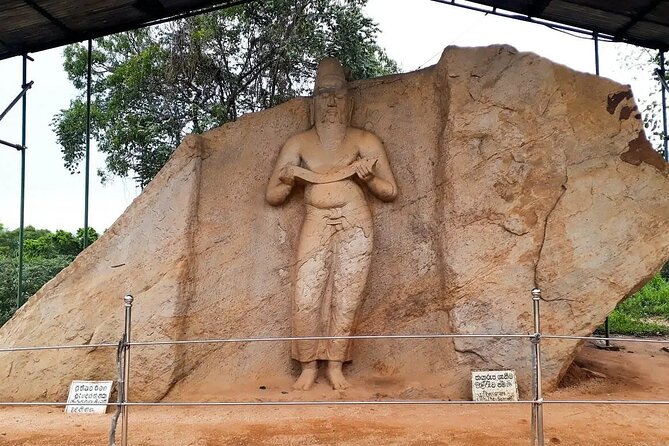
- 2) Statue of Parakramabahu I: a single-block colossus
- 3) Pothgul Viharaya: the temple tied to sacred texts
- 4) Royal Palace: architectural ambition you can still read
- 5) Polonnaruwa Vatadage: a heritage stop for the eye and the mind
- 6) Siva Devalaya: switching spiritual gears
- 7) Rankoth Vehera and 8) Manik Vehera: dagobas that signal power and devotion
- 9) Kiri Vehera (Milk White Dagoba): the standout color memory
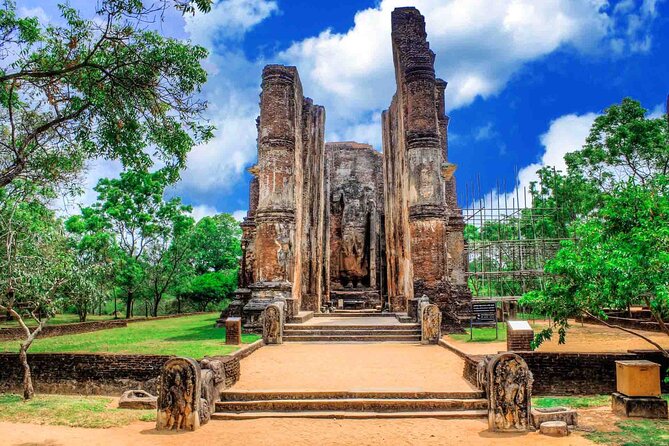
- 10) Lankathilaka Image House: brick walls and a colossal Buddha
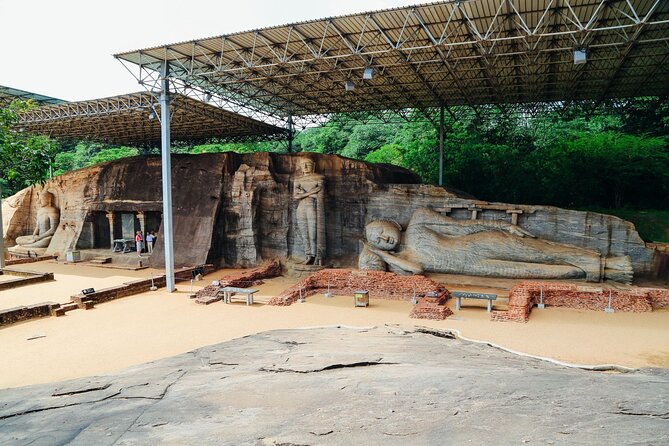
- 11) Gal Vihara: rock-cut art you can’t really rush
- Price and logistics: where the $71.43 really lands in your budget
- Driver quality is the hidden ingredient (especially with self-guided notes)
- Who should book this Polonnaruwa private tour (and who might not)
- Should you book this Private Polonnaruwa Sightseeing Day Tour from Sigiriya?
- FAQ
- How long is the Private Polonnaruwa Sightseeing Day Tour from Sigiriya?
- Is the entrance fee included for the museum and other sites?
- Does the tour include pickup from Sigiriya, Dambulla, or Habarana?
- What is included in the price?
- Can I hire a site guide for the ruins?
- Where does the tour start and end?
- What happens if the weather is bad?
Key points before you go
- Private transport, not a bus scramble: Your group goes in your own vehicle, with pickup and return from the meeting point.
- Self-paced with a written guide: You get materials to help you understand what you’re seeing without needing constant narration.
- Driver support when it gets busy: The driver helps you find where to go and keeps the timing comfortable.
- Big visual stops for photos: From giant statues to dagobas and rock-cut art, the ruins are made for camera time.
- Budget for tickets: Museum and site admission aren’t included, so set aside money for entry fees.
Getting to Polonnaruwa from Sigiriya without the stress
Polonnaruwa is the kind of place that rewards a slower, steadier pace. The ruins are spread out, and doing it efficiently matters—especially if you’re coming from the Sigiriya area. This tour handles the hard part for you: private pickup and a car ride into the archaeological zone, then back again at the end.
You’ll typically be picked up from your chosen starting location (Sigiriya, Dambulla, or Habarana). Then it’s on to Polonnaruwa, where a day can feel both big and manageable. The tour also comes with bottled water, which sounds minor until you’re out in the heat watching the sky for a break in the sun.
You can also read our reviews of more tours and experiences in Sigiriya.
What you actually get: private vehicle, written guide, and optional site narration
This is a private tour/activity, so it’s just your group—not a mixed crowd. That matters because you control your pace. You’re not stuck waiting for strangers to finish photos, and you’re not forced into a scripted rhythm.
Here’s the key model of this experience: you get a detailed written guide (free of charge), and you explore on your own. If you want more context, you can hire a professional site guide for an extra fee (5000 LKR). That’s a smart setup. If you’re the type who enjoys reading and looking closely, the written guide can be plenty. If you want someone to explain stories in real time, budgeting for the site guide becomes the better move.
Also note: the tour uses a mobile ticket, and the activity is set up for good weather. If conditions are poor, you’re offered a different date or a full refund—so don’t plan this as your one-and-only rain-or-shine option.
Stop-by-stop: the Polonnaruwa ruins route in 3–6 hours
This day tour is designed to cover a lot of the most memorable sights without making you feel rushed. Expect roughly 3 to 6 hours total, with short visits at each stop. The exact flow is built around classic Polonnaruwa highlights—temples, palaces, dagobas, and standout statues—so you get a rounded sense of the city rather than only one corner of it.
1) Archaeological Museum: get oriented before you walk among giants
Most people rush into the ruins and regret it later. Starting at the Polonnaruwa museum helps you put names and meanings to shapes before you’re standing in front of stonework that’s older than your country’s modern history.
You’ll take tickets and visit the museum for about 30 minutes. Admission isn’t included, so factor in museum entry fees. Still, this first stop pays off because later sites make more sense when you’ve already seen the basics.
2) Statue of Parakramabahu I: a single-block colossus
Next up is the statue of King Parakramabahu I. The standout detail here is scale: carved from a single block of granite, it’s about 12 feet tall. Even if you only catch it briefly, the size is the point. You’ll get a quick look, around 15 minutes, then move on.
Short visit time can sound limiting—until you realize the route keeps the momentum. You won’t feel like you’re stuck at one stop all day, and you’ll still reach the bigger scenic payoff points.




3) Pothgul Viharaya: the temple tied to sacred texts
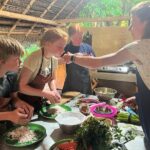
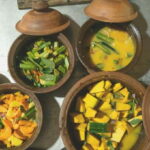
From statues to the quieter side of Polonnaruwa: Pothgul Viharaya. This stop connects the physical ruins to what they were meant to protect. These viharayas were dedicated to safeguarding and preserving sacred Buddhist texts, sutras, and commentaries.
It’s a good pause if you enjoy the human purpose behind the architecture. You’ll spend about 15 minutes here. Since admissions aren’t included, it’s one of those stops where you mainly pay attention with your eyes and your imagination.
4) Royal Palace: architectural ambition you can still read
The Royal Palace of Polonnaruwa is described as a prime example of the era’s architectural prowess. You’ll get about 30 minutes, which is enough time to notice structure, proportions, and layout without turning it into a full-day project.
The downside? A palace site can be tricky to interpret if you don’t know what you’re looking for. That’s where the included written guide helps. Even a quick read before you move to the next area can make the stone feel less random.
5) Polonnaruwa Vatadage: a heritage stop for the eye and the mind
Vatadage is another classic Polonnaruwa structure, with the purpose described as reflecting cultural and architectural heritage. Plan for around 15 minutes.
This is a good stop for photos and close observation—especially if you enjoy noticing how religious architecture is designed to guide movement and attention. If you’re not a “read every label” person, don’t worry. You can still enjoy it visually, and the written guide fills in the gaps.
6) Siva Devalaya: switching spiritual gears
Then you’ll go to Siva Devalaya (No. 1), a temple dedicated to Lord Shiva. Spend about 15 minutes.
This is a useful reminder that Polonnaruwa isn’t only one tradition. In a short day, it’s good to see different religious spaces so you don’t leave thinking the ruins were all one thing.
7) Rankoth Vehera and 8) Manik Vehera: dagobas that signal power and devotion
Rankoth Vehera gets about 15 minutes, described as showing the architectural brilliance of ancient civilizations, with deep religious and cultural significance. Manik Vehera also earns a 15-minute slot and is framed as a testament to enduring spirituality and architectural prowess.
Even if you don’t have every historical detail in your head, you’ll still get something valuable: the sense that these structures were built to last and to matter. The stone shapes push you to slow down just long enough to appreciate craftsmanship.
9) Kiri Vehera (Milk White Dagoba): the standout color memory
Kiri Vehera is identified as the Milk White Dagoba of Polonnaruwa. It’s one of the stops that feels like it sticks in your memory because of the descriptive nickname and the visual impact such a dagoba usually has.
You’ll spend around 15 minutes. This is another good photo moment, and it’s also a nice point in the day to breathe and reset.
10) Lankathilaka Image House: brick walls and a colossal Buddha
Next comes Lankathilaka Temple, described with several concrete features: towering brick walls, a colossal Buddha statue, and exquisite frescoes (the description notes fres… which points to painted decoration).
Expect about 15 minutes. This is the kind of stop where 15 minutes is enough to get the big picture. If you love details, you might wish for longer—but you can always spend a second round of looking if the area isn’t crowded.
11) Gal Vihara: rock-cut art you can’t really rush
The day ends with Gal Vihara, a rock-cut site where you’re told the attraction is the artistic excellence and spiritual devotion of ancient Sri Lanka. Plan on about 30 minutes.
This is a strong finale because rock-cut artwork can hit emotionally. You’ll likely find it easier to picture how the place functioned when you’re staring at it in person, not just on a screen. Take your time here if you can.
Price and logistics: where the $71.43 really lands in your budget
The price is listed as $71.43 per group (up to 4). That’s one of the main reasons this tour makes sense: you’re paying for private transport and coordination, not per-person guide-hours.
At full capacity (4 people), you’re effectively splitting the cost. At fewer people, it gets pricier per person fast—so this is a great option if you’re traveling with family or friends who also want a stress-free route.
But the biggest budget variable is admissions and lunch. Entrance fees aren’t included, and the museum stop clearly has ticketed admission. If you’re trying to keep the total day cost predictable, set aside money for museum and site entry fees. The tour includes bottled water, which helps with small expenses on the day, but it won’t cover lunches.
Driver quality is the hidden ingredient (especially with self-guided notes)
When you choose a self-guided ruins day, the driver becomes your secret weapon. Your driver’s job isn’t just driving. It’s making sure you find the right spot fast, know where to park, and don’t waste time when parts of the site are busy.
From the experience feedback, the best pattern is clear: drivers keep things flexible, show you where to go when things are crowded, and make the whole day feel unpressured. With a driver like Shahiru from Sinhagiri Tours, the tone is professional and kind, with a calm attitude that helps you enjoy the ruins instead of managing logistics.
That’s why this tour works even if you skip hiring a live site guide. You’ll have a written guide in your hands, and you’ll still have real-time help for getting around.
Who should book this Polonnaruwa private tour (and who might not)
I think this tour fits you best if:
- You want private transport from the Sigiriya area and a smooth route through Polonnaruwa.
- You’re happy using a written guide and learning at your own speed.
- You like having the option to hire a site guide (5000 LKR) if you decide you want more spoken context mid-day.
You might want to look elsewhere or add a live guide from the start if:
- You expect a step-by-step, narrated walkthrough at every stop.
- You’re traveling solo and you want the lowest possible cost (since the price is per group up to 4).
Should you book this Private Polonnaruwa Sightseeing Day Tour from Sigiriya?
If your goal is a comfortable, efficient Polonnaruwa day without the hassle of sorting transport and timing, I’d book it. The combination of private vehicle, bottled water, and a written guide is a strong value—especially if you can share the cost with a small group.
My practical advice: budget for entrance fees and decide in advance whether you’ll likely pay for the optional site guide. If you’re the type who enjoys reading on the spot and then looking closely, you’ll probably enjoy the self-guided structure. If you want stories and explanations delivered out loud, plan to add the site guide fee so the day feels complete.
FAQ
How long is the Private Polonnaruwa Sightseeing Day Tour from Sigiriya?
It runs about 3 to 6 hours, depending on timing and how much time you spend at each stop.
Is the entrance fee included for the museum and other sites?
No. Entrance fees are not included, including the museum admission at the first stop.
Does the tour include pickup from Sigiriya, Dambulla, or Habarana?
Yes. Pickup is offered from your preferred location in Sigiriya, Dambulla, or Habarana.
What is included in the price?
You get a private vehicle and bottled water. You also receive a detailed written guide, and a mobile ticket is provided.
Can I hire a site guide for the ruins?
Yes. A professional site guide can be arranged for an extra fee of 5000 LKR.
Where does the tour start and end?
It starts at Sinhagiri Tours on Thalkotta Rd, Sigiriya, and it ends back at the meeting point.
What happens if the weather is bad?
This experience requires good weather. If it’s canceled due to poor weather, you’ll be offered a different date or a full refund.