Galle Fort is a living history walk, not a museum-on-rails. I love the way a local guide ties UNESCO Galle Fort sights to everyday street life, and I also love that the route covers both architecture and key viewpoints like the Galle Lighthouse ramparts. One thing to consider: it is a proper walking tour on uneven cobbles, so bring comfortable shoes if you have knee or balance issues.
This is a small, private-style experience (max 12 people) that focuses on the fort as a working enclave with museums, shops, and churches inside the walls. You’ll get a family-connected perspective from the guide, and that tends to make the history feel grounded instead of like a textbook recital.
If your group expects long, uninterrupted narration, you’ll want to confirm your guide’s style upfront—some guides are very chatty, while others are more hands-on and quieter.
In This Review
- Key Things to Know Before You Go
- Entering the Galle Fort Streets With a Local Guide
- Meeting at National Tea Rooms: Why This Start Works
- Portuguese, Dutch, British: A Fort Built in Layers
- Dutch-Style Streets, Low Gables, and Churches You Can Actually See
- Museum Stops: When Artifacts Turn Into Stories
- The Ramparts: Your Best Shot at That Wide Fort View
- Galle Lighthouse Moment: Ending at a Classic Landmark
- Price and Value: What $65 Buys You Here
- Timing, Group Size, and How to Plan Your Day
- What If You Want More Explanation (or Less Walking)?
- Should You Book the Galle Fort Walk With a Local?
- FAQ
- How long is the Galle Fort walk with a local guide?
- Where do we meet for the tour?
- What is included in the tour price?
- Is the tour a small group or private?
- Is walking required and are there steps?
- Can I cancel and get a full refund?
Key Things to Know Before You Go
- Meet at National Tea Rooms (10 Lighthouse St) so you start with an easy reference point
- UNESCO Galle Fort walking route that mixes streets, landmarks, museums, and viewpoints
- Ramparts to Galle Lighthouse for the classic wall-and-beacon perspective
- Entrance fees are included, so you spend less time solving ticket puzzles
- Private-group feel with a maximum of 12 people and only your group participating
- Short tea break happens on the walk, but tea or king coconut milk may cost extra
Entering the Galle Fort Streets With a Local Guide

UNESCO Galle Fort feels like a small city folded inside an old defensive shell. From the moment you meet outside, you get pulled into the logic of the place: narrow streets, changing sight lines, and buildings that look similar at first—until your guide points out the differences. That is where this tour earns its keep.
I like starting in the fort zone because it makes the history instantly visible. Portuguese, Dutch, and British rule aren’t presented as separate chapters you read later—they show up as stonework, street patterns, churches, and government-era buildings you can actually stand beside. A good guide also helps you read what you’re looking at without killing the fun.
The tour is built to move at a walking pace for about two hours, so it’s long enough to connect the dots but short enough to stay energized. The group size cap (up to 12) matters too. Big bus groups can turn a place like this into a photo sprint. Here, you have time to stop, ask, and look.
One small caution from the real-world experience: cobbles and some steps are part of the deal. If you have leg issues or asthma triggered by exertion, plan to take it slowly when you hit stair sections and consider bringing a hat and water.
You can also read our reviews of more tours and experiences in Galle.

Meeting at National Tea Rooms: Why This Start Works
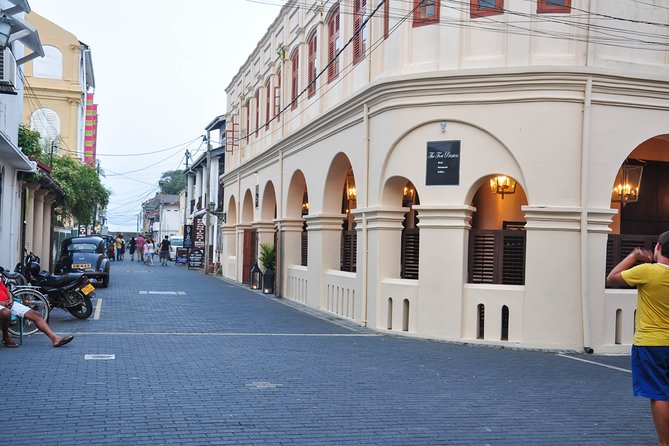
The meeting point is National Tea Rooms, 10 Lighthouse St, Galle. Starting here is smart because it gives you a clear landmark and a natural pause point. You don’t need to decode directions with maps app frustration while you’re already inside a maze of lanes.
Several guides on this route are locals with family roots in Galle. Names you might hear include Shirat and Chirath. In practice, what that means for you is simple: the guide can point out details that are easy to miss on your own, like how restorations are being handled or how certain buildings fit into the fort’s role as a harbor stronghold.
If you’re the kind of person who hates standing around waiting, this style helps. You get moving quickly, and the guide uses the first stretch to get your bearings—so the rest of the walk feels like a guided storyline instead of random stops.
Portuguese, Dutch, British: A Fort Built in Layers
Galle’s harbor importance goes way back. The fort area traces significance to as early as 1400 BC, when it was an important port for global trade, including cinnamon export routes. That matters because Galle Fort wasn’t built in a vacuum. It grew out of a strategic coastline with ships coming and going for centuries.
Here’s the core shift your guide will connect as you walk:
- Portuguese influence (1500s era): They fortified the port, made Galle a headquarters, and also damaged or removed monuments in the area. On the ground, you’ll see how later builders worked with what was already there.
- Dutch expansion (1600s era): After the Dutch took over Portuguese assets, they built stronger stone defenses—think ramparts and bastions—plus practical infrastructure like storm drains and additional buildings. The Dutch footprint shows up in the fort’s sturdier defensive layout and the look of some structures you pass.
- British additions (late 1700s onward): The British added further buildings, and later the Galle Lighthouse (1938) appeared as a beacon-style landmark. When you reach it, you’re not just seeing a tower—you’re seeing a later layer of how this harbor stayed relevant.
You don’t need to memorize dates. The real value is that by the time you’re halfway through, you’ll start noticing cause-and-effect: this wall exists because of this threat; this building exists because administration needed a presence; this part of the street feels planned because it served the fort like a town.
Dutch-Style Streets, Low Gables, and Churches You Can Actually See

A lot of fort walking tours do the same thing: you glance at a wall, you move on, you take photos. This one tries to slow down just enough for you to notice the fort’s character.
Inside Galle Fort, you’ll see Dutch-era architecture and features that make the place feel different from modern Sri Lanka cities. Low, gabled houses show up, plus churches and former government buildings. Even the street naming can change how you read the space—your guide may point out that older labels still exist and that restoration choices keep some of those traces visible.
What I like about this part is that it gives you a sense of scale. The fort isn’t just a pile of stone. It’s organized like a town. People historically lived inside it, traded inside it, and practiced daily life within the walls. When your guide explains what changed under each colonial power, it feels more like urban planning than conquest history.
If you enjoy architecture, you’ll probably catch yourself staring longer than you planned. If you don’t, the guide can still steer you: where to look, what to ignore, and what to ask about if you’re curious.
Museum Stops: When Artifacts Turn Into Stories

A big highlight is the time spent in museums. That’s important here because the fort’s “why” is sometimes more readable through artifacts and archives than through walls alone. You’ll tour key museum areas where objects and records help explain the fort and Galle’s harbor story.
This is one of the best parts of the experience because museums in forts often do one of two things: either they’re dry, or they clarify the context your walking route just started to reveal. On this tour, the museum time tends to do the second job. You connect what you’ve seen outside to items that give them names and purpose.
There is also an everyday-life angle. Museums and archives aren’t just about rulers. They help explain how the fort functioned as a trading and administrative hub, and why certain routes and structures mattered.
One note for your expectations: museum coverage depends on what’s open and how the guide structures timing. If you have a strict preference for only outdoor viewpoints, you might want a bit less museum time. If you’re happy mixing both, you’ll likely find the pace satisfying for a 2-hour walk.






The Ramparts: Your Best Shot at That Wide Fort View
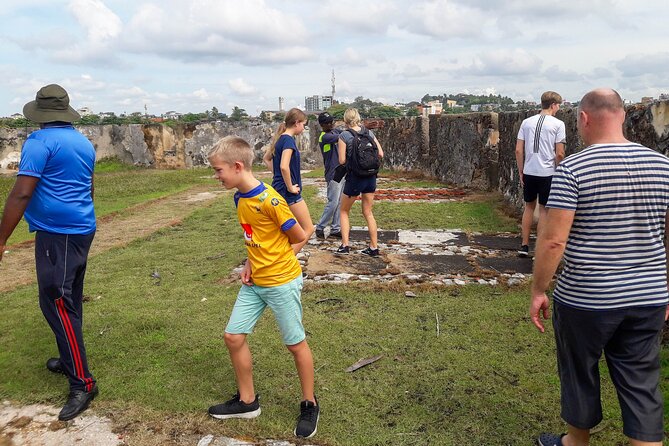
Then comes the dramatic part: walking along the ramparts. This is where the fort starts feeling like a set of living boundaries instead of a tourist loop.
From the walls, you get a clear view of the coastline and the way the fort hugs its harbor. Your guide will frame what you’re seeing in terms of defense and maritime importance—why these walls were built, and how the harbor shaped everything from trade to fort layouts.
The ramparts are also the portion where you’ll feel the tour’s physical side. Expect uneven surfaces and some height changes. Take your time on the tricky sections. If it’s hot out, slow down even more—heat and cobbles can team up on your energy levels.
One detail worth knowing: your guide may also explain the lighthouse’s history as part of the overall British-era layer. That means the ramparts stop isn’t just a view to photograph—it’s a setup for the famous beacon moment.
Galle Lighthouse Moment: Ending at a Classic Landmark
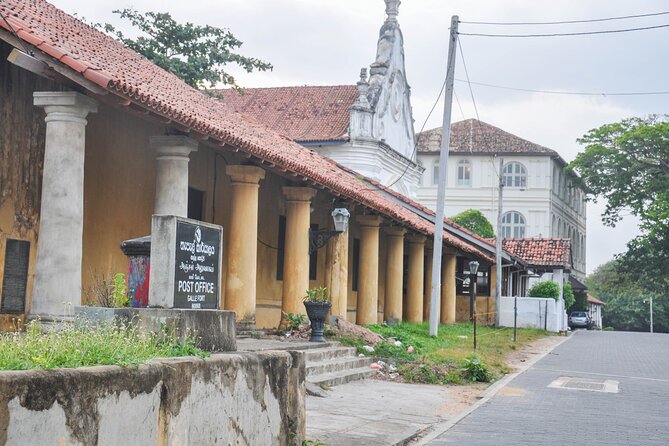
Finishing with the Galle Lighthouse is a smart design choice. It gives you a visual “full stop” to the story. You see a later-era beacon that made sense because the harbor was still central to navigation and trade.
The lighthouse is described as a replica of an earlier beacon first built by the British, and reaching it from the ramparts is part of the payoff. You end up with a view that shows the fort’s defensive intent and the ocean-facing reality it protected.
This also helps you make sense of what you’ve been hearing. If the Portuguese and Dutch layers felt abstract earlier, the lighthouse ties the narrative to modern-day geography: the sea is still the main character. You’re not just walking in an old colonial district—you’re standing where ships would have mattered.
Price and Value: What $65 Buys You Here

At $65 per person for around 2 hours, the value hinges on three things you actually get:
First, you get a local private guide with personal connection to Galle (names like Shirat and Chirath come up in guide experiences). That matters because a guide can explain what you’re seeing in real time, not just point at it.
Second, entrance fees are included. Forts and museums can nickel-and-dime you quickly when you’re trying to manage tickets while also walking.
Third, you get a structured route that hits multiple “I wouldn’t find this alone” moments: the museum pieces, the ramparts, and the lighthouse viewpoint. You’re not just wandering Galle Fort for the sake of it—you’re covering the key storyline beats.
One confusing detail to watch: the tour includes a break for a Ceylon tea or king coconut milk, but tea or coconut milk may be listed as own expense. In plain terms, plan for a small extra spend if you want the drink. You can still enjoy the break even if you skip the purchase.
Timing, Group Size, and How to Plan Your Day
This is a small-group (up to 12) private tour. Only your group participates, so you’re not sharing the guide with strangers from five different hotels. That’s a genuine quality-of-life upgrade, especially inside a compact fort where everyone wants to stop at the same viewpoints.
Duration is about 2 hours, which is perfect if you have one afternoon in Galle or you want a history-focused segment without burning your whole day. If you’re combining it with beach time or dinner plans, you can usually fit this neatly.
If you hate heat, consider the timing. One guide experience described a 6:30am start to beat the day’s warmth. You can’t assume every slot is that early, but if you have the option, early is a smart move in southern Sri Lanka.
What If You Want More Explanation (or Less Walking)?
This tour is described as medium walking, and there can be steps. One experience also hinted that a guide might be quieter or use a different teaching style. So think about what you personally want:
- If you like stop-and-go chat, ask your guide to slow down at the big landmarks and answer questions as you go.
- If you prefer lighter narration, you might still enjoy the museum and ramparts without needing constant commentary.
- If steps or pace are hard for you, plan to take breaks and choose slower moments near climbs.
Also pack a hat and comfortable shoes. The fort is charming, but cobbles don’t care about your fashion choices.
Should You Book the Galle Fort Walk With a Local?
Book this tour if you want the fastest way to understand Galle Fort without turning it into a solo scavenger hunt. The best reason is that you’ll connect Portuguese, Dutch, and British layers to specific places—cobbled streets, churches, museum artifacts, ramparts, and the lighthouse—within a tight two-hour window. Add in entrance fees included and you’ve got a solid value for a guided experience.
I’d pass or consider an alternative if you want mostly outdoor viewpoints with minimal museum time, or if walking on cobbles and steps is a major problem for you. And if you’re the type who really depends on active talking for learning, message or ask about the guide’s style before you set expectations.
FAQ
How long is the Galle Fort walk with a local guide?
It lasts about 2 hours.
Where do we meet for the tour?
The meeting point is National Tea Rooms, 10 Lighthouse St, Galle 80000, Sri Lanka.
What is included in the tour price?
A local guide is included, and entrance fees are included. A drinks break happens during the tour, but food and drinks are listed as not included.
Is the tour a small group or private?
It is private for your group only, with a maximum of 12 people per booking and a minimum of 2.
Is walking required and are there steps?
Comfortable walking shoes are recommended. The tour includes a medium walking route and can involve steps.
Can I cancel and get a full refund?
Yes. You can cancel up to 24 hours in advance for a full refund. If you cancel less than 24 hours before the start time, the amount paid is not refunded.