If you like real animal encounters, this day delivers. This port trip turns into a safari drive through Udawalawe National Park and a short stop at the Elephant Transit Home.
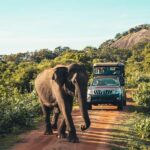
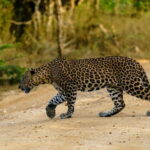
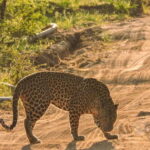
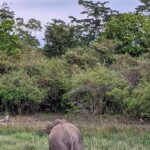
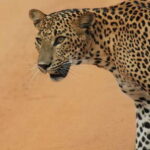
You’ll go with a driver/guide in a 4×4 safari jeep and spend real time looking for wildlife like elephants, leopards, mongooses, and bandicoots.
Two things I really like here are the flexible timing (morning or afternoon departures) and the small-vehicle feel—jeeps are capped at 7 passengers. The other big win: you get port pickup and drop-off, so you’re not trying to figure out transport on your own.
One drawback to consider: the main entrance fees are not included (Udawalawe and ETH), so your final total will be higher than the headline $60. Also, double-check the pickup details ahead of time so you’re not relying on last-minute surprises at the port.
In This Review
- Key highlights you’ll care about
- Hambantota Port pickup to safari jeep: the practical reality
- Udawalawe National Park: where the safari focus is the whole point
- Elephant Transit Home (ETH): a short stop with a big purpose
- Price and value: what $60 really means once fees are added
- The guide and the jeep: how spotting gets better with the right help
- Timing tips for morning vs afternoon departures
- What to pack and how to make the safari comfortable
- Who this tour fits best (and who might find it less ideal)
- When things don’t go perfectly: protecting your day at the port
- Should you book Udawalawe National Park & ETH from Hambantota Port?
- FAQ
- How long is the Udawalawe National Park & ETH tour from Hambantota Port?
- Do I get picked up and dropped off at Hambantota Port?
- What does the tour price include?
- Are the park and Elephant Transit Home entrance fees included?
- Can I choose a morning or afternoon departure?
- Is there a private tour option?
- Is there a group size limit?
- What is the cancellation policy?
- Will I get a ticket after booking?
Key highlights you’ll care about
- Safari jeep driving in Udawalawe with a driver/guide to help spot animals
- Elephant Transit Home (ETH) visit focused on rehabilitating orphaned elephant calves
- Port pickup and drop-off from Hambantota saves you time and stress
- Small group on jeeps (max 7) for better viewing and less crowding
- Choose morning or afternoon departure to match your cruise and energy level
- Private tour option for just you and your party
Hambantota Port pickup to safari jeep: the practical reality
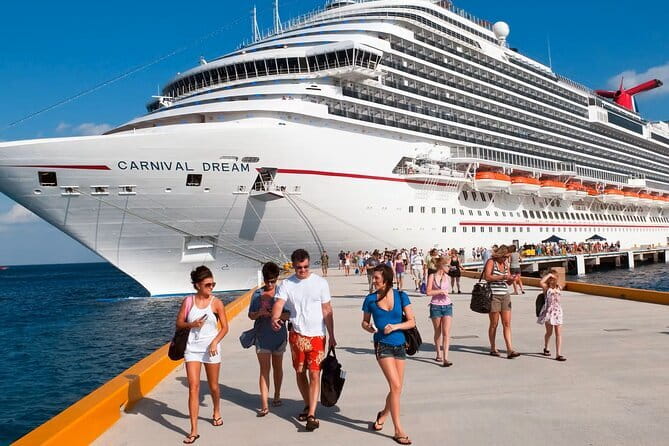
This tour is built for people already in the area. Starting from Hambantota Port means you skip the usual puzzle of getting to a trailhead or faraway park entrance. It’s also set up with pickup and drop-off as part of what you pay for.
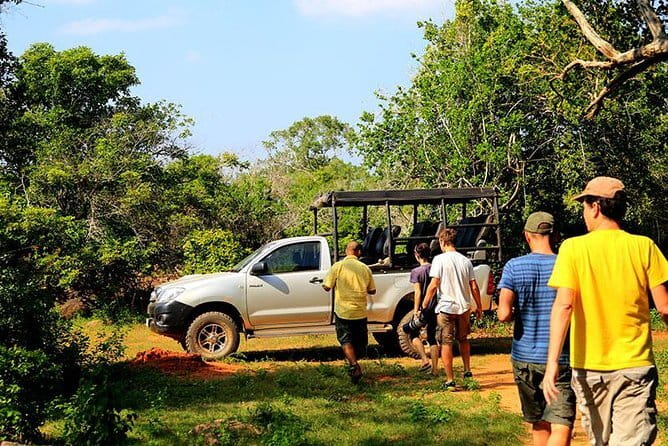
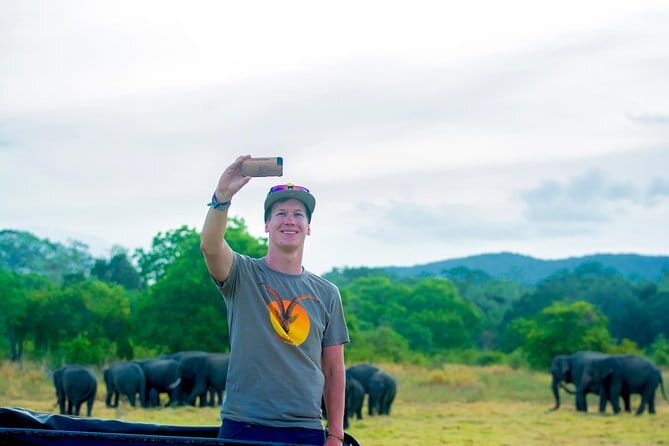
You’ll ride in a safari-style 4×4 vehicle. The vehicle limit is 7 passengers per jeep, which matters more than you’d think. In animal country, “everyone can see” beats “everyone can sit.” It’s also easier for the driver/guide to manage stops when the group is smaller.
A big planning detail: the tour runs about 5 to 7 hours. That’s long enough for a true safari block, then a second experience at ETH. It’s not a half-hour taste test.
You can choose a morning or afternoon departure, which is handy if your ship schedule is tight. It’s also a good way to match your own comfort—some people prefer cooler daylight for wildlife viewing, while others want the later timing that fits better with shore plans.
Finally, you’ll have a mobile ticket and confirmation comes at booking. That’s useful if you’re moving fast between port activities.
You can also read our reviews of more tours and experiences in Hambantota.

Udawalawe National Park: where the safari focus is the whole point
Udawalawe National Park sits on the boundary of Sabaragamuwa and Uva Provinces, and it’s designed as a sanctuary. The park was created partly because animals were displaced by construction of the Udawalawe Reservoir on the Walawe River, and partly to protect the reservoir’s catchment. It covers 30,821 hectares and was established 30 June 1972.
There’s also a human story behind the scenery. Before it became a protected reserve, the area was used for shifting cultivation (called chena farming). Farmers were gradually removed after the park was declared. Understanding that helps you see the park as something managed for wildlife—not just a pretty place to pass through.
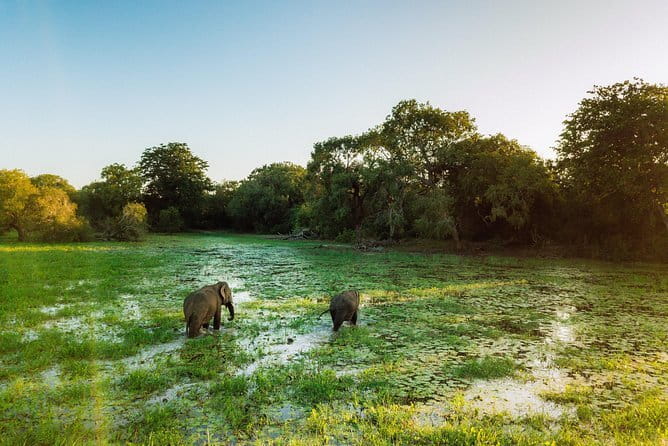
For you, the key takeaway is this: your time in Udawalawe is about wildlife viewing with a driver/guide who helps point things out. The tour schedule gives you about 3 hours inside the park, and the safari style matters. You’re in a jeep, watching carefully for movement and for animals using the open areas and forest edges that species tend to use.
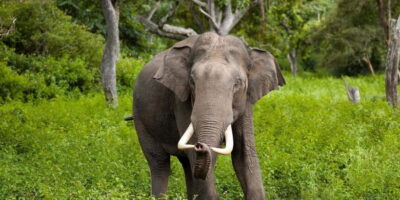
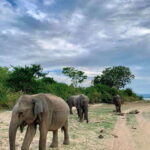
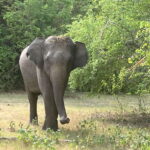
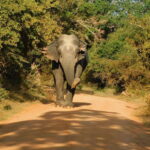
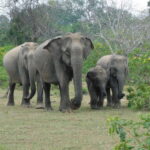
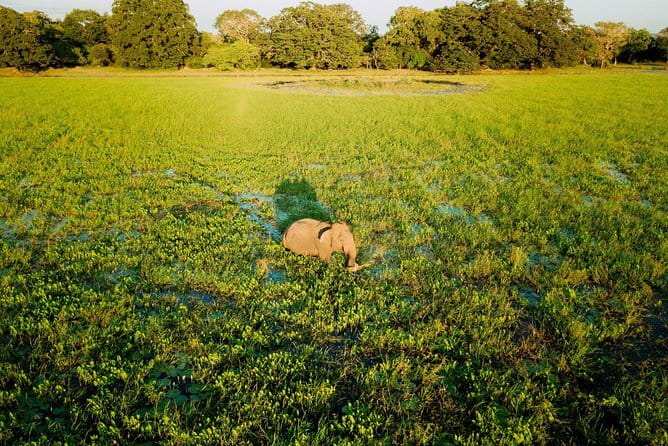
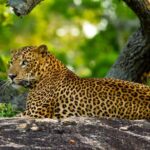
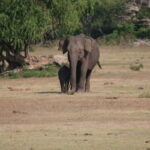
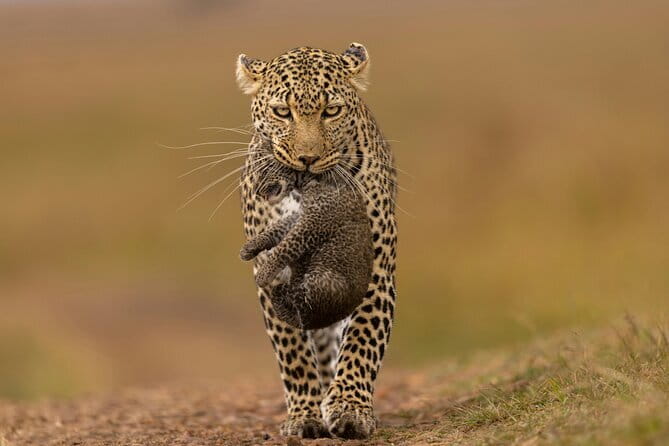
What animals are possible here? Based on the tour information, you should keep your eyes open for elephants, leopards, mongooses, and bandicoots. That’s a solid mix, from big and bold to small and speedy. I like seeing lists like that because it signals you’re not just doing a one-species outing.
Also, this is the kind of park where patience pays off. Your driver/guide can’t guarantee sightings, but they can steer the experience—knowing where to look, when to stop, and how to read the landscape from a vehicle.
One more thing: park admission is not included in the $60 price. Entrance fee is listed separately, so plan for that cost if you want an accurate day budget.
Elephant Transit Home (ETH): a short stop with a big purpose
After the safari block, you visit the Elephant Transit Home (ETH) inside Udawalawe National Park. Your time there is about 30 minutes, so don’t expect an all-day animal sanctuary experience. Think of it as a focused stop that adds meaning to your safari drive.
ETH was established in 1995 by Sri Lanka’s Department of Wildlife Conservation. Its job is to rehabilitate orphaned elephant calves with the goal of releasing them back into the wild later.
Why this matters for you: it changes the way you look at what you just saw on the safari. Instead of only thinking about the animals as “cool to spot,” you connect them to a real conservation effort—getting young elephants through a vulnerable stage.
In practical terms, you’re going for a quick education moment, not a deep immersion. If you’re the type who loves learning what conservation programs actually do, you’ll appreciate the added context.
And because ETH admission is also not included (it’s listed separately), factor in that extra ticket when you’re budgeting.
Price and value: what $60 really means once fees are added
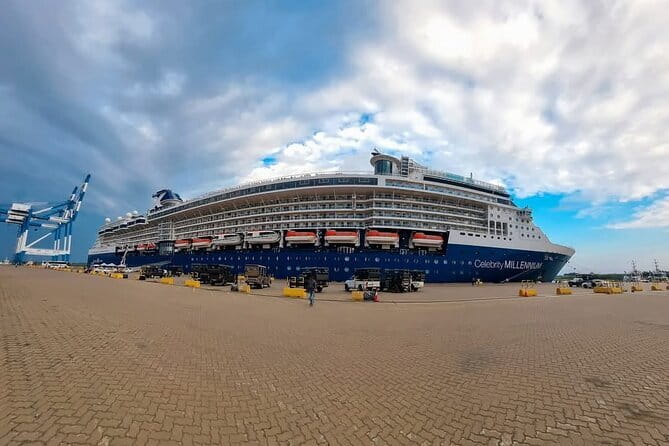
The tour price is $60 per person, and it’s designed for cruise/port travelers who want transport and guidance handled. But here’s the part you should plan around: the Udawalawe National Park entrance fee is $45 per person, and ETH admission is $7 per person.
So your real total for the day, based on the provided fees, lands around $112 per person (before any optional add-ons you might choose). That’s a different number than $60, and it affects value.
Here’s where I think it still can be good value:
- You’re paying for port pickup/drop-off, not just a park tour.
- You’re getting safari jeep transportation in a small group (max 7 per jeep).
- A driver/guide is included, and they’re there to help you spot animals during the park drive.
To make the value math work for your budget, I’d recommend comparing this to two separate costs you might pay on your own: transport from the port area plus an entry-based safari jeep with a guide. If you were arranging it in parts, you’d likely lose time and still end up paying similar totals.
One more value note: the tour mentions group discounts. If you’re traveling with friends or family, you might reduce per-person cost and keep the day moving smoothly.
Bottom line: this is not a cheap activity. But it’s often a fair trade for a full safari drive plus ETH, delivered from the port with transport handled.
The guide and the jeep: how spotting gets better with the right help
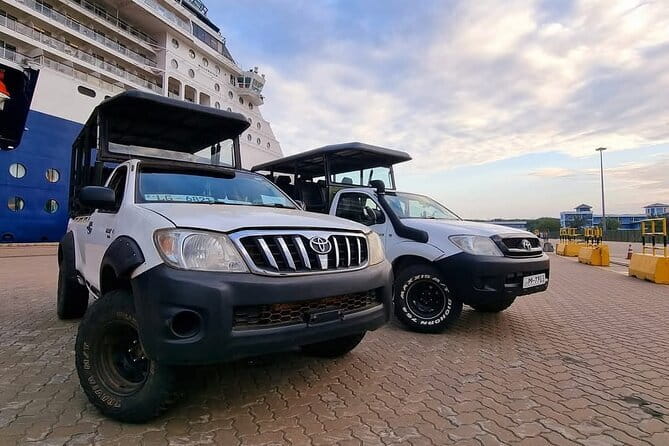
The best part of a wildlife day isn’t the vehicle. It’s the people operating it.
The tour includes a driver/guide, and the whole point is that they’ll help point out wildlife. That matters in Udawalawe because animals aren’t always standing in the open like a postcard. They can appear briefly, move between cover, or blend into the setting until you know what you’re looking for.
A strong signal from the experience feedback is that guides who know the park can turn a safari into a highlight day. One positive account specifically praised an awesome guide for showing many animals and beautiful nature. I take that as confirmation that the guide role isn’t filler—it’s the difference between watching passively and actively searching.
So here’s my practical tip: when your guide stops, stop. Don’t rush out to get photos. Those pauses often line up with the moments when animals are actually visible. If you want better photos too, keep your camera ready during quiet stretches, not only when something starts moving.
Also, because jeeps are limited to 7 passengers, the guide can manage the group without constant squeezing. That helps you stay focused on what you’re seeing.
Timing tips for morning vs afternoon departures
You can pick morning or afternoon, and that choice can shape how the day feels even if your itinerary is the same.
Morning departures tend to fit well if you like cooler starts and early daylight for spotting animals. Afternoon departures can match cruise energy levels better and give you a softer start onshore.
Since your overall time is 5 to 7 hours, your schedule will likely be a sequence of: port pickup, safari time in Udawalawe, ETH stop, then return to the port. The timing also matters because entrance points have their own operating windows; if you’re late, you might shrink your time inside the park.
My advice: choose the departure that lines up best with your ship’s timetable and your ability to be on time at the port. In a day like this, being early beats being brave.
What to pack and how to make the safari comfortable
The tour info doesn’t list specific gear requirements, so I’ll stick to practical comfort suggestions that help on any jeep safari:
- Bring water. You’ll want it during a few hours of vehicle time and walking only if needed.
- Use sun protection. You’re out in the open enough to feel the heat.
- Wear closed-toe shoes. Jeep travel is bumpy; you’ll be happier with real grip.
- Consider binoculars if you love scanning. You’ll spot more when you can zoom in mentally before you take a photo.
- Bring a light layer. Some afternoons and vehicle rides can feel cooler than expected.
Also, plan for a quick schedule rhythm. This is not a slow sightseeing day. It’s about moving when the driver/guide needs to move.
Who this tour fits best (and who might find it less ideal)
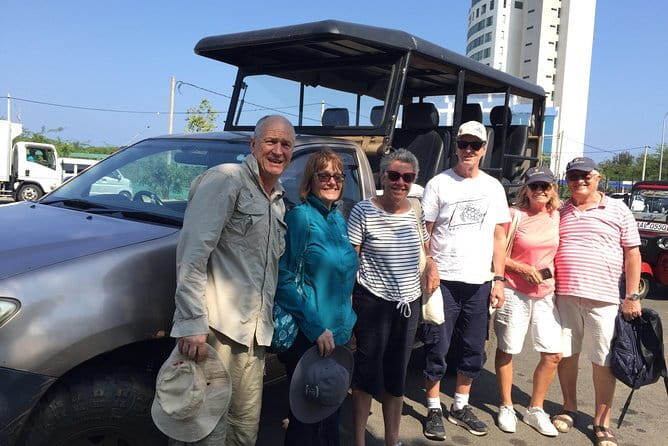
This is best for you if:
- You’re in Hambantota with limited time and want a direct, organized wildlife day.
- You love animal spotting and want a driver-led safari instead of a self-guided drive.
- You want a short conservation add-on with the ETH visit.
- You’re traveling as a group and appreciate small jeep capacity.
It’s a good match for most travelers since the tour notes most travelers can participate. If you’re the type who gets antsy in long car rides, the 5 to 7 hours might be the biggest mental hurdle—though the structure is designed to keep it active.
If your main goal is a full-day, slow-motion wildlife experience, you might find the park time and ETH time feel brief. But if you want a concentrated, port-friendly itinerary, this one is built for that.
When things don’t go perfectly: protecting your day at the port
There’s at least one reported issue where a driver did not show up at the port at the designated time. Even though the report says there was no charge, the bigger point is that port timing is unforgiving.
You can protect yourself in a few simple ways:
- Save your confirmation details and double-check the pickup timing before you go ashore.
- Be at the agreed meeting point a bit early. Don’t wait until the last minute.
- If you have phone access, keep a way to reach the provider or your booking support.
Most days will run fine. But with port tours, it’s smart to build a little safety margin into your plan.
Should you book Udawalawe National Park & ETH from Hambantota Port?
I’d book it if you want a practical, guided safari day that fits a port schedule, with small jeep capacity and a real conservation stop at Elephant Transit Home. The value is strongest when you factor in port pickup/drop-off, safari jeep transport, and guide spotting support—especially if you’d otherwise struggle to arrange transport on your own.
Skip or rethink it if:
- Your budget is tight once entrance fees are added.
- You hate structured schedules and prefer flexible, self-paced sightseeing.
- You’re the type who needs guaranteed sightings. This tour is about wildlife opportunity, not guarantees.
If your ship timetable works and you’re excited by elephants and other Sri Lankan wildlife, this is a solid call.
FAQ
How long is the Udawalawe National Park & ETH tour from Hambantota Port?
The tour lasts about 5 to 7 hours, including the safari time and the Elephant Transit Home stop.
Do I get picked up and dropped off at Hambantota Port?
Yes. Port pickup and drop-off are included in the tour.
What does the tour price include?
It includes the driver/guide, port pickup and drop-off, and transportation in a safari jeep (up to 7 passengers per jeep).
Are the park and Elephant Transit Home entrance fees included?
No. Udawalawe National Park entrance fee and the Elephant Transit Home (ETH) admission fee are not included.
Can I choose a morning or afternoon departure?
Yes. The tour offers both morning and afternoon departures.
Is there a private tour option?
Yes. There is a private tour option for just you and your party.
Is there a group size limit?
The tour vehicle has a maximum of 7 passengers per jeep, and the overall activity has a maximum of 99 travelers.
What is the cancellation policy?
You can cancel for free up to 24 hours in advance for a full refund.
Will I get a ticket after booking?
Yes. You’ll receive confirmation at booking time, and the tour uses a mobile ticket.