Sri Lanka by road feels human, not rushed. This 8-day private car hire from Negombo pairs an air-conditioned vehicle with an English-speaking chauffeur guide, plus airport help via Overa. I like that the day starts are clear (8:00am) and the driving feels organized rather than chaotic.
What I really liked is the mix of famous heritage and real-life stops. You’ll hit major UNESCO-listed places like Anuradhapura’s living monuments and Dambulla’s Golden Temple caves, while still getting time to breathe in local settings instead of only big-ticket ruins.
One thing to watch: not every entrance fee is covered. Galle Dutch Fort is listed as admission ticket not included, and meals and camera/video fees are also not included—so you’ll want a bit of extra budget for the last day and for personal spending.
Key highlights I’d plan around
- Airport-to-Negombo start with an Overa representative and guide, so your first hours are less stressful
- UNESCO-rich days: Anuradhapura, Polonnaruwa, Dambulla, and Kandy are all built into the route
- Sigiriya + Habarana: rock fortress time plus a village walk with canoe, bull cart, and local food
- Kandy culture that includes Kandyan dancers and drummers, plus devotional fire walking
- Some entrance fees not included, especially Galle Dutch Fort, plus camera/video fees and meals
- Personal service momentum, with strong praise in past trips for helpful, friendly drivers (names like Janaka, Sity, Dilshan, and Lakshi come up a lot)
In This Review
- Entering Sri Lanka by car from Negombo (not just sightseeing blocks)
- Day 1 in Negombo Beach: arrive, settle in, then let the day soften
- Anuradhapura in one day: pagodas, stupa stops, and a very old sacred fig tree
- The must-see stops in Anuradhapura
- Mihintale: a heritage site that’s also described as wildlife sanctuary
- Polonnaruwa to Sigiriya: planned ruins, big irrigation, then overnight near the rock
- Sigiriya rock fortress plus Habarana village life (canoe, bull cart, local food)
- Sigiriya: the rock fortress
- Habarana village walk and hands-on activities
- Dambulla caves and the Tooth Relic in Kandy, with a real Kandyan evening
- Golden Temple of Dambulla
- Temple of the Sacred Tooth Relic and a quick Kandy introduction
- Kandy walking tour plus Kandyan dancers and drummers
- Galle Dutch Fort on the last major stop: beautiful fusion, plan for extra costs
- Day 8 departure: you finish with airport transport instead of uncertainty
- Price, value, and what $51.50 really buys you for 8 days
- The real service difference: how drivers like Janaka, Sity, Dilshan, and Lakshi show up
- Who should book this tour, and who might want something different
- FAQ
- FAQ
- What’s included in the Sri Lanka car hire with English-speaking driver-guide?
- Are admission tickets included for every stop?
- Do you get pickup when starting in Sri Lanka?
- Is this tour private or shared with other people?
- What cities and key stops does the 8-day route cover?
- Does the itinerary include Kandy’s cultural performance?
- What if weather is bad during the tour?
- Can I cancel and get a full refund?
- Should you book this 8-day driver-guide road trip?
Entering Sri Lanka by car from Negombo (not just sightseeing blocks)
This experience is built around one simple idea: you shouldn’t waste time negotiating transport while you’re trying to see Sri Lanka. You get private, air-conditioned transportation with an English-speaking chauffeur guide. That matters because the route covers multiple regions across several days, and the best parts depend on timing—arriving at heritage sites when you can actually enjoy them.
You start at 8:00am, and the tour includes pickup (and the airport meet-up is specifically described: an Overa representative and guide greet you, then you’re taken into Negombo). This is the kind of setup that helps you get your bearings fast, especially if it’s your first time in Sri Lanka.
Who this fits best: couples, families, and small groups who want a smooth plan with someone to explain what you’re seeing, without turning the trip into a public-bus scavenger hunt.
Day 1 in Negombo Beach: arrive, settle in, then let the day soften
Negombo is a coastal landing spot with wide sandy beaches and a safe sea-coastal area. On day 1, you’re guided from the airport into town, check into your hotel, and then the rest of the day is yours. Your guide leads you to some of Negombo’s curious sites, but the emphasis is clearly on relaxation.
I like this approach because it avoids the common travel trap: landing, rushing straight to big ruins, then being too tired to appreciate anything. You can enjoy the beach and consider Negombo nightlife if you feel like it.
What to expect:
- A comfortable first day with guidance on initial orientation
- Beach time is built in (and the itinerary notes admission ticket not included for this stop)
If you’re coming off a long flight, this day gives you enough “recovery room” before heritage-heavy days start.
You can also read our reviews of more tours and experiences in Negombo.
Anuradhapura in one day: pagodas, stupa stops, and a very old sacred fig tree
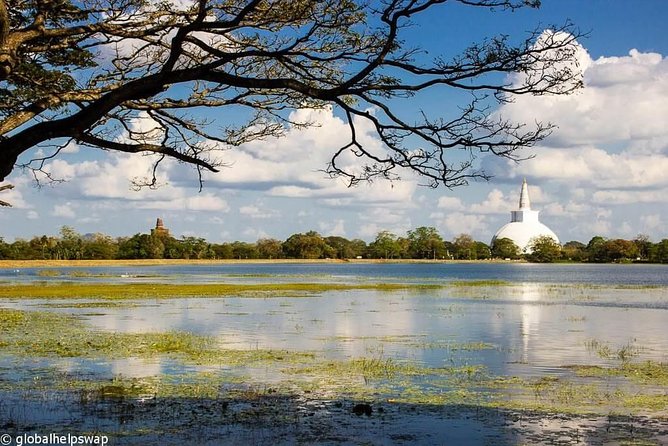
Day 2 is all about Anuradhapura, the ancient capital and a UNESCO World Heritage Site. The vibe here is spiritual and historical, but what makes it work in a short span is the variety: you go from major monuments (like Ruwanwelisaya) to sacred living landmarks (like the Jaya Sri Maha Bodhi fig tree).
This is also the day where the stop-by-stop timing helps you. The itinerary lists visits in the 30-minute range for many key sites, which keeps things moving without feeling like you’re sprinting every minute.
The must-see stops in Anuradhapura
- Ruwanwelisaya (30 minutes, admission included)
One of the foremost living monuments of Sinhalese Buddhist heritage. Even if you’ve seen photos before, the scale tends to make people slow down.
- Jaya Sri Maha Bodhi (30 minutes, admission included)
This sacred fig tree is said to be a sapling from the historical Bodhi tree and is noted as planted in 288 BC. It’s presented as one of the oldest living human-planted trees with a known planting date—an incredible fact to hold in your head while you’re standing there.
- Dagoba of Thuparama (30 minutes, admission included)
The itinerary frames this as the first dagaba built in Sri Lanka following the introduction of Buddhism.
- Lovamahapaya (30 minutes, admission included)
Known as the Brazen Palace for its bronze-tile roof in the past.
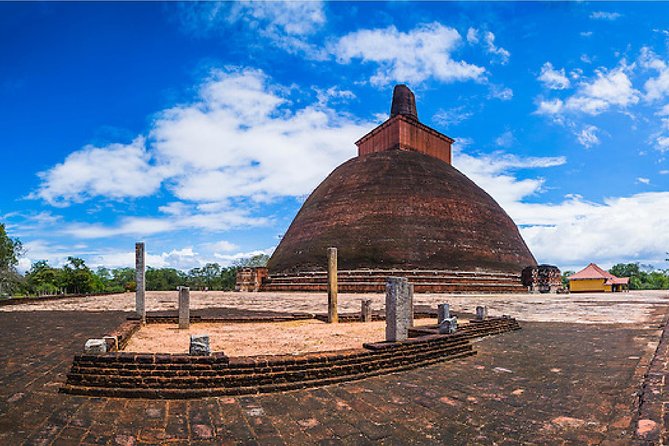
- Abhayagiri Dagaba and Abayagiriya Stupa (30 minutes each, admission included)
The ruins here are described as among the most extensive, and one note gives an idea of the original and current heights (the original may have been over 100m; today is about 70m).
- Mirisaveti Stupa (20 minutes, admission included) and Lankarama Sthupa (20 minutes, admission included)
These smaller blocks give you pacing—and help you avoid monument fatigue.
The itinerary also mentions that during Anuradhapura you’ll witness things like the Aukana Buddha statue, the thuparama temple, and Isurumuniya rock carvings. Even if your exact route depends on the guide’s navigation, this gives you a sense that the day isn’t only “walk from stupa to stupa.” It’s also about seeing different types of Buddhist-era artistry and stonework.
Mihintale: a heritage site that’s also described as wildlife sanctuary
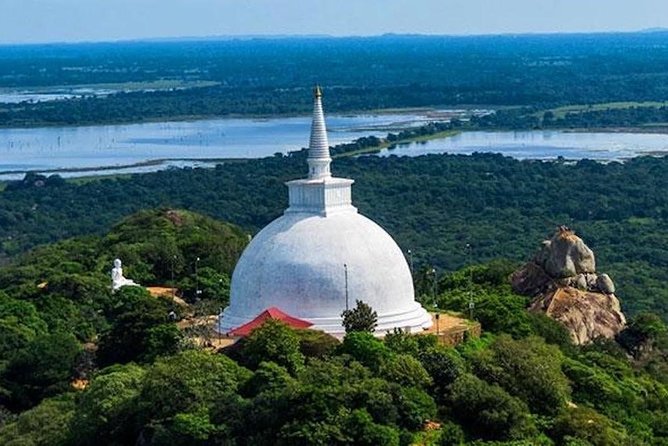
On day 3, you head to Mihintale, described as a world-first wildlife sanctuary. It’s tied to the year 247 BC, when King Devanampiya Tissa is said to have declared it a sanctuary.
You get about 4 hours for this stop, and the admission ticket is listed as included. What I like about placing Mihintale after the Anuradhapura monuments is that it gives your trip a different texture: less “ancient city grid” and more “single place with a purpose,” where the heritage and nature angle are part of the story.
If you’re the type who enjoys sites that feel lived-in (not staged), this is a good day to slow down and pay attention to surroundings, not only structures.
Polonnaruwa to Sigiriya: planned ruins, big irrigation, then overnight near the rock
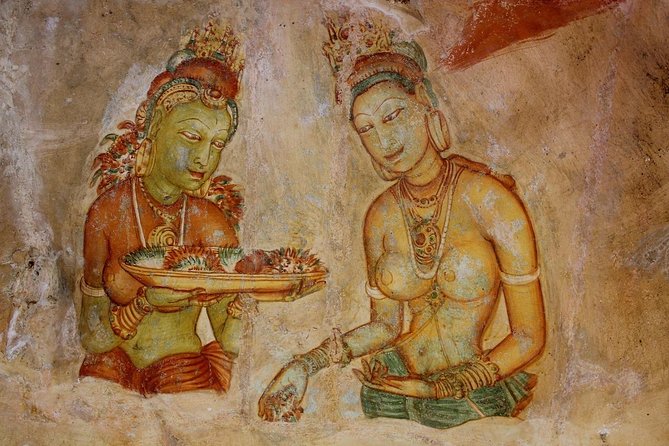
Day 4 starts with Polonnaruwa, another UNESCO World Heritage Site. This is the kind of archaeological visit that rewards a guide’s explanation, because Polonnaruwa isn’t just impressive—it’s described as one of the best planned archaeological relic sites in Sri Lanka.
You’re given about 5 hours here, with admission included. Key highlights listed in the itinerary include:
- Gal Viharaya rock temple
- Watadage
- King’s Council Chamber
- Lotus Bath
- Lanka Thilaka Viharaya
- Parakramabahu statue
- Parakrama Samudraya, the Sea of Parakrama, presented as a major ancient man-made irrigation system
I love when a destination explains how people lived, not just what they built. The irrigation story is a powerful way to connect the monuments to daily needs—water management, farming, and survival.
After Polonnaruwa, the itinerary continues to Sigiriya, where you overnight. That’s practical: it reduces extra late-day travel and positions you to see the rock fortress with better timing the next morning.


Sigiriya rock fortress plus Habarana village life (canoe, bull cart, local food)
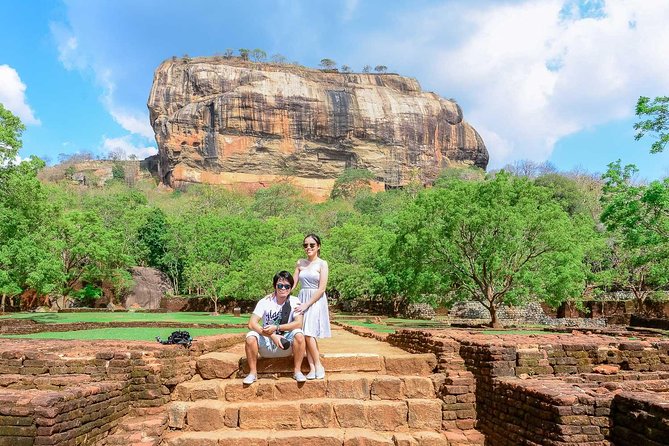
Day 5 gives you the best kind of contrast: monumental Sigiriya in the morning and then rural village life in the afternoon.
Sigiriya: the rock fortress
You get about 4 hours at Sigiriya Rock Fortress, described as an ancient-world wonder visible for miles from surrounding plains. Admission is included for this segment.
This is the day where you’ll feel how the route is designed: the itinerary has enough time to do the main fortress experience without squeezing it into ten minutes.
Habarana village walk and hands-on activities
After exploring Sigiriya, the itinerary shifts to Habarana, with a rural farming village experience: a village tour fees included, plus options listed as:
- a canoe trip on the lake
- a bull cart ride
- tasting local food
- time to venture out into rice and vegetable fields
The admission ticket here is noted as free, and the village portion is built as an experiential block rather than only observation. I think that’s one of the real value points of this tour: it keeps Sri Lanka from becoming only monuments and transport.
If you travel with kids, this is often the segment that makes the day feel fun rather than only educational.
Dambulla caves and the Tooth Relic in Kandy, with a real Kandyan evening
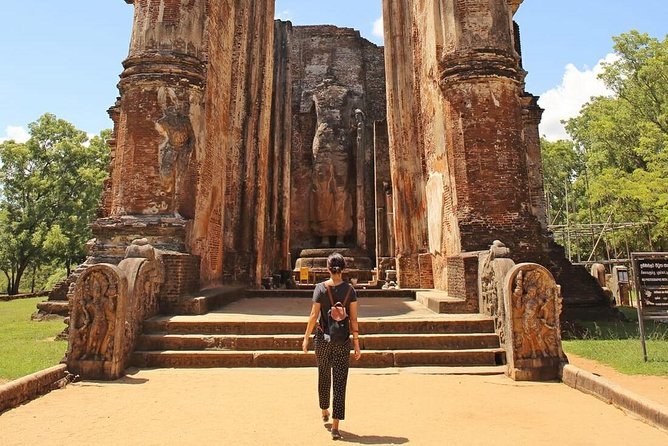
Day 6 is a two-part cultural day: cave temples first, then Kandy.
Golden Temple of Dambulla
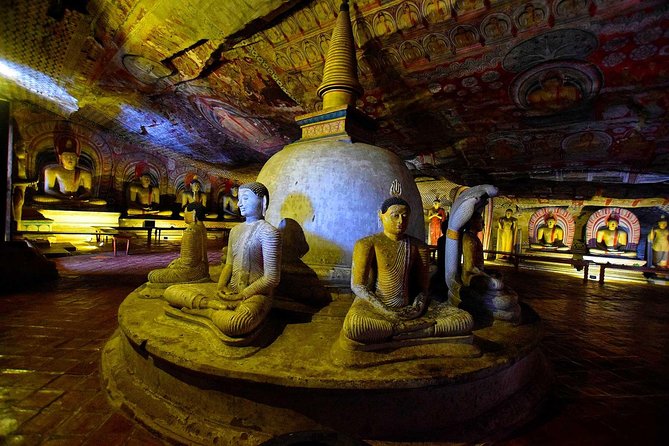
You start at Dambulla Cave Temple, known as the Golden Temple of Dambulla, a World Heritage Site. You get about 1 hour, admission included.
Even with an hour, cave temples can pack a lot in. This time slot feels realistic, especially after Sigiriya and village time the day before. It’s enough to see the main features without turning it into a long slog.
Temple of the Sacred Tooth Relic and a quick Kandy introduction
Then you move to Kandy and visit the Temple of the Sacred Tooth Relic (Dalada Maligawa). The itinerary says Kandy is a UNESCO World Heritage Site (declared in 1988) and that the tooth relic is housed there. Admission is included.
The time listed is very short (3 minutes). In practice, this can mean you’re quickly entering the space and seeing the main focus rather than touring deeply. If you want more time inside, your driver-guide may be able to help you manage your schedule based on local conditions—but the itinerary as written is brief.
Kandy walking tour plus Kandyan dancers and drummers
The afternoon is a Kandy city walking tour (4 hours, admission free). The itinerary says you’ll enjoy the city, see multicultural diversity, shop in local boutiques, walk streets, and explore authenticity. Your driver/guide will be in Kandy and supports you if you need help.
In the evening, there’s a cultural performance of traditional Kandyan dancers and drummers, including devotional fire walking.
This is the day where the “English-speaking driver-guide” matters most. You’re not only moving between sites; you’re being guided through what you’re seeing and how to understand it in context. It also helps you navigate Kandy in a way that feels less touristy and more like a local day out.
Galle Dutch Fort on the last major stop: beautiful fusion, plan for extra costs
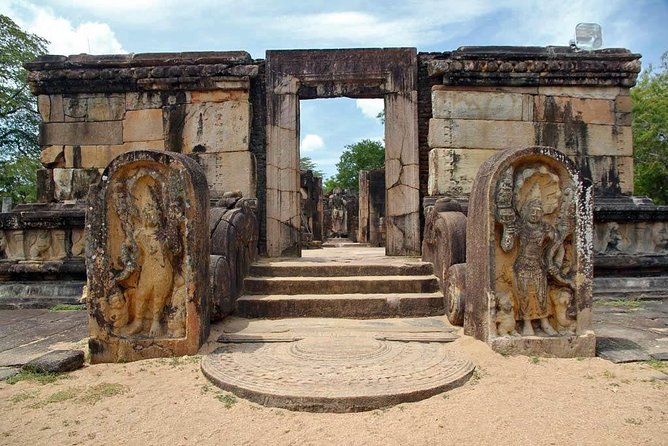
Day 7 heads south to Galle, where the Galle Dutch Fort is part of the UNESCO story. The itinerary calls it the biggest lasting fortress in South Asia and emphasizes a fusion of architectural design with Portuguese and local traditions.
You get about 4 hours. Admission ticket is listed as not included, so this is one of the clear “budget check” moments of the trip.
This is a good way to end the heritage portion with a coastal city feel. Fort days can also be great for photography and slow wandering, as long as you manage sun and walking.
Day 8 departure: you finish with airport transport instead of uncertainty
On day 8, after breakfast you proceed to the airport for departure. There’s nothing complicated here—the tour ends as a clean handoff to get you on your flight, rather than leaving you to arrange last-minute transport yourself.
Price, value, and what $51.50 really buys you for 8 days
At $51.50 per person for an 8-day private car hire with an English-speaking driver-guide, the value comes from three things:
- Time and stress savings
You’re not coordinating separate transport between Anuradhapura, Polonnaruwa, Sigiriya, Dambulla, Kandy, and Galle. That alone can save you hours of planning.
- Included site admissions for most listed stops
Many monuments in the itinerary show admission included. That reduces the “surprise bill” feeling that can happen on DIY trips.
- Practical experience design
The route includes a true village experience in Habarana (canoe, bull cart, local food). That pushes the trip beyond checklists and helps you connect with everyday life.
The main limitation is cost predictability on extras. The itinerary clearly flags items not included: dinner and lunch, personal expenses (like drinks and tips), early check-in/late check-out charges, and camera/video fees if they apply. And, importantly, Galle Dutch Fort admission is not included.
So the right way to think about this price is: it’s a strong deal if you budget modestly for meals and the one or two entrance gaps.
The real service difference: how drivers like Janaka, Sity, Dilshan, and Lakshi show up
The best part of this kind of tour is often not the “big sights.” It’s the day-to-day help: getting you to the right entrance, keeping timing workable, and answering questions in plain English.
Past feedback for this provider repeatedly praises service quality and helpfulness, with names like Janaka, Sity, Dilshan, Nuwan/Nuhan Sity, and Lakshi showing up as organizers or driver partners. A common thread is friendliness, professionalism, and going out of the way to support families and keep the trip running smoothly.
Also, some clients report practical help like coordinating and confirming details between hotels and stops. If you’re traveling with kids or you want someone to handle small questions quickly, this matters.
Who should book this tour, and who might want something different
This tour is a great match if you want:
- Private transport with an English-speaking guide
- A route that hits the cultural heart of Sri Lanka: Anuradhapura, Polonnaruwa, Kandy, plus Sigiriya and the south coast
- A balanced day that mixes major monuments with at least one hands-on local-life experience (Habarana)
You might consider a different option if:
- You dislike long multi-day schedules with site-to-site changes
- You prefer a trip where all entrances and meals are fully included (this one has clear non-included items, including Galle Dutch Fort)
FAQ
FAQ
What’s included in the Sri Lanka car hire with English-speaking driver-guide?
The tour includes private transportation in an air-conditioned vehicle, sightseeing tours with an English-speaking chauffeur guide, and entrance fees for the mentioned sites.
Are admission tickets included for every stop?
Most sites list admission ticket as included, but Galle Dutch Fort is marked as admission ticket not included, and Day 1 Negombo Beach is also listed as admission ticket not included.
Do you get pickup when starting in Sri Lanka?
Pickup is offered. You’re also described as being greeted at the airport by an Overa representative and guide, then taken into Negombo.
Is this tour private or shared with other people?
It’s private. Only your group will participate.
What cities and key stops does the 8-day route cover?
You’ll base in or visit Negombo, Anuradhapura, Mihintale, Polonnaruwa, Sigiriya, Habarana, Dambulla, Kandy, and Galle, then go to the airport on Day 8.
Does the itinerary include Kandy’s cultural performance?
Yes. The itinerary includes a cultural performance of traditional Kandyan dancers and drummers, including devotional fire walking.
What if weather is bad during the tour?
The experience requires good weather. If it’s canceled due to poor weather, you’ll be offered a different date or a full refund.
Can I cancel and get a full refund?
Yes. Free cancellation is available up to 24 hours before the experience’s start time for a full refund.
Should you book this 8-day driver-guide road trip?
If you want an organized route that connects Sri Lanka’s big heritage highlights with at least one real “live like locals” day, I think this is an easy yes—especially at $51.50 per person for private air-conditioned transport and an English-speaking guide.
Just don’t ignore the non-included parts. Plan for meals, personal expenses, any camera/video fees, and the Galle Dutch Fort entrance cost. If you budget for those, you’ll get a smooth, heritage-heavy road trip without the planning headaches.