Wax and dye in one good morning.
This is a small-group, hands-on batik workshop in Kandy that walks you through the full process—from choosing fabric to the final de-wax—using traditional tools and techniques. I like that you’re not just watching. You’re doing the steps yourself, so the craft actually makes sense. I also like that it’s hosted in a family-style home studio with plenty of time for questions, rather than a rushed demo.
One thing to consider: it’s a busy 3 hours 30 minutes. If you want a slow, sit-and-snack cultural stop, this will feel more like a focused class than a casual wander.
In This Review
- Key Things to Know Before You Go
- Your Kandy Morning Starts in a Real Workshop Setting
- What You’ll Learn: Batik Is a Whole System, Not One Trick
- Picking Fabric and Designing Your Pattern (So It Looks Like You Meant It)
- Wax Tools You’ll Actually Use: Tjanting, Funnel, and Henry Tool
- Waxing Techniques That Build the Resist Effect
- Dyes: Naphthol, Vat, and Reactive Methods Explained
- De-Waxing (The Moment the Design Reveals Itself)
- Small Group Instruction: Why You’ll Ask More Questions Here
- Comfort Details: What the Experience Feels Like in Real Life
- Value in Real Terms: Is $28 a Good Deal?
- Best For Who: The Right Fit for Your Style of Travel
- Should You Book the Interactive Batik Workshop in Kandy?
- FAQ
- Where does the workshop start and end?
- How long is the interactive batik workshop?
- What’s included in the price?
- Will I be able to take my batik work home?
- What tools and techniques will I learn?
- How big is the group?
- What is the cancellation policy?
Key Things to Know Before You Go
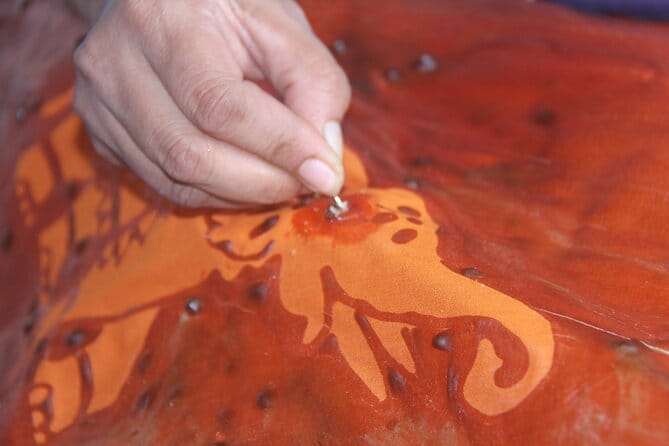
- Small group (max 10) means hands-on help when your wax work needs it
- Full step-by-step process: fabric selection, waxwork, dyes, then de-waxing
- Traditional tools you’ll use, including the tjanting / Henry-style tool and stamping methods
- Color education you can apply with naphthol, vat, and reactive dye approaches
- You take your own batik cloth home, not a postcard version of the craft
Your Kandy Morning Starts in a Real Workshop Setting
The workshop meets on Thalapiyannawa Road in Kandy, with the activity starting at 8:00 am and returning you back to the same meeting point at the end. The timing matters. A morning start gives you cooler working conditions for a process that involves heat (waxwork and later de-waxing), plus a full block of focused instruction before the day gets busy.
What makes this feel authentic is the setting: it’s run by an experienced couple and takes place in their home studio. That translates into a more personal pace. You’re not bouncing around a large facility; you’re learning inside the real place where they’ve been making batik day after day.
And yes, you’ll get a refreshing herbal tea as part of the experience. It’s a small detail, but it helps you settle in—because batik is a hands-on craft that asks for patience.
You can also read our reviews of more tours and experiences in Kandy.


What You’ll Learn: Batik Is a Whole System, Not One Trick
A lot of art experiences give you a single craft moment. This one teaches batik as a full system: how wax creates resist, how designs transfer onto cloth, and how different dye methods behave.
You’ll cover the end-to-end flow, including:
- Fabric selecting
- Wax mixtures and waxing techniques
- Tool use: funnel / tjanting / Henry tool
- Wax spraying
- Stamping
- Cracking
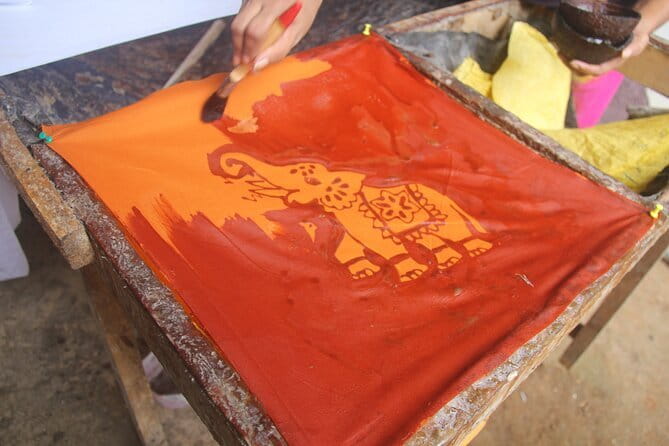
- Brush arts
- Wax designing
- Dyes & applications
- Dye mixtures and techniques: naphthol dyes / vat dyes / reactive dyes
- Wax burning & wax boiling (de waxing)
Why this matters for you: batik can look magical from the outside, especially the color patterns that appear after wax removal. Learning the steps in order helps you understand what causes those results. Instead of copying a pattern, you’ll learn how to control outcomes—line by line, section by section.
Picking Fabric and Designing Your Pattern (So It Looks Like You Meant It)
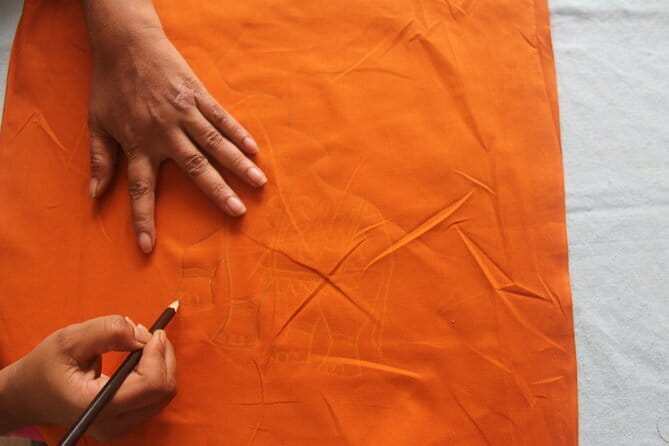
The class starts with the practical question: what cloth you’re working with. You’ll learn fabric selecting, which sounds simple, but it’s the foundation of everything else. The cloth affects how wax holds, how lines stay crisp, and how dyes spread.
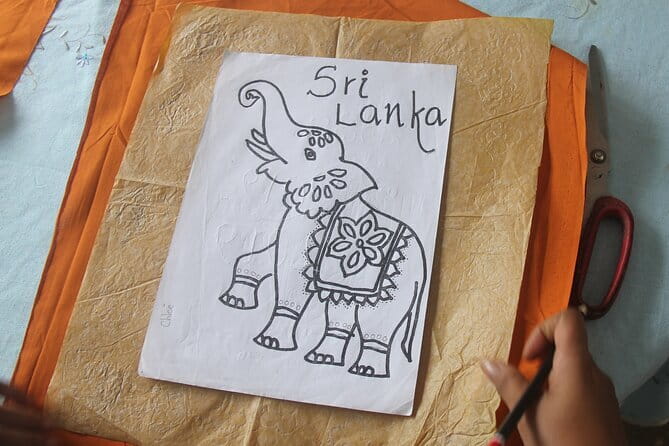
Then you move into drawing and design planning, including wax designing. You’ll get to create your own design rather than just fill in a template. That’s the difference between a souvenir and a real keepsake: your choices show up in the finished cloth.
Pro tip: think in sections. Batik is resist work. If you treat it like painting from one side to the other, you’ll fight the process. Treat it like a map of protected and unprotected areas. Once you think that way, the chaos becomes a plan.
Wax Tools You’ll Actually Use: Tjanting, Funnel, and Henry Tool

This workshop isn’t limited to one “special pen.” You’ll work with several tools and techniques, which is key if you want to understand the craft instead of memorizing a single method.
You’ll try:
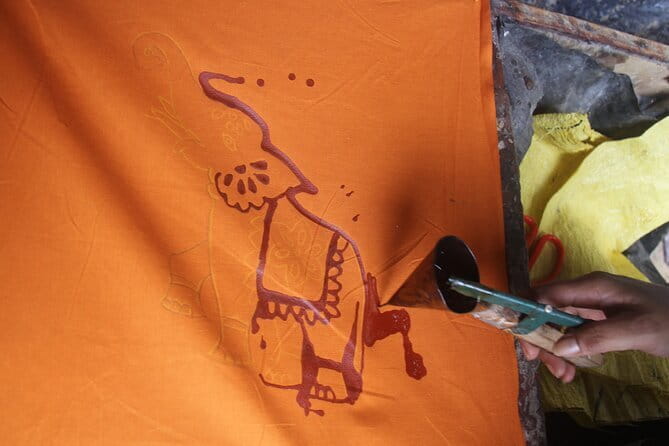
- Tjanting (a traditional tool used for controlled wax lines)
- Funnel methods (useful for different wax application styles)
- A Henry tool approach (another traditional tool style used in wax application)
- Wax spraying for specific effects
- Stamping for repeated patterns
- Brush arts for hands-on wax work
- Cracking techniques as part of the texture process
Each tool teaches a different kind of control—thick vs. thin lines, crisp vs. soft edges, and patterned vs. freehand looks. If you’ve ever wondered why batik artists’ work can look so detailed, this is where you see how they build that detail step-by-step.
Also, because the group is small (max 10), instruction can stay focused. When your wax line goes where you didn’t intend, you don’t just watch someone else fix theirs. You get guidance to fix yours.
Waxing Techniques That Build the Resist Effect
The central magic of batik is wax resist: wax protects the fabric from dye in the areas you cover. To do that well, you need consistent wax mixtures and waxing techniques.
You’ll learn waxing as more than dipping or smearing. The class covers the workflow that gets you from a design to a cloth that can survive multiple dye steps. That includes how and where wax gets applied, and what you should aim for so the resist doesn’t fail.
A helpful mindset here: waxwork rewards slow hands. If you rush, lines get messy and areas can blur when dyes hit. When you take your time, you get clearer separation between colors.
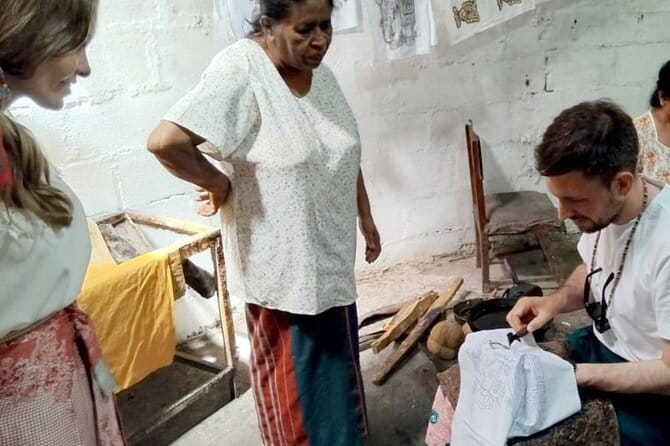
In the experience, the instructor personally guides each participant where help is needed. That’s not a vague promise—it’s what makes the workshop doable for beginners.





Dyes: Naphthol, Vat, and Reactive Methods Explained
Dyes are where batik can feel intimidating. Different dye systems behave differently, and you can’t treat them all the same. This is why the workshop is valuable: you learn the dye categories you’ll use, including:
- Naphthol dyes
- Vat dyes
- Reactive dyes
- Plus dye mixtures & techniques for applying color
Even if you’ve never touched textile dye before, the class frames these as tools for different results. Vat dyes and naphthol systems are often associated with layered development and distinct depth. Reactive dyes tend to be more straightforward in application terms (though still technical). The point isn’t the chemistry lecture. The point is how the process looks and feels in your hands.
If you’re the type who wants to understand why something works, this dye segment will feel like the payoff. And because you’re working step-by-step rather than guessing, you’re more likely to end up with a cloth you’ll actually want to display.
De-Waxing (The Moment the Design Reveals Itself)
After all the dye work, you reach the finish line: removing the wax. The workshop includes wax burning & wax boiling (de waxing), which is where the design finally shows its true contrast—protected areas stay lighter, dyed areas take color, and textures become visible.
This step is important not just for the look. It’s where you learn the practical reality of batik. Wax doesn’t come out by wishful thinking. It comes out by process.
Even if your early wax layers were imperfect, de-waxing is often forgiving in a surprising way. That’s another reason this class is worth taking. It gives you the whole arc: you won’t be stuck at the stage where you have a dyed cloth that looks unfinished.
Small Group Instruction: Why You’ll Ask More Questions Here
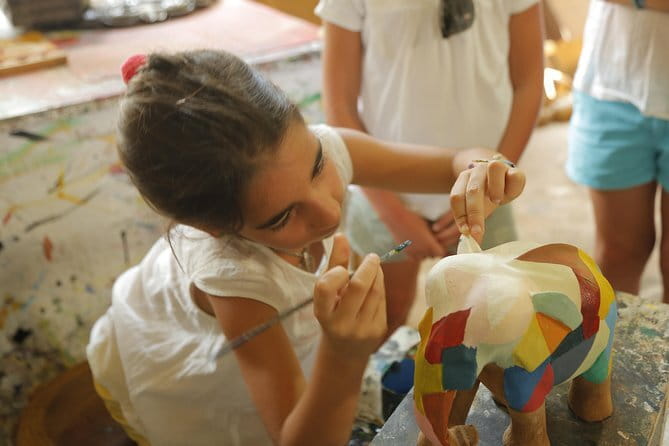
With a maximum of 10 travelers/people, the instructor can actually spend time where it counts. You get time to ask questions, and the guidance is personal. This matters for batik because tiny technique choices create big differences—line thickness, wax coverage, dye timing.
The workshop is also run by an experienced couple, and the teaching style comes across as patient and careful. In past groups, the instructors have included people like Anuja and Manugi, working with their families. Either way, the common thread is family teamwork: you’re not just learning from one person in a studio booth; you’re learning in a small household workshop where batik is part of everyday life.
Comfort Details: What the Experience Feels Like in Real Life
You’re working for roughly 3 hours 30 minutes, so plan for a hands-on craft pace. Expect your hands to be busy. Expect concentration. And expect that you’ll need a few minutes here and there to reset your technique, because batik involves multiple steps.
The setting is described as cozy and friendly, with a herbal tea included. In practice, that kind of warm hospitality makes the learning curve less stressful. You’re more likely to try again when something goes wrong, which is exactly how you improve.
Also, you don’t have to bring materials. The workshop includes all tools and equipment, plus the cloth and other material needed for the program.
Value in Real Terms: Is $28 a Good Deal?
At $28 per person for about 3 hours 30 minutes, this workshop is strong value if your goal is a hands-on skill and a take-home result.
Here’s what you’re paying for that justifies the price:
- Instruction through the full batik process, not a single step
- Small-group attention (max 10)
- Tools and materials included (so you’re not doing math on extra supplies)
- Fees and taxes included in the listed price
- A finished item: you take your own batik cloth as a souvenir
What you should budget separately:
- Lunch isn’t included
- Private transportation isn’t included, so you’ll want to plan how you’ll get to Thalapiyannawa Road
If you’re in Kandy and you’ve been thinking about arts-and-crafts that don’t feel touristy, this is one of the better ways to spend a half-day. You leave with something you made, and you understand the process behind it.
Best For Who: The Right Fit for Your Style of Travel
This experience is a great fit if you:
- Like making things with your hands
- Want a cultural activity that’s structured and teachable
- Prefer small group settings with time to ask questions
- Enjoy process-based learning (wax, resist, dyes, reveal)
It’s less ideal if you:
- Want a short, low-effort activity
- Don’t like working with details and patience
- Are hoping for lots of downtime and wandering
Most people can participate, and the instruction format makes it workable even if you’ve never tried batik before. The key is showing up ready to focus for a few hours.
Should You Book the Interactive Batik Workshop in Kandy?
Yes—if you want a hands-on souvenir and you like learning how something is made, this workshop is worth your time. The biggest win is the full craft arc: fabric selection, waxwork with traditional tools, dye methods (naphthol, vat, reactive), and then de-waxing for the reveal. That’s a complete learning story, not a quick demo.
Before you book, do a quick reality check: bring comfortable morning energy. You’ll be working, not just observing. And because lunch isn’t included, plan food around the start time of 8:00 am.
If you’re the kind of person who loves returning home with proof that you tried something real, this is a smart half-day choice.
FAQ
Where does the workshop start and end?
The workshop starts on Thalapiyannawa Road in Kandy and ends back at the same meeting point.
How long is the interactive batik workshop?
It lasts about 3 hours 30 minutes.
What’s included in the price?
The price includes all tools and equipment, the cloth and other materials needed for the program, and all fees and taxes.
Will I be able to take my batik work home?
Yes. You create your own design and take your batik cloth as a souvenir.
What tools and techniques will I learn?
You’ll work on fabric selection, wax mixtures and waxing techniques, and use traditional tools such as the funnel, tjanting, and Henry tool. The workshop also covers stamping, wax spraying, cracking, brush arts, dye applications, and de-waxing by burning and boiling.
How big is the group?
The workshop has a maximum group size of 10.
What is the cancellation policy?
Free cancellation is available up to 24 hours in advance for a full refund.