Polonnaruwa feels like stepping into a city made of stone and stories. This Lux Tours Lanka day trip is a smart way to hit the key sights in one go, with pickup options and a mobile ticket that keeps things simple. I especially like the tight focus on the big Polonnaruwa monuments—so you’re not wasting the day chasing small, random stops.
The guide-driven pace is also a big win. In the best moments, you’ll get clear, enthusiastic explanations (I’ve seen how a guide named Dan kept things engaging and even pointed out wildlife while driving), which makes the ruins easier to read. One consideration: admission tickets aren’t included at the stops, so you’ll want to budget a bit extra and plan your timing.
In This Review
- Key highlights worth planning for
- From Kandy to Polonnaruwa: a day that actually makes sense
- Price and time: does $65 feel fair?
- The private-group advantage: pickup, pace, and a guide who reads the room
- Gal Vihara: four Buddhas cut from one slab
- Archaeological Museum: your decoder ring for Polonnaruwa
- Polonnaruwa Vatadage and the Quadrangle: the compact heart of the ruins
- Lankathilaka Image House: the big gedige moment (17m walls)
- Thivanka Image House: thrice bent and the three-curve Buddha pose
- Rankoth Vehera: the 54m dagoba you can feel from far away
- Extra touches: wildlife spotting, culinary guidance, and sometimes more
- Who should book this Polonnaruwa day tour?
- FAQ
- FAQ
- How long is the Polonnaruwa day tour from Kandy?
- What is the price for this tour?
- Does Lux Tours Lanka offer pickup?
- Is this a private tour?
- Are admission tickets included for the stops?
- What main sites do you visit during the day?
- When does this tour operate?
- Is free cancellation available?
- Should you book this tour?
Key highlights worth planning for
- Gal Vihara’s four Buddha images carved from one long slab, tied to Parakramabahu I’s northern monastery
- Archaeological Museum walkthrough with rooms for the citadel, outer city, monastery area, and Hindu monuments
- The Quadrangle: a compact cluster of ruins bounded by a wall, and arguably the most concentrated sight area
- Lankathilaka Image House: a massive gedige temple built by Parakramabahu I and restored by Vijayabahu IV
- Thivanka Image House detail: the Buddha in a thrice-bent three-curve pose, connected to what the name means
- Rankoth Vehera (Rankot Vihara) dagoba: a 54m stupa and one of the island’s largest
From Kandy to Polonnaruwa: a day that actually makes sense
A trip like this works because Polonnaruwa is best experienced with context. The ruins are spread out enough that you could easily feel lost if you go DIY. With Lux Tours Lanka, you get a guided route that strings together the most important sites—so when you see a stupa, you also understand what you’re looking at, and when you see carved figures, you know why they matter.
I also like the “one city, many angles” approach. You’re not just looking at temples from one side and moving on. You see the religious spaces, the carved Buddha imagery, the dense Quadrangle ruins, and the structures that tell you how daily life and belief systems were shaped in the ancient capital.
The tour is private, meaning it’s only your group. That matters more than it sounds. In ruins and museums, people naturally move at different speeds. Private time lets you linger when something clicks—especially around carvings and layout-heavy areas like the Quadrangle—without feeling rushed.
You can also read our reviews of more tours and experiences in Kandy.

Price and time: does $65 feel fair?
At $65 for a Kandy-to-Polonnaruwa day tour (listed as about 5 to 12 hours), the value comes down to what you’ll otherwise spend time and energy managing.
If you’re doing this yourself, you’d likely pay for transport, spend time figuring out entrances and routes, and lose the kind of guided explanations that make archaeology feel readable instead of confusing. Here, you pay for direction, route efficiency, and interpretation. For many people, that’s the real value—especially if you only have a single day in the region.
The other side of the math: site admission isn’t included at the stops. That doesn’t make the tour a bad deal, but it does mean your true cost is price plus tickets. Also, because the itinerary is time-based and the stop durations are fairly tight, it helps to go in with tickets ready (or at least a plan) so you don’t accidentally burn your best hours waiting in lines.
The private-group advantage: pickup, pace, and a guide who reads the room
Lux Tours Lanka offers pickup and uses a mobile ticket. Those two details might seem minor, but on a day trip they reduce friction. You’re less likely to show up stressed or waste time coordinating.
Pace is where private touring really shines. A group can pause for photos, take breaks, or ask follow-up questions without turning it into a whole production. And the guide attention level can genuinely change how the day feels. In one of the experiences I saw described, Dan was engaging and attentive, explained things with enthusiasm, and even added wildlife spotting during the drive. That kind of extra observation doesn’t replace the monuments—it supports them. It keeps the long road time from feeling like dead travel.
Gal Vihara: four Buddhas cut from one slab
Gal Vihara is a top-tier stop because it’s both visually impressive and easy to understand. It’s known for a group of beautiful Buddha images, likely the high point of Sinhalese rock carving, and part of the northern monastery tied to Parakramabahu I.
What I love about this stop is the clarity of the artistry. The Gal Vihara consists of four separate images all cut from one long slab. That single detail helps you look more closely: instead of seeing random figures, you start noticing how the images relate to one another within the same stonework.
Timing-wise, expect around 45 minutes here, and admission is not included. The drawback isn’t the site—it’s the plan. If you arrive late or you’re ticket-late, you might feel pressure to rush your photos and slow looking. So when you’re there, treat this as your “pay attention carefully” moment.
Archaeological Museum: your decoder ring for Polonnaruwa
If Gal Vihara is the art, the Archaeological Museum is the explanation. This museum is described as excellent, with rooms dedicated to the citadel, the outer city, the monastery area, and Hindu monuments.
The museum’s value is how it prepares your brain for what you’ll see outside. When you step into a ruin area with model layouts and themed rooms, you stop asking what everything is and start asking why it was built that way. One highlighted detail is a model of monks’ hospital and medical instruments in the monastery-area section, which adds a rare “how life worked” perspective, not just temples and statues.
Plan for about 1 hour at the museum, and again, admission is not included. If you’re someone who hates museums, you may be tempted to skip it. I wouldn’t. Even if you only walk the highlights, it tends to make the outdoor Quadrangle and temple stops feel more grounded.



Polonnaruwa Vatadage and the Quadrangle: the compact heart of the ruins
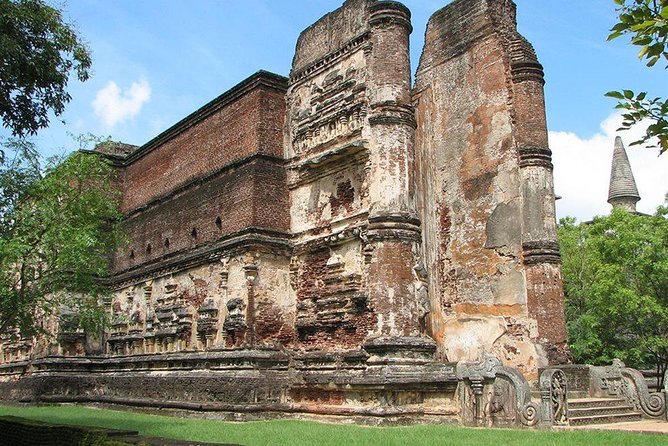
This is where Polonnaruwa usually clicks for people. The area known as the Quadrangle is described as a compact group of buildings in a raised area bounded by a wall. That boundary is more than a detail—it means you’re not wandering endlessly. You’re in one focused zone where layout and clustering matter.
You’ll walk to Polonnaruwa Vatadage, described as a short stroll north of the Royal Palace ruins. The Quadrangle is often framed as the most concentrated collection of buildings in the Ancient Cities core, and with good reason. You can get a strong sense of the space without needing a full-day “spread out over kilometers” approach.
Expect about 30 minutes here. The challenge: because it’s compact, you may feel like you can cover it quickly—then realize you missed the small stuff. Go slow on your first pass. Look for how different structures relate to each other within the wall-bounded space.
Admission is not included at this stop, so treat tickets as part of the logistics you manage early in the day, not something to leave until the last second.
Lankathilaka Image House: the big gedige moment (17m walls)
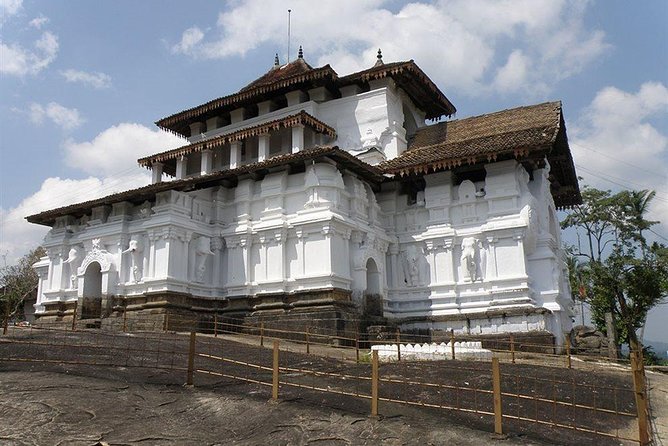
Lankathilaka is one of those stops that changes your scale sense. This temple structure—an image house—was built by Parakramabahu I and later restored by Vijayabahu IV. It’s described as a massive gedige: a stone Buddhist temple with a corbelled roof and thick walls.
The key detail is size: it has 17m-high walls. That’s the kind of dimension you feel when you’re standing near it. It’s not just a ruin photo; it’s a physical presence.
Expect about 30 minutes, and admission isn’t included. If you’re short on time, this is worth choosing even over less significant structures, because big structures like this act like anchors for the whole site. You’ll likely remember it more clearly than smaller carvings—especially when your brain is juggling multiple stops in one long day.
Thivanka Image House: thrice bent and the three-curve Buddha pose
Thivanka Image House is a great example of why the smaller, single-building stops can matter. The name Tivanka/Thivanka refers to “thrice bent,” describing the position of the Buddha image inside—a three-curve posture normally reserved for female statues.
That concept gives you something to look for. Instead of treating it like another temple shell, you focus on the specific pose and what the name signals. It’s one of those details that can make you feel like the site has a personality.
This is also about a 30-minute stop, with admission not included. If you tend to move fast, set a rule for yourself: give the pose your attention for a full minute or two before you start photographing everything at once.
Rankoth Vehera: the 54m dagoba you can feel from far away
Rankoth Vehera is centered on the Rankot Vihara dagoba, described as the largest in Polonnaruwa and the fourth largest on the island. The dagoba is listed at 54m.
You’re also told it’s been ascribed to the reign of King Nissanka Malla. Like other major dagobas in Anuradhapura and Polonnaruwa, the description notes construction details about the dome, which hints at how these structures weren’t only symbolic—they were engineering projects too.
Expect about 30 minutes at Rankoth Vehera, with admission not included. The main consideration here is contrast. By the time you get to the dagoba, you may be slightly “sight-saturated” from earlier carvings and temples. If that happens, do a reset: step back, let your eyes track the dome and shape, then move in closer.
This is also the stop that often benefits from a guide’s pacing. A good guide can help you appreciate the scale and layout instead of just pointing and moving on.
Extra touches: wildlife spotting, culinary guidance, and sometimes more
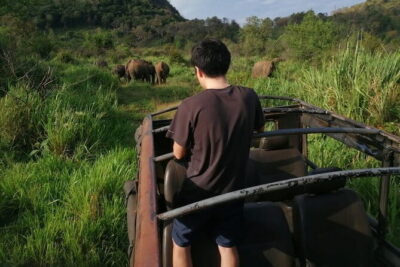
One of the best parts of a guided day trip is when the guide adds small real-world texture. In the experiences I saw, the drive wasn’t just transport—it included wildlife spotting. That can make the day feel like it has breathing room between monuments.
Another added value that shows up in the descriptions is a culinary guide. That doesn’t come from the archaeology itself, so it depends on the route and timing. If food is part of your travel priorities, ask your guide where they recommend you stop or what local dishes might fit your preferences.
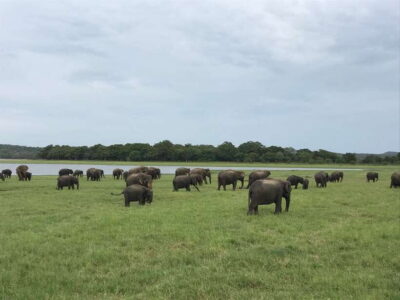
Finally, one described day included a visit to an elephant orphanage. The core focus here is Polonnaruwa, but that kind of extra time may appear depending on scheduling. If that’s important to you, it’s worth checking in when you book so you’re not surprised by what’s included.
Who should book this Polonnaruwa day tour?
This is a great fit if you:
- Want maximum clarity on the main Polonnaruwa monuments without puzzle-solving logistics
- Appreciate a guide who explains and adjusts pace for your group
- Have limited time from Kandy and still want the Quadrangle plus the major temples and carvings
- Prefer private touring over being one voice in a big group
It’s less ideal if you:
- Hate museums and indoor interpretation (because the Archaeological Museum is part of the day)
- Want a super flexible itinerary with lots of optional detours
- Don’t want to handle extra admission tickets separately
FAQ
FAQ
How long is the Polonnaruwa day tour from Kandy?
The duration is listed as approximately 5 to 12 hours.
What is the price for this tour?
The price is listed at $65.
Does Lux Tours Lanka offer pickup?
Yes, pickup is offered.
Is this a private tour?
Yes. It’s a private tour/activity, and only your group will participate.
Are admission tickets included for the stops?
No. Admission ticket is not included at the stops listed (Gal Vihara, Archaeological Museum, Polonnaruwa Vatadage, Lankathilaka Image House, Thivanka Image House, Rankoth Vehera).
What main sites do you visit during the day?
The day includes Gal Vihara, the Archaeological Museum, Polonnaruwa Vatadage (Quadrangle), Lankathilaka Image House, Thivanka Image House, and Rankoth Vehera.
When does this tour operate?
The listed opening hours are Monday to Sunday from 7:00 AM to 8:30 PM.
Is free cancellation available?
Yes, you can cancel for a full refund if you cancel at least 24 hours in advance of the experience start time.
Should you book this tour?
I’d book it if your priority is seeing the best of Polonnaruwa with real context, not just collecting photos. The mix of Gal Vihara, the Archaeological Museum, the Quadrangle, and major structures like Lankathilaka and Rankoth Vehera is exactly the kind of concentrated route that works for a one-day visit from Kandy.
I’d hesitate only if you’re trying to keep costs super tight because admission tickets aren’t included, and you want zero schedule pressure during a long day. But if you go in ready to manage tickets and you want a guide who keeps the day moving with enthusiasm, this is a strong, efficient use of your time in Sri Lanka’s ancient heartland.