Golden hours in Yala turn luck into a plan. Ajith Safari runs a small-group (max 6 people) game-drive setup with golden-hour timing, aiming to line you up for Sri Lankan leopards and the other big animals of Yala. I love the door-to-door hotel pickup (if you choose it) and the clear focus on seeing the Big Three, but you’ll want to factor in the Yala entrance fee and keep an eye on what the driver is actually able to deliver that day.
What makes this tour appealing is how it’s built around how Yala works in real life: you go early or late, you stay quiet when you need to, and you rely on an experienced driver-guide to make fast calls on where sightings are most likely. For full-day trips, you also get lunch and bottled water, so you’re not scrambling mid-safari. The only thing that can put a wrinkle in your day is timing—clarify what your paid hours mean (park time vs. pickup and waiting) so your expectations match reality.
In This Review
- Key things that matter (before you book)
- Why Yala’s Big Three needs the right timing
- Ajith Safari Jeep drives: what the setup is really like
- Morning vs afternoon vs the 7-hour option
- Price and what you actually get for $18
- Inside Yala: how sightings, stops, and crowd pressure work
- Wildlife you can realistically expect to look for
- Comfort, safety, and what to pack for an open jeep
- Common issues to watch for (and how to protect your day)
- Who this safari suits best
- Should you book Ajith Safari for Yala?
- FAQ
- What is the price of the Yala safari with Ajith Safari?
- How long is the safari?
- Are Yala National Park entrance fees included in the price?
- Is lunch included?
- Does the tour include hotel pickup and drop-off?
- What size is the safari jeep group?
- What time windows are used for the best leopard chances?
- What wildlife is the safari mainly trying to spot?
- What happens if the weather is poor?
- What is the cancellation policy?
Key things that matter (before you book)
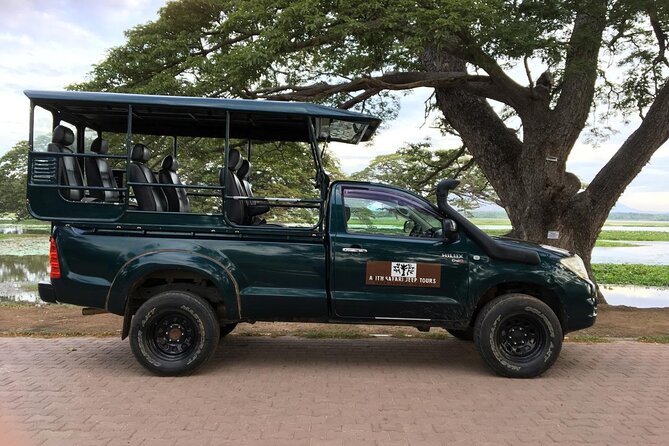
- Golden-hour windows: plan on being in Yala in the first 2 hours (6–8 a.m.) and/or the last 2 hours (4–6 p.m.)
- Max 6 in the jeep: smaller groups help you avoid noise and keep wildlife viewing smoother
- Big Three focus: leopards, sloth bears, and elephants are the targets, not random driving
- Know what’s included: full-day safaris add Sri Lankan lunch and 2 liters of bottled water per person
- Budget for park fees: Yala entrance fees are not included (13,000 LKR per person)
Why Yala’s Big Three needs the right timing
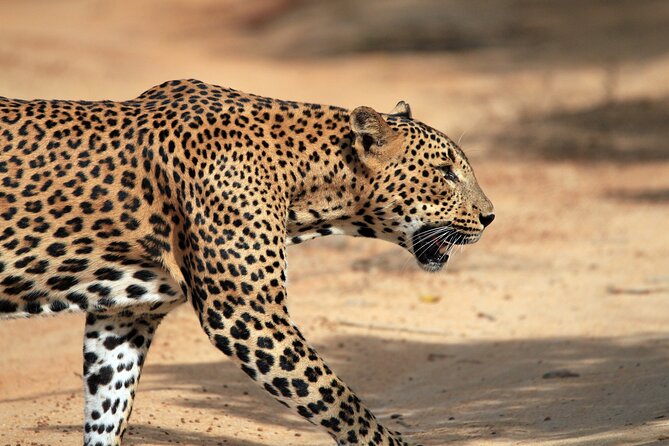
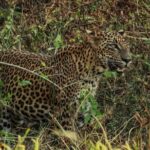
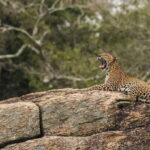
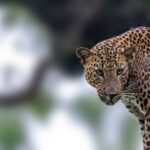
Yala National Park is famous for one thing above all: the best odds at seeing Sri Lankan leopards. The park is said to hold around a hundred individuals, and the Sri Lankan leopard is a native subspecies. That matters because in Yala you’re not just visiting a park—you’re hunting a rare sight, and timing is everything.
Ajith Safari’s schedule is built around the so-called golden hours, when light and animal activity tend to line up. If your safari lands in the early morning or toward late afternoon, you’re more likely to catch animals moving before the heat changes behavior and before the park gets more crowded.
You can also read our reviews of more tours and experiences in Yala National Park.
Ajith Safari Jeep drives: what the setup is really like
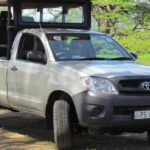
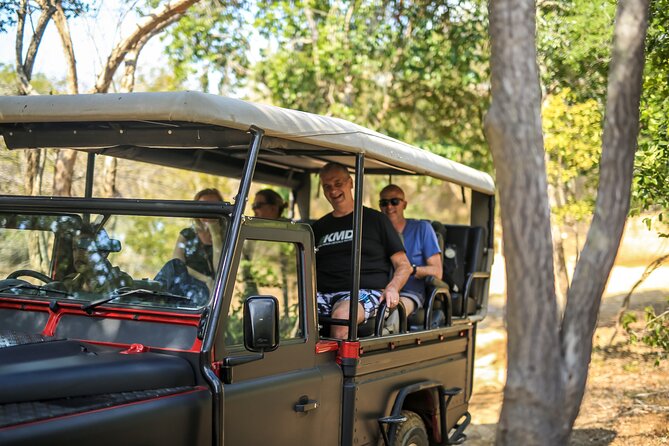
This is a 4-wheel-drive safari in a jeep designed for wildlife viewing, with a max of 6 passengers on a sharing basis. That small number is more than a comfort detail. In wildlife parks like Yala, fewer people means less noise, less jostling for views, and fewer situations where someone inadvertently waves arms or blabs at the wrong moment.
The driver-guides are described as licensed from the Wildlife Department of Sri Lanka, and in day-to-day terms that usually shows up as stronger navigation, better knowledge of where to look, and better judgment about when to move and when to hold. Some of the names that come up for standout guiding include Nalaka, Naja, Bale, Kanaka, Kasun B, Dillon, and Hishan—often paired with faster spotting, calmer driving in busy areas, and explanations that actually help you understand what you’re seeing.
One practical note: Yala can feel busy because there are a lot of jeeps chasing the same sightings. The best-run safaris try to get ahead of the crowd or reposition so you can watch longer, not just park hop for a quick glance.
Morning vs afternoon vs the 7-hour option
You’ll pick from different safari lengths and start times, but the tour’s logic is consistent: try to get you into the park during peak visibility. Morning departures aim for 6–8 a.m., while afternoon options target 4–6 p.m. If you choose a longer option, your day is still organized around those golden windows.
Here’s how I’d think about the choices:
Morning safari (6–8 a.m. window)
Morning is often when the park feels most alive for serious leopard-hunting. It can also be cooler until the sun rises, so if you’re doing this early, bring a sweater or light layer. You’ll also likely start with better animal movement while the park is less chaotic.
Afternoon safari (4–6 p.m. window)
Late-day drives can feel dramatic—animals emerge as temperatures drop. This is also a sweet spot for photos and for that gradual shift into golden light. If you’re someone who hates early starts, afternoon can be the better fit.
7-hour option (confirm what counts as park time)
The longer duration sounds like more leopard time, but it’s worth treating “7 hours” as a schedule that may include pickup, waiting, and travel between points as well as time inside the park. If you want maximum viewing, ask how your hours are divided so you don’t end up paying for one thing and getting another.
Price and what you actually get for $18
The headline price is $18.00 per person, which is unusually low for a 4-wheel-drive wildlife safari. The catch is simple: Yala entrance fees are not included. You’ll pay 13,000 LKR per person at the park.
So your real cost depends on your total package:
- For shorter safaris, you’re mainly paying for the jeep time and the driver-guide service.
- For full-day safaris, the value improves because lunch and water are included.
For full-day safaris, lunch is provided: rice, chicken, dhal curry, beans, potato tempering, papadam, and Sri Lankan fruits. Bottled water is also included—2 liters of mineral water per person. On a long day in Yala, that’s not fluff. It means you stay focused on the drive instead of rationing snacks or paying for overpriced roadside food while you’re waiting for a potential sighting.
If you’re debating whether to do half-day vs full-day, here’s the plain truth: leopard sightings aren’t predictable. The longer you’re in the park during the right light, the more chances you have—but only if the day isn’t swallowed by delays.
Inside Yala: how sightings, stops, and crowd pressure work
Once you’re in the park, you’re usually dealing with two realities at once: you’re looking for animals, and you’re sharing space with many other jeeps chasing the same possibilities. That means your experience can swing based on driving choices—how quickly the jeep reaches a sighting, and whether the driver holds position long enough for proper viewing.
A strong driver-guide does two helpful things:
- Gets you to sightings efficiently.
- Manages the viewing time so you aren’t stuck for long stretches doing nothing.
In some cases, a good guide will also try to avoid the constant shuffle of vehicles, sometimes keeping you away from the heaviest congestion so you can watch without feeling like you’re in a parade. When driving works well, the safari feels like you’re being guided toward moments rather than simply moving from one stop to another.
Also remember the vehicle is open. Dust can be a factor, especially if you’re sitting near the back. A light scarf or face cover can make a big difference to how comfortable you feel during bumpy drives and dusty stops.
Wildlife you can realistically expect to look for
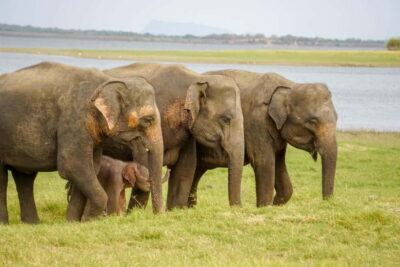
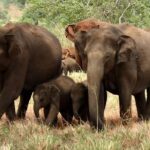
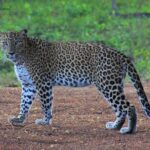
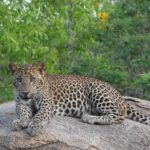
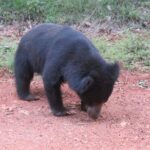
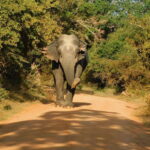
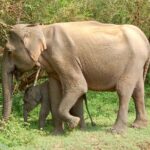
The tour’s targets are specific: leopards, sloth bears, and elephants. Yala is known for leopards, but sloth bears and elephants also appear often enough that the safari is planned around them.
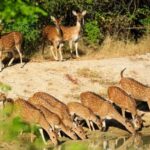
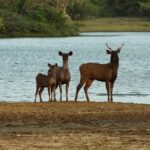
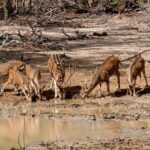
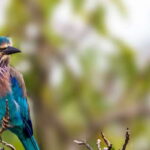
That target list matters because it affects how the driver spends time. If you get a driver who’s good at reading the day, you’ll see more than the “headline” animals. In strong days, you might also encounter wild buffalo, crocodiles, water buffalo, mongoose, deer, monitor lizards, birds (including great hornbills), and monkeys.
Just be ready for the fact that Yala is still wild. Even the best planning can’t guarantee a leopard in every safari. What you want is a driver who keeps searching intelligently rather than giving up early.
Comfort, safety, and what to pack for an open jeep
An open jeep safari is fun, but it’s also practical. Here’s what I think you should plan for:
- Bring a light layer for the early morning start. The park can feel cold until the sun gets up.
- Expect dust. If you sit in the back, dust tends to be worse, so dress with that in mind.
- Wear closed shoes with grip. Yala roads and jeep movement can be rough.
- If you want photos, bring lens cloth wipes or something similar for dusty moments.
Safety also comes down to driver skill. A well-driven jeep feels controlled even when roads get uneven, and the driver knows how to position the vehicle when animals are nearby.
Common issues to watch for (and how to protect your day)
Most safaris run smoothly, but with wildlife days you want to prevent avoidable headaches. Here are the big ones to watch for, plus how you can handle them:
Clarify the vehicle and what’s guaranteed
At least one past situation involved a mismatch between what was expected and what showed up. Before you go, confirm what vehicle type you’re actually getting and whether the operator can meet the stated standard.
Language and guide communication
Many safaris feel better when the driver-guide explains what you’re seeing. If English communication is important to you, ask ahead about the driver-guide language ability and be ready for some days to feel more quiet than others.
Entrance fees and whether charges get duplicated
Entrance fees are required and are not included in the base price. Make sure you know the expected amount (13,000 LKR per person) and that you’re not being charged again due to an admin mistake. Bring cash.
The time-accounting problem on longer safaris
For longer options, treat “7 hours” as a schedule that may include pickup, waits, and transit. Ask what portion is in the park so you can compare fairly to a shorter safari.
If you’re late entering the park
Yala has rules about operating hours. If your day runs behind schedule, your time inside shrinks quickly. A driver who stays on time helps a lot here.
Who this safari suits best
Ajith Safari is a strong fit if:
- You want a focused Yala experience built around leopards and the Big Three.
- You like the idea of small-group jeep viewing, not a packed vehicle.
- You’d rather handle logistics once (pickup/drop-off, jeep, driver-guide) and spend your energy watching animals.
- You’re traveling on a budget but still want a real game drive, not just a short photo stop.
It may be less ideal if:
- You expect a highly interactive, classroom-style guide on every day.
- You hate any chance of delays and want guaranteed time inside the park with no waiting.
- You’re sensitive to rough admin details like entry-fee handling or hour-counting.
Should you book Ajith Safari for Yala?
If you’re doing Yala for wildlife—especially if leopards are your top priority—this safari setup is worth considering. The price is attractive, the golden-hour planning is smart, and full-day options add meaningful value with lunch and water.
My call: book it if you can be flexible, show up ready for open-jeep dust and early starts, and ask a couple of clarifying questions about what your paid hours include and how entrance fees will be handled. If you want to maximize odds, lean toward early morning or late afternoon, and don’t assume the longer duration automatically means more park time.
In Yala, the best days are the days when the driver keeps working the sighting circuit with patience. Choose the time window wisely, pack for dust and morning chill, and you’ll be set up for a memorable Sri Lanka wildlife day.
FAQ
What is the price of the Yala safari with Ajith Safari?
The tour price is listed as $18.00 per person.
How long is the safari?
The duration is described as 4 to 14 hours, depending on the option you choose.
Are Yala National Park entrance fees included in the price?
No. Yala entrance fees are not included and are listed as 13,000 LKR per person.
Is lunch included?
Lunch is included for the full-day safari option. The lunch menu includes rice, chicken, dhal curry, beans, potato tempering, papadam, and Sri Lankan fruits.
Does the tour include hotel pickup and drop-off?
Hotel pickup and drop-off are included if you select that option. If you’re staying outside the given pickup area, pickup can be arranged with an extra charge.
What size is the safari jeep group?
The safari jeep has a maximum of 6 passengers on a sharing basis.
What time windows are used for the best leopard chances?
The plan is to be in the park during the first two hours of the day (6 to 8 a.m.) and/or the last two hours (4 to 6 p.m.) for the golden hours.
What wildlife is the safari mainly trying to spot?
The safari aims to find the big three: leopards, sloth bears, and elephants.
What happens if the weather is poor?
The experience requires good weather. If it’s canceled due to poor weather, you’ll be offered a different date or a full refund.
What is the cancellation policy?
Free cancellation is available. You can cancel up to 24 hours in advance for a full refund, and cancellations within 24 hours of the start time are not refunded.