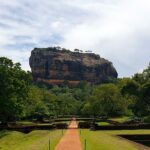
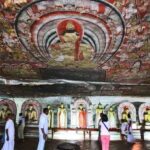
Lion Rock and cave art in one long day. This full-day trip pairs the Sigiriya Rock Fortress with the Dambulla Cave Temple, and it’s the kind of plan that makes a far-from-home place feel instantly important. I love how Sigiriya’s wall paintings make ancient court life feel human, and I love that Dambulla stacks five caves in one visit, so you don’t have to choose between viewpoints. One possible drawback: the transfers are long, and a day like this can feel like a big ask if you hate road time.
Expect a serious climb at Sigiriya—about 1,250 steps—and temple etiquette that means covered shoulders and knees, plus shoes off. Lunch and some drinks are not fully clear-cut from the tour notes, so you’ll want cash ready. The good news is that when the driver is on the ball, the day feels organized instead of chaotic; some groups even get a guide like Dimuthu, noted for being friendly and attentive with water and snacks.
In This Review
- Key things to know before you go
- Ella to Sigiriya: why the long drive can still be worth it
- The roadside stop that sets the tone
- Sigiriya Lion Rock: frescos, the rock fortress feel, and the 1,250-step reality
- What you’ll really see inside the fortress
- The views are the payoff
- Water gardens and fountains: why this detail matters
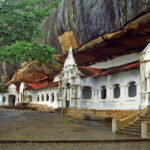
- Dambulla Royal Cave Temple: five caves, painted eras, and Buddha images
- How to enjoy the caves without feeling rushed
- The “largest and best-preserved” part—what you can feel
- The return break: crafts, souvenirs, and how your time gets used
- Price and value: is $100 per person a fair deal?
- Comfort, heat, and temple rules: practical tips that save your day
- Who this tour fits best (and who should skip)
- Should you book this Ella-to-Sigiriya-and-Dambulla day tour?
- FAQ
- What’s included in the Sigiriya and Dambulla day tour from Ella?
- Are entrance fees included?
- How long is the tour, and how much travel time should I expect?
- Is there a lot of walking or stairs?
- What should I bring and wear?
- Is this tour suitable for everyone?
Key things to know before you go
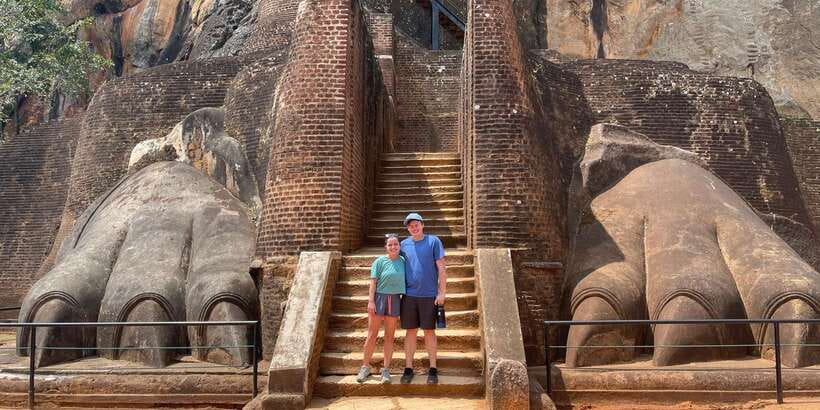
- Sigiriya is the main event: plan for sun, steps, and time for photos at the top.
- Dambulla is a one-ticket cave complex: five caves with Buddha images and painted surfaces spanning many eras.
- You’re riding a shared vehicle: it’s not a private car, so departure timing and stops depend on the schedule.
- Entrance fees are not included: bring cash for tickets, plus remember passport is required on the day.
- You’ll visit local crafts: wood carving and batik textiles, with time to buy souvenirs.
Ella to Sigiriya: why the long drive can still be worth it
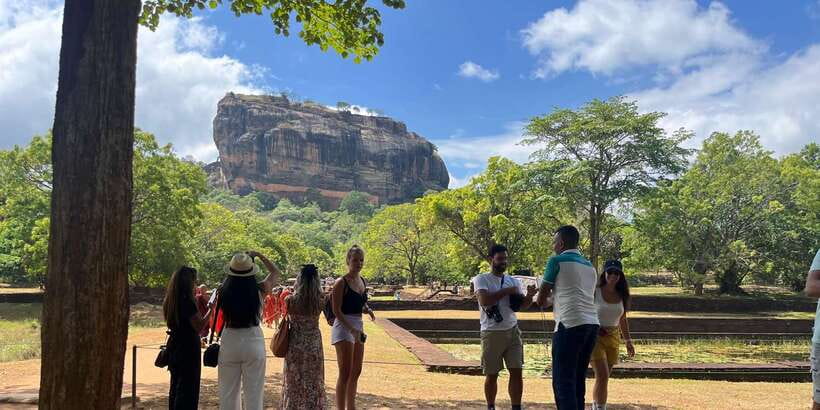
This is a 14-hour day, and you’ll feel it from the start. The trip begins with pickup in Ella, then you head toward Badulla and onward to Sigiriya by air-conditioned vehicle. If you’re the type who enjoys passing countryside—small towns, road activity, changing light—this part can be pleasant. If you only want short sightseeing hops, you’ll likely feel the hours more strongly.
One of the best values here is that you don’t waste your whole day trying to stitch together separate guides or transportation. You get an English-speaking driver, bottled water, and structured timing so you can focus on the sights. At the same time, a couple of reports point out that sometimes the information feels more phone-based than guide-based—so bring a curious mindset, and don’t assume every explanation will be deep.
The day is also a good match for first-timers who want the “big two” sites from Ella: Sigiriya in the morning and Dambulla on the way back. That ordering helps you see each place with enough energy rather than squeezing both at the end of the day.
You can also read our reviews of more tours and experiences in Dambulla.


The roadside stop that sets the tone
Early on, you’ll stop for a restaurant moment that includes coffee, tea, breakfast, and onboard meal time plus welcome refreshments. That break matters more than it sounds, because you’ll later deal with heat and walking right when you want to feel fresh. It’s also when you can use the restroom and get your gear ready—camera, sunscreen, hat, and insect repellent.
If you’re sensitive to travel fatigue, this is where you win the day. I’d treat the stop like your pre-game: drink water, eat something simple, and wear comfortable clothes you can move in. You’ll also want to keep your shoes easy to remove, since temple visits come with shoe-off rules.
Sigiriya Lion Rock: frescos, the rock fortress feel, and the 1,250-step reality
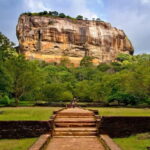
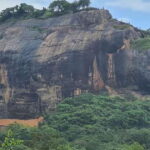
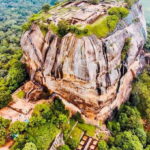
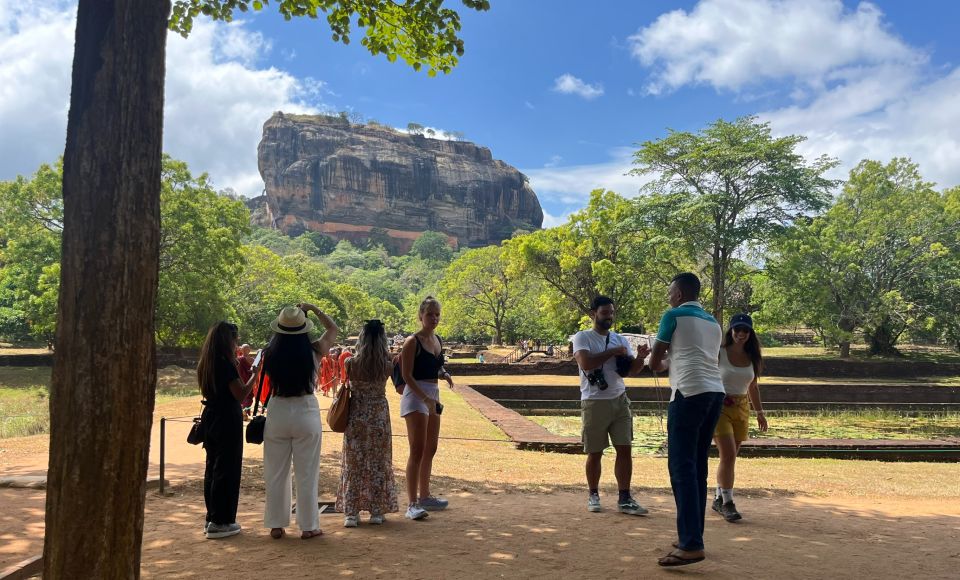
Sigiriya is one of those places where you immediately understand why it’s famous. The fortress sits on a massive column of rock, chosen—according to the ancient Sri Lankan chronicle The Culavamsa—as the site of King Kassapa’s new capital. Even from lower viewpoints, you can sense the planning: the scale, the geometry, and the sense that everything was built to control sightlines.
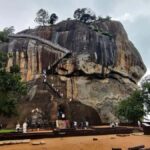
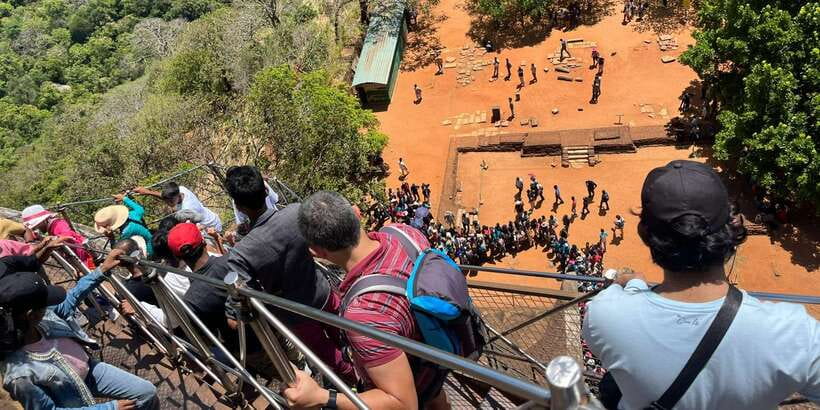
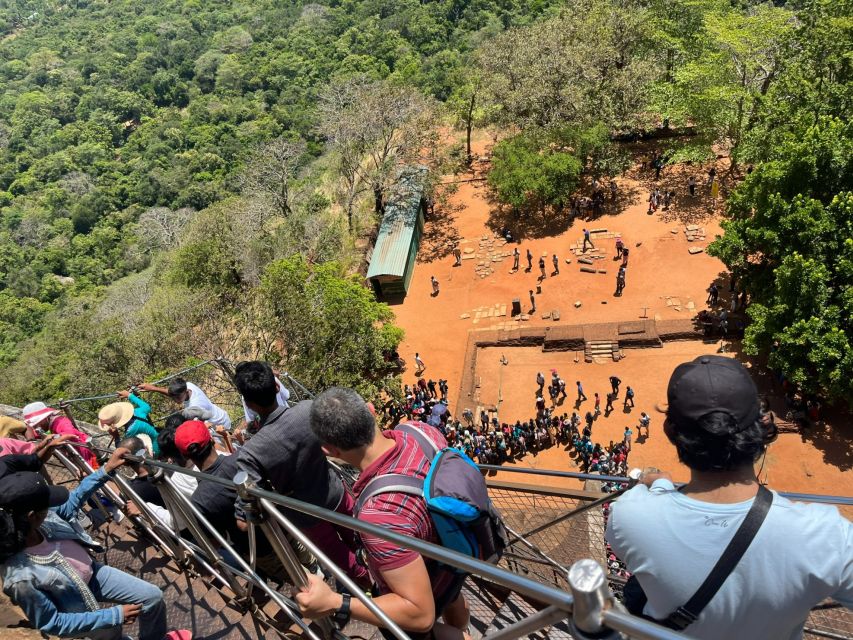
The climb is the practical make-or-break point. You’re looking at around 1,250 stairs to reach the top area. If you’re not afraid of heights but still dislike steep steps, take it slow. Use the shade when you can, pause often, and don’t rush just because others are moving faster. (This tour is also listed as not suitable for back problems or people afraid of heights.)
What you’ll really see inside the fortress
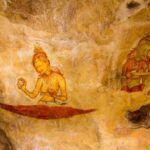
Once you get into the fortress complex, you’ll notice how the rock isn’t just a landmark—it’s a wall-canvas. The route includes time to admire paintings of queens, princesses, and maids. These aren’t abstract decorations; they’re images of real people and real clothing styles, which makes the past feel less like a textbook.
When the experience is at its best, you’ll also get solid guide assistance at Sigiriya Lion Rock. The tour notes say assistance is available in English, German, French, and Spanish, which can help if you want context while walking. One standout guide story you may hear about a driver like Dimuthu includes the kind of on-the-spot friendliness that makes the hours pass quickly—plus timely water and snack help on the way in and out.
The views are the payoff
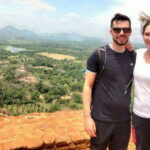
At the top, the views do what they’re supposed to do: they make the whole fortress make sense. You see why this site mattered strategically, not just aesthetically. It’s a great place to take photos, but keep your body moving safely. Bring comfortable shoes, and keep your hat secured if it’s windy.

Water gardens and fountains: why this detail matters
People often focus only on the climb and the murals, but Sigiriya also includes water garden design. You’ll have a chance to see the water gardens and fountains that were made in the 2nd century. That detail turns Sigiriya from a “rock with art” into something closer to a living palace landscape—planned for movement of people and water, not just for defense.
Even if you don’t know much architecture, it’s easy to connect the dots here. The gardens and water features are part of the same story as the frescos: a royal world where aesthetics and engineering mattered. And because you’re moving through a sequence of platforms and viewpoints, the site feels like it has chapters instead of being one long stop.
Dambulla Royal Cave Temple: five caves, painted eras, and Buddha images
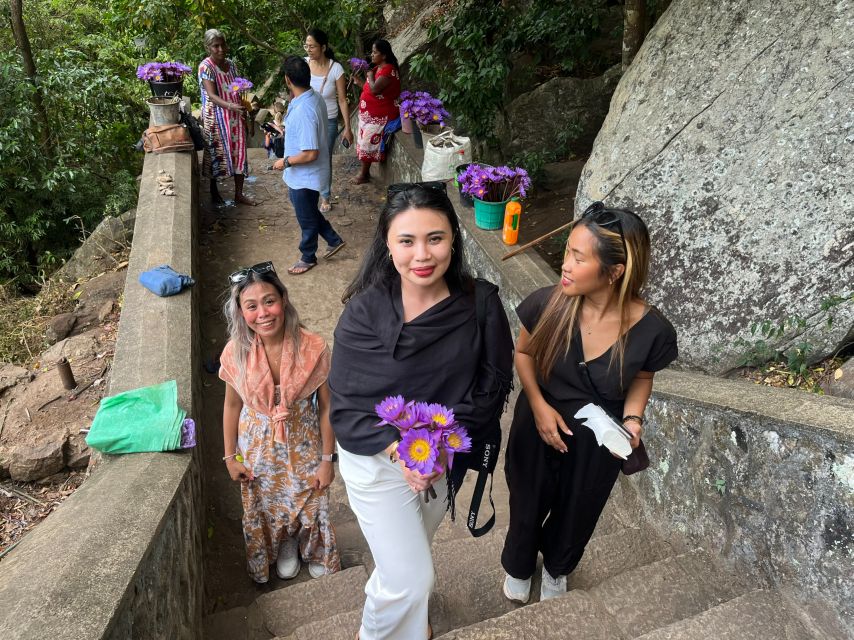
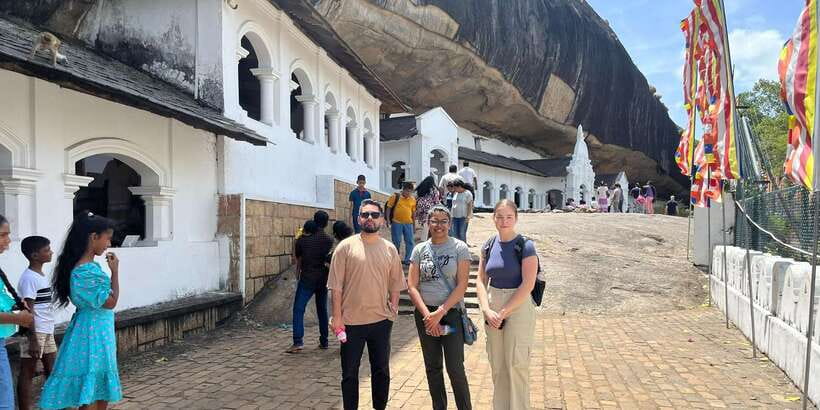
After Sigiriya, the drive heads back toward Ella with a stop at Dambulla Royal Cave Temple and Golden Temple. This is the other big reason this tour works well: you don’t just do one sight. You shift from man-made fortress space to living religious art space.
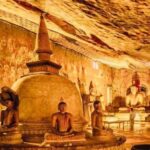
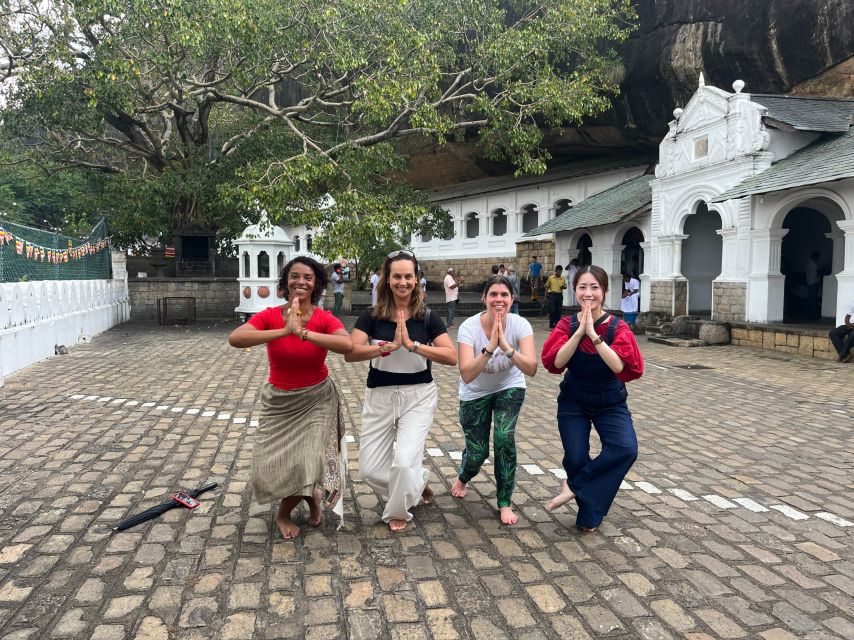
Dambulla’s claim to fame is its cave complex: five stunning caves that house Buddha images and rock paintings. The tour notes place the paintings from around the 2nd century B.C. up through the 18th-century Kandyan era. That time span is the real value—because you get a visible timeline of styles, subjects, and artistic choices.
How to enjoy the caves without feeling rushed
You’ll get free time and a self-guided walk with sightseeing around 45 minutes noted for this stop. That can feel short depending on your pace, so it helps to pick a strategy: start by looking up for the largest painted panels, then move slower for the best-preserved areas. If you want photos, time them for moments with fewer people, but don’t treat it like a photo quest only.
You’ll also face temple rules: shoes and hats off, plus shoulders and knees covered. It’s not complicated, just respectful. Also, because you’ll be walking indoors and outdoors around cave entrances, comfortable shoes matter even more than you think.
The “largest and best-preserved” part—what you can feel
Dambulla being described as the largest and best-preserved cave temple complex in Sri Lanka shows up in the sheer amount of painted surface you encounter. It’s not just one chapel—it’s a whole system. The number of caves means you’re not repeating the same view over and over; you’re constantly shifting angles and levels, which keeps your attention.
The return break: crafts, souvenirs, and how your time gets used
On the way back, you’ll have another restaurant break (listed as a longer stop) that includes coffee, tea, lunch, free time, walking, and even coffee tasting. This is the slot where you can reset. If the early day felt intense, this is where you refill energy and cool down a bit before the final ride.
You’ll also visit local crafts such as wood carving and batik textiles, with time to purchase souvenirs. This isn’t just a shopping stop. It’s also a chance to understand what local artisans are doing now—so Sigiriya and Dambulla aren’t your only contact with culture. The key is to browse calmly: compare prices, take your time, and don’t let your energy level decide what you buy.
One small practical tip: bring small cash for souvenirs and for anything tied to entrance fees. This tour notes that entrance fees are not included, and tickets can’t wait while you search for an ATM.
Price and value: is $100 per person a fair deal?
At $100 per person, the value depends on what you care about: convenience, guiding, and the “two-site combo.”
Here’s what you’re getting:
- Hotel pickup and drop-off in Ella
- Air-conditioned shared transport
- English-speaking driver
- Bottled water
- Guide assistance in Sigiriya Lion Rock
- King coconut subject to availability
The big exclusions are:
- Entrance fees
- Food and drinks unless specified (and the day includes at least some meal/restaurant stops, but the notes also mention lunch at your own expense)
So what does that mean in real life? If you’d otherwise pay separately for transport from Ella plus guides for both sites, the bundled cost usually starts to make sense. You’re paying for reduced hassle, not for a “luxury” format. When the driving and guiding line up well, you’ll feel like you got your money’s worth because the day stays organized and you don’t scramble.
When guiding is weaker—especially if you mainly get information from phones—it’s easier for that $100 to feel expensive. One report specifically felt like the info came more from devices than guides, which can dilute the experience at Sigiriya. If you’re the kind of traveler who wants explanations while you walk, you’ll want to pay attention to whether your tour includes solid human interpretation at the main sites.
Comfort, heat, and temple rules: practical tips that save your day
This tour is not shy about walking. Sigiriya includes a long stair climb, and Dambulla requires respectful temple behavior while you move through cave areas. That’s why I recommend you pack like you’re doing a hike, not a museum trip.
Bring:
- Comfortable shoes
- Sunscreen, hat
- Insect repellent
- Cash (for entrance fees and any extra purchases)
- A current valid passport (required on travel day)
- Camera
Wear:
- Comfortable clothes that cover shoulders and knees for temple visits
Also note the rules:
- No alcohol or drugs
- No luggage or large bags
- No pets
Not everyone should do this. The tour data says it isn’t suitable for wheelchair users, people with back problems, people afraid of heights, pregnant women, or those with altitude sickness. Even if you’re generally fine, the stairs at Sigiriya are where people often hit their limit.
Who this tour fits best (and who should skip)
This works especially well if you’re staying in Ella and you want to see Sigiriya and Dambulla in one efficient swing. It’s a good match for:
- First-time Sri Lanka visitors with limited time
- Travelers who don’t mind a full day and can handle stairs
- People who like major historic sites with clear “wow” moments
It may not fit if:
- You strongly dislike long road time
- You need a fully flexible schedule (this day is structured)
- You want lots of deep, human-led explanation at every stop—some experiences are better guide-wise than others
Should you book this Ella-to-Sigiriya-and-Dambulla day tour?
If you’re choosing between DIY and a structured day, I’d lean toward booking when you want two top sights without transport headaches. The combination of Sigiriya’s royal fortress setting and Dambulla’s multi-cave painted temple complex is hard to beat for value of time.
Do it only if you can handle the practical side: 1,250 stairs, temple dress rules, and a long day moving from Ella to Sigiriya and back. If you’re okay with that, you’ll likely come away feeling like the day was busy but meaningful, especially when you get a friendly driver who keeps you comfortable and on track.
FAQ
What’s included in the Sigiriya and Dambulla day tour from Ella?
The tour includes hotel pickup and drop-off, transportation by an air-conditioned vehicle, an English-speaking driver, bottled water, and guide assistance in Sigiriya Lion Rock. It also includes a king coconut subject to available. Entrance fees and food/drinks are not included unless specified.
Are entrance fees included?
No. Entrance fees are not included, so you’ll want cash ready for tickets.
How long is the tour, and how much travel time should I expect?
The total duration is listed as 14 hours. Transfers are approximate and depend on time of day and traffic, and the day includes a long drive from Ella to Sigiriya and back via Dambulla.
Is there a lot of walking or stairs?
Yes. Sigiriya includes about 1,250 stairs to reach the top. Comfortable walking shoes are recommended.
What should I bring and wear?
Bring comfortable shoes, sunscreen, a hat, insect repellent, cash, and your passport (required on the day). For temple visits, shoulders and knees should be covered, and you’ll need to remove shoes and hats.
Is this tour suitable for everyone?
No. It’s listed as not suitable for wheelchair users, people with back problems, people afraid of heights, pregnant women, and people with altitude sickness. It also includes rules like no alcohol/drugs and no large luggage.