A Kandy cooking class feels like getting invited into a home kitchen. In this private, small-group session, you’ll learn Sri Lankan techniques from Chitra and then eat what you make, with options for vegan and gluten-free diets. The best part is how fast it turns from chopping and stirring to a real shared meal at the table.
I love the hands-on pace and clear, personalized coaching. I also like that the meal is not an afterthought—coffee/tea and lunch are built into the experience, and you actually sit down to enjoy what you cooked.
One consideration: with only 3 hours on the clock, you’ll cover a lot, so it helps if you’re comfortable cooking while things move quickly. If you want a slow, step-by-step lesson for just one dish, this may feel a bit packed.
In This Review
- Key highlights worth caring about
- Why a Kandy cooking class works better in a small group
- Meet your instructor: Chitra (and the local cooking team around her)
- The 3-hour flow: pickup, cooking, then eating what you made
- Choosing ingredients: a market stop that upgrades everything
- Lentils, jackfruit curry, and the flavor logic you can repeat
- Lentils: learn texture and balance
- Jackfruit curry: sweet-savory without confusion
- Spice blends: learn what changes between dishes
- Lunch at the table: Sri Lankan hospitality in real form
- Vegan and gluten-free options that keep the real flavor
- Price and value check: is $40 worth 3 hours?
- Who should book this Kandy cooking class
- Quick practical notes that help you enjoy it
- Should you book this cooking class?
- FAQ
- How long is the Private Traditional Sri Lankan Cooking Class in Kandy?
- How many people are in the group?
- Is pickup and drop-off included?
- What languages is the instruction in?
- Can you accommodate vegan or gluten-free diets?
- What’s included in the price?
- What is the cancellation and payment flexibility?
Key highlights worth caring about
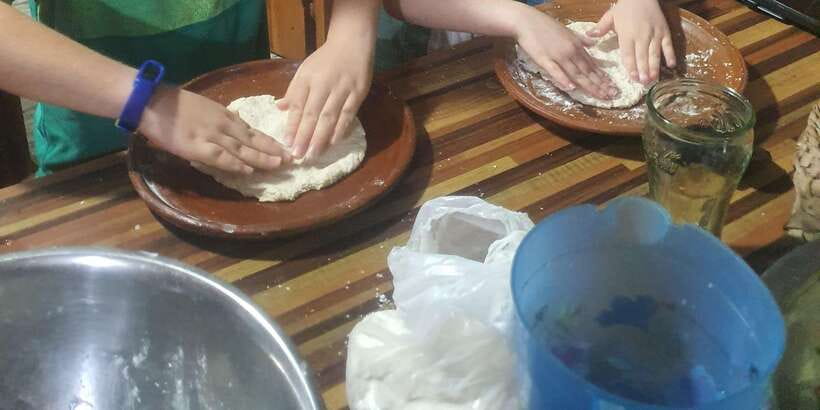
- Small group (up to 4) means less waiting and more direct help when you get stuck.
- Chitra’s Sri Lankan focus covers both spice blends and cooking methods, not just assembly.
- Market-to-kitchen energy means you can start by choosing ingredients you’ll recognize and use.
- Jackfruit curry and lentils anchor the menu, with other dishes often added for variety.
- Vegan and gluten-free options help you keep the Sri Lankan flavors without weird swaps.
- Recipes after class are a big deal if you want this food back at home.
Why a Kandy cooking class works better in a small group
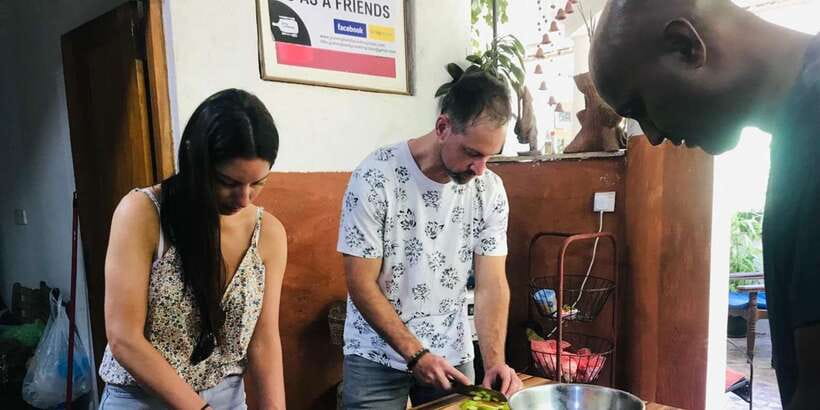
Kandy has a way of making visitors slow down and look closer. A cooking class fits that mood perfectly, especially when it’s limited to 4 people, because you’re not competing for attention or tools. You get a real working rhythm: taste, adjust, and move on.
I like how this format tends to create confidence fast. When your instructor can watch your pan and correct your technique in real time, you stop guessing about spice levels, heat control, or timing. And when the group is small, you also get the chance to ask practical questions—how ingredients behave, how to reuse leftovers, what makes one curry taste different from another.
You can also read our reviews of more tours and experiences in Kandy.


Meet your instructor: Chitra (and the local cooking team around her)
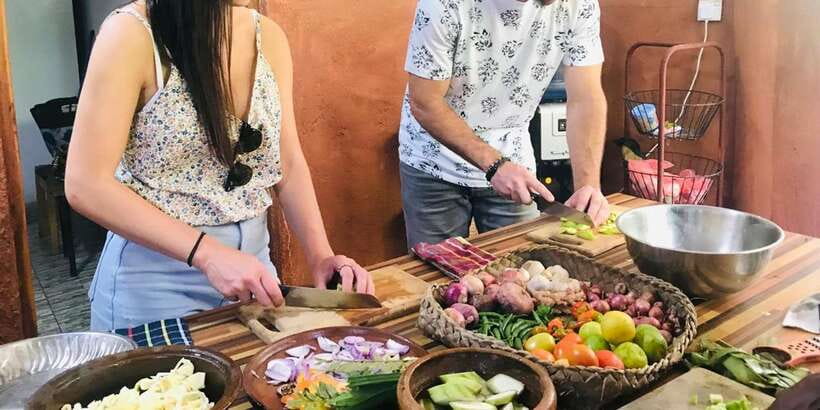
The class is led by Chitra, described as an experienced instructor in Sri Lankan cuisine. Even if you’re a beginner, that matters, because Sri Lankan cooking is equal parts method and flavor logic. You’re not just memorizing recipes—you’re learning how the dish comes together.
From what the experience is like in practice, you’ll likely work closely with a warm local hosting team as well. In similar sessions, I’ve seen that the main teacher is friendly but also supported by the household-style guidance that makes the kitchen feel relaxed, not stiff. You’ll feel comfortable asking why something works, not just how to do it.
Also, the instruction is in English, which is a huge quality-of-life win. You shouldn’t have to translate cooking terms while your curry is simmering.
The 3-hour flow: pickup, cooking, then eating what you made
The whole experience is 3 hours, with pickup included. You meet at your hotel concierge desk, then you head out in a tuk tuk or van depending on group size. This matters more than it sounds: it reduces the mental load, so you can focus on cooking and tasting instead of figuring out transport.
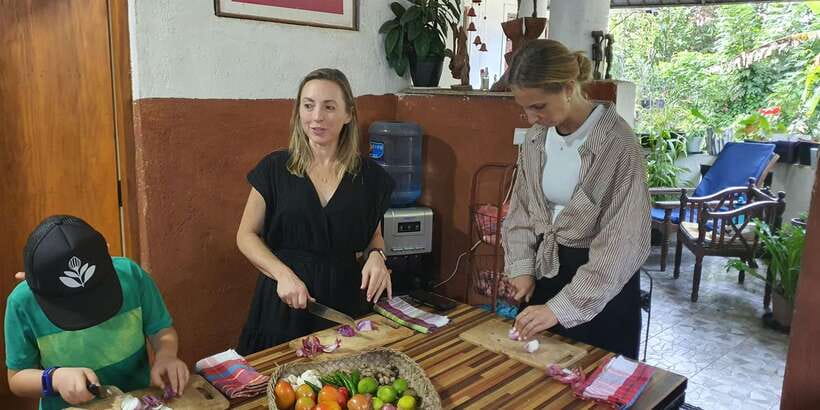
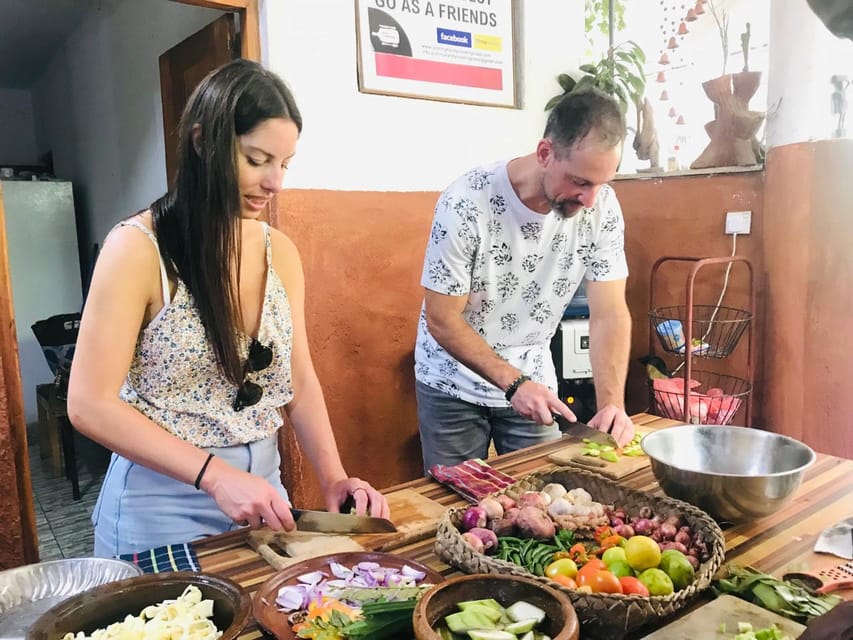
In the class itself, the pace is hands-on from the start. You’ll prepare dishes like lentils and jackfruit curry, and you’ll learn spice blending and cooking methods tied to each one. It’s also the kind of class where you’re not relying on pre-made shortcuts—everything is built from start to finish, so you understand the process, not just the outcome.
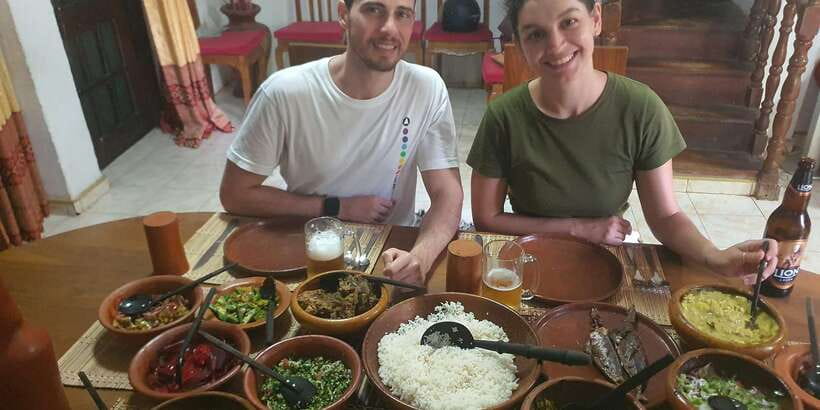
Then comes the best part: you eat together. Lunch is included, and you’ll gather around the table to taste what you cooked with guidance from the instructor.
Choosing ingredients: a market stop that upgrades everything
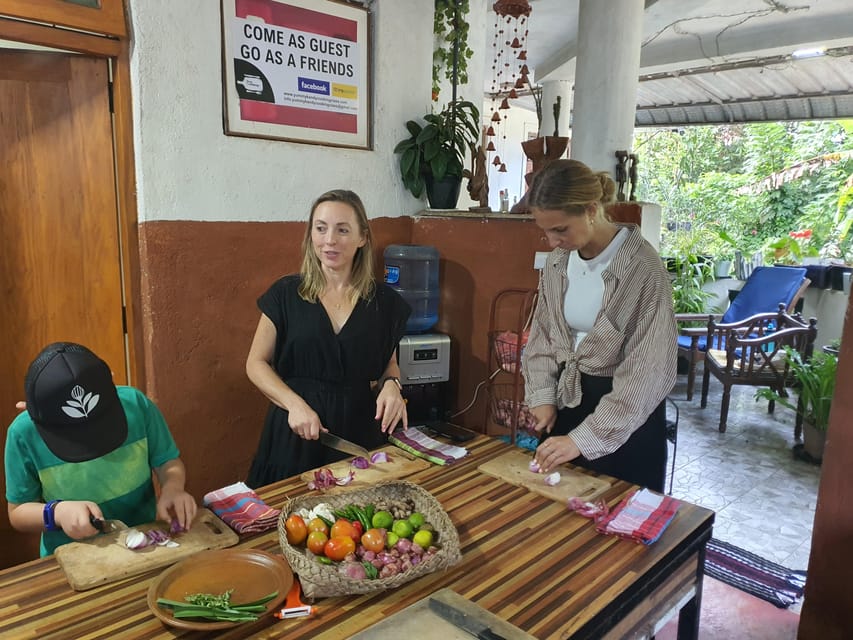
One of the most memorable moments in this kind of Sri Lankan class is picking ingredients before you cook. In practice, you may be taken to a market with the hosts to select produce that will actually show up in your dishes.
Why this is worth your time: it turns cooking into something you recognize. You learn how ingredients look when they’re fresh, what’s seasonal, and how certain vegetables or fruit become more flavorful once cooked with curry spices. Even better, it gives you an easier way to shop later at home because you can translate the ingredient, not just the recipe name.
If you’re the type who likes to know where food comes from, this step is a big part of the value.
Lentils, jackfruit curry, and the flavor logic you can repeat
Let’s talk about the two headline dishes—because learning these two teaches you a lot about Sri Lankan flavor building.






Lentils: learn texture and balance
Lentils in Sri Lankan cuisine often depend on timing and texture. You’ll focus on how they soften, how spices bloom, and how to tune the balance so the dish tastes full, not flat. When your lentils are right, the curry has body, and you can serve it with whatever starch you eat alongside.
The practical benefit: lentils are forgiving at home. Once you know the technique that gets the right softness and seasoning, you can recreate it without needing a Sri Lankan spice shop every time.
Jackfruit curry: sweet-savory without confusion
Jackfruit curry is the kind of dish that makes people pause and pay attention. The fruit can be tricky if you only know it from snacks or desserts, but in curry it becomes something else: tender, aromatic, and deeply spiced.
In this class, you’ll learn how the cooking method brings out the right texture and how the curry handles the fruit’s natural character. That’s the key: you’re not just making a dish; you’re learning why it tastes the way it does.
Spice blends: learn what changes between dishes
The class isn’t only about turning ingredients into food. It’s about learning spice blends and the methods behind them. That’s what helps the next dish taste distinct from the last—different heat, different depth, different aroma.
And because it’s small-group, you’re more likely to catch details like how long spices need to cook before they change flavor, or how the base supports the curry later.
Lunch at the table: Sri Lankan hospitality in real form
After the cooking, you sit down for lunch. Coffee and/or tea are included, plus bottled water, so you’re not scrambling for drinks mid-experience.
What makes this meal feel special is that it’s not a buffet you barely control. You made it. So you taste with attention: salt, acidity, spice, and texture. You’ll likely learn practical notes as you eat—how to adjust future batches, what tastes best on day one, and how certain vegetables behave in curry sauce.
One nice touch from descriptions of the experience: the food you eat is often better than what you’ll get in a standard hotel meal. That’s usually because you’re working with fresher ingredients and cooking with technique, not just reheating.
Vegan and gluten-free options that keep the real flavor
Dietary needs are handled with vegan and gluten-free options. That’s not a small checkbox. Sri Lankan cooking can include ingredients that trip up vegans or people avoiding gluten, so it matters that the class actually supports your preferences.
What you’ll care about as a practical cook: you want substitutes that still behave like the original ingredient. In this kind of class, the menu adjustments are meant to preserve the Sri Lankan flavor backbone—spices, aromatics, and cooking methods—so you don’t end up eating something that feels like a compromise.
If you tell them your dietary preference ahead of time (Vegan/Vegetarian or Gluten-free), you should be able to cook and eat with the group without awkward plate swaps.
Price and value check: is $40 worth 3 hours?
At $40 per person for a 3-hour private small-group class, the value is strongest if you care about technique, not just a one-time meal.
Here’s why it can be a solid deal:
- You get lunch plus coffee/tea and water.
- All kitchen equipment is included.
- The group stays small (up to 4), which usually means more help per person.
- You get time with an instructor focused on Sri Lankan cooking—plus recipes afterward.
The value drops a bit if you only want entertainment and don’t plan to cook again. But if you want skills you can repeat, this is the kind of experience that pays you back later—because you’ll likely want to recreate what you cooked.
Who should book this Kandy cooking class
This is a great fit if:
- you want hands-on Sri Lankan cooking in English
- you like small groups and direct instruction
- you want to learn specific dishes like lentils and jackfruit curry
- you need vegan or gluten-free options that are taken seriously
- you enjoy shopping for ingredients and cooking from scratch
It might be less ideal if:
- you want a long, slow class focused on just one recipe
- you’re traveling with someone who needs extremely quiet, low-movement activities (the kitchen pace can be active)
Quick practical notes that help you enjoy it
Pickup and drop-off are included, and you’ll likely ride in a tuk tuk or van. The class is wheelchair accessible, which is a real advantage if you need that support.
The experience isn’t suitable for babies under 1 year—so plan childcare accordingly.
Should you book this cooking class?
If you want more than a tasting event—and you actually want to understand Sri Lankan flavors—you should book it. The small-group size, the 3-hour hands-on format, and the focus on dishes like lentils and jackfruit curry make it a practical, memorable way to take Sri Lankan cooking home with you.
Only skip it if you prefer slow pacing or you’re looking for a strictly one-dish workshop. Otherwise, this is the kind of Kandy experience that turns food into skill, and skill into repeatable meals.
FAQ
How long is the Private Traditional Sri Lankan Cooking Class in Kandy?
The class lasts 3 hours.
How many people are in the group?
It is a small group limited to 4 participants.
Is pickup and drop-off included?
Yes. You meet at your hotel concierge desk and are returned to your hotel afterward, using a tuk tuk or van depending on the number of guests.
What languages is the instruction in?
The instructor speaks English.
Can you accommodate vegan or gluten-free diets?
Yes. Meals and recipe options are available according to dietary preferences, including vegan/vegetarian and gluten-free.
What’s included in the price?
Coffee and/or tea, lunch, all necessary kitchen equipment, bottled water, and meals according to your dietary preferences.
What is the cancellation and payment flexibility?
Free cancellation is available up to 24 hours in advance for a full refund, and you can reserve now and pay later.