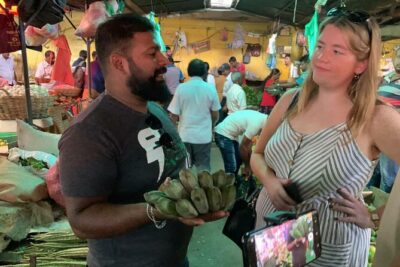
A cooking class in Kandy should feel like dinner with locals. This one is led by Chitra and built around fresh ingredients from her home garden and traditional curry-making in clay pots. I love that it’s hands-on from start to finish, and you end with a full meal you made yourself; the only real catch is you’ll be active for about 3 hours, so come ready to chop, mix, and stand at the counter (not just watch).
You’ll learn how Sri Lankan curries come together, including the spices and the traditional way to prepare curry powder, plus coconut milk made from cracked coconuts. The class also works for vegan/vegetarian and gluten-free preferences, and the small group size (max 8) helps Chitra give personal attention. You finish by eating what you cooked while chatting about Sri Lankan history, culture, and everyday life.
In This Review
- Key things that make this cooking class worth it
- Where the class starts: Glory Homestay and a home-garden approach
- The garden-to-kitchen flow: what you actually do step by step
- Learning Sri Lankan curry powder the traditional way
- Coconut milk extraction: why this step changes your final curries
- Cooking in clay pots: rice with 5 curries for your dietary preference
- Dinner at the end: eating with Chitra and the group
- Price and value in plain terms
- Who this class suits best (and who should skip it)
- Practical tips before you go
- Should you book Flavours of Sri Lanka in Kandy?
- FAQ
- Where is the class meeting point?
- What time does the cooking class begin?
- How long is the experience?
- How many people are in the group?
- Is there a meal included?
- What dietary options are available?
- Do you learn how to make curry powder?
- Do you extract coconut milk yourself?
- Is water included?
- Are alcoholic beverages included?
Key things that make this cooking class worth it
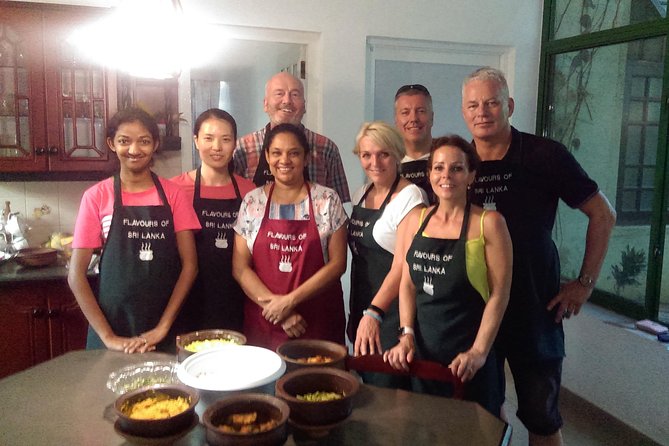
- Home garden ingredient picking that turns the meal into a real start-to-finish process
- Curry powder secrets and how the spice blend changes the whole flavor
- Hands-on coconut milk extraction you get to do yourself
- A typical Sri Lankan meal of rice with 5 curries, cooked in traditional clay pots
- Small group energy with room to ask questions and actually learn
- Dietary options including vegan/vegetarian and gluten-free choices
Where the class starts: Glory Homestay and a home-garden approach
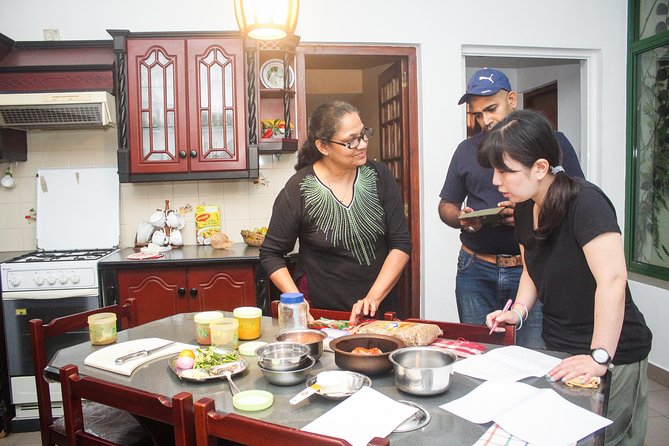
This experience begins at Glory Homestay on Meda Bowala Road in Kandy (about a 3:30 pm start). You’re not rolling up to a lecture room or a restaurant kitchen. You start at a home base, and the first big “why this matters” moment is walking into the garden where your ingredients come from.
I like this structure because it connects food to place. When you pick vegetables, herbs, and other ingredients yourself, you’re paying attention in a way you simply won’t at a market booth or supermarket demo. It also helps you understand what’s actually in season and what those ingredients tend to taste like when they’re fresh.
One practical point: since the garden is part of the experience, wear something you don’t mind getting a little dusty. You’ll likely be doing hands-on prep, and comfort matters more than style here.
You can also read our reviews of more tours and experiences in Kandy.

The garden-to-kitchen flow: what you actually do step by step
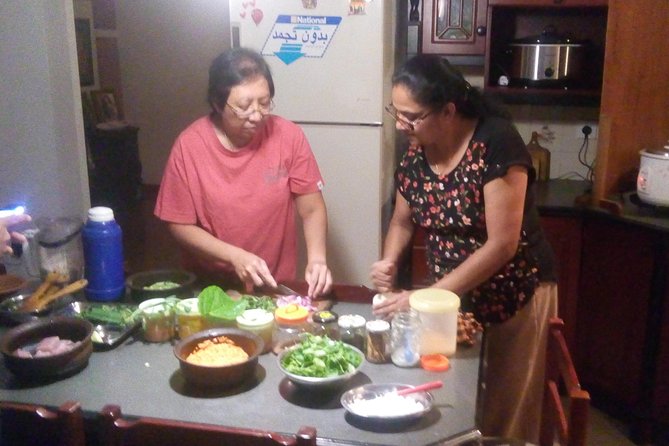
After the ingredient picking, the class shifts into curries—what goes into them and why Sri Lankan curry flavor works the way it does. You get an introduction to curries with the ingredients and spices you’ll use, plus explanations on the traditional way to prepare curry powder.
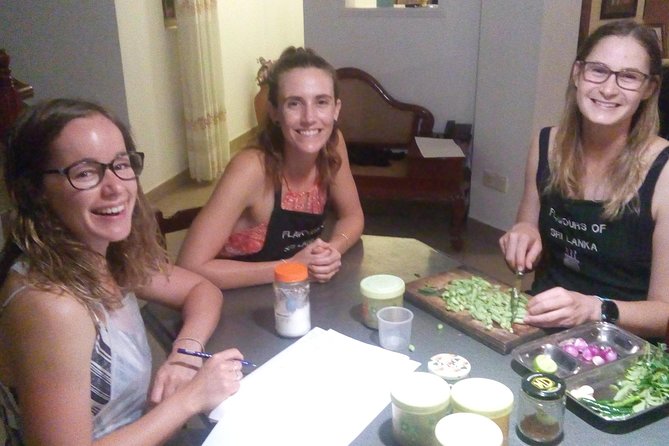
Then comes the part you’ll remember: you’re involved in every step of prep. This isn’t “watch me once, taste at the end.” You’ll be chopping, mixing, and assembling parts of a meal that relies on spice balance. If you’ve ever tasted a curry that felt perfectly layered, this is the skill-building side of that experience.
Chitra also cracks coconuts with you, scrapes them, and helps you extract coconut milk. Coconut milk is a major player in Sri Lankan cooking, and getting hands-on with it gives you a clearer sense of how texture and richness show up in the finished curry.
Learning Sri Lankan curry powder the traditional way
Curry powder can sound like a store-bought thing. In this class, you learn it as a process—spices treated with care and blended in a traditional way. You’ll get the spices you’ll use and the “secrets” behind how curry powder is prepared, which is exactly the kind of information you can’t easily guess from a recipe card.
What I like here is the focus on technique, not just flavor. You’re building an understanding of how the spice base supports everything else in a curry—lentils, jackfruit curry, and the other curries that show up in a typical meal.
If you take one cooking takeaway seriously, make it this: the spice blend isn’t an afterthought. It’s the backbone. Once you understand that, you’ll start tasting curried dishes differently when you eat out later.
Coconut milk extraction: why this step changes your final curries
You’ll crack coconuts, scrape the flesh, and extract coconut milk during the class. That matters because coconut milk isn’t just an ingredient you add; it’s part of the curry’s body and feel.
Doing this yourself is also a quick way to learn patience. You’ll see the difference between using coconut milk prepared carefully versus rushing the step. Your curries will reflect that effort, and you get to understand what “creamy” means in Sri Lankan style, not just in general cooking terms.
And yes, it’s messy enough to be fun. That’s one reason small-group classes work well: you can laugh, help each other, and keep going without awkwardness.
Cooking in clay pots: rice with 5 curries for your dietary preference
The practical goal is a typical Sri Lankan meal: rice with 5 curries. You’ll cook the curries in traditional clay pots using homemade curry powder, so the meal isn’t just a set of random dishes. It’s a coherent plate built from the same curry foundation.
This part is also where the “small group” feature turns into real learning. With max 8 people, Chitra can check what you’re doing while you’re doing it. That reduces the chance you’ll miss a step or end up uncertain about why your curry tastes a little different.
You’ll also cook according to your dietary preference—vegan/vegetarian or gluten-free options are available. The class is built to match the meal to your needs, not just offer a plain alternative on the side. That means you get to participate in the cooking with ingredients that suit you.
From the menu examples, you can expect curries that may include lentils and jackfruit curry. The key is that you’re learning a Sri Lankan “system” for curry-making, not only one signature dish.





Dinner at the end: eating with Chitra and the group
Once you finish cooking, you sit down and dine on your creations. Dinner isn’t a quick snack here; it’s the reward for the work you did. You’ll eat what you made with Chitra and your fellow students, and you’ll likely chat about history, culture, and lifestyle in Sri Lanka while you eat.
This is a big value point, even if you’re not the chatty type. Shared meals create a natural, low-pressure way to ask questions. It also helps the cooking stick, because you can immediately connect what you did in the kitchen to how it tasted on the table.
You’ll also have unlimited spring water provided during the class. It’s boiled and filtered, which is the kind of detail that keeps a fun evening from turning into a logistics headache.
Alcoholic beverages aren’t included, so plan on keeping it alcohol-free for this session. If that’s not your style, you’ll still get a full dinner experience without needing extra add-ons.
Price and value in plain terms
At $25 per person for a roughly 3-hour class, you’re paying for more than “a cooking demo.” You’re paying for:
- an instructor-led, hands-on session,
- equipment in the kitchen,
- a complete meal at the end,
- unlimited spring water (boiled and filtered),
- and dietary accommodation options (vegan/vegetarian and gluten-free).
In other words, the cost is tied to real participation plus a finished dinner, not just tasting samples. If you’re the kind of traveler who likes food you can recreate at home, this is the kind of experience where the fee feels more like a lesson than an attraction.
Mobile ticket entry also simplifies things. You don’t need to juggle paper confirmation in a city where walking times and timing can shift.
Who this class suits best (and who should skip it)
This is a great fit if you want a practical food experience in Kandy. It’s also ideal if you enjoy cooking or even if you only cook at home sometimes, because the class teaches technique you can actually reuse—spice mixing, curry powder thinking, coconut milk extraction, and clay-pot cooking approach.
You’ll probably enjoy it most if you like small groups and don’t mind being active. Since the class involves prep and cooking steps, it’s not built for people who prefer passive sightseeing.
If you’re traveling with a tight schedule, note the timing: it starts at 3:30 pm and runs about 3 hours. Build your afternoon accordingly so you’re not rushing in hungry and stressed.
Practical tips before you go
A few things can make your evening smoother.
First, wear comfortable clothes for kitchen work. You’ll be moving from garden picking to prep work to cooking, and you’ll want something you can handle.
Second, think about spice level. The class is about Sri Lankan curries, which are typically fragrant and flavorful with spice. The data doesn’t mention customization for heat level, so if you’re sensitive to spice, it’s smart to let Chitra know your preference when the class starts.
Third, come hungry. You’ll be doing enough work that dinner tastes like it matters.
Finally, plan for a social meal. Even if you keep your own conversation small, the structure encourages group discussion about Sri Lankan life and culture while you eat.
Should you book Flavours of Sri Lanka in Kandy?
If you want more than a photo stop and you like learning by doing, I’d book this. The combination of Chitra-led instruction, ingredient picking, spice teaching, coconut milk prep, and a real dinner of rice with 5 curries makes the experience feel like value, not filler.
Skip it only if you strongly prefer passive activities or if you can’t handle a hands-on 3-hour kitchen session. Otherwise, this is one of the more direct ways to understand Sri Lankan cooking beyond the restaurant version of the story.
FAQ
Where is the class meeting point?
It starts at Glory Homestay, 46 Meda Bowala Rd, Kandy 20000, Sri Lanka.
What time does the cooking class begin?
The start time is 3:30 pm.
How long is the experience?
It lasts about 3 hours.
How many people are in the group?
The tour/activity has a maximum of 8 travelers, which supports personal attention.
Is there a meal included?
Yes. Dinner is included, and you eat the dishes you cook at the end of class.
What dietary options are available?
You can choose vegan/vegetarian or gluten-free preferences.
Do you learn how to make curry powder?
Yes. You get an introduction to curries and learn about the ingredients and spices, including the traditional way of preparing curry powder.
Do you extract coconut milk yourself?
Yes. You crack coconuts, scrape them, and extract coconut milk as part of the class.
Is water included?
Unlimited spring water is included, and it is boiled and filtered.
Are alcoholic beverages included?
No. Alcoholic beverages are not included.