A kitchen lesson in Ella feels personal fast. You’ll cook the Sri Lankan way with Kamala and Irosha, using local ingredients and simple steps you can repeat at home. I love the hands-on outdoor setup and the way the mother-and-daughter team explains spices clearly, step by step. One possible drawback: since much of the class happens outdoors over heat and fire, wet weather or cooler evenings can make it feel more intense than an indoor kitchen.
In just 2 hours, you’re not watching. You’re chopping, grinding, frying, mixing, and seasoning right alongside the hosts—then you eat what you made. The small group size (up to 6) makes it feel like a family cooking session, not a scripted show.
And when you leave, the learning doesn’t stop. You’ll get recipes to take home (including via WhatsApp), plus practical guidance on how to keep flavors balanced without needing fancy ingredients.
In This Review
- Key things I’d write on the back of your ticket
- Why Mom’s Kitchen Cooking class beats a restaurant meal
- The outdoor kitchen: fire, tools, and the small-group advantage
- What the 2-hour flow really feels like (and what you do)
- What you’ll cook in Ella: curries, coconut sambol, papadum, and more
- The spice lesson: learning what to do first, second, and last
- The communal meal: tasting your work (and noticing the details)
- Price and value: what $20 buys you in real skill
- Who should book this class (and who might not love it)
- Tips to get the most out of your 2 hours
- Should you book Mom’s Kitchen Cooking class in Ella?
- FAQ
- How long is the cooking class?
- What does it cost?
- How big is the group?
- What’s included in the experience?
- What language is the class taught in?
- Do I get recipes to take home?
Key things I’d write on the back of your ticket
- Mother-and-daughter teaching duo: Kamala (deep experience) with Irosha (clear explanations in English)
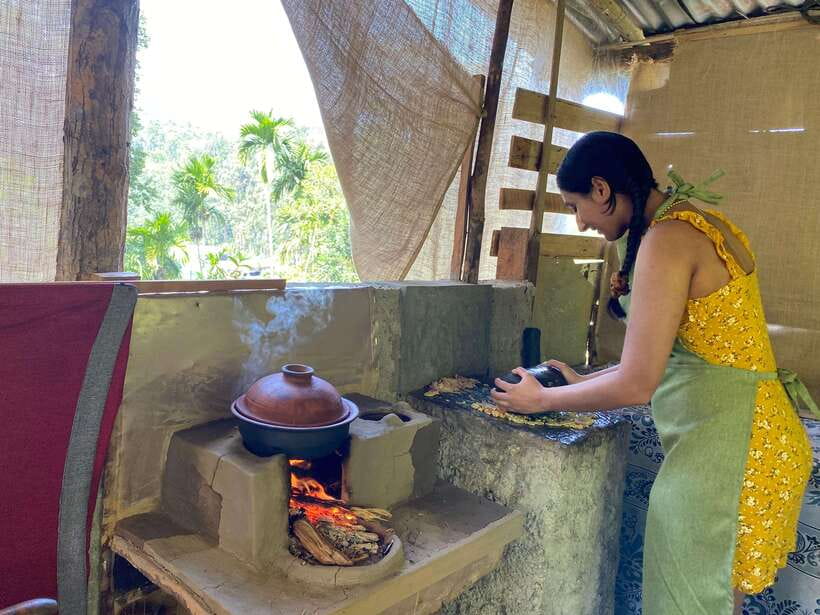
- Outdoor kitchen over fire and gas: woodfire-style cooking plus traditional tools
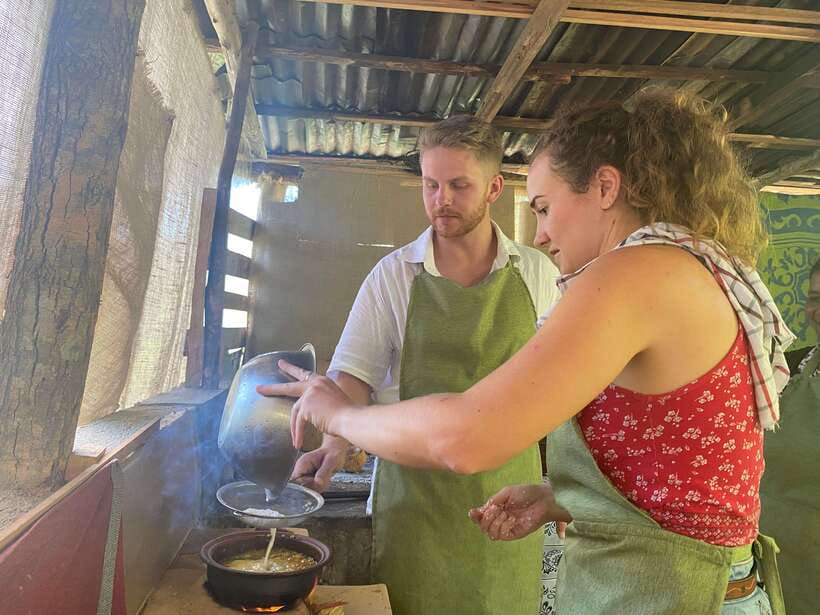
- You do the work: chopping, peeling, grinding spices, frying, mixing, and seasoning together
- Learn the spice logic: dishes can use overlapping spices yet taste very different
- Take-home recipes: sent after the class, often via WhatsApp
- You finish by eating together: communal meal in a scenic home setting
Why Mom’s Kitchen Cooking class beats a restaurant meal
Ella has plenty of great food, sure. But this experience teaches you how that food actually gets built. Instead of ordering a curry and hoping it tastes like it does in Sri Lanka, you get the ingredient rhythm: what gets fried first, what’s ground, when coconut comes in, and how seasoning ties everything together.
What makes this class work so well is the setup. It’s a home kitchen experience led by a mother-and-daughter team—Kamala and Irosha—and the vibe is friendly and practical. You’ll see how the cooking flows when one person knows the recipe from memory and another helps you understand the why behind the technique.
I also like the approach: several dishes use a small set of spices and fundamentals. That means you’re not memorizing a hundred ingredients. You’re learning a method—then you can recreate the same “Sri Lanka flavor system” later with whatever produce you can find.
The other big win is participation. In a lot of cooking classes, you do one simple task while someone else cooks the real stuff. Here, you’ll likely do a spread of jobs—hand-washing ingredients, peeling and chopping, working aromatized oil, and cooking on the stove or over fire—so your final meal tastes like your own work.
You can also read our reviews of more tours and experiences in Ella Sri Lanka.


The outdoor kitchen: fire, tools, and the small-group advantage
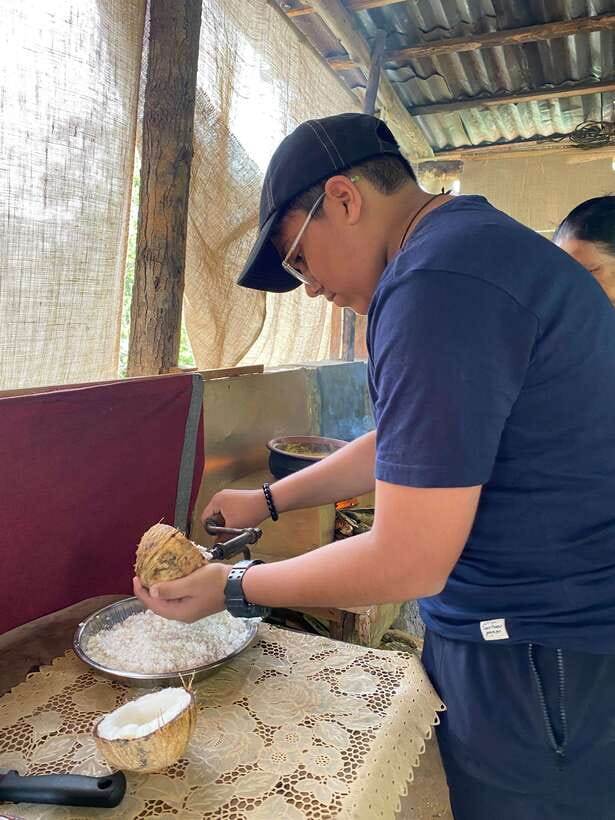
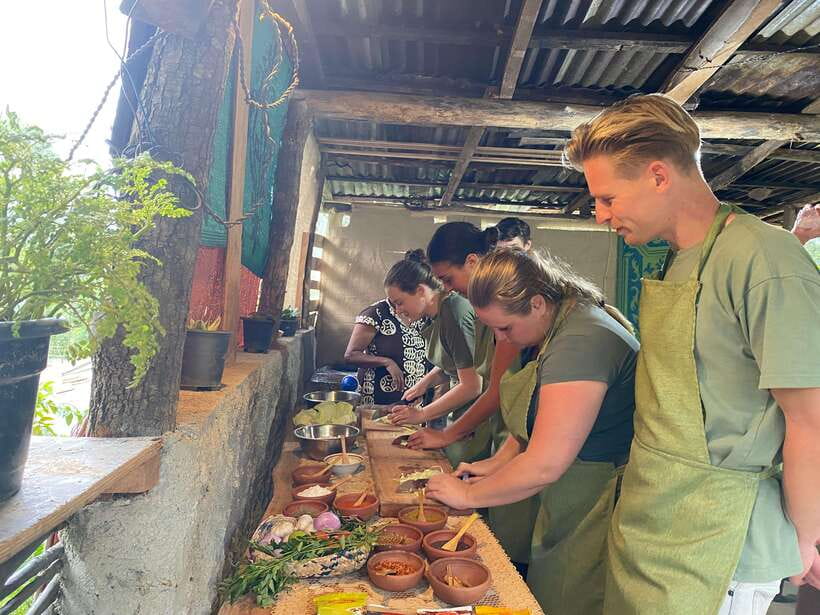
This is not a studio. The cooking happens in an outdoor kitchen space connected to the family home—often described as a beautiful area with views of Ella. You might be cooking right in the open air, with the sky and nature close by. Some classes also mention animals popping by (birds and even a squirrel), which adds to the “you’re in someone’s real life” feeling.
Expect to cook using traditional techniques and tools. You may grind spices (including using a stone/grinding setup), roll or prepare ingredients by hand, and use heat from both fire/woodfire and a gas stove depending on the moment and the dish. That mix matters because it shows you what changes when flavors hit direct heat versus controlled stove cooking.
Food handling is taken seriously. Multiple guests specifically mention the cooking area being clean and the hosts following strong hygiene habits. That’s reassuring—especially when you’re working close to hot oil, chopping fresh produce, and handling spices throughout the session.
And the small group size (limited to 6) is more than a number. It keeps the class from turning into a line. You can ask questions without the hosts rushing to the next person, and they can correct technique when you’re grinding, frying, or seasoning.
What the 2-hour flow really feels like (and what you do)
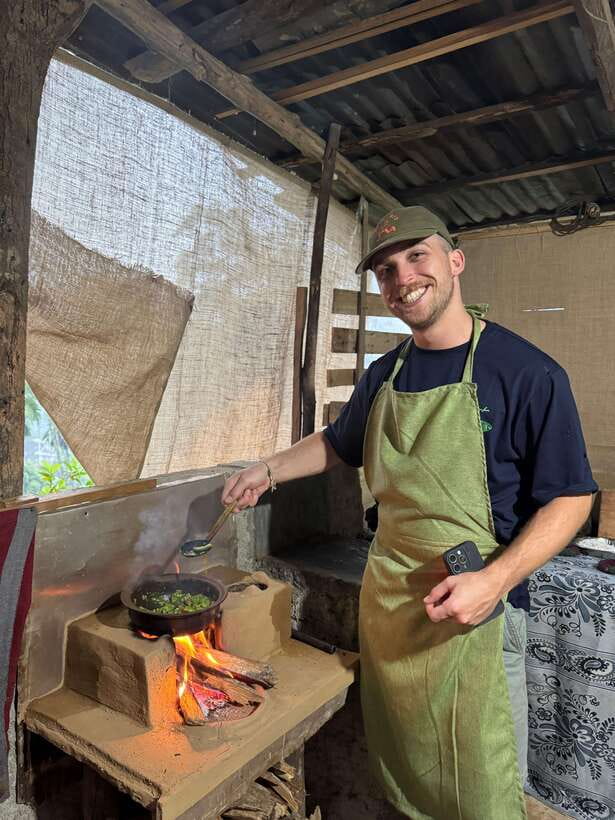
The class starts with a welcome and a quick run-through of what you’ll do. Then you begin with a kitchen introduction: tools, locally sourced ingredients, and how the day’s recipes connect to Sri Lankan cooking traditions. You’ll also hear cultural context for the dishes, not in a textbook way, but in the way the hosts explain why a particular ingredient matters and how it shows up in everyday meals.
After that, you move into hands-on cooking. The pacing is lively: chopping and prep, then heat work, then mixing and seasoning. You’ll likely rotate through different roles as each course comes together. That means you don’t feel stuck doing just one job for the whole time.
You can expect multiple courses. The class format includes appetizers and main dishes, with desserts mentioned as part of the overall structure. In practice, many sessions center on curries and sides—like coconut sambol, rice, and papadum/poppadoms—because those are the heart of Sri Lankan home cooking and the most teachable items.
The session ends with a communal meal. You sit down with your group and eat the dishes you prepared. This is when everything clicks: you learn the taste target while it’s still fresh in your memory. If you’re the kind of person who learns better by tasting and comparing, this ending is a big deal.
What you’ll cook in Ella: curries, coconut sambol, papadum, and more
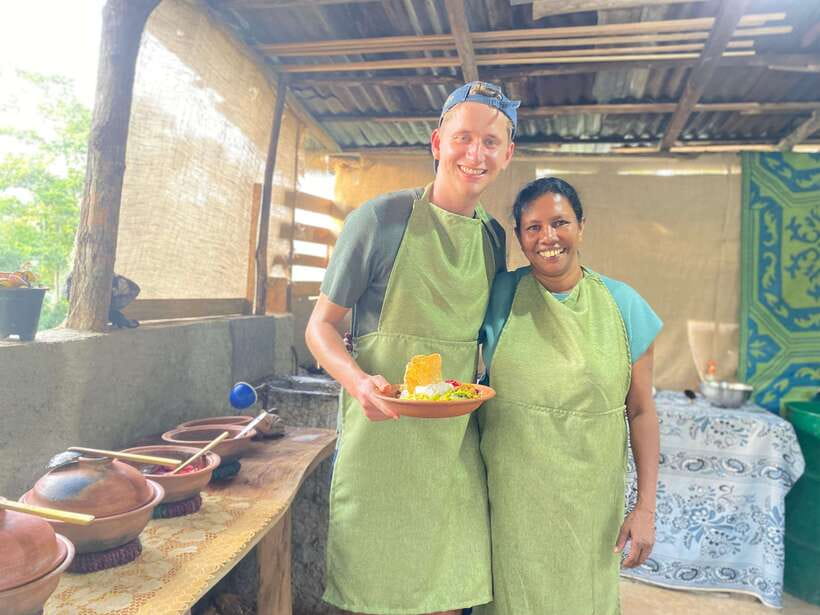
Let’s talk dishes, because this is what most people actually want to know.
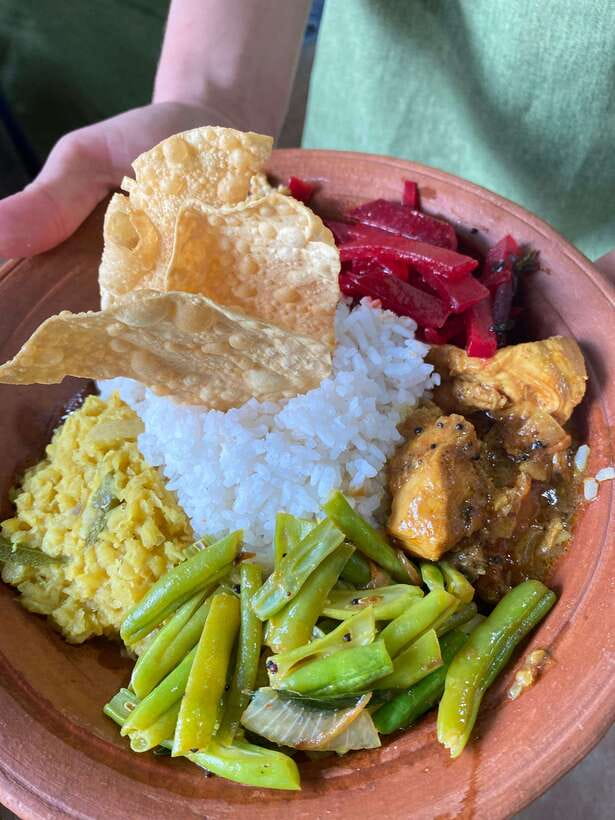
You’ll typically make several Sri Lankan recipes in one class—often a handful of curries plus key sides. Guests mention cooking multiple curries such as chicken curry, mango curry, and bean or beetroot curry. Lentil preparations like dahl also show up in several sessions. The exact combination can vary, but the emphasis stays the same: curries that taste layered, not one-note.
One constant favorite is coconut sambol. It’s a side that teaches you how coconut and chili, plus aromatics and seasoning, create a punchy balance. Even if you’ve never made it before, this dish is usually quick enough that you can focus on technique rather than stress about timing.
You’ll also likely make papadum/poppadoms. Whether they’re fried or cooked in a specific way, the goal is simple: understand the texture shift and how these crispy sides fit into a curry meal.
Rice and dahl are part of the “build the plate” learning too. Even when you’re confident cooking rice at home, learning how Sri Lankan families serve it—plus how the curry’s salt and heat land—helps you make better choices later.
Here’s the smart part of this menu style: many dishes can share a similar base of spices, but the final flavor changes because of small technique differences. That’s how you learn the real lesson, not just copy recipes line by line.
The spice lesson: learning what to do first, second, and last
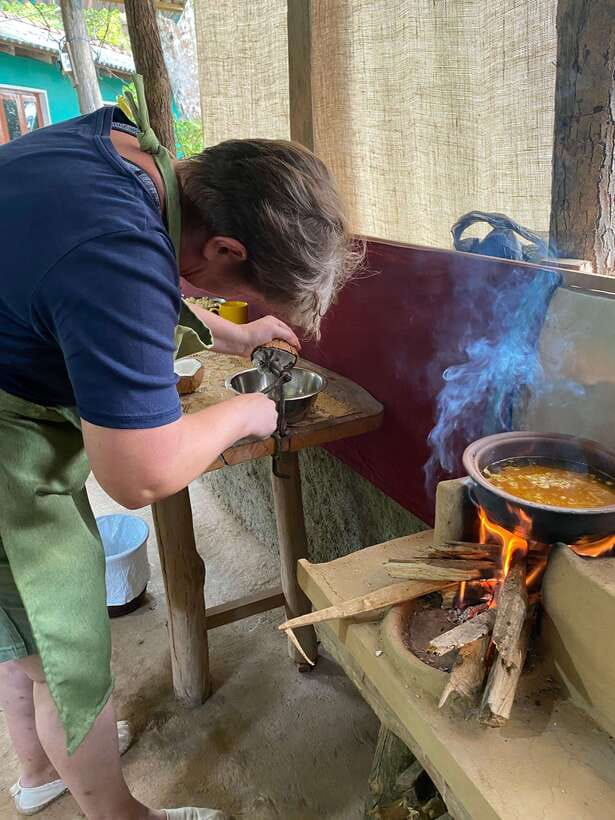
Sri Lankan cooking can feel intense if you approach it like a Western recipe with strict steps and measured amounts. This class helps you think differently.
You’ll get clear guidance on spices—what they smell like in oil, what changes when they toast, and how grinding affects flavor. Since the hosts are teaching from everyday experience, they often explain seasoning in practical terms: not just how much, but what you’re trying to achieve in taste.
One detail that keeps coming up is how straightforward Sri Lankan recipes can be when you treat them like a method. Several guests mention that different curries might use the same spice set, but they still end up distinct. That’s gold when you cook at home. You stop feeling like every dish is a brand-new complicated project.
Also, you’ll likely get tips on time-saving techniques. That’s important because the class is only 2 hours. They don’t try to turn you into a chef with a week of prep. They focus on the steps that matter most for flavor—like grinding where it counts, building aromatics in oil, and seasoning at the right moment so it doesn’t taste flat.



The communal meal: tasting your work (and noticing the details)
Eating after a cooking class sounds obvious. In practice, communal dining is where you learn the last 20%—texture, salt, heat, and balance.
Because you cooked the dishes yourself, you taste with new awareness. You’ll notice how the sambol cuts through curry richness. You’ll feel how papadum adds crunch at the exact moment you want it. And you’ll understand why rice and dahl aren’t filler; they’re the structure that makes the curry taste complete.
The setting adds to it. Multiple guests mention views from the outdoor kitchen area and a relaxing atmosphere while you eat. Some even describe an extra layer of nature—birds and small wildlife during the session—which makes the meal feel like part of a living moment, not just a food break.
Price and value: what $20 buys you in real skill
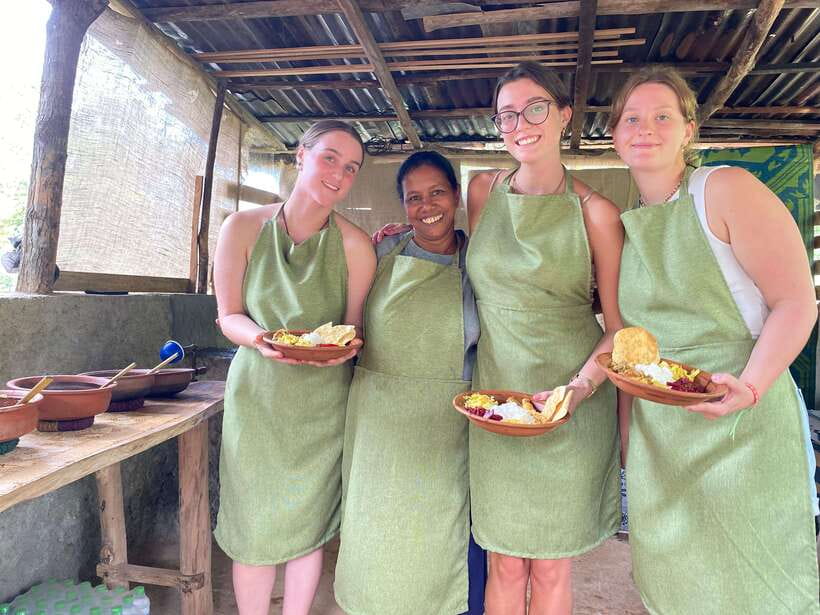
At $20 per person for about 2 hours, this class is priced like a budget activity on paper. But the value is better than the number suggests because you’re buying skills, not entertainment.
You’re getting:
- Hands-on cooking time with active roles for everyone
- Locally sourced ingredients used during the lesson
- A full meal at the end
- Recipes to take home, including delivery by WhatsApp in many cases
The biggest value is the recipe clarity. If you’ve ever tried to recreate curry at home and ended up with something bland, you’ll appreciate why: you didn’t understand when to add things, what to toast, or how to judge seasoning. Here, you learn those practical cues from people who do it regularly.
And the small-group limit (up to 6) matters for value too. You’re not paying $20 to stand in a crowd. You can ask questions and actually get feedback while you’re cooking.
Who should book this class (and who might not love it)
This is ideal if you want a hands-on cultural food experience without fancy equipment or long travel across town. It also suits you if you like learning by doing and tasting while the techniques are fresh in your mind.
It’s especially good for:
- Food lovers who want to understand curries beyond the restaurant version
- People who enjoy spices and want a real explanation of how they work
- Small groups or couples who want a family-run setting rather than a large tour group
- Anyone planning to cook after the trip and wanting recipes you can follow
It might be less ideal if you want a very polished, high-speed cooking show with zero mess and perfect predictability. This class is home-style. It uses fire and traditional methods. That’s the point, but it also means you’re participating in a real cooking environment.
Also, if you’re sensitive to heat or strong chili flavors, you can still take the class—you just need to be open about adjusting to taste. The hosts are accommodating to dietary requests in at least some cases, so it’s worth telling them what you need ahead of time.
Tips to get the most out of your 2 hours
If you want to bring home both flavor and confidence, focus on these during the class:
- Watch the order of steps, not just the ingredients. Ask what goes into hot oil first and why.
- Taste at key moments. If you get a chance to taste while cooking, pay attention to how flavors change before serving.
- Ask for home adjustments. You can cook at home, but your stove won’t be the same. The hosts’ home-focused tips are what make recipes realistic.
- Save your take-home recipes immediately. Many guests get them via WhatsApp, so check your messages and keep them organized.
And since you’ll be doing prep tasks like chopping and grating coconut, wear something you don’t mind getting a bit spice-scented. That’s part of the fun.
Should you book Mom’s Kitchen Cooking class in Ella?
Yes—if you want an authentic, family-style cooking experience where you actually cook, not just watch. This is one of the better ways to understand Sri Lankan food in a short amount of time because it teaches the method behind the flavor.
Book it if:
- You care about hands-on learning
- You want recipes you’ll realistically use later
- You like outdoor cooking and scenic home settings
Consider skipping if:
- You prefer fully indoor, climate-controlled activities
- You want a strict, restaurant-style “everything will be identical” menu
If you’re in Ella with a couple of hours to spare and you like food that tastes like someone’s real life, Mom’s Kitchen Cooking class is a very solid choice.
FAQ
How long is the cooking class?
It runs for 2 hours.
What does it cost?
The price is $20 per person.
How big is the group?
It’s limited to a small group of up to 6 participants.
What’s included in the experience?
You get the cooking class, locally sourced ingredients, and a meal at the end.
What language is the class taught in?
The class is offered in English, and the hosts explain clearly in English.
Do I get recipes to take home?
Yes. You receive the recipes to recreate the dishes at home (often shared via WhatsApp).