Three days, three big Sri Lanka hits. This tight little route strings together Sigiriya, Dambulla’s Golden Cave Temple, and Kandy’s spiritual center, then finishes in cool Nuwara Eliya tea country. The best part is the pace: you’re not bouncing around on your own, and you’re not missing the headline sights either.
I like that the trip is built around a private vehicle with a chauffeur guide, so you can move efficiently between Kandy, Sigiriya, and the hills without losing time. I also like the value shape of it: you get 2 nights accommodation, dinner, and breakfast (3) included, which covers the “basic needs” part of the trip.
One thing to plan for: the itinerary stacks in a lot of major sites, and many of the entrance fees are not included (plus Sigiriya and Minneriya costs add up). Also, expect meaningful walking—especially the climb up Sigiriya Rock Fortress—so pack for that.
In This Review
- Key Things That Make This 3-Day Kandy-to-Tea-Country Trip Work
- A Fast Hit of Sri Lanka’s Core Sights, Starting and Ending in Kandy
- Day 1 From Kandy: Sri Muthumariamman Temple, Dambulla Caves, and Sigiriya Lion Rock
- Minneriya National Park Safari: Nature Break After the Rock Fortress
- Day 2 in Kandy: Royal Botanical Gardens, Buddha Statue Views, Dance, and the Tooth Relic
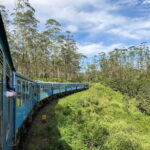
- Day 3 to Nuwara Eliya: Bluefield Tea, Ramboda Falls, Tudor-Style Post Office, Gregory Lake
- Price and Value: What $275 Covers and What Adds Up Later
- Timing and Comfort Tips for This Kind of Kandy Loop
- Who Should Book This Trip From Kandy?
- Should You Book It?
- FAQ
- What cities does this tour cover, and where does it start and end?
- What is included in the $275 per person price?
- Are entrance fees included?
- Is transportation private?
- Is there a vegetarian option?
- Does the tour require physical fitness?
- Are tickets mobile?
- Can I cancel for a full refund?
Key Things That Make This 3-Day Kandy-to-Tea-Country Trip Work
- Private transport end-to-end: you’re not coordinating buses; you’re following your guide’s timing.
- UNESCO highlights in one sweep: Dambulla Cave Temple plus Sigiriya Rock Fortress in the same overall trip.
- Kandy done right: gardens, views over Kandy Lake, a cultural dance show, and the Temple of the Tooth Relic.
- Tea country realism: a real hillside tea estate visit plus classic Nuwara Eliya stops like the Tudor-style post office.
- Wildlife add-on day one: Minneriya National Park with an estimated safari jeep fee.
A Fast Hit of Sri Lanka’s Core Sights, Starting and Ending in Kandy
This is a classic “greatest hits” itinerary, but it’s not just a checklist. It’s designed for the person who has limited time and still wants variety: ancient monuments, Buddhist and Hindu sites, and then the cooler, colonial-style hill atmosphere of Nuwara Eliya.
You start in Kandy and end back in Kandy. There’s also mention of a possible drop at Nanoya station if you need it, which is handy if your next step is train travel. The tour uses private transport in an air-conditioned minivan or car with a chauffeur guide, which is a big deal here because distances between these areas can eat up a day when you’re not organized.
You’ll also see how the itinerary balances “major sights” with a few softer moments. Kandy isn’t only temples; you get views and a cultural dance show. Day three isn’t only waterfalls; you get tea gardens and that specific Nuwara Eliya vibe people associate with Little England. If that mix sounds like what you want—history plus scenery—this route fits.
One more practical detail: it’s described as customizable on the itinerary side. That can matter when you want to adjust timing around what you care about most, like whether you’d rather spend more time at a viewpoint versus shopping around a city center.
You can also read our reviews of more tours and experiences in Kandy.
Day 1 From Kandy: Sri Muthumariamman Temple, Dambulla Caves, and Sigiriya Lion Rock
Day one is all about starting with religious sites, then shifting into Sri Lanka’s most dramatic archaeological stage.
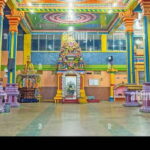
First stop is Sri Muthumariamman Temple, visited on the way out toward Sigiriya. This temple is known for its 1008 statues of Hindu deities. It’s not a tiny roadside stop either: the Raja Koburum was completed in 2007, and the temple project is tied to sculptor Nagalingam and his son Ramanathan, with a team of designers, painters, and architects from Tamil Nadu and Sri Lanka. If you’re interested in religious art and how it’s built and funded, this is a strong opening.
Next comes Dambulla Royal Cave Temple and Golden Temple. This is a World Heritage Site in central Sri Lanka, and the details here help you appreciate why it matters: it’s listed as the largest and best-preserved cave temple complex in Sri Lanka, located 148 km east of Colombo and 72 km north of Kandy. On a tight tour, landing here is efficient because you get a whole temple world in one place—caves plus sacred space—without having to hop between multiple smaller sites.
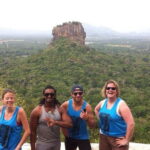
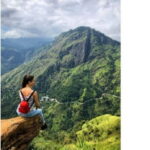
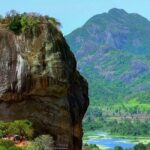
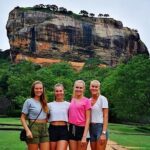
Then you hit Sigiriya The Ancient Rock Fortress. This is the big “stop and stare” moment. Sigiriya was built by King Kashyapa I (reigned 477–495), and the fortress was designed like a lion-shaped palace. You can picture the layout: the summit intended as a safeguard against enemies, and then after the king’s defeat around 495, the palace fell into ruin and later became a pilgrimage destination.
The visit is also physically memorable. You start the final ascent through the open paws of the lion, one of the few remaining portions of the palace that still holds. And if you like art, look for the 21 rock paintings of apsaras (celestial singers and dancers). Sigiriya became a UNESCO World Heritage site in 1982, which lines up with why it’s treated like a major world landmark rather than a local attraction.
Drawback to plan for on day one: you’ll be doing temple walking plus climbing time. Wear shoes you can stand in for a while. Bring a hat and plan for sun exposure—Sigiriya is not the place for “I’ll just hope it’s cool.”
Minneriya National Park Safari: Nature Break After the Rock Fortress
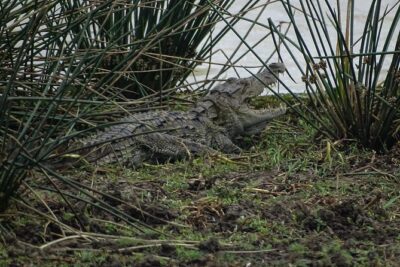
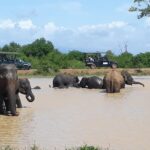
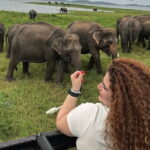
After Sigiriya, the itinerary shifts from ancient stone to living landscapes with a visit to Minneriya National Park. This stop is paired with an estimated entrance fee for the park and an estimated safari jeep fee, which tells you the park visit is meant to be more than a quick photo stop.
The key practical point: plan your energy. Day one already includes a temple complex and a rock fortress ascent, so Minneriya is at its best when you treat it like a proper nature session. The jeep fee being listed suggests you should expect to pay for the vehicle experience separately (not only the park entrance). If wildlife is a major reason you chose this trip, check that you’re comfortable with the extra cost and the time commitment on the day.
Also, note the description text for the Minneriya slot repeats Sigiriya’s description in the details you provided. That’s likely a content mix-up, but the stop name is still clear: Minneriya National Park is included, and the safari fees are specifically estimated. The takeaway for you: treat Minneriya as the “safari component” day one includes, even if the written description is messy.
Day 2 in Kandy: Royal Botanical Gardens, Buddha Statue Views, Dance, and the Tooth Relic
Day two is Kandy done at a human pace, moving from gardens to panoramas to culture to one of the most important Buddhist sites in the country.
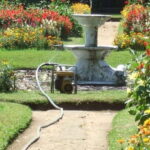
You start with the Royal Botanical Gardens (Peradeniya), about 5.5 km west of Kandy. This place is famous for orchids, but it’s also massive in variety: the garden includes more than 4000 species of plants, including orchids, spices, medicinal plants, and palm trees, plus it’s attached to the National Herbarium of Sri Lanka. In 2016, the garden was visited by about 1.2 million locals and 400,000 foreign visitors, which gives you a sense of scale and popularity. The reason this matters on a short itinerary is simple: you can spend a focused chunk of time walking paths and still feel like you saw a lot.
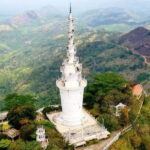
Next is the Bahiravokanda Vihara Buddha Statue (Bahirawakanda Temple / Sri Maha Bodhi Viharaya), about 2 km from Kandy’s city center. The highlight is the giant white Buddha statue, called Bahirawakanda Vihara Buddha Statue, standing at 88 feet, one of the tallest Buddha statues on the island. Even if you’re not a “statue person,” this kind of landmark tends to give you a good sense of Kandy’s surroundings and the way the city rises into hills.
After that comes a viewpoint: Kandy View Point at Arthur’s Seat. It sits at 1790 feet above sea level, and the description gives you the exact kind of view you’re going for: Kandy Lake, the Temple of the Tooth Relic overlooking the city, and the arrangement of iconic buildings under blue sky. It’s also tied to the British-era legend of planter Arthur using a seat to view the city. On a day that includes a lot of religious sites, this kind of outlook helps you reset your brain.
Then you get Kandy Lake Club Cultural Dance Show. This is a short 30-minute slot, but it’s specifically about Kandyan dance—the classical up-country tradition. The notes here are useful: Kandyan dancers are traditionally performed only by male dancers, and the style focuses on powerful footwork, leaps, and whirls. If you want a cultural moment without committing to a full evening program, this is a sensible fit.
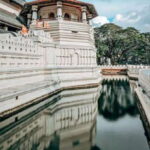
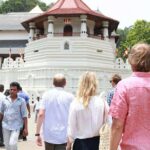
Finally, you end at the Temple of the Sacred Tooth Relic. The tooth relic is described as one of Buddha’s teeth and central to Sri Lanka’s Buddhist religious and political history, brought to Sri Lanka in the 4th century AD. The Temple itself is first built in 1603, with the current temple dating to the 18th century. This stop is the emotional anchor of Kandy for many visitors, and even if you don’t follow every historical detail, you’ll understand the importance quickly because the whole place is organized around the relic.
Practical consideration for day two: day two is packed but not rushed, so keep your pace steady and don’t treat every stop like a 5-minute drive-by. Give your eyes time at the viewpoint and gardens.
Day 3 to Nuwara Eliya: Bluefield Tea, Ramboda Falls, Tudor-Style Post Office, Gregory Lake
Day three is the shift from lake-city to tea-hill weather. If Kandy felt humid and lush, Nuwara Eliya tends to feel like the climate changes in your hands.
You begin with Bluefield Tea Gardens, a popular hillside tea production estate in Rambado town around 1200 meters above sea level. The description emphasizes scenic surroundings—lush vegetation and valleys—which is what you want from a short tea visit. This is where you get that “this is why people come here” feeling: tea isn’t only a product here; it’s the scenery and daily rhythm of the area.
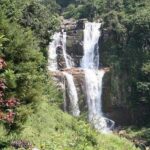
Next is Ramboda Waterfall at Ramboda Pass on the A5 highway. The waterfall is listed as 109 m high, one of Sri Lanka’s higher waterfalls (11th highest in the country) and also ranked in the world (729th highest). It’s formed by Panna Oya, a tributary of Kothmale Oya, and the altitude is given as 945 m above sea level. This is a stop that works well on a 1-hour window because you can see it, photograph it, and still keep moving.
You then visit the Post Office Nuwara Eliya, an iconic red brick building in Tudor Revival style, described as one of the oldest post offices in the country. It’s two-story, and in 2012 the upper floor (living quarters of the postmaster) was transformed into a tourist accommodation spot. Even if you don’t plan to stay, the building is a classic Nuwara Eliya marker: the place where you feel the British-era imprint.
After that, you spend time in Nuwara Eliya itself, where the vibe is described as “Little England,” with colonial-era bungalows, Tudor-style hotels, hedgerows, and pretty gardens. The itinerary gives you an hour to take in the feel without trying to do everything at once.
Finally, the route includes Lake Gregory (Gregory Lake / Gregory Reservoir), constructed during British Governor Sir William Gregory in 1873. The lake and surrounding area make up the Gregory Lake Area. It’s a good closing stop because it shifts you from tea production and colonial buildings into a calm, open view. It also gives you a last chance to slow down before you return to Kandy.
Price and Value: What $275 Covers and What Adds Up Later
At $275 per person, you’re paying for a lot of the infrastructure that usually costs money in Sri Lanka trips: lodging, guided transport, and at least some meals.
Included in the package:
- Dinner
- 2 nights accommodation
- All taxes, fees, and handling charges
- Hotel pickup and drop-off
- Private transport by air-conditioned minivan or car with chauffeur guide
- Breakfast (3)
What’s not included are several entrance fees and ride costs. The estimates provided are important because they help you budget realistically:
- Sri Muthumariamman Temple: ~500 LKR
- Dambulla Cave Temple: ~2000 LKR
- Sigiriya Rock Fortress: ~US$30
- Minneriya National Park: ~US$50
- Safari Jeep: ~US$50
- Royal Botanical Gardens: ~3000 LKR
- Bahirawakanda Vihara Buddha Statue: ~500 LKR
- Lake Club cultural dance show: ~2000 LKR
- Temple of the Tooth Relic: ~3000 LKR
- Ramboda Waterfalls: ~500 LKR
So the “value” math works like this: the base price buys you comfort and time savings (private transport and included meals), while entrance fees buy you the actual access to the sites. If you’re the type who hates fee surprises, you’ll want to budget extra for Sigiriya plus the Minneriya safari component.
One more detail that affects cost: the tour includes water bottles, but meals and drinks beyond that are not included. If you like planning lunch on your own, that’s fine. If you want fully included food, you’ll need to adjust expectations.
Timing and Comfort Tips for This Kind of Kandy Loop
Because this is a “three major city” style route, your schedule will be shaped by travel time and opening hours. The transfer times are listed as approximate and depend on traffic and time of day, so don’t build your own tight plans on either side of the tour.
Here’s how to prepare in a practical way:
- Bring good walking shoes. Sigiriya is the main workout, but temples and viewpoints add up.
- Pack sun protection (hat, sunscreen). The climb and open areas don’t leave much room for shade.
- Carry small cash for the estimated entrance fees that are marked as not included, especially the ones in LKR.
- Plan for meals on your own except for dinner and breakfast that are included. Water bottles are included, but drinks and lunch aren’t described as included.
On the service side, the operator describes flexibility: private transport, and a customization itinerary is mentioned. In the feedback for this kind of service, I saw clear praise for driver-guide professionalism and communication, including names like Shamin and Irfan, plus responsiveness from the owner Zameek. That matters because good timing and smooth communication are what make a short itinerary feel relaxed instead of frantic.
Who Should Book This Trip From Kandy?
This tour is a strong match if:
- You have limited time but want the standout sights: Sigiriya, Dambulla, and Kandy’s Tooth Relic.
- You prefer private, air-conditioned transport rather than arranging connections yourself.
- You like variety: temple artistry, viewpoints, cultural dance, then tea country and waterfalls.
It may be less ideal if:
- You want long stays in only one place. This is efficient, not slow travel.
- You dislike paying extra for entrance fees and safaris. Many key sites in the route require separate admission costs.
Also, the description asks for a strong physical fitness level. That’s especially relevant because the itinerary includes a rock fortress climb.
Should You Book It?
If you want a high-efficiency Sri Lanka sampler where the major stops are handled for you—transport, guides, accommodation, and key meals—this is an easy recommendation. The $275 price feels fair when you count in lodging (2 nights), dinner, and the private air-conditioned ride between regions.
I’d book it if you’re excited by the specific combo of ancient sites plus Kandy culture plus cool hill atmosphere. I’d think twice if you’re only interested in one or two of those areas, because you’ll be spending your limited time hopping between them.
If you decide to go, do one simple thing: budget for the extra entrance fees early (Sigiriya and Minneriya safari costs are the big ones). That way the trip stays fun, not stressful.
FAQ
What cities does this tour cover, and where does it start and end?
It’s designed to cover Kandy, Sigiriya, and Nuwara Eliya from Kandy, and the tour begins from Kandy and ends back at Kandy. There is also a possibility of a drop at Nanoya station if required.
What is included in the $275 per person price?
The package includes dinner, 2 nights accommodation, all taxes and fees, hotel pickup and drop-off, private transport in an air-conditioned vehicle with a chauffeur guide, and breakfast (3).
Are entrance fees included?
No. Entrance fees are listed as not included, including estimated fees for places like Dambulla Cave Temple, Sigiriya, Royal Botanical Gardens, the Temple of the Tooth Relic, and Minneriya National Park (plus a safari jeep fee estimate).
Is transportation private?
Yes. The tour is private on a basis that uses a private air-conditioned minivan or car with a chauffeur guide, and it’s described as a private tour/activity where only your group participates.
Is there a vegetarian option?
A vegetarian option is available. You should advise at the time of booking.
Does the tour require physical fitness?
The additional info says travelers should have a strong physical fitness level, which matters because the itinerary includes Sigiriya Rock Fortress.
Are tickets mobile?
The tour features include mobile ticket, and confirmation is received at booking time.
Can I cancel for a full refund?
Yes. Cancellation is free up to 24 hours before the experience’s start time for a full refund. If you cancel less than 24 hours before, the amount paid is not refunded.