Rock temples to whale days in one loop.
This private Sri Lanka plan strings together cultural sights, wildlife encounters, and serious beach downtime in a logical route from Colombo down to the south coast. I like the way the day-to-day flow is set up so you spend more time seeing and less time figuring things out.
I also like two practical things a lot: private air-conditioned transport with WiFi on board for long drives, and a real guide who can steer you through the major religious and nature stops without guesswork. It’s the kind of structure that helps when you’re bouncing between cave temples, climbs, and safaris.
One consideration: the pace is full, and many stops list admission as not included, plus lunch and dinner aren’t part of the package. So you’ll want to budget extra for paid entries and a few ticketed activities, especially safaris and whale watching.
In This Review
- Key highlights I’d put near the top
- Sri Lanka in 14 days: a route built for variety, not boredom
- Colombo start and finish: practical points that matter
- Negombo to Sigiriya: coast heat, then cave cool
- A small but real Sigiriya tip
- Pidurangala, craft village life, and the Minneriya elephant day
- What to do to enjoy the safari more
- Kandy, Temple of the Tooth, and the things people overlook
- Nuwara Eliya and tea-country stops that feel very different
- Clothing reality check
- The Nanu Oya to Ella train and Nine Arches Bridge: a high-payoff day
- Ella’s short hikes plus a zipline for the daring
- Safety-minded advice
- Ravana Falls, then Yala National Park where the stakes feel real
- How to make the safari more enjoyable
- Tangalle and Hummanaya: beach calm plus the blowhole spectacle
- Mirissa: whales in season, and sunset views that cost nothing
- Bentota: sea turtles and a mangrove river cruise
- Price and value: what you’re paying for (and what you’ll pay extra)
- The costs to budget for
- Who this tour fits best (and who should rethink the pace)
- Should you book this Sri Lanka private tour?
- FAQ
- What’s included in the Sri Lanka private tour package?
- Is transportation private, or do I share it with others?
- Are entrance tickets and tours included at each stop?
- Does the tour include whale watching, and when is it available?
- Can the tour handle dietary needs like vegan or gluten-free?
- Is free cancellation available?
Key highlights I’d put near the top
- Private transport, parking, fuel, and a guide keep the trip smooth instead of chaotic
- A/C vehicle + WiFi on board makes the travel days feel shorter
- Big nature days: Minneriya elephants and Yala wildlife sit front and center
- Hill-country rail moment on the Nanu Oya to Ella train route
- Culture anchors: Dambulla cave temples and Kandy’s Temple of the Tooth
- Breakfasts included (13), but plan to choose your own lunches and dinners
Sri Lanka in 14 days: a route built for variety, not boredom

This is the kind of trip that works when you want a lot of Sri Lanka without turning your vacation into a spreadsheet. You’re not stuck doing only one type of travel. One day you’re in cave temples. Another day you’re climbing rock views. Then it’s elephants, safari jeeps, and finally ocean time.
What makes this plan especially workable is that it groups the country’s highlights in a sensible order. You start in the west-coast area, move into the cultural triangle and tea country, then head to the south coast and end back in Colombo. That means fewer backtracks and less time spent in transit than you’d likely tolerate if you tried to assemble everything on your own.
You’ll also notice the trip is mostly made of short-to-medium blocks—many stops are around 1 to 4 hours. That matters. Long days are still part of Sri Lanka, but the schedule helps you keep momentum.
You can also read our reviews of more tours and experiences in Colombo.

Colombo start and finish: practical points that matter
Everything orbits around Colombo in this plan. You begin and end in Colombo, and the tour also references Bandaranaike International Airport (CMB) as your finish point. That’s helpful because it lines up the end of your trip with the place you actually need to get to—no last-minute scramble.
The operating window is listed as 12:00 AM to 11:30 PM, which signals flexibility for start/end timing on service days. In real life, the exact timing still depends on your driver and your hotel check-in, but the broad daily window is a good sign if your flight times are unusual.
One more practical angle: the tour is described as near public transportation, and it says most travelers can participate. That’s useful because it hints you won’t be relying on complicated local connections to make the schedule work.
Negombo to Sigiriya: coast heat, then cave cool

Day one starts in Negombo, a coastal town with beaches, a lagoon, and colonial-era details. If you’re landing in Sri Lanka and you need a gentler first day, this is a smart choice. Negombo gives you ocean air and a break from the first round of long drives.
Then the trip hits the cultural anchor: Dambulla Cave Temple, a UNESCO World Heritage site. This is one of those places where you should slow down and look up. The cave complex is packed with Buddhist statues and murals. You’re given about an hour here, so I’d treat it as a careful walk rather than a race. Some entrances are listed as admission not included, so factor that into your budget for temple fees.
Right after that, you stop at the Golden Temple of Dambulla for another look at the area’s Buddhist significance, including the large golden Buddha statue. That pairing works because you get one big cave experience, then a second temple moment that keeps the theme going.
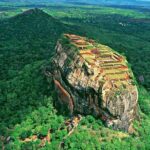
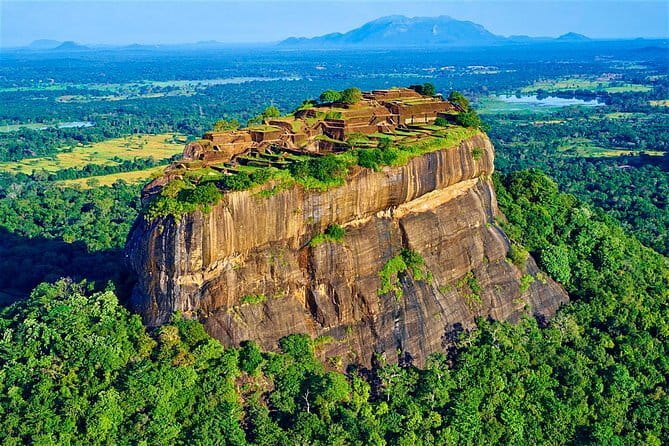
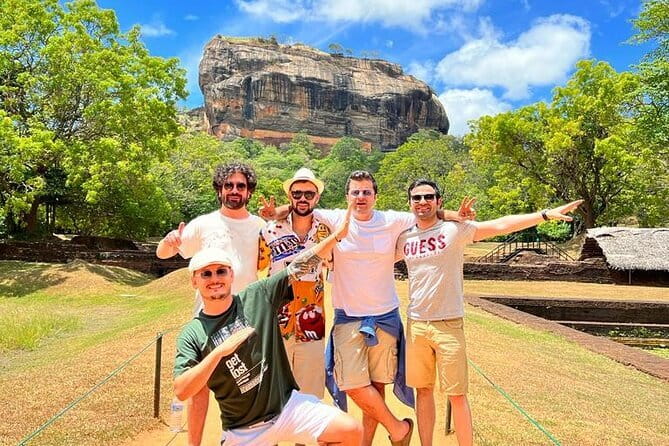
From there, you roll into Sigiriya—and Sigiriya is the star for a reason. You’re not just visiting a viewpoint. You’re dealing with an iconic climb: Sigiriya Rock Fortress with views, historic frescoes, and the famous lion’s-paw entrance. Expect the climb to take time and energy (about 3 hours in the plan). Bring water, wear grippy shoes, and don’t treat it like an urban walk.
A small but real Sigiriya tip
If you’re the type who hates lines, go in with the mindset that you’ll be moving at temple-climb speed, not cruise-control speed. The best part of Sigiriya is the payoff—wide views and the feeling of stepping into an ancient story.
Pidurangala, craft village life, and the Minneriya elephant day
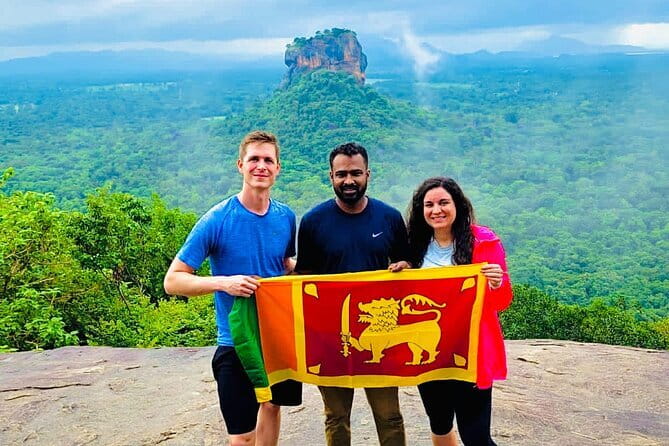
After Sigiriya, the plan adds a quieter, often less crowded alternative: Pidurangala Rock. You get panoramic views and ancient ruins, and the time block is about 2 hours. This is a good pairing with Sigiriya Rock because it gives you similar scenery with a different vibe. If Sigiriya feels too intense that day, Pidurangala can feel like the pressure valve.
Next is a Sigiriya craft village experience. This is the day where you trade monuments for everyday culture. In the plan, it includes things like bullock cart rides, traditional cooking demonstrations, and visits to local farms. You’re only there for about 3 hours, but it’s enough time to get a real sense of rural life and how people earn a living. It’s also an excellent breather before the wildlife-focused days.
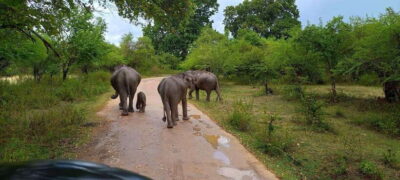
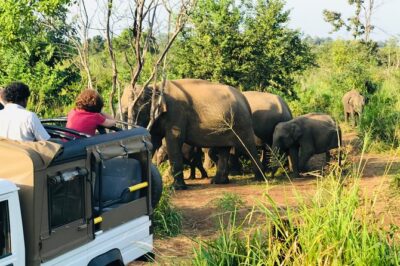
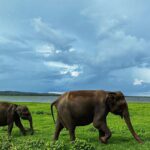
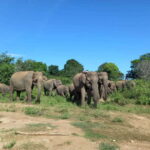
Then comes Minneriya National Park, famous for its elephant gatherings. You’re scheduled for both the park time and an actual Minneriya safari. Even if you’ve seen elephants elsewhere, this is special because the park is known for large groups, especially around the annual gathering season.
These entries are listed as admission not included, so expect safari fees to be part of your on-the-ground costs. Still, the structure—park time and then safari time—makes sense. Safari time is where you get the close-up spotting, while the park block helps you see the wider environment.



What to do to enjoy the safari more
- Go in with patience. The animals don’t read your schedule.
- Bring sun protection. Even if the days aren’t scorching, safari hours still add up.
- If you have binoculars, bring them. You might not need them every minute, but they help.
Kandy, Temple of the Tooth, and the things people overlook
Kandy is the next big cultural hub. Before you even reach Kandy, you stop in Matale for the Matale Herbal and Spice Garden. It’s about 2 hours and admission is listed as free. This is one of those stops that can either feel like a sales pitch or a real learning moment, depending on the guide. When it works, it helps you understand how spices move from farms into everyday Sri Lankan kitchens—and why certain flavors keep showing up later in your meals.
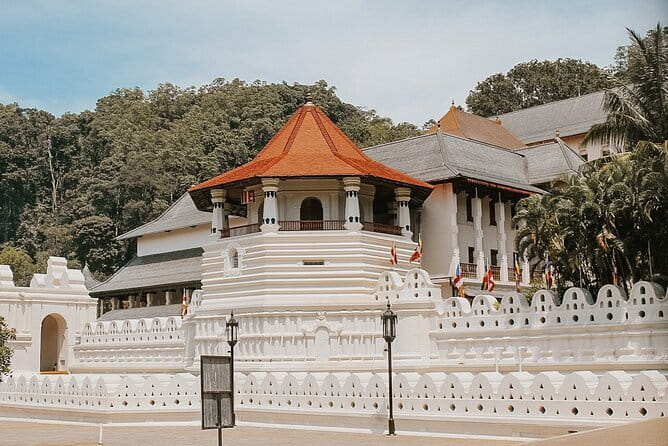
Then you arrive at Kandy and the major spiritual highlight: the Temple of the Sacred Tooth Relic (Sri Dalada Maligawa). You’re given 3 hours here. This is not a quick look-and-go site. If there’s a key place in the country for Buddhist devotion, this is one of them, and the complex is known for intricate architecture and religious ceremonies. Some admissions are not included, so budget accordingly.
You also stop at Kandy Lake for about 30 minutes. It’s short, but it gives you an easy reset after a heavier temple day. Think of it as a place to get your bearings and let your feet cool down.
On day five, you move outward to surrounding experiences. Peradeniya Royal Botanical Gardens (about 3 hours) gives you a slower pace with lots of plant variety. Admission is listed as not included, but the time block makes it feel worth it: you’re not rushing through a few photo stops.
You also visit an Ishini Gem Museum area (listed as free for admission in the plan), where you can see Sri Lankan gemstones and learn about mining and craftsmanship. Then there’s Oak Ray Wood Carvings for handcrafted wooden sculptures, again listed as free.
Finally, you end the day with the Kandy Lake Club Traditional Dance Show, about 1 hour. This is ticketed based on the plan’s admission not included note, so factor that in. It’s a useful way to connect the cultural theme after the temple day—especially if you want more than just monuments.
Nuwara Eliya and tea-country stops that feel very different
From Kandy, the route climbs into tea country. Day six includes Ramboda Waterfall (about 3 hours). Admission is listed as free, and that’s nice because it keeps your day from turning into a string of paid tickets.
Then you move into the Tea Plantation time block (about 3 hours) and the town of Nuwara Eliya, often called Little England because of its colonial-era feel. In the plan, there’s also time at the Post Office Nuwara Eliya, a historic red-brick building style that’s listed as free for admission.
These stops work because they offer variety in sensory feel. Tea country has cooler air and open hills. Even when you’re just walking around estates, it feels like a different country from the cultural triangle.
Clothing reality check
Sri Lanka’s hills can feel cool compared to the coast. Even if it’s warm earlier in the day, I’d keep a light layer handy. And for anything outdoors, bring sunscreen too—cloud cover can fool you.
The Nanu Oya to Ella train and Nine Arches Bridge: a high-payoff day
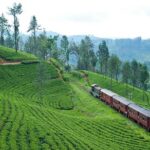
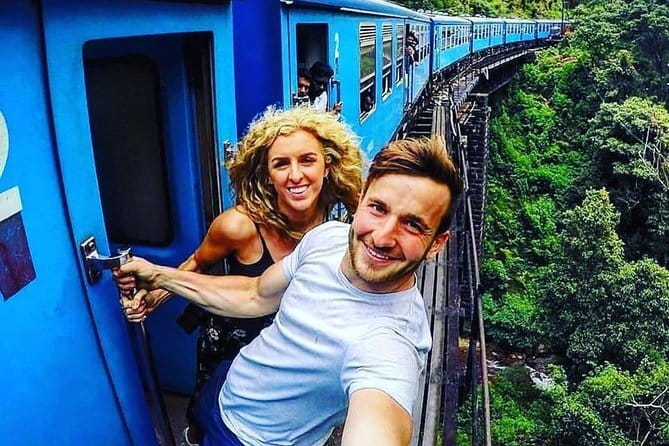
On day seven, you ride the hill-country train from Nanu Oya railway station to Ella. The plan schedules about 4 hours, and admission is listed as not included for this segment. This part is one of the most memorable ways to cross Sri Lanka’s interior because the views come at you fast—tea plantations, waterfalls, and winding tracks.
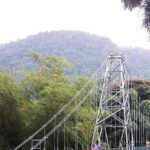
When you arrive in Ella, you have time around Nine Arches Bridge. You get about 2 hours here, and admission is listed as free. The bridge is an iconic colonial-era railway structure, and it’s popular for photos because the backdrop is dramatic.
What I like about this day is the balance. You don’t just travel; you get a built-in reason to stop, look, and take in the scenery.
Ella’s short hikes plus a zipline for the daring
Day eight is built for easy-to-moderate outdoor effort. First is Little Adam’s Peak view point, about 4 hours. Admission is listed as free. This is the kind of hike that rewards you quickly: a climb, then wide views of the hills and tea country.
Then you add Flying Ravana Mega Zipline (about 2 hours). Admission is listed as not included. If you like adventure and you’re comfortable with heights, this can be a fun contrast to temple days. If you’re not, you can still enjoy the viewpoint parts of the day without it.
Safety-minded advice
For zipline days, expect weather to matter. If conditions are windy or rainy, activities can pause. Wear shoes you trust, and treat harness instructions seriously. It’s not the place to be casual.
Ravana Falls, then Yala National Park where the stakes feel real

Day nine combines nature beauty with the wildlife centerpiece. You start at Ravana Ella Falls for about 1 hour. Admission is listed as free. It’s a shorter stop, but it gives you the reset you want before the next big driving/safari block.
Then it’s Yala National Park, scheduled for about 4 hours, with admission listed as free for the park stop. After that, you also have a Yala Safari segment (about 4 hours), with admission not included.
Yala is known for diverse wildlife, including leopards and elephants, plus many bird species. You’re going in with a realistic chance of spotting animals—nothing in wildlife is guaranteed, but Yala is one of the better bets in the country for a dramatic day.
How to make the safari more enjoyable
- Bring snacks and water if your operator allows it during breaks (the plan doesn’t specify).
- Bring something for dust. Jeep roads can be dry and gritty.
- Have a camera ready, but don’t forget to look with your eyes first.
Tangalle and Hummanaya: beach calm plus the blowhole spectacle
Day ten moves to the south coast with Tangalle, known for relaxed beach time. You’re scheduled for about 6 hours at Tangalle Beach, with admission listed as free.
Next is Hummanaya Blow Hole, about 3 hours. Admission is listed as free. This is one of Sri Lanka’s signature natural effects: seawater shoots up through a natural fissure in the rocks, especially at high tide. Plan for dramatic timing—if you get the wave show, you’ll remember it.
This day is a breather after intense safari time. You’re not searching for animals anymore. You’re just letting your body recover.
Mirissa: whales in season, and sunset views that cost nothing
Day eleven is Mirissa Beach for about 7 hours. Admission is listed as free. Mirissa is the classic mix of swim-friendly ocean time, relaxed beach bars, and easy sunset watching.
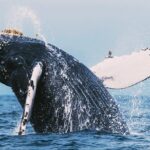
Day twelve is a special add-on: Whale Watching in Mirissa for about 4 hours, with admission not included. The plan also states the whale watching runs from November to April. So if your trip is outside those months, you’ll want to confirm what alternatives are available.
Later on day twelve, you visit Coconut Tree Hill, about 2 hours and listed as free. It’s a straightforward spot that delivers a lot: ocean views and photos without needing an admission fee.
Then you’re back at Mirissa Beach again for additional time, about 3 hours. That repeated beach block is a quiet win. It’s easy to feel rushed on tours, and here you’re given a chance to enjoy the coast more than once.
Bentota: sea turtles and a mangrove river cruise
Day thirteen shifts to Bentota. You start with the Sea Turtle Protection Association / Bentota Turtle Hatchery for about 2 hours. Admission is listed as not included. This is a conservation-focused stop where you can learn about sea turtle life cycles and even see hatchlings. The plan also notes participation in releasing baby turtles into the ocean, but since admission isn’t included, check the exact rules and whether releases occur on the day you visit.
Then you go on the Madu River Boat Safari for about 3 hours, with admission not included. This is a mangrove-rich river cruise through wetlands and small islands, with chances to see birds and wildlife and visit local villages or fish farms. The value here is that it’s nature without the “sit in a jeep for hours” vibe.
If you’re trying to balance one more safari day in your head with something calmer, this is a good fit.
Price and value: what you’re paying for (and what you’ll pay extra)
The tour price is $1,505 for about 14 days with private transport and hotel included. What makes the value feel plausible is the amount you’re covering: multi-day route planning, a guide, air-conditioned vehicle, and on-the-road logistics like parking fees and fuel surcharge.
You also get WiFi on board, which sounds minor until you’re tired and your phone battery is always dying. Then it becomes a big comfort item.
Breakfast is included 13 times, which is a meaningful daily savings. But lunch and dinner are not included, so you should plan for a mix of local meals and rest nights. That’s also your chance to steer your own day slightly—if you want spicy street-style food one night, you can.
One more value note: the plan mentions pickup is offered and group discounts. Since this is described as a private tour where only your group participates, you’re essentially paying for control. If you’ve ever tried to arrange a driver across multiple regions in Sri Lanka, you know that control can cost more than you expect.
The costs to budget for
Since many stops are marked admission ticket not included, you should assume extra spending for items like:
- temple and rock climb admissions (where listed as not included)
- national park safari fees
- hill-country train tickets
- zipline activity
- whale watching (seasonal)
- turtle hatchery participation
- any ticketed shows
The good news: having these items listed as not included helps you plan ahead instead of being surprised on arrival.
Who this tour fits best (and who should rethink the pace)
This plan is a good match if you want:
- private comfort (A/C transport, WiFi, parking handled)
- a serious hit of culture (Dambulla and the Temple of the Sacred Tooth Relic)
- at least two major wildlife days (Minneriya and Yala)
- mix-and-match outdoor time (Ella hikes, falls, viewpoints)
- a final phase focused on the ocean (Tangalle and Mirissa)
You might want to rethink if you:
- hate long days and constant moving
- prefer a slower pace with lots of free time per day
- don’t want to budget for paid tickets and ticketed activities
Fitness-wise, this is not a couch-only itinerary. You’ll climb and hike at Sigiriya and Ella, and you’ll walk around caves and temples.
Should you book this Sri Lanka private tour?
If you want an organized Sri Lanka trip that still includes the nature and culture that people come for, I’d say it’s a strong option. You’re paying for private transport, a guide, and a schedule that takes you coast to hills to wildlife to beach without the usual planning headaches.
Book it if your travel style likes structure but not strictness, and if you’re excited about mixing elephants, safaris, temple sites, and ocean time. If you’re picky about ticket costs, check up front which entrances are listed as not included and set aside money for them. Do that, and you’ll turn a full route into a very satisfying one.
FAQ
What’s included in the Sri Lanka private tour package?
The package includes an air-conditioned vehicle, WiFi on board, private transportation, parking fees, fuel surcharge, a guide, and breakfast (13). Lunch and dinner are not included.
Is transportation private, or do I share it with others?
It’s a private tour/activity, so only your group participates.
Are entrance tickets and tours included at each stop?
Not all admissions are included. Some stops are listed as free, while others are listed as admission ticket not included. You should budget for the paid items.
Does the tour include whale watching, and when is it available?
Whale watching in Mirissa is part of the plan, and it runs from November to April.
Can the tour handle dietary needs like vegan or gluten-free?
Yes. The tour says it can cater to different dietary preferences, including vegetarian, vegan, and gluten-free, if you share your needs when booking.
Is free cancellation available?
Yes, you can cancel for a full refund up to 24 hours in advance of the experience’s start time.