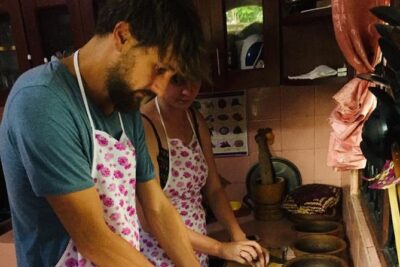
Dinner starts in someone’s kitchen. Cooking with Arun is a hands-on Sri Lankan class run like a family evening, with Arun and his mom guiding you through Tamil-style dishes in a cozy kitchen that feels welcoming from the first minute. I love how practical it is, and I love the warm, humorous, sit-right-down-and-cook vibe that makes even beginners comfortable. One thing to consider: you’re cooking in a home-style setup, so expect simple, lived-in logistics rather than a polished food studio.
The lesson mixes real instruction with real fun. I also like the fact that the menu can be customised to your preferences, including vegetarian and vegan options, and they’re happy to hear about dietary needs. The music matters too: guitars and a ukulele keep the kitchen lively while you chop, stir, and taste. The only real drawback is that with a 3-hour timing window, you’ll learn and cook what’s planned for that session, not every possible Sri Lankan technique in one go.
In This Review
- Key highlights worth knowing
- A 3-hour Sri Lankan cooking class inside Arun’s family kitchen
- The menu: Tamil-style Sri Lankan dishes, tuned to you
- You cook while the house hums: music, warmth, and Snowy the pet
- From welcome drink to dine-in meal: what happens during the session
- Afternoon tea with authentic sweets: a sweet finish that feels Sri Lankan
- The recipe book and what to do with extra food
- Price and value: is $37 per person fair?
- Who should book this cooking lesson (and who should skip it)
- Practical tips before you go
- Should you book this Sri Lankan cooking lesson with Arun?
- FAQ
- How long is Cooking with Arun & Tamil Family?
- Is the instructor teaching in English?
- How big is the group?
- What’s included in the experience?
- Can they accommodate vegetarian, vegan, or other dietary needs?
- Do I receive a recipe book to take home?
- Is there free cancellation?
Key highlights worth knowing
- Small group (up to 10) means you get attention while cooking, not just watching.
- Tamil-style Sri Lankan dishes with options for meat, vegetarian, and vegan preferences.
- Music in the kitchen with guitars and a ukulele, plus a relaxed, playful tone.
- Snowy the pet adds a memorable, low-pressure warmth to the whole experience.
- Welcome drink, dine-in meal, and afternoon tea with sweets keep you properly fed.
- Complimentary PDF recipe book helps you recreate the dishes later.
A 3-hour Sri Lankan cooking class inside Arun’s family kitchen
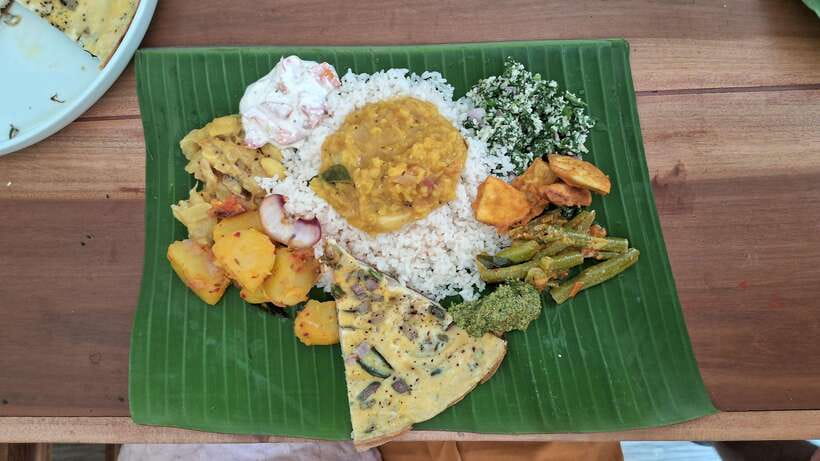
This is the kind of experience that makes you understand a country through everyday life, not just landmarks. Arun opens his home kitchen to you for a 3-hour session, and it quickly turns into something closer to cooking with friends than doing a formal class.
From the start, the tone is friendly and low-stress. You get a welcome drink, then you jump into the cooking lesson with the guidance of Arun and his mom. The kitchen is described as cozy, and that matches what you should expect: it’s comfortable, familiar, and focused on getting you cooking rather than showing off.
If you’re worried about skill level, don’t. The setup is designed for everyone, including people who have never chopped an onion without a plan. Arun’s style comes through in the way the lesson feels both structured and playful, with humor that keeps things from turning into a lecture.
One extra detail I really like is how the experience stays human. This family cooking lesson isn’t just about food; it’s about hosting. Even one booking that included a 2-year-old points to the fact that they know how to keep the atmosphere welcoming.
You can also read our reviews of more tours and experiences in Kandy.


The menu: Tamil-style Sri Lankan dishes, tuned to you
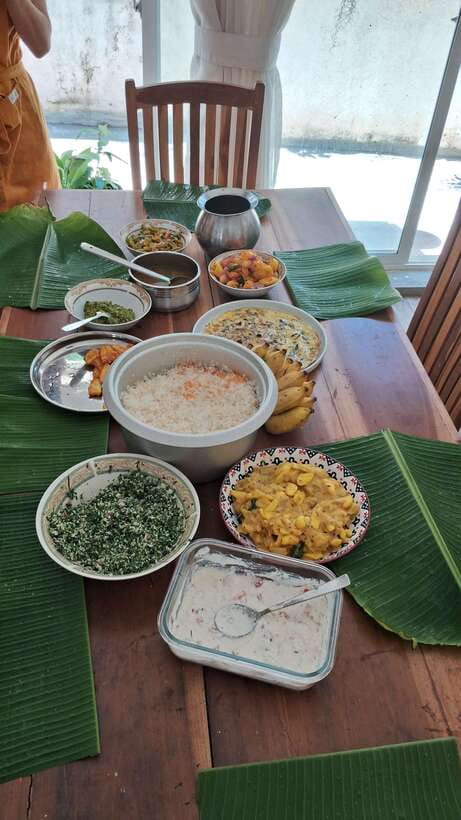
The best classes don’t just teach recipes. They teach how to adjust. In this one, you can expect a range of Sri Lankan dishes—often including spicy curries as well as milder options—set up to match what you want to eat.
You’ll find variety on the menu. That matters because Sri Lankan cuisine isn’t one-note; the flavors shift with spice level, ingredients, and how each dish is built. The lesson is also set up so you’re not boxed into one kind of eating—vegetarians and vegan diners can be accommodated, and dietary restrictions are welcome if you tell them ahead of time.
Here’s how I’d think about it as a value check: you’re paying for a session where you’re likely to leave with a full meal worth of cooking knowledge, not just one dish. The fact that the menu is described as wide-ranging is important. It increases the chance that something truly fits your tastes—especially if you usually prefer mild flavors or you avoid certain ingredients.
Because it’s a shared family kitchen, the menu can also feel flexible in practice. If your preferences change once you’re there, you’ll get a chance to adjust during the experience. That’s a big deal for anyone who’s traveled with dietary limits or picky spice tolerance.
You cook while the house hums: music, warmth, and Snowy the pet
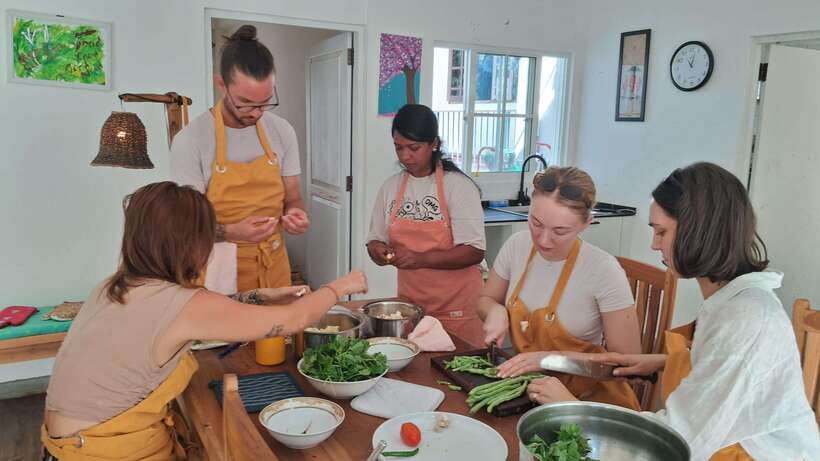
Many cooking classes are quiet in a polite way. This one is lively. One of the distinctive parts of the experience is the music: you can plug in and play your favorite tunes while you cook, and the kitchen has guitars and a ukulele ready to go.
If you enjoy a fun atmosphere, this is a major plus. Music keeps the work flowing, and the whole session feels less like studying and more like a social meal in progress. It also makes photos and conversation easier, since people aren’t stuck in strict concentration mode the whole time.
Then there’s Snowy. Yes, there’s a pet involved, and Snowy is described as a lovable kitchen companion. For families, it’s usually a hit. For solo travelers, it’s a great reminder that this is a home environment, not a stage.
That home feeling shows up again and again in the way the family hosts. People describe the experience as heartwarming and full of humor, and that lines up with the promise that the atmosphere is welcoming no matter your cooking level. In practical terms, it means you’re more likely to ask questions, taste without fear, and actually enjoy the process.
From welcome drink to dine-in meal: what happens during the session
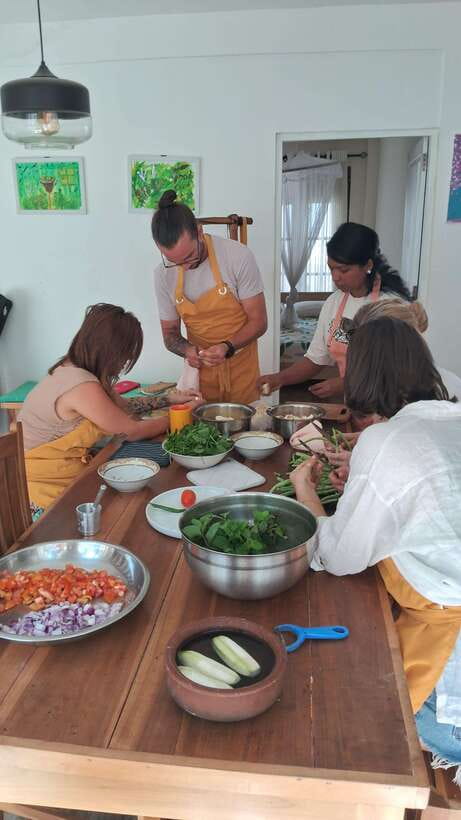
You’ll spend your 3 hours moving through a simple, satisfying arc: you arrive, you cook, you eat, and you leave with recipes.
Start with the welcome drink. It’s a small touch, but it matters. It signals you’re being hosted, not processed. It also helps you settle in if you’re coming straight from sightseeing.
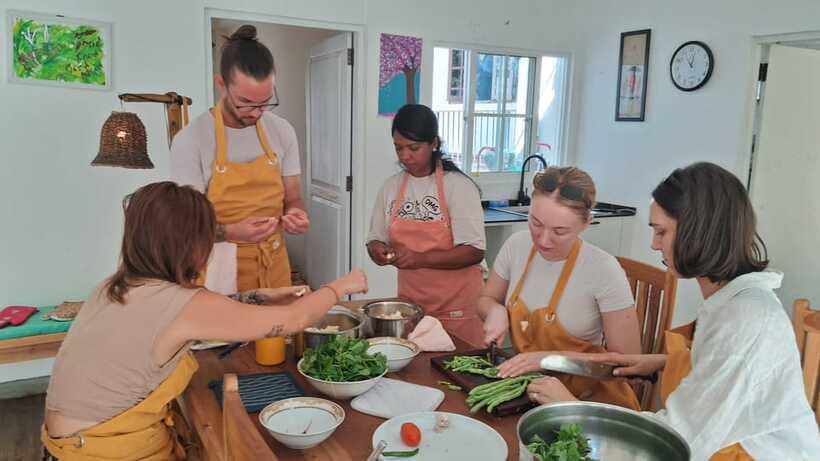
Then you get into the cooking lesson. Arun and his mom guide you through the steps, and the group size stays small enough that you aren’t stuck waiting your turn. You should expect guidance that supports your comfort level, especially if you’re a beginner. The class also leans into hands-on participation, so you’re not just watching while someone else cooks.
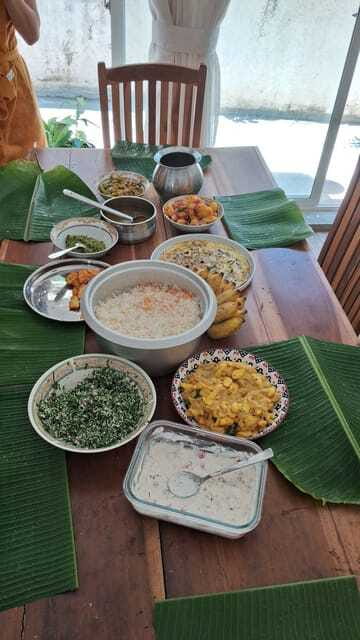
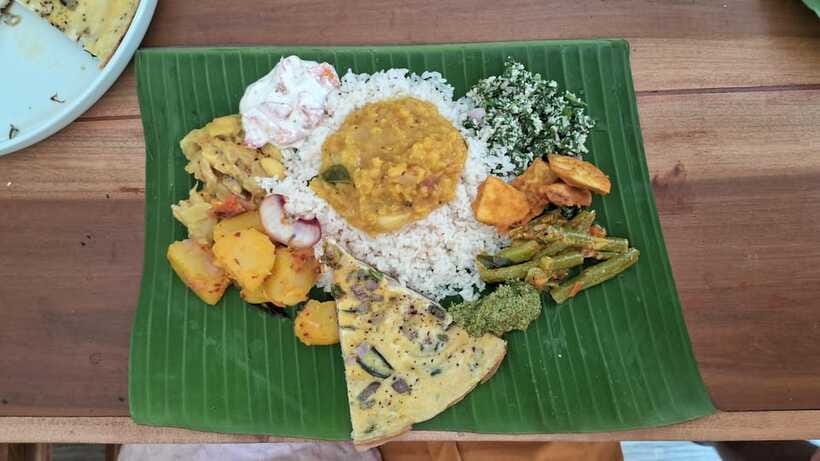
Next comes the dine-in part, where you eat what you cooked together. This is one of the most valuable parts of any cooking class: tasting your own food while the flavors are still fresh in your mind. It’s also where you’ll notice how adjusting spice, seasoning, or texture changes the final result.
If you want an extra comfortable moment, there’s also mention of a rooftop chill-out area. That means you may have the chance to unwind after cooking, with views while you enjoy your meal. Even if the main focus stays on eating together in the dining space, the option to linger outside makes the overall experience feel less rushed.
Afternoon tea with authentic sweets: a sweet finish that feels Sri Lankan
The class doesn’t end when you’re full. You also get afternoon tea plus authentic sweets. That’s a smart inclusion, because Sri Lankan meals often flow into sweet snacks and tea breaks the way families naturally do at home.
From a traveler’s perspective, it’s also a great way to taste more of the country’s everyday flavor profile without needing another stop. You’re already in a cultural setting; adding tea and sweets makes the “whole evening” feel complete.
Think of it like this: you learn how the main meal is built, then you finish with something different. It gives you a wider sense of what the kitchen does across the day.






The recipe book and what to do with extra food
You leave with a complimentary PDF recipe book. That’s honestly one of the best parts of cooking classes, because it turns your memory into a tool. When you get home and want to repeat the dishes, having the recipes keeps things from fading into vague “it tasted like curry” territory.
There’s also a nice element around how extra food is handled. The experience notes that you can take home food if they made more, or they donate to disadvantaged people. That’s a practical, values-based touch, and it means the meal isn’t just wastefully packaged for show.
If you’re the type who loves cooking at home, this matters. You’re not only enjoying a meal in the moment. You’re setting yourself up to cook again and actually recreate what you learned.
Price and value: is $37 per person fair?
At $37 per person for 3 hours, this can be strong value if you treat it like a mini cultural night, not just a cooking demo.
Here’s why the price feels reasonable based on what you get:
- You’re paying for a guided, hands-on cooking lesson with a family, in English.
- You get the full meal you help make, plus afternoon tea and sweets.
- You also get a PDF recipe book to take home.
- The group is capped at 10, which usually means better attention while cooking.
The included welcome drink is a bonus that adds up when you’re trying to avoid “hidden extras” that show up in other food experiences. And the takeaway recipe book turns a one-time meal into something you can use again.
If you’re strictly budgeting, the only caution I’d give is that you should confirm your dietary needs early. The lesson is designed to accommodate preferences, but you’ll get the best outcome if you communicate clearly.
Who should book this cooking lesson (and who should skip it)
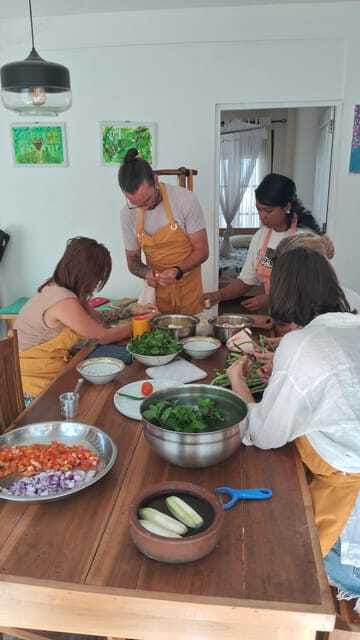
This is a great fit for:
- First-time cooks who want real guidance in a friendly setting.
- Travelers who love food but also care about how people host.
- Anyone who wants Sri Lankan flavors without committing to a long tour day.
- Families, since the experience has shown comfort with a young child.
- People who want variety: curries, milder options, and accommodations for vegetarian/vegan preferences.
You might skip it if:
- You’re looking for a high-end, restaurant-style cooking workshop with lots of formal equipment.
- You want a tightly timed, very quiet, strictly structured class with no music.
- You expect a full Sri Lankan culinary encyclopedia in 3 hours. You’ll learn a lot, but it’s still one focused session.
Practical tips before you go
Keep these in mind so you get the most out of the time:
- Tell them about your dietary restrictions and spice preference up front so the menu can match you well.
- Wear comfortable clothes. It’s a cooking lesson, so you’ll likely be moving, tasting, and working at counters.
- Come with curiosity. The best part is asking why something tastes the way it does, then using that knowledge later at home.
- If you enjoy music, this is a fun setting. If you don’t, know that guitars and a ukulele are part of the atmosphere.
And one more small thought: a home kitchen makes the experience feel real. That’s exactly what you want. It also means you should relax into the flow rather than expecting perfect restaurant pacing.
Should you book this Sri Lankan cooking lesson with Arun?
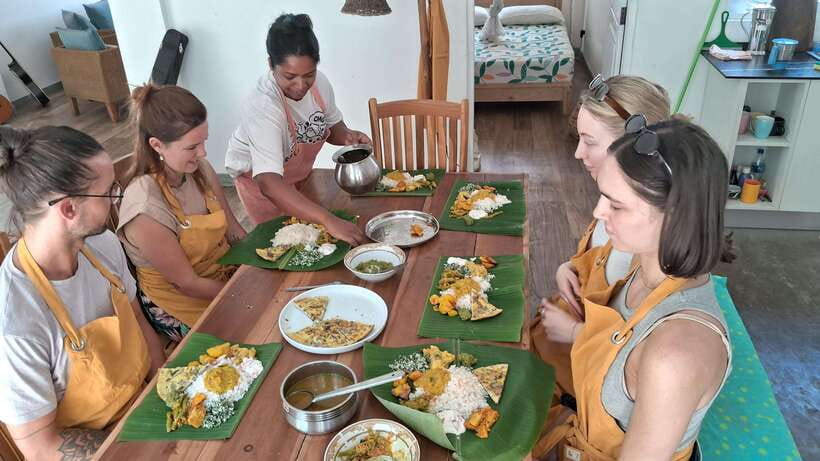
If you want an authentic Sri Lankan cooking night with real hospitality, this is an easy recommendation. The combination of small group size, hands-on instruction, family warmth, music in the kitchen, and a PDF recipe book makes it feel worth the money—especially if you’re excited to taste and learn more than one dish.
Book it if you’re open to a cozy, friendly home-style setting and you’d like to leave with recipes you can actually use. Skip it only if you need a formal, silent, studio-like workshop. If that’s not your vibe, Cooking with Arun is the kind of experience that sticks with you long after the meal is over.
FAQ
How long is Cooking with Arun & Tamil Family?
The cooking lesson lasts 3 hours.
Is the instructor teaching in English?
Yes, the instructor speaks English.
How big is the group?
It’s a small group limited to 10 participants.
What’s included in the experience?
You get a welcome drink, the cooking lesson, dine in, afternoon tea with authentic sweets, and a recipe book. If more food is made, you can take some home or it may be donated to disadvantaged people.
Can they accommodate vegetarian, vegan, or other dietary needs?
Yes. The menu includes options for vegetarian and vegan preferences, and they can accommodate dietary restrictions or food allergies if you let them know.
Do I receive a recipe book to take home?
Yes. You receive a complimentary PDF recipe book after the cooking is done.
Is there free cancellation?
Yes. You can cancel up to 24 hours in advance for a full refund.