A trip like this moves fast, yet it stays comfortable. What makes it interesting is the mix: Negombo canal life, early Mirissa whale watching, misty Ella hikes, Kandy’s sacred relic temple, then UNESCO sites like Sigiriya and the ancient cities. I like that you’re carried between stops in an A/C private vehicle with a driver-guide, plus you get free Wi-Fi and bottled water to keep the long days stress-free. One thing to plan for: several major costs are not included, especially national park fees and entrance tickets, so your budget needs some breathing room.
You’ll start early (pickup timing is set up from 7:00 am), and the route is built around seeing Sri Lanka in a logical loop, not bouncing all over the map. On this kind of trip, I value the human factor: in past bookings for this operator, guides such as Milan and Lakshan were highlighted for keeping things smooth and adapting when plans need to shift. Still, be aware that on-the-road timing matters here; you’re covering a lot of ground in 10 days.
In This Review
- Key things you’ll notice on this Sri Lanka round trip
- Setting off: Airport pickup and Negombo’s Dutch-Portuguese fingerprints
- Colombo Fort and city time that’s actually useful (not just photo stops)
- Mirissa whale watching: the morning plan and what you can realistically hope for
- Ravana Falls to Ella Village trekking: short drives, big scenery
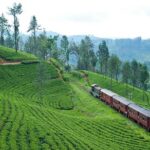
- The Ella to Kandy train ride: a scenic travel day you’ll remember
- Kandy’s Temple of the Sacred Tooth Relic and the Ceylon Tea Museum day
- The Three Temples Loop: Gadaladeniya, Lankatilaka, and Embekke Devalaya
- Matale spice garden and the 55 m gopuram at Sri Muthumariamman Temple
- Dambulla cave temple complex: a World Heritage stop that rewards slow viewing
- Sigiriya Lion Rock climb, then Polonnaruwa’s ancient grid
- Anuradhapura and the final drive to Colombo airport
- Hotels, breakfast, and the value of being out of the planning business
- Price and logistics: what $656.67 likely buys you, and what you’ll pay extra
- Who should book this Sri Lanka round trip
- Should you book this 10-day Sri Lanka round trip?
- FAQ
- What’s included in the tour price?
- Are lunch and dinner included?
- What about whale watching tickets?
- Do national park fees come with the tour?
- Are entrance tickets included for temples and UNESCO sites?
- How long is the trip and where does it start?
- Is this a private tour?
- Can children join?
- Does the tour provide Wi-Fi?
- When is the best season for whale watching in Mirissa?
- What’s the cancellation policy?
Key things you’ll notice on this Sri Lanka round trip
- Mirissa whale watching in the morning window (typical start around 7:00 am, about 3.5–4 hours)
- Ella to Kandy by train, one of the most scenic stretches in the country (about 7 hours by rail)
- Kandy’s Temple of the Sacred Tooth Relic, a UNESCO-listed site with a golden roof and major religious importance
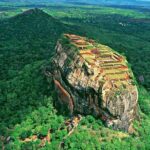
- UNESCO Sigiriya + Dambulla cave temple complex, two of Sri Lanka’s “you have to see it” stops
- A multi-temple day around Kandy, including the Three Temples Loop and time in Embekke/Matale area sites
- You’re not on your own logistics, with a driver-guide, A/C transport, and baby seats available if needed
Setting off: Airport pickup and Negombo’s Dutch-Portuguese fingerprints
Your trip starts with pickup at Bandaranaike International Airport, then you head to Negombo for your first night. Negombo is a great “landing zone” city: close to the airport, easy to orient yourself, and still local enough to feel like more than a waiting room for Colombo.
What I like about the first day is the quick history hit. Negombo’s old Dutch canal network is still used, and you can see how old and new Sri Lanka overlap. The area also has reminders of colonization—Dutch fort elements dating back to 1672, Portuguese and Dutch houses, administrative buildings, and churches such as St. Mary’s Cathedral with ceiling frescoes. This is the kind of opening that helps you understand what you’ll see later: Sri Lanka keeps layers.
Possible drawback: the first day can feel like “transfer day.” You’ll want a light first evening so you’re ready for the early starts that follow.
You can also read our reviews of more tours and experiences in Colombo.
Colombo Fort and city time that’s actually useful (not just photo stops)
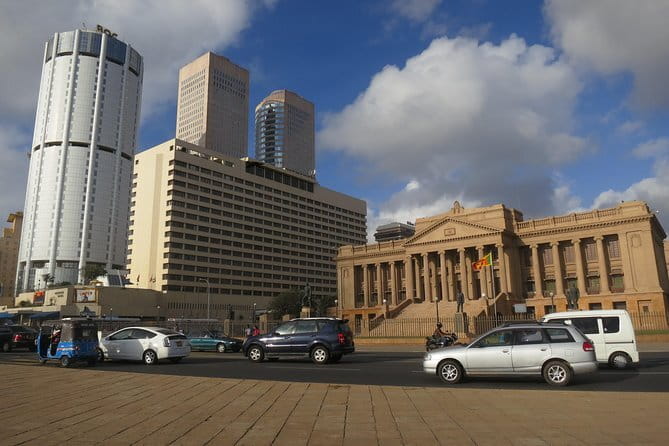
Colombo shows up as more than a name on a map. Your route includes time for a city tour with stops around major landmarks such as Galle Face Green, Viharamahadevi Park, Beira Lake, and Mount Lavinia beach. You also pass institutions like the National Museum, and the Colombo Lotus Tower is listed as a feature on the tour route.
Here’s why this matters: Colombo can be confusing if you arrive with no plan. Even if you don’t spend hours in every place, a guided loop helps you build a mental map. Then, when you later see smaller towns and religious sites, you’ll spot the patterns.
Practical note: this is one of those sightseeing blocks where you’ll likely move through several viewpoints in a few hours. Bring water, and keep your phone charged for the day. Your tour includes bottled water and free Wi-Fi, which helps if you want to check opening times or map your next walk.
Mirissa whale watching: the morning plan and what you can realistically hope for
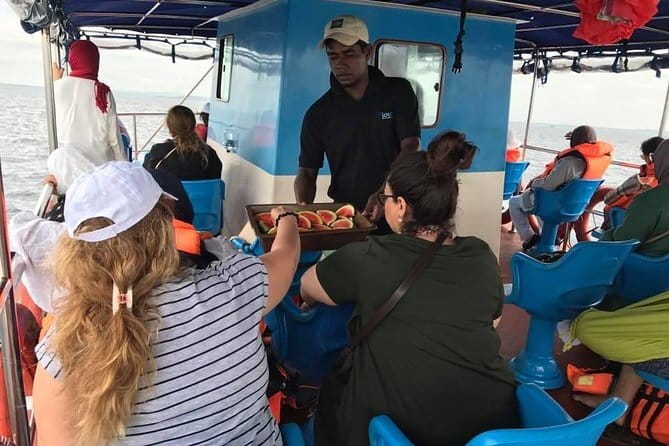
Mirissa is the headline water activity. The tour is structured so you leave early for whale and dolphin watching, typically starting around 7:00 am and lasting about 3.5 to 4 hours.
What’s helpful is knowing what the season window is. Whale watching in Sri Lanka is described as best from November to April, when the warm waters are calmer. The likely sightings list includes blue whales, Bryde’s whales, sperm whales, fin whales, and several dolphins like common dolphins and bottlenose dolphins. Sometimes you can even get killer whale sightings.
You might be thinking, so what’s the catch? It’s weather and sea conditions. Even with good planning, water conditions can affect how comfortable the ride is and how far wildlife is from the boat. I’d pack for cool mornings if you go: early starts often mean cooler air, even in tropical climates.
Tickets for the whale watching activity are marked as not included, so budget for that separately.
Ravana Falls to Ella Village trekking: short drives, big scenery
From Mirissa/Yala direction, the tour pushes you into the hill country via Ella, with a stop at Ravana Ella waterfall. The waterfall is described as around 25 meters (82 ft) tall, pouring from an oval-shaped concave rock outcrop. You’ll also hear a simple seasonal difference: during the wet season, the flow can look like an areca flower pattern, while in the dry season the water reduces.
Then you reach Ella for time described as trekking and hiking around Ella Village. This is where the tour’s pacing makes a difference. You’re not doing a one-size-fits-all “walk until you collapse” excursion. The way it’s framed suggests a flexible, scenic hike that lets you enjoy views without turning every moment into a workout.
Consideration: hiking in Sri Lanka can involve uneven ground. Wear shoes with grip, not thin flip-flops. If it has rained, paths can get slippery.
The Ella to Kandy train ride: a scenic travel day you’ll remember
One of the best “transport moments” is also one of the most famous: the train from Ella to Kandy. The route is listed as one of the most scenic in the world, passing tea estates, tunnels, farming fields, forests, and village life. The journey time is about 7 hours.
This is where a good tour design shows up. If you take the train on your own, it’s easy to turn a scenic ride into an exhausting ticketing scramble. Here, the plan is already integrated into the itinerary, so the ride becomes part of the experience, not a chore.
Practical tips (based on what matters for comfort): keep layers for indoor air-conditioning or cool tunnel moments, and charge your phone beforehand. If you’re a photo person, you’ll want a strap or secure bag because moving through crowded windows happens fast.


Kandy’s Temple of the Sacred Tooth Relic and the Ceylon Tea Museum day
Kandy is the cultural anchor of this route. You visit the Temple of the Sacred Tooth Relic (Sri Dalada Maligawa), described as a UNESCO World Heritage site (listed in 1988) and one of the most sacred Buddhist sites in the world. The temple’s feature is the golden roof, and the relic housed there is the tooth relic associated with Lord Buddha.
You also visit the Ceylon Tea Museum. That stop matters because it explains a huge part of Sri Lanka’s economy and landscape, even if you’re mostly seeing it as scenery while traveling. When you understand how tea is processed and produced, the tea estates you pass elsewhere stop feeling like background.
Tickets for these stops are not included, so you’ll likely pay some entry fees directly at the sites.
The Three Temples Loop: Gadaladeniya, Lankatilaka, and Embekke Devalaya
The tour includes a classic temple circuit often called the Three Temples Loop. You’ll see:
- Gadaladeniya Temple complex, described as built during the reign of King Buvanekabahu iν in 1344
- Lankatilaka Temple, the bright white shrine described as one of the most impressive of the three
- Embekke Devalaya, included as part of the loop
The most useful thing about a temple loop with a driver is timing and navigation. These sites are not hard, but they do require attention: steep approaches, uneven paths, and changing light inside sacred spaces. A driver-guide keeps you from losing time to wrong turns.
Dress matters too. You’ll want shoulders and knees covered when visiting religious areas.
Matale spice garden and the 55 m gopuram at Sri Muthumariamman Temple
After Kandy, the route turns toward Matale with a stop in a spice garden. You’re told you’ll learn about different spices and how some are grown and processed, plus you can purchase spices.
Then comes the Sri Muthumariamman Temple, dedicated to Mariamman, the goddess linked with rain and fertility. The key visual detail on the tour is the towering 55 m (180 ft) gopuram—a decorated gateway tower—named as Raja Koburum in the tour description.
This is one of those stops that feels small on a map but gives context for later purchases and souvenirs. If you buy spices in Sri Lanka, it’s nice to know what you’re tasting and using, not just where it came from.
Tickets are not listed as included for these stops.
Dambulla cave temple complex: a World Heritage stop that rewards slow viewing
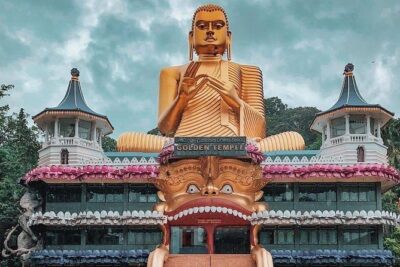
Next you head to Dambulla Cave Temple. It’s described as one of Sri Lanka’s UNESCO World Heritage sites and as the largest and best-preserved cave temple complex in the country.
Cave temples work best when you allow time to look up. The scale can surprise you, and details inside can be hard to catch if you move too quickly. Your tour frames this as a multi-hour stop, which is good, since cave interiors often change in temperature and lighting.
Again, expect entrance fees to be separate from the package.
Sigiriya Lion Rock climb, then Polonnaruwa’s ancient grid
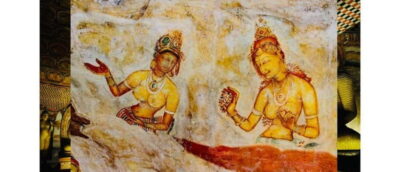
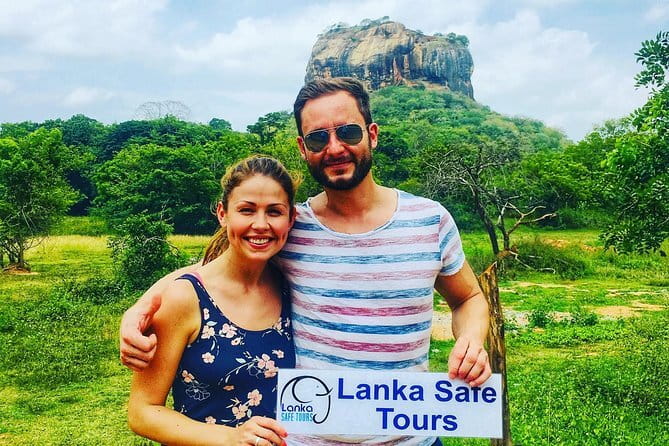
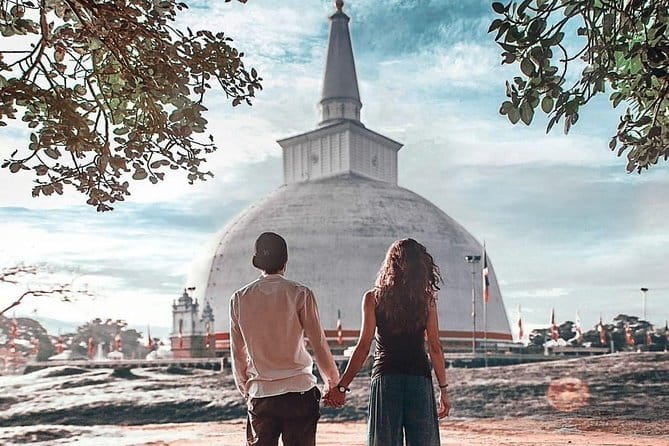
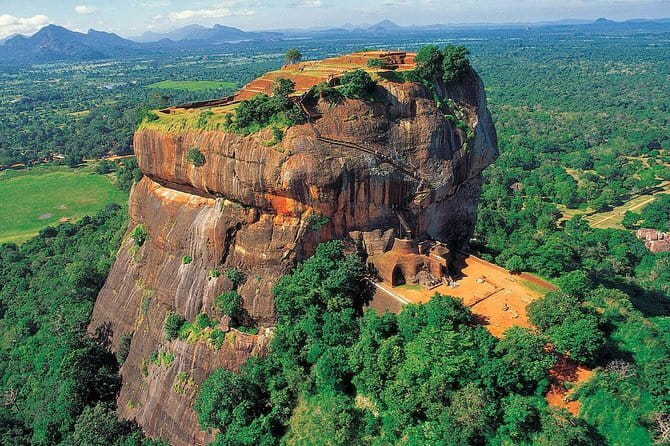
Sigiriya is the headline rock. The tour notes Sigiriya as a UNESCO World Heritage site dominated by a massive column of rock nearly 200 meters (660 ft) high. You’ll visit and climb Sigiriya Lion Rock.
A climbing day like this can be the most physically demanding part of the tour. Go early, drink water often, and pace your steps. If the weather is hot or humid, you may want to stop more than you think you need and take breaks on viewpoints.
Later, you move on to Polonnaruwa, described as Sri Lanka’s second most ancient kingdom and one of the best-planned archaeological relic cities, declared a World Heritage site. This is the payoff for people who like structure: ancient engineering, layouts, and remnants you can track as a city plan.
Anuradhapura and the final drive to Colombo airport
The route continues toward Anuradhapura after Polonnaruwa. The itinerary description doesn’t spell out exactly which sites you’ll cover there, but it’s positioned as a major ancient-city capstone.
Then, near the end, you head back toward Colombo and to the airport. The tour notes you’ll be driven to the airport two to three hours in advance, depending on your flight time.
That buffer is genuinely useful. Sri Lanka traffic can be unpredictable, and missing a flight is the worst kind of souvenir.
Hotels, breakfast, and the value of being out of the planning business
You get 9 nights of accommodation with breakfast included. The hotels are described as good quality, ranging from economy/budget to standard and luxury depending on your selection. That flexibility is important because it changes how “value” feels.
In practical terms, breakfast included means you can leave in the morning without hunting for food, and the route starts early on multiple days. The tour also includes coffee and/or tea, bottled water, and local taxes. Add free Wi-Fi, and you can handle messages, maps, and quick planning on the go.
One more practical detail: the vehicles are A/C private transport (van and car), and baby seats are available if needed. That matters if you’re traveling with a family and want fewer compromises.
Price and logistics: what $656.67 likely buys you, and what you’ll pay extra
At $656.67 per person for a 10-day/9-night private-style circuit, you’re mostly paying for three things:
- Transport across long distances in comfort
- A driver-guide to manage routing and keep you from wasting hours
- Hotel nights plus breakfast
That’s the value. You’re not just visiting places; you’re buying time and easing the friction that comes with Sri Lanka’s roads and tight schedules.
What’s not included is also clearly flagged: lunch, dinner, alcoholic drinks, national park fees, and activities/entrance tickets. So the real all-in cost depends on how much you do where paid access is required (Sigiriya, Dambulla, temple tickets, and the national park portion for Yala).
If you want a simple planning rule, assume you’ll pay for:
- food beyond breakfast
- park and entrance tickets
- the big activity costs like whale watching
- any safari-related fees in the national park
Who should book this Sri Lanka round trip
This tour fits best if you want:
- a structured route with a driver-guide (especially useful on your first Sri Lanka trip)
- the big-ticket mix: coast wildlife, hill country, Kandy culture, and UNESCO archaeology
- comfort upgrades like A/C vehicle, bottled water, and onboard Wi-Fi
It’s also a good match for couples and friends who want to travel together without group-fuss, since it’s described as a private tour with your group only.
If you’re the type who wants total spontaneity and independence, you might prefer building your own route. But if you’d rather trade some freedom for fewer headaches, this style of itinerary makes sense.
Should you book this 10-day Sri Lanka round trip?
I’d book it if your priority is seeing a lot of Sri Lanka’s top places with comfort and minimal planning stress. The route hits the coast, the tea hills, major Buddhist sites, and major UNESCO ruins, and the travel days are built around meaningful movement (especially the Ella-to-Kandy train).
I’d hesitate if you hate budgeting for extra ticket fees and meals, or if you want long, lazy stays in just one region. This is a “see the highlights” trip, and those days move.
FAQ
What’s included in the tour price?
Accommodation for 9 nights (as per the itinerary), breakfast, bottled water, coffee and/or tea, a driver/guide, transportation by A/C private vehicle with baby seats available if needed, port pickup and drop-off, free Wi-Fi, and local taxes.
Are lunch and dinner included?
No. Lunch and dinner are listed as not included.
What about whale watching tickets?
Whale watching is listed as not included, so you’ll pay the activity cost separately.
Do national park fees come with the tour?
No. National park fees are listed as not included.
Are entrance tickets included for temples and UNESCO sites?
Activities/entrance tickets are listed as not included, so plan to pay site fees directly.
How long is the trip and where does it start?
It’s a 10-day, 9-night round tour starting with pickup at Bandaranaike International Airport in the Colombo area, with the route including Negombo and other regions.
Is this a private tour?
Yes. It’s described as private, with only your group participating.
Can children join?
Children must be accompanied by an adult, and the minimum age is listed as 18 years.
Does the tour provide Wi-Fi?
Yes. Free Wi-Fi is included.
When is the best season for whale watching in Mirissa?
The whale watching season is listed as starting in November and ending in April.
What’s the cancellation policy?
Free cancellation is available if you cancel up to 24 hours in advance of the experience’s start time. If you cancel less than 24 hours before, the amount paid is not refunded.