Negombo feels real fast. This 4-hour city tour pairs an A/C car and professional chauffeur guide with an easy route that mixes temples, markets, and coastal life without turning into a shopping circuit. I especially like the local conversations you get along the way and the short walking market stop where you can browse vegetable and fruit stalls among everyday shoppers. One possible drawback: it’s a tight loop with lots of seeing and moving, so if you’re mainly chasing a long beach stretch, you’ll want to keep expectations realistic.
You’ll be in a small group (max 3), picked up from your hotel lobby, and guided in English by a driver who can explain what you’re seeing and adjust as needed. In practice, guides like Tharaka are described as professional, funny, and fluent in English, and that matters here because the best parts are the human details—how people shop, pray, and live by the sea.
In This Review
- Key highlights worth planning for
- Getting started: pickup, the A/C car, and orientation by drive-by
- Negombo Grand Mosque pass-by and the Angurukaramulla Buddhist temple stop
- The main-street market walk: veggies, fruit stalls, and street-snack freedom
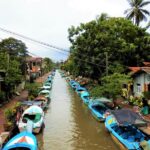
- Going down the sea street via the Dutch canal
- Sri Sitthi Vinayagar Temple and St. Mary’s shrine: religion in close view
- Fortifications and the fish market: a gritty, real Negombo moment
- Crossing the lagoon bridge to fishermen’s island
- Our Lady of Good Voyage over the Indian Ocean
- Mora Wala sea basin and the final return to your hotel
- Price and value: what $50 buys in a 4-hour loop
- What this tour is best at (and what it isn’t)
- Who should book this Negombo city tour
- Should you book this tour?
- FAQ
- FAQ
- How long is the Negombo city tour by car?
- What’s the group size?
- Is pickup included, and where do they pick you up?
- Do I need to speak another language besides English?
- What’s included in the price?
- Do you get any guided walking?
- Does the tour include shopping stops or pressure to buy?
Key highlights worth planning for
- Small-group comfort (max 3) with an A/C car and chauffeur guide
- A guided walk through Negombo’s main-street market life
- A smooth religious mix: mosque pass-by, Buddhist temple, Hindu temple, and Catholic shrine
- Fortifications plus the fish market and dried-fish beach mats
- Lagoon-bridge views of fishermen’s island and Our Lady of Good Voyage
- A finish that sends you back to your hotel for sunset time
Getting started: pickup, the A/C car, and orientation by drive-by
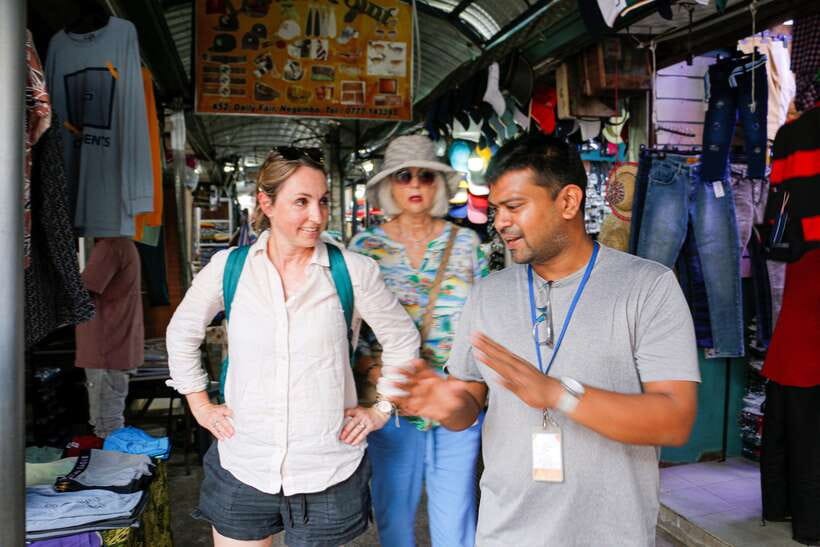
The tour starts right at your hotel lobby, so you’re not wrestling with buses or haggling for rides before you even see anything. Once you’re in the air-conditioned car, you quickly settle into the rhythm of a good city tour: the guide drives, explains what you’re passing, and gives you context so the stops land better.
There’s also a short sightseeing drive just outside the city—about 30 minutes—that helps you get your bearings. You’ll pass the Negombo Grand mosque early on, which sets the tone for what you’ll keep seeing throughout the loop: Negombo isn’t one-note. It’s religious, commercial, and coastal all at once.
You can also read our reviews of more tours and experiences in Negombo.


Negombo Grand Mosque pass-by and the Angurukaramulla Buddhist temple stop
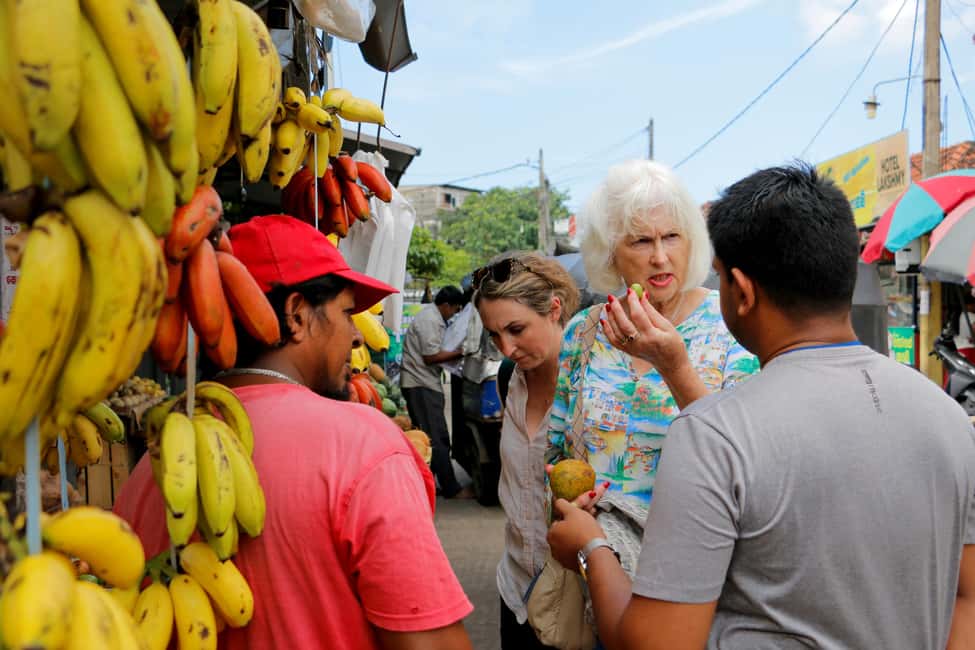
Early on, you get the visual contrast that makes Negombo interesting: the mosque is a strong landmark as you travel, then the tour moves into a Buddhist temple visit at Angurukaramulla (the stop is described as Abayasekararamaya Temple). You’ll have a brief on-the-ground moment, then back into the car.
This kind of stop is useful because it’s not just about architecture. A good guide will point out what matters in daily practice—how people approach the space, how the temple fits the neighborhood, and what you should watch for while you’re walking around. Dress matters, too. Even though the tour doesn’t list dress rules, temples in Sri Lanka generally expect shoulders and knees covered, so plan for that.
The main-street market walk: veggies, fruit stalls, and street-snack freedom
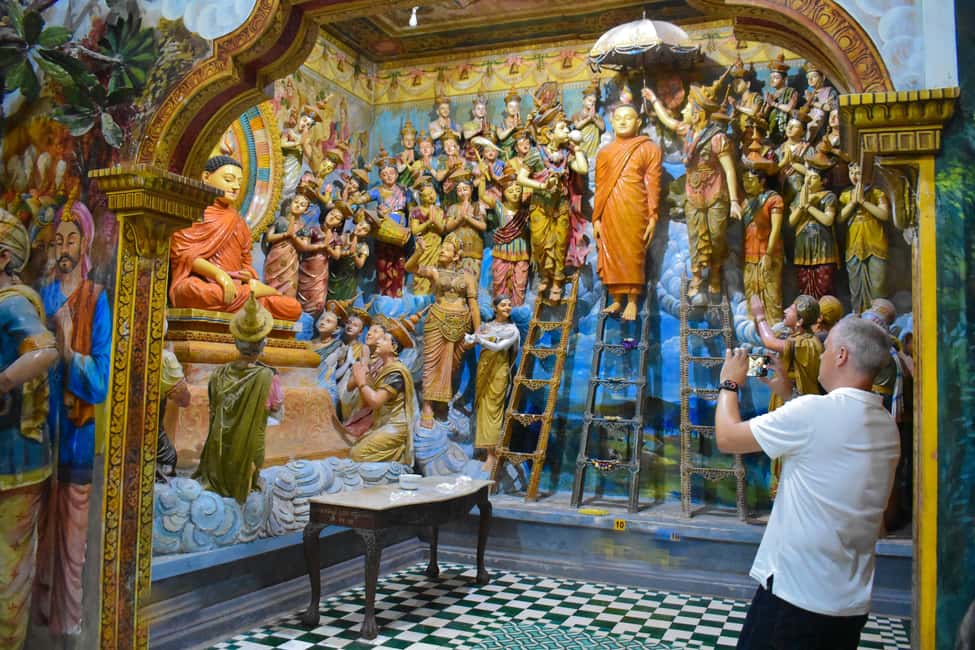
One of the best parts here is how the tour keeps you close to daily life. After you park in the middle of town, you’ll do a short walking tour of about 20 minutes through the main street markets.
You’ll pass vegetable stalls and fruit stalls, and you’ll be walking alongside people who are actually doing shopping for the day. That’s what makes this stop feel different from “tourist market” experiences. There’s no pushy script telling you what to buy, and you can take the pace you want—pause for photos, look at produce, ask a question, then move on.
If you want a snack, you can. The tour includes bottled water per person, and cassava chips are offered from the street as an optional extra. I like snacks on trips like this because they’re small, local, and you don’t have to turn the entire day into a food quest. If you have a sensitive stomach, just use your judgment on what you eat and how spicy you go.
Going down the sea street via the Dutch canal
After the market walk, the route shifts toward the coast. You’ll drive along the sea street near the Dutch canal, which gives you a visual change from the busy shopping lane.
This is also where the tour feels like it’s stacking viewpoints and stories rather than repeating the same street scene. The guide’s job is to keep the connections clear—how canals, waterways, and the sea shape where people build churches and temples, how commerce moves, and why the waterfront life is such a big part of Negombo.
Sri Sitthi Vinayagar Temple and St. Mary’s shrine: religion in close view
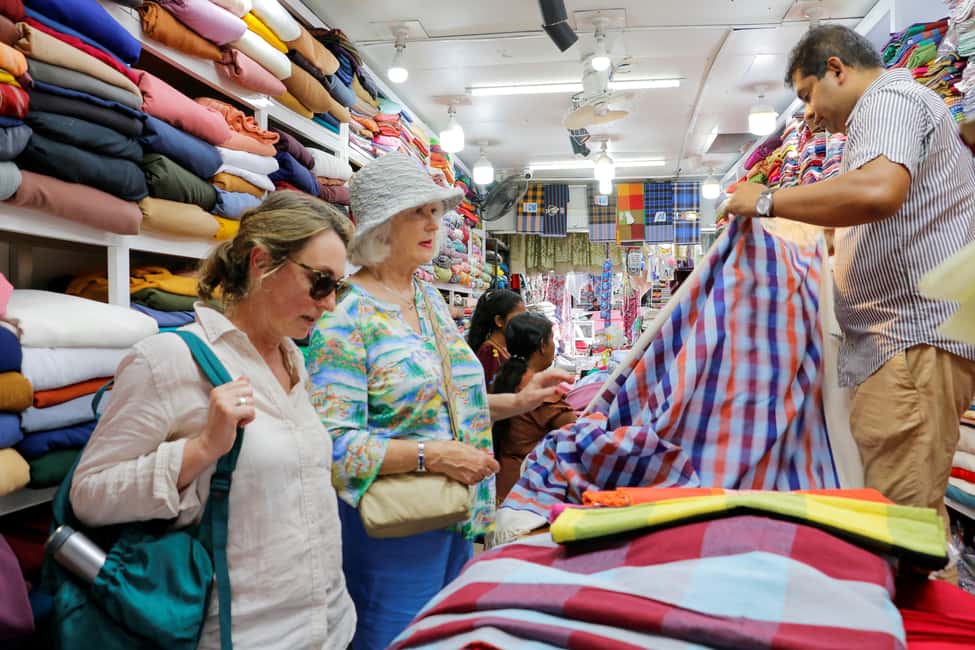
You’ll stop at the Sri Sitthi Vinayagar Temple, and you’ll also visit St. Mary’s Roman Catholic Shrine. It’s a compact religious two-part, and that’s exactly why it works in a 4-hour format.
Seeing Hindu and Catholic sacred spaces back-to-back (with a mosque pass-by earlier) helps you understand Negombo as a living place, not a theme park. The guide can explain what you’re looking at—symbols, placement, and how worship fits into the neighborhood. Try to keep your photo-taking respectful and ask before shooting more closely, especially around active worship.
If you like thoughtful travel, this section is a good moment to slow down. You’re not trudging through a long museum. You’re stepping into places that still matter to local people right now.





Fortifications and the fish market: a gritty, real Negombo moment
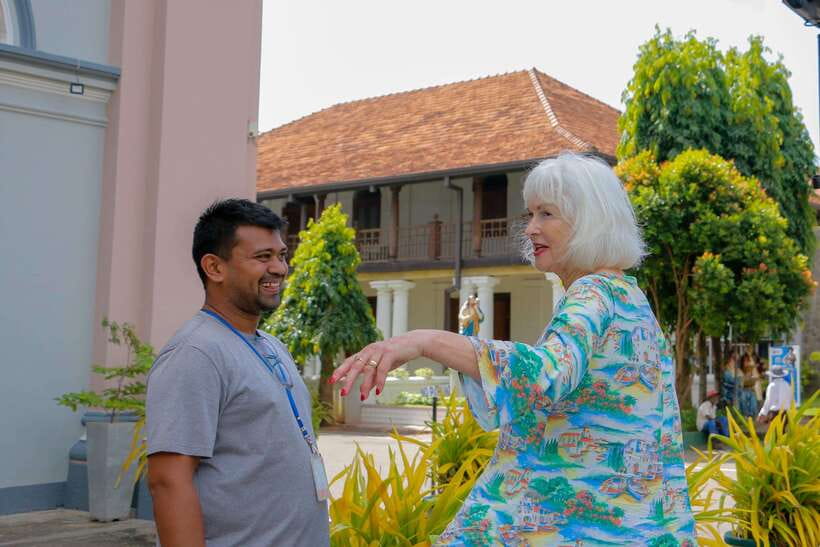
Negombo had a prominent fort during colonial times, and this tour includes a visit to fortifications. The value here isn’t learning an encyclopedia worth of dates—it’s standing near the leftover evidence and letting it explain the city’s shape.
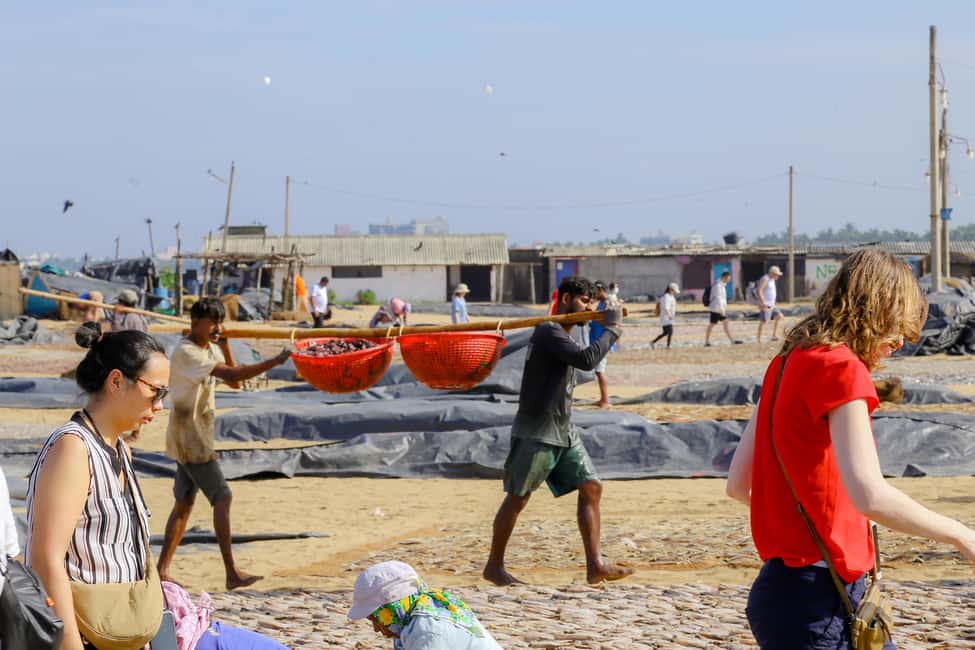
From there, you move toward the fish market, where dried fish are laid out on beach mats. The tour specifically calls out that the smell is part of everyday life in this area, and that’s worth knowing ahead of time. If you’re sensitive to strong odors, it helps to mentally prepare so you don’t get thrown off by the sensory reality.
I also like that this is paired with viewpoints rather than just passing through. You’re seeing how the fishing economy leaves physical traces—mats, drying patterns, and the practical mess that comes with work that never really pauses.
Crossing the lagoon bridge to fishermen’s island
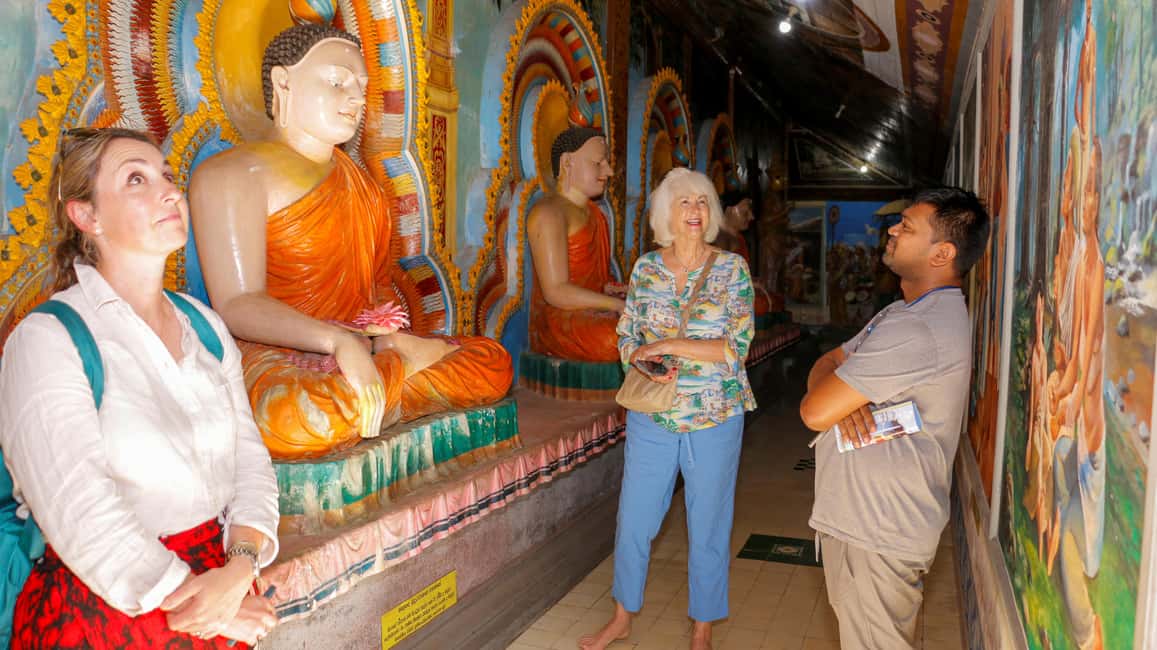
Next comes one of the most scenic “feels authentic” moments: you cross a big bridge over the lagoon to reach the fishermen’s island. The bridge area is where boats dock, and the guide’s route makes you look at the lagoon from a spot that locals and workers use.
This is one of those stops where the payoff is partly visual and partly emotional. Water changes everything about perspective, and watching the dock activity from the bridge gives you a more grounded feel for how the city functions.
If you’re the kind of traveler who likes knowing what you’re seeing in plain language, this section is for you. A guide can explain how the lagoon links to local movement and fishing routines without making it feel like a lecture.
Our Lady of Good Voyage over the Indian Ocean
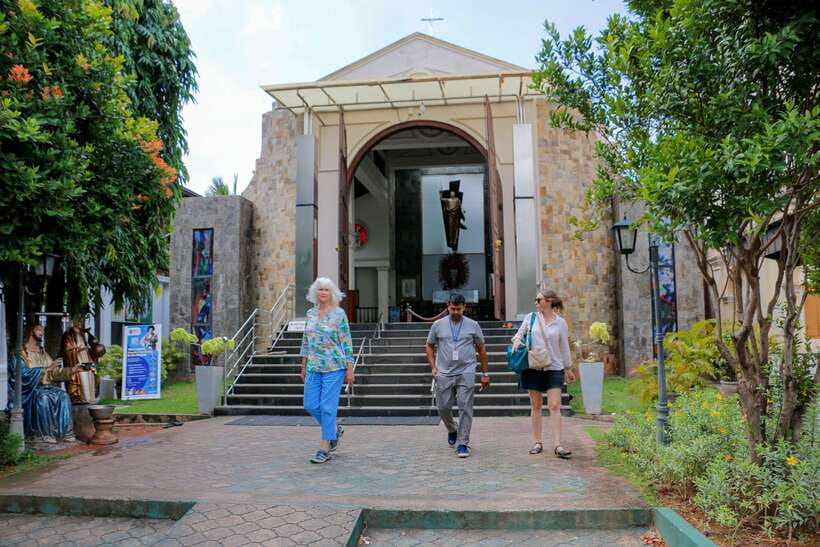
On fishermen’s island, you’ll visit the authentic fishermen’s church of Our Lady of Good Voyage, located with views out over the Indian Ocean. Even with the tour moving along briskly, this stop earns attention because it puts worship right next to seafaring life.
Look out toward the water if you can. Ocean light makes everything feel different, and you’ll better understand why a fishermen’s church would be built where it can watch the sea. It’s also a nice pause after the busy market-and-fort section, because it gives you a different kind of scene: open horizon instead of stalls and walls.
Mora Wala sea basin and the final return to your hotel
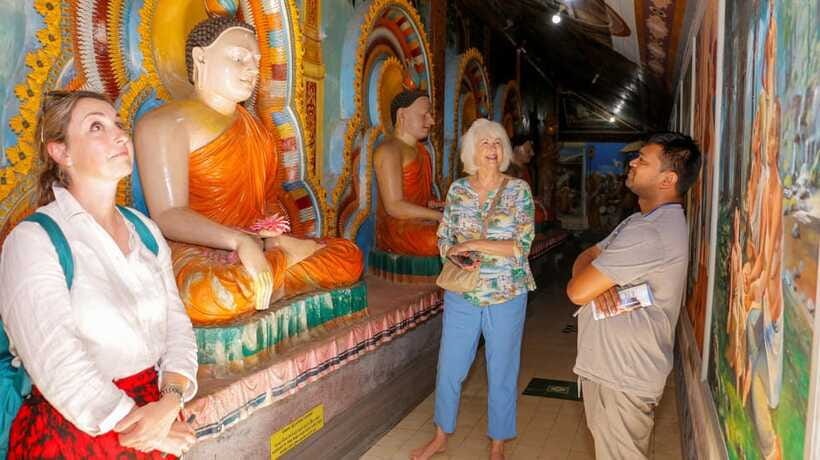
The last major stop is a quick visit to Mora Wala, described as a popular sea basin where villagers and local travelers go to bathe. This isn’t framed as a long beach day. It’s more like a short window into how locals use coastal areas for everyday routines.
Then you head back to your hotel so you can relax—ideally with time for beach watching or sunset. I like this structure because it respects your energy. A 4-hour tour can be fun, but you still need the rest of the day for your own pace, especially in a beach town.
Price and value: what $50 buys in a 4-hour loop
At $50 per person, the cost lands in the mid-range for guided half-day tours, but the value comes from the package. You’re getting:
- an A/C car and chauffeur guide
- an English live guide
- bottled water per person
- a short guided walk in town
- optional cassava chips
The small group size (limited to 3 participants) also changes the economics. You’re not squeezed into a big bus where questions get ignored and photos become a scramble. With fewer people, the guide can answer your questions and shift the timing if you need a slow minute.
If you’re comparing to hiring a regular taxi for the same route, this tour still adds value because it’s not only transportation—it’s interpretation. Negombo’s strongest moments are partly subtle: the way markets work, the reason certain religious sites appear where they do, and the meaning of coastal routines. A guide helps you connect those dots.
What this tour is best at (and what it isn’t)
This experience is strongest if you want a balanced slice of Negombo—religious sites, market streets, fortifications, and fishing life—without turning the day into a shopping crawl. The tour also specifically notes zero touristic shopping persuasion, which I consider a big deal. In a port city, it’s easy to waste time buying souvenirs you didn’t need.
It’s also good for solo travelers because the pace is easy and the group is intentionally small. In a group of three, you feel like you’re traveling with someone local rather than getting herded.
What it isn’t: it’s not a full-day museum marathon, and it’s not built around long time on the beach. The walking section is about 20 minutes, and the rest is car and short stops. If you want deep time at one location, you’ll likely feel the clock.
Who should book this Negombo city tour
You should book if:
- you want an English-guided loop that covers key sights in a short time
- you prefer local markets over forced shopping stops
- you like coastal towns and want to see the fishing reality, not only postcards
- you’d rather spend time learning from your guide than planning routes yourself
You might skip it if:
- you want a leisurely half day with lots of unstructured beach time
- you’re looking for many hours of museum-style sites
- you have strong sensitivity to strong fish-market odors (since dried-fish smells are part of that stop)
Should you book this tour?
Yes, I’d book it if your goal is to get oriented fast and see the everyday Negombo stuff that you’d miss on your own. The combo of small-group comfort, guided market walking, and a realistic coastal sequence—fortifications, fish drying mats, lagoon bridge, and a fishermen’s ocean-view church—makes it feel like a meaningful day rather than a checklist.
If you’re worried about anything, the main thing to plan for is the fish market stop’s smell. Bring patience, keep an open mind, and use that time for photos and context rather than expecting a clean showroom experience.
FAQ
FAQ
How long is the Negombo city tour by car?
The tour duration is 4 hours.
What’s the group size?
The group is small, limited to 3 participants.
Is pickup included, and where do they pick you up?
Yes. Pickup is included from your hotel lobby. You’ll need to specify your hotel name, and it’s also helpful to provide a contact number.
Do I need to speak another language besides English?
No. The live tour guide provides English.
What’s included in the price?
Included are the local chauffeur guide, an air-conditioned car, bottle of water per person, and optional cassava chips from the street.
Do you get any guided walking?
Yes. There is a guided walking tour of about 20 minutes through local streets and markets.
Does the tour include shopping stops or pressure to buy?
The tour is described as having zero touristic shopping persuasion, and it focuses on seeing local places and markets instead.