Negombo can be more than a beach stop. This tuk-tuk city tour strings together fishing life, Portuguese-and-Dutch leftovers, and Hindu and Christian landmarks in just 4 hours, so you get a lot without feeling rushed. I especially like the way you start at Lellama seafood market, and then switch gears to big heritage sites like St. Mary’s Church. One thing to consider: the schedule is tight, so comfortable shoes and a calm attitude toward traffic help.
I also like that the tour is built around walking moments—like the temple approach—and photo stops that actually make sense with the sites, not random pull-offs. The possible drawback is weather timing: if it’s hot or drizzly, the outdoor stretches (canal and forts, plus temple grounds) can feel longer than the clock suggests.
In This Review
- Key points at a glance
- Negombo in 4 hours: the tuk-tuk pacing that actually works
- Lellama seafood market: catamarans, catch, and what you’re really seeing
- St. Mary’s Church: Christian heritage, Portuguese links, and exact construction dates
- Sri Singama Kali Amman Kovil: murals, sculptures, and the feel of living religion
- Hamilton Canal (14.5 km) and the British-built waterway story
- Negombo Dutch Fort: Portuguese roots and a Dutch pentagonal rebuild
- Angurukaramulla Temple: dragon’s mouth and a moss-covered 300-year-old library ruin
- Price and value: what $40 buys (and what it avoids)
- Small logistics that make a big difference
- Who this tour fits best (and who might want a different plan)
- Should you book this Negombo tuk-tuk tour?
- FAQ
- FAQ
- What’s the duration of the Negombo city and fishing village tour?
- Where does pickup happen?
- Are the entrance fees included?
- What does the price include?
- What’s not included in the price?
- Is there a guide, and what language is it in?
- What should I bring with me?
- What are the cancellation rules?
Key points at a glance
- Lellama seafood market at the start of the day, when the fishing catch is being brought in
- St. Mary’s Church with construction that resumed in 1874 and finished in 1922
- Sri Singama Kali Amman Kovil murals and sculptures worth slowing down for
- Hamilton Canal (14.5 km) linking Puttalam to Colombo, built by the British in 1802
- Negombo Dutch Fort with Portuguese origins and a Dutch pentagonal rebuild in the 1640s
- Angurukaramulla Temple dragon’s mouth entrance plus a moss-covered, 300-year-old library ruin
Negombo in 4 hours: the tuk-tuk pacing that actually works
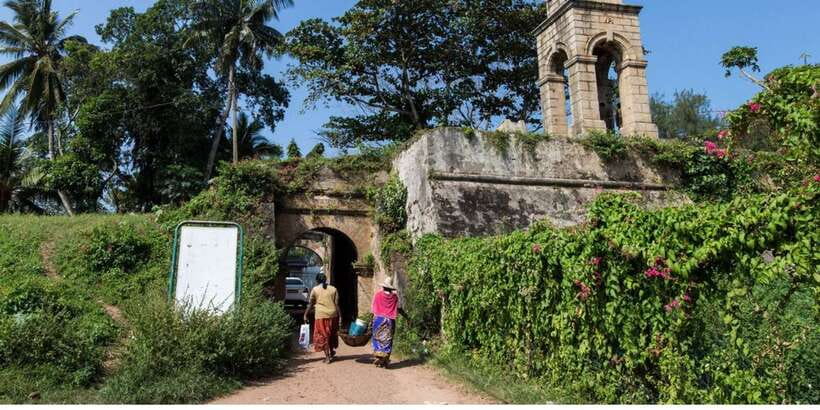
This tour is designed for a classic problem in Sri Lanka: you want the culture, but you also want it to fit your day. With pickup at 08.00, you’re already out when the morning energy is building. The route keeps moving, but it doesn’t feel like nonstop driving. You get short photo stops, scheduled breaks, and real time at the key stops.
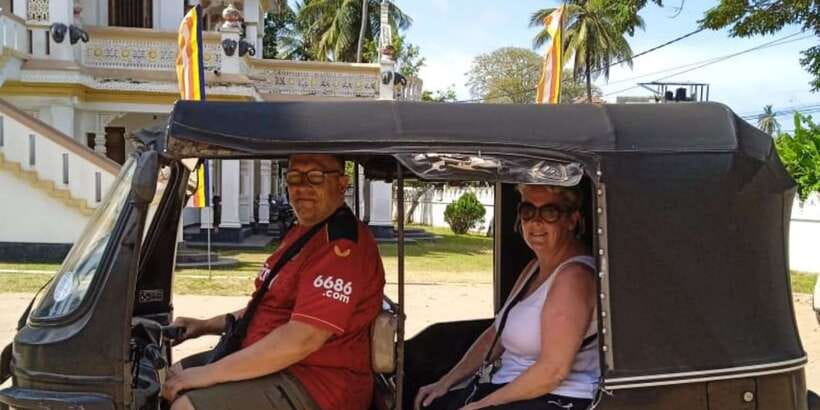
The tuk-tuk format also changes the feel of the day. It’s open enough to notice what’s happening around you, without the stress of navigating. And because it’s a private group, you’re not trapped behind a large crowd’s pace.
If you’re sensitive to heat, plan for it. Several stops are outdoors or semi-outdoors, so bring a water-friendly mindset even though refreshments are included. If you’re traveling on a big holiday, know that some market or religious-area timings can shift—your guide should adjust on the fly.
You can also read our reviews of more tours and experiences in Negombo.


Lellama seafood market: catamarans, catch, and what you’re really seeing
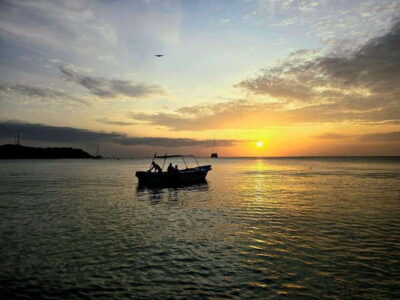
Your morning begins at the local seafood market at Lellama. The big draw here isn’t just the seafood itself—it’s the human rhythm. You’ll see the catamarans associated with Negombo’s fishing activity and watch fishermen bringing in the day’s catch.
Why this stop matters: Negombo’s identity is tied to the sea, and this is the most direct way to understand it. Many places have markets, but fewer show the full working chain—boat arrival, unloading, and the practical hustle that comes with it.
Practical tip: if you want photos, keep your phone ready, but also keep your distance. People are working. Quick snaps work best, and being polite goes a long way here. If you’re in camera mode, you’ll likely appreciate that there’s time built into the tour for sightseeing and photos rather than pushing you past quickly.
One more thing: during major religious holidays, the market may be closed. On at least one Good Friday run, the fish market was shut, and the guide adjusted the day with alternatives to keep the morning worthwhile. So if your dates fall around a holiday, trust that you won’t just be left staring at a closed gate.
St. Mary’s Church: Christian heritage, Portuguese links, and exact construction dates
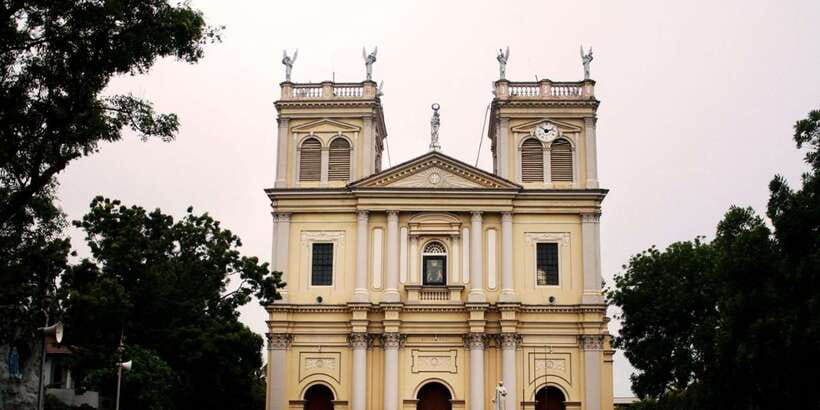
After the market, you’ll head to St. Mary’s Church, one of the clearest signs of Negombo’s Christian roots tied back to Portuguese influence. The details here aren’t vague—construction resumed in 1874 and the church was completed in 1922—and those dates give the building real weight.
What I like about this stop is how it reframes Negombo from a quick transit point into a layered coastal city. The church isn’t only about architecture. It’s about continuity: local Christian communities building, restoring, and finishing something over decades.
What to expect on site: it’s a religious place, so keep your tone respectful, dress modestly, and plan for slower moments if there’s activity inside. If you’re the kind of traveler who likes “why these dates exist,” this is a good match.
Potential drawback: if you’re expecting a dramatic fort-style viewpoint, this stop is more about atmosphere and heritage than sweeping views. It rewards a patient eye.
Sri Singama Kali Amman Kovil: murals, sculptures, and the feel of living religion

Next comes Sri Singama Kali Amman Kovil, a Hindu temple that’s especially known for its murals and sculptures. This is one of those places where you’ll get more out of it if you take your time.
Look for the way the art supports the space. Temples aren’t museum rooms. They’re working religious environments with visual storytelling—color, texture, and figures built into the architecture.
This stop also adds variety to the day. After Portuguese-and-colonial-era touches at St. Mary’s, you shift into a different belief system and a different kind of artistic expression. It’s a smart pairing, because it helps you see Negombo as a place where cultures overlap rather than exist in separate boxes.
Practical note: temples often mean walking and some uneven ground. Wear shoes you can trust, and keep your pace steady.
Hamilton Canal (14.5 km) and the British-built waterway story

The tour then moves to Hamilton Canal, a 14.5 km waterway connecting Puttalam with Colombo. It was built by the British in 1802, and that timeline matters. You’re not only looking at water—you’re looking at an infrastructure project that shaped movement and trade in the region.
Why you’ll care: canals are one of those “boring on paper, important in real life” features. Seeing it on your route helps you understand how coastal cities like Negombo weren’t just about fishing. They were also about transport links and the flow of goods.
What to expect: this is a sightseeing stop with photo moments and time to look around. You may not get a long “stand and stare” experience, because the tour keeps moving. Still, it’s a strong bridge between the religious stops and the colonial-era forts.
Consideration: because it’s a waterway, it can be windy or humid depending on the weather. If you’re carrying a phone or camera, keep it secure and ready.





Negombo Dutch Fort: Portuguese roots and a Dutch pentagonal rebuild
Then it’s time for Negombo Dutch Fort. The fort’s origin is Portuguese, later rebuilt in a pentagonal shape by the Dutch in the 1640s. That mix is the whole point of the fort: it’s evidence of how power changed hands along the coast.
I like this stop because it gives you something tangible to walk around. Even when a fort isn’t fully intact, the layout and structure help you picture the defensive thinking of earlier centuries.
What to expect:
- time for photo stops and sightseeing
- a more architectural feel than market life
- a chance to connect the “European presence” theme across the day
Possible drawback: if you’re in a hurry for viewpoints, forts can feel slow. But if you’re paying attention to shapes and construction, this is a satisfying heritage stop. Also, because the fort is outdoors, bring a little patience for sun and heat.
Angurukaramulla Temple: dragon’s mouth and a moss-covered 300-year-old library ruin
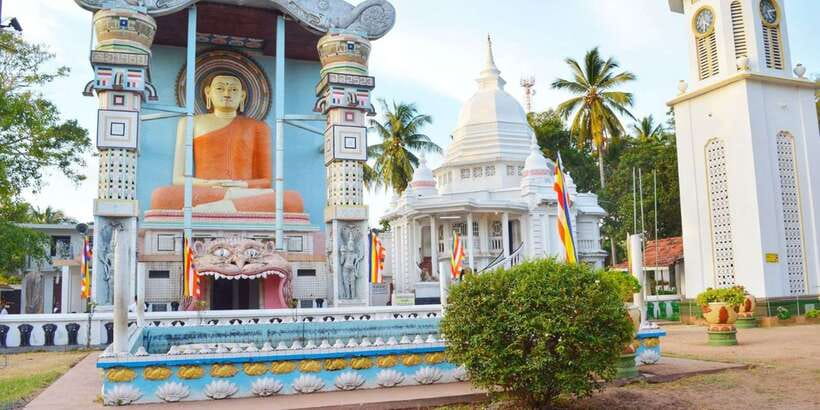
The day ends at Angurukaramulla Temple, one of Negombo’s most known temples. You’ll pass through the dragon’s mouth entrance, which locals believe helps ward off evil spirits. Then you’ll see the moss-covered ruin of an ancient library, described as about 300 years old.
This stop is the emotional finish for many people. It’s not only pretty—it feels symbolic. The dragon-mouth entry turns a normal approach into something ritual. And the library ruin adds a rare kind of atmosphere: knowledge-as-ruins, not just knowledge-as-building.
What makes it memorable:
- the dragon-mouth entrance creates a clear photo moment that also feels meaningful
- the mossy ruin gives you a sense of time passing, long after the original use faded
Practical advice: plan a little extra time for looking around. Even though the tour is timed, the temple approach and grounds reward a slow walk. Keep your phone charged—the tour day is short, but you’ll probably want to take more photos than you expect.
Price and value: what $40 buys (and what it avoids)
The price is $40 per person for a 4-hour tour, including pickup and drop-off by tuk-tuk. For this area, that’s not just transportation—it’s a bundle.
Here’s what you’re getting:
- hotel transportation and return by tuk-tuk
- English live guide for the route
- entrance fees for the stops in the program
- fuel surcharge, driver charges, and parking fees covered
- complimentary refreshments and water
- government taxes included
That matters because Negombo costs can add up fast once you start paying separately for tuk-tuk rides, entrance tickets, and parking. With this package, you spend your effort on the sights, not on counting small expenses all morning.
Is it “worth it” if you only care about one place? If you want just one site, you might do better arranging a shorter plan. But if you want fishing life plus colonial forts plus temple heritage, the price starts to make sense quickly.
One consideration: because it’s a compact route, you won’t get hours at any single site. That’s the trade for fitting everything into four hours.
Small logistics that make a big difference
A few details make this tour feel smooth:
- Pickup is offered from multiple areas: Waikkal, Kammala, Negombo, Wattala, and Katunayake.
- Drop-off is also flexible across those same areas.
- It’s described as a private group, so your tuk-tuk and guide time don’t get shared with a larger crowd’s rhythm.
- You’ll have a live guide in English, which helps with context at places like the Dutch Fort and Hamilton Canal, where dates and names matter.
For your day, bring a charged smartphone and a passport or ID card (a copy is accepted). It’s simple advice, but it prevents the annoying moment where you’re ready to go and can’t.
Who this tour fits best (and who might want a different plan)
This is a strong match if you:
- only have a half day in Negombo
- want a good mix of fishing culture + colonial-era sites + temples
- prefer a local guide to handle the “what is this and why does it matter” part
- like the freedom of tuk-tuks without the stress of planning routes
It may be less ideal if you:
- hate walking in heat (some sites involve walking and outdoor time)
- want deep museum-style time at one stop
- are trying to cram in other heavy commitments immediately afterward
Should you book this Negombo tuk-tuk tour?
I’d book it if your goal is to understand Negombo in a practical way, fast. Lellama market sets the tone, St. Mary’s and Sri Singama Kali Amman Kovil add cultural depth, and Hamilton Canal plus the Dutch Fort connect you to the coastal trade story. The last stop at Angurukaramulla Temple gives you a memorable ending, with the dragon-mouth entrance and that mossy library ruin.
I’d skip or modify it if you’re hoping for a slow, unhurried day with long stays at each site. Four hours is the point here: enough time to feel the city’s variety, not enough to treat any one stop like your whole vacation.
FAQ
FAQ
What’s the duration of the Negombo city and fishing village tour?
The tour lasts 4 hours.
Where does pickup happen?
Pickup options include Waikkal, Kammala, Negombo, Wattala, and Katunayake.
Are the entrance fees included?
Yes. Entrance fees for the sightseeing places mentioned in the program are included.
What does the price include?
It includes hotel round-trip transportation by tuk-tuk, driver charges, fuel surcharge, parking fees, complimentary refreshments and water, and government taxes. It also includes entrance fees.
What’s not included in the price?
Any other expenses not mentioned in the price-includes section are not included.
Is there a guide, and what language is it in?
Yes, there is a live tour guide in English.
What should I bring with me?
Bring a charged smartphone and a passport or ID card (a copy is accepted).
What are the cancellation rules?
There is free cancellation up to 24 hours in advance for a full refund.