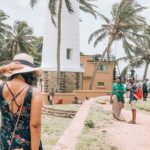
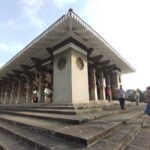
Colombo feels different when you’re not trapped behind glass. This small-group walk with Ajeet De Soyza gets you up close to colonial architecture and everyday street life, with history explained in a way that makes you want to ask more questions. Two things I really like: the small group size (max 8) that keeps it personal, and the mix of stops that goes beyond postcard sights into real neighborhoods. One thing to keep in mind: if you prefer a fast, light stroll, you may find the commentary a bit detailed, especially on a warm day.
You start at the iconic Galle Face Hotel area and end at the same place, so you can build a loop around Colombo’s layers. Stops run from a historic prison cell linked to Sri Lanka’s last king to the Dutch Hospital shopping precinct, then into Pettah’s old-town bustle and back out toward the sea. The only potential drawback is simple: it’s a walking tour, so comfortable shoes matter.
In This Review
- Key Highlights You’ll Actually Care About
- Colombo on Foot: Why This Walk Works
- Who this fits best
- Stops in the Fort: Colonial Echoes and Central Landmarks
- King Sri Wickrama Rajasinghe Prison Cell
- Dutch Hospital Shopping Precinct
- Colombo Fort Clock Tower
- Central Bank Currency Museum (outside visit framing)
- Cargills Department Store Building
- Grand Oriental Hotel
- Jami Ul-Alfar Mosque (Red Mosque)
- TITUS STORES (historic family business)
- Pettah Old Town: Markets, Trade Energy, and Old Business Streets
- Old Town Hall (Pettah’s lesser-known historic monument)
- Pettah Bazaar (busy markets stop)
- Colombo Fort Railway Station (British-built hub)
- Gangaramaya and Galle Face: Faith, Architecture, and the Sea Breeze Ending
- Gangaramaya (Vihara) Buddhist Temple
- Galle Face Hotel and Galle Face Green
- Pace, Group Size, and Staying Comfortable
- What to bring
- Price and Value: What $30 Really Buys
- The transportation point
- The Guide Factor: Ajeet De Soyza’s Style
- Should You Book It?
- FAQ
- How long is the Colombo Walking Tour with Ajeet De Soyza?
- What is the price, and what’s included?
- What about admission fees or donations during the tour?
- Where does the tour start and end?
- How many people are in the group?
- Is cancellation allowed if plans change?
Key Highlights You’ll Actually Care About
- Max 8 travelers means you’re not shouting over a crowd
- Fort + Pettah + temples + Galle Face in about 3 to 4 hours
- Snacks and bottled water help on a hot city walk
- Ajeet De Soyza’s Q&A-friendly style keeps the tour from feeling like a lecture
- Optional-style temple donation (Gangaramaya) is extra and issued on-site
- Mobile ticket makes check-in easy
Colombo on Foot: Why This Walk Works
If you’re in Colombo for a short time, the temptation is to see the city from a vehicle and call it done. This tour does the opposite. You travel on foot through key areas and hear the story of Sri Lanka’s capital with real streets, real textures, and real people around you.
What makes it work is the sequencing. You begin around Fort and the British-era core, then shift toward Pettah where the city’s trade energy shows up fast. Later you add religious sites and finish at Galle Face, which gives you a clean visual ending: the sea, the green, and some of the colonial-era landmarks that frame the coastline.
You can also read our reviews of more tours and experiences in Colombo.


Who this fits best
This is a good match if you want a smart, question-friendly introduction to Colombo. It’s also ideal if you like architecture, history, and culture that isn’t locked behind museum glass. Most travelers can participate, but it’s still a walking experience—built for people who can handle several hours in the city heat.
Stops in the Fort: Colonial Echoes and Central Landmarks
This section is where Colombo’s story turns from street-level life to the big symbolic buildings that shaped the city. You’ll spend short bursts at each place—enough to understand why it matters and to see the setting—without turning the tour into a marathon.
King Sri Wickrama Rajasinghe Prison Cell
The tour begins with a striking historical anchor. King Sri Wickrama Rajasingha was captured in 1815 and transferred to Colombo without entering Kandy. That detail matters because it places Colombo in the political map of the time, not just as a port city but as a key endpoint in a national struggle.
The stop is brief, and it’s free, but it sets the tone: Colombo didn’t become important by accident. The city’s layers show up here right away.
Consideration: it’s not a happy story. If you prefer upbeat starts, just note this first stop is heavier than most tour openers.
Dutch Hospital Shopping Precinct
Next you step into the Dutch colonial legacy. The Dutch Hospital complex is known as the oldest building in the Colombo Fort area, dating to the Dutch colonial period. Today it’s a heritage building turned into a shopping and dining precinct.
This is one of those stops that helps you connect history to modern use. You’re not only looking at old stone—you’re seeing how that old space now fits everyday life. It’s a perfect example of Colombo’s habit of repurposing what it inherited.
Tip for your visit: take a moment to notice the scale and layout. Even if you only glance, it’s easier to understand the Dutch footprint once you see the building in person.
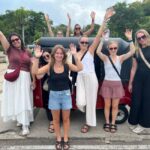
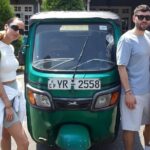
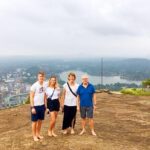
Colombo Fort Clock Tower
Then you walk through the central business district area where colonial-era architecture still shapes the streetscape. The Fort Clock Tower is described as a unique structure in the city, and it works as a visual checkpoint: you’re in the core, and the city is organized around these older reference points.
This stop is short—about five minutes—and free, which makes sense. It’s meant to give you orientation more than a deep museum-style lesson.
Central Bank Currency Museum (outside visit framing)
You’ll also see the Central Bank Currency Museum area and hear about the building’s history. Construction began in 1911, and at opening it was the tallest building in Colombo. The structure is designed in Greco-Roman architectural style with Corinthian columns (as described in the tour notes).
This stop is useful even if you do not go inside the museum. The building itself is the lesson: Colombo’s finance power has always had an architectural statement behind it.
Small drawback: the stop itself is brief. If you love museums, you may want to plan a return visit on your own.
Cargills Department Store Building
You’ll stop at the old Cargills & Millers buildings, described as among the oldest department-store structures in Sri Lanka. The area originally had a Dutch building on the land, later tied to prominent figures (including Sir), which reinforces the theme of continuity and reuse.
This is a great stop for travelers who like commerce history. It shows how shopping and distribution have long shaped Colombo, not just in modern times.
Grand Oriental Hotel
The Grand Oriental Hotel is a classic Colombo landmark. It opened in 1875 with 154 luxury and semi-luxury rooms and is described as the first of the modern type of imposing hotels built in the East.
What’s helpful here is how the stop bridges past to present. Hotels like this aren’t just accommodations; they’re part of Colombo’s international identity. Even a short visit gives you a sense of the city’s ambition during colonial-era modernization.
Quick reality check: you’re looking at the exterior and learning the context. If you expect an inside visit, nothing in the tour data promises that.
Jami Ul-Alfar Mosque (Red Mosque)
Next comes a religious landmark: Jami Ul-Alfar Mosque, popularly known as the Red Mosque. The tour notes describe it as a unique masterpiece.
This stop adds contrast in style and atmosphere. It also reminds you that Colombo’s history isn’t only colonial-era buildings. Religious architecture carries different kinds of meaning, different kinds of stories.
Practical note: be ready for respectful behavior around active worship spaces, even if your time there is short.
TITUS STORES (historic family business)
You also pass by or stop at TITUS STORES, a family-run business founded in 1924. It originally sold petrol lamps called TITUS Lamps, then shifted to homeware and gifts when electricity arrived.
This is one of my favorite types of stops: small business history. It’s how you learn a city without needing a passport into elite museums. The lamps detail is oddly specific—and that’s why it’s memorable.
Pettah Old Town: Markets, Trade Energy, and Old Business Streets
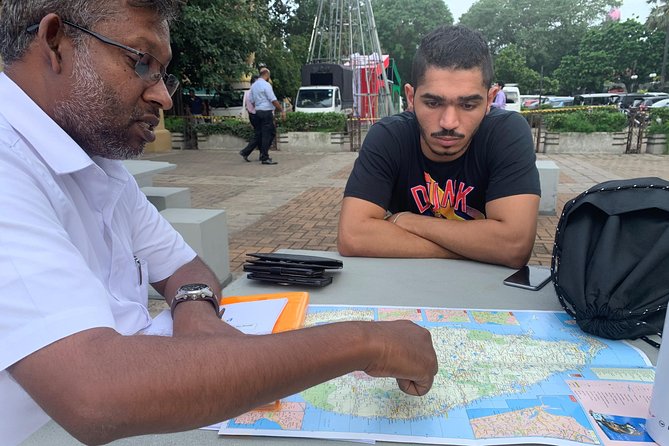
After the Fort area, the tour pivots toward Pettah, where the energy is more street-level and less formal. This is where Colombo stops feeling like a timeline and starts feeling like a living place.
Old Town Hall (Pettah’s lesser-known historic monument)
You’ll see Old Town Hall, described as a large gothic church-like mansion in Pettah’s old business quarter. It’s noted as something people pass by without thinking much about what’s inside, and the tour frames it as a treasure trove of history.
Even without going deep into rooms, this kind of stop changes how you see Pettah. You stop treating it as just a shopping zone and start seeing it as a place with preserved structures from earlier eras.
If you’re a history fan: spend a few extra seconds looking at features from the exterior. Gothic-style elements in a business neighborhood are the kind of detail that makes the city feel real.
Pettah Bazaar (busy markets stop)
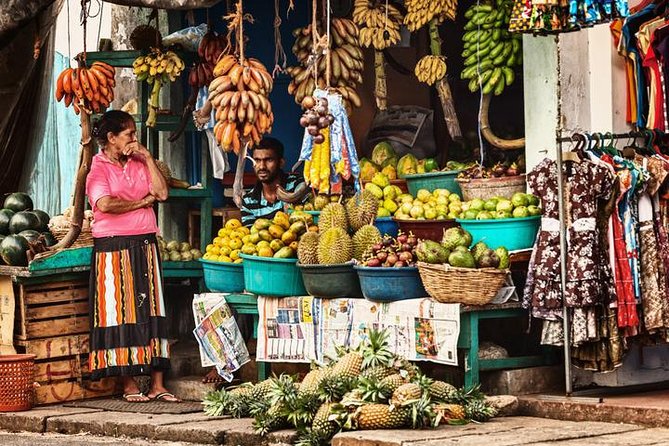
Then you explore Pettah Bazaar on foot. The tour notes call this out as a hands-on view of the busy market scene.
This is where the tour earns its practical value. You learn what “busy” actually looks like here—stalls, movement, and the way people navigate the market as part of daily life. It’s a sensory stop that gives your brain a break from architecture facts.
Colombo Fort Railway Station (British-built hub)
You also visit Colombo Fort Railway Station, described as the major hub of Colombo’s city network and built by the British.
Railways are a theme in colonial cities for a reason: they reorganize distance. Seeing the station during the tour helps you connect the dots between colonial planning and modern movement.
Time strategy: since your stop is around 15 minutes, don’t expect to read every sign. Look for the big picture: station geometry, platform layout, and the way it connects street life to longer-distance travel.
Gangaramaya and Galle Face: Faith, Architecture, and the Sea Breeze Ending
The last part of the tour balances spiritual architecture and then wraps the day with Colombo’s waterfront identity.
Gangaramaya (Vihara) Buddhist Temple
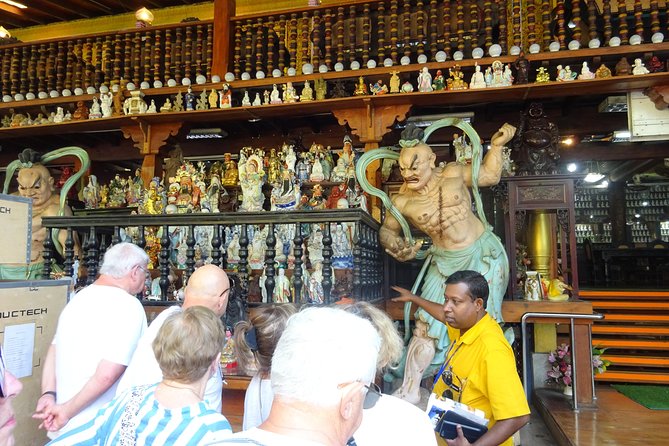
You’ll reach Gangaramaya Buddhist Temple, described as the main temple in Colombo with architecture influenced by many cultures.
This stop is longer than many on the route (about 20 minutes), which signals importance. It’s also one of the few places where you should expect an extra cost: the tour notes say the donation to the temple is considered the admission fee, and a ticket is issued. The listed extra cost is about $2 per person.
Consideration: if you’re trying to keep strict costs, that $2 matters. If you don’t mind small on-the-ground contributions for religious sites, it feels fair and straightforward.
Galle Face Hotel and Galle Face Green
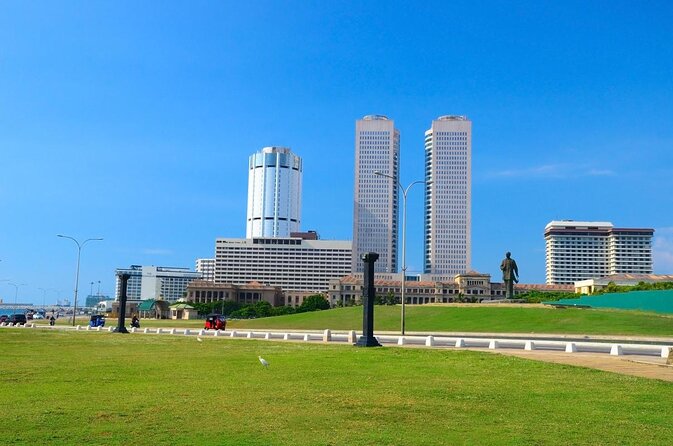
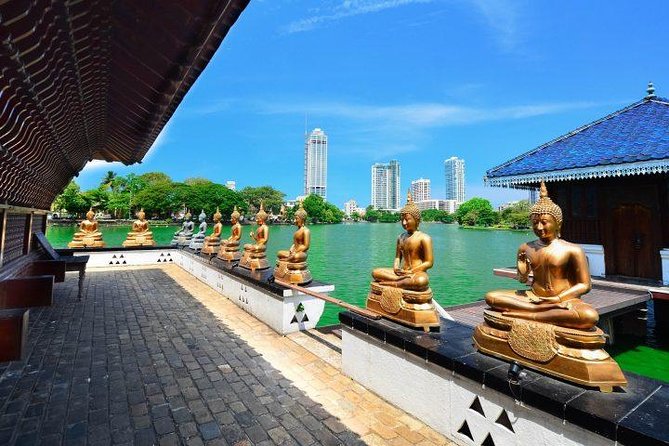
You finish at Galle Face Hotel, facing Galle Face Green. The tour notes explain that depending on time of day, you may see activities on the Green and get a glimpse into the past of the Green with iconic buildings nearby, including the Old Parliament and the famous Galle Face Hotel.
This is a smart ending because it lets you decompress. You’ll have been walking through dense streets and historic structures; now you’re at an open-air seaside space where you can reflect on what you learned and observe Colombo in a calmer frame.
Pace, Group Size, and Staying Comfortable
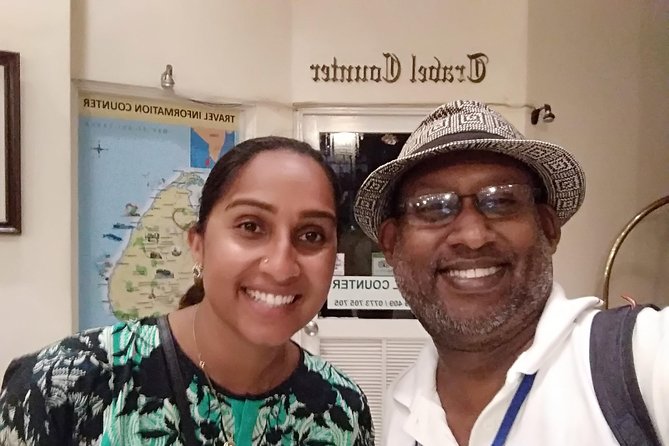
The tour is designed for a small group: maximum 8 travelers. That matters more than people think. With a tight group, you can ask follow-up questions and still hear the guide clearly.
The duration is listed as 3 to 4 hours, approximate. Many of the stops are short, so the pace feels like a steady rhythm of look, learn, move. One review comment points out that for some people it can feel like a slow, short stroll with a lot of detail. That’s worth listening to as you decide what kind of experience you want.
What to bring
Because Colombo can be hot and sunny, plan for the basics:
- comfortable walking shoes
- a water bottle (the tour includes bottled water)
- snacks (included) to avoid the late-day slump
If you’re sensitive to heat, you might want to think about your best time of day for booking and how you’ll manage sun exposure.
Price and Value: What $30 Really Buys
At $30 for a 3 to 4-hour small-group walk, this is priced like a practical intro tour. What you’re paying for isn’t just “someone walking with you.” You’re paying for guidance that connects multiple parts of Colombo into one story, with short stops that keep you moving.
Here’s what is included:
- bottled water
- snacks
- government fees
- private transportation
- free admission at most stops (as indicated in the tour details)
- mobile ticket
What’s not included:
- temple donation/admission at Gangaramaya (about $2 per person)
That temple fee is the main extra. Everything else is structured so you don’t constantly reach for your wallet.
The transportation point
Even though it’s described as a walking tour, the inclusion of private transportation suggests there may be short rides between areas. A separate note mentions an electric tuk-tuk in at least one version, so don’t be surprised if your route uses small vehicle hops to save time or handle distance.
The Guide Factor: Ajeet De Soyza’s Style
The real differentiator here is the guide, Ajeet De Soyza. The consistent theme in the feedback is that he’s friendly, patient, and takes questions seriously. People also noted his ability to connect Sri Lankan history to what you see in Colombo today, not only by reciting facts but by shaping the story in a way that feels relevant.
That Q&A-friendly approach is one of the biggest value boosts in a city tour. If you like to ask why something looks the way it does, or what changed and when, you’ll get more out of this than a generic highlights loop.
The one recurring caution is that his commentary can be very detailed, to the point where some people felt it slowed the stroll. If you’re the type who prefers fewer facts and more freedom to wander, you should set expectations early or choose this specifically when you want explanation.
Should You Book It?
Book this if you want:
- a small-group intro to Colombo’s Fort and Pettah areas
- a history-and-culture walk with time for questions
- an easy start and end at Galle Face Hotel, with a natural way to continue exploring
Don’t book it if you want:
- a fast, mostly silent walking tour
- a plan that avoids temple donations entirely (Gangaramaya has an extra $2-style contribution)
If your goal is to understand Colombo in a few hours—without getting stuck behind a bus window—this is a strong value bet. It gives you a lot of meaningful stops in a short time, plus the comfort basics (water and snacks) that keep the day from turning unpleasant.
FAQ
How long is the Colombo Walking Tour with Ajeet De Soyza?
The tour runs about 3 to 4 hours.
What is the price, and what’s included?
The price is $30. Included are bottled water, snacks, government fees, and private transportation. A mobile ticket is provided.
What about admission fees or donations during the tour?
Most stops list free admission, but the Gangaramaya (Vihara) Buddhist Temple requires a donation considered an admission fee. A ticket is issued there, at about $2 per person.
Where does the tour start and end?
The tour starts and ends at the Galle Face Hotel, at Galle Rd, Colombo 00300, with the end in front of Galle Face Green.
How many people are in the group?
The tour has a maximum of 8 travelers.
Is cancellation allowed if plans change?
Free cancellation is available up to 24 hours in advance for a full refund. The tour also requires good weather and may be rescheduled or refunded if poor weather cancels it, or if a minimum number of travelers isn’t met.