Colombo can feel big and slightly chaotic, but this open-top double-decker bus tour gives you an easy way to read the city in one afternoon. I like that the guide’s live English commentary connects the landmarks as you pass them, instead of treating stops like a checklist. I also like the small comfort wins: snacks, juice, and drinking water during the ride.
The tour also hits the good mix of old and new. You’ll see everything from the Colombo Lighthouse area to downtown civic buildings, plus port views and religious sights along the way. One thing to consider: because it’s open-top, you’ll want to plan for sun and possible rain, and most of the sightseeing is from the bus rather than inside buildings.
In This Review
- Quick hits before you get on board
- Why this double-decker orientation tour is such a smart Colombo move
- Price and timing: $26.67 for a 2.5–3 hour Colombo spotlight
- Route walkthrough: the landmarks you’ll pass and what to watch for
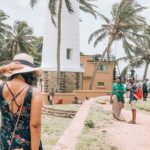
- Colombo Lighthouse and the clock tower connection
- The last king’s prison cell: power, punishment, and the past
- Galle Face Promenade and the WWII cannons
- South Expansion of Colombo Harbour: modern Colombo at work
- York Street remnants and the colonial street feel
- Slave Island area: a difficult label that matters
- Hindu kovil and the carved gopuram
- Beira Lake: the green-blue pause in the city center
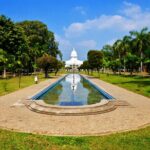
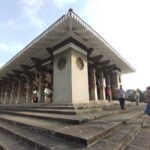
- War Memorial, Public Library, and the civic spine
- Nelum Pokuna Theatre and Vihara Mahadevi Park
- Colombo Town Hall: the grand civic finale
- What’s included on the ride that actually helps
- Hotel pickup and meeting points: how to make it painless
- Who this afternoon excursion is best for
- Should you book the Colombo City Tours afternoon excursion?
- FAQ
- What time does the Colombo City Tours afternoon excursion start?
- How long is the tour?
- What is the price per person?
- What kind of bus is used?
- Are refreshments included?
- Is there an English-speaking guide?
- Is hotel pick-up available?
- What is not included in the tour?
Quick hits before you get on board
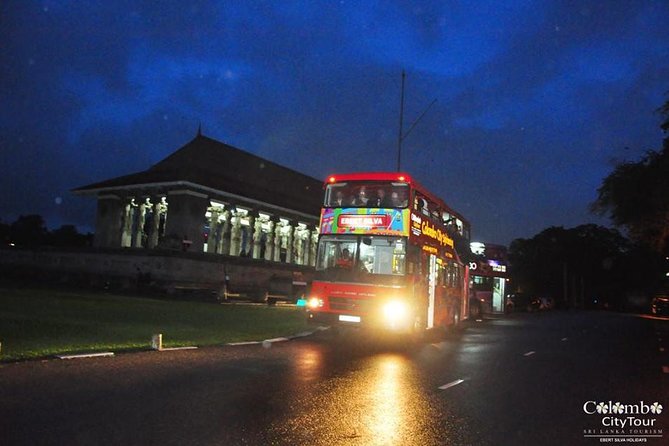
- Open-top double-decker views across major landmarks and waterfront areas
- English live narration that helps you understand what you’re seeing
- Refreshments included: snacks, juice, and drinking water on the route
- A long list of stops passed by: Lighthouse, Galle Face Promenade, Beira Lake, Town Hall
- Limited group size (max 70) with limited slots, so booking ahead is smart
- Hotel pick-up on request, including a known join-from option at The Kingsbury Hotel
Why this double-decker orientation tour is such a smart Colombo move
If you’re only in Colombo for a short stretch, you need two things fast: direction and context. This afternoon bus format delivers both. You’re not hunting for the right streets or trying to stitch together half-day plans from scratch. Instead, you get a guided sweep across the city’s key districts, so you leave knowing where things are and how they connect.
The open-top double-decker matters more than you might think. When you’re moving, you’re also comparing neighborhoods in real time. Coastal landmarks read differently when you can look out over the route, not just glance at one corner. And in a city where roads and buildings can change character block to block, being up high helps you spot what’s important at a glance.
Then there’s the narration. The best part isn’t the facts alone. It’s the way the guide links the places to each other: colonial-era street traces, religious architecture you’ll recognize, port expansion areas, and civic buildings that show how Colombo runs today. Even if you’re not a history person, the commentary helps you build a mental map.
You can also read our reviews of more tours and experiences in Colombo.


Price and timing: $26.67 for a 2.5–3 hour Colombo spotlight
At about $26.67 per person, this is priced like a true value tour rather than a premium chauffeur-style outing. You’re paying for three things you’d otherwise piece together: guided narration, transportation by double-decker bus, and refreshments. If you’re using the tour as a first-afternoon orientation (especially when you’re still learning the city), it becomes one of those efficient travel moves that saves time later.
Timing-wise, it starts at 2:30 pm and runs roughly 2 hours 30 minutes to 3 hours. That afternoon slot is handy because you can sleep in, see the city after lunch, and still have the evening left for your own wandering. Since you’re passing so many landmarks, you’ll be glad you did it in a single stretch instead of trying to drive or taxi between far-flung points.
One more practical note: the tour has a maximum of 70 travelers and mentions limited slots. That tends to mean a smoother experience when compared with mega-bus days, and it also means you should book sooner rather than later if your dates are fixed.
Route walkthrough: the landmarks you’ll pass and what to watch for
This tour is built around a classic “big sights” corridor through Colombo’s main areas. You’ll see a lot in a short time, so here’s how to make the most of it: focus on patterns. Notice what looks colonial, what looks modern, what’s religious, and what’s coastal or civic.
Colombo Lighthouse and the clock tower connection
The Colombo Lighthouse area is one of those spots that helps you understand Colombo as a port city. Even from the bus, you get the sense of navigation, trade, and the city’s link to the sea.
A little further along, you’ll also pass the Lighthouse with Clock Tower designed by Lady Ward, with an interesting detail that the tower was built before Big Ben in London. It’s the kind of comparison that makes a city feel connected to the wider world. When you look at the clock tower, try to imagine the era it represents—because you’re seeing not just a structure, but a time when British influence shaped public landmarks.
The last king’s prison cell: power, punishment, and the past
You’ll also pass the Prison Cell of the last Sri Lankan King. This is a heavy stop, but it’s valuable because it anchors Colombo’s story in conflict and political change. From a bus, you may not linger long, but the guide’s narration helps you understand why this spot matters in the broader timeline.
If you’re sensitive to war and oppression themes, mentally note that this stop can feel intense compared to the lighter waterfront scenery. It’s still worth seeing, because it gives the day emotional weight.

Galle Face Promenade and the WWII cannons
Next up is the famous Galle Face Promenade, where the tour includes the view of World War II cannons. This is where you’ll feel the layering: today it’s a public space for people, but the ground has a military memory.
When you see the promenade from the road, look for how the coastline shapes the entire space. Colombo’s sea-facing areas tend to hold a lot of daily life, so it helps to get this view before you plan any solo walks later.
South Expansion of Colombo Harbour: modern Colombo at work
After the promenade, you’ll roll toward the South Expansion of the Colombo Harbour. This segment is about the city’s ongoing engine. Even if you’re not into ships, port expansion shows how Colombo keeps evolving beyond its older districts.
Try to watch for the contrast: the city’s monumental civic and religious areas on one side, and industrial movement on the other. That contrast is one of Colombo’s defining traits.
York Street remnants and the colonial street feel
You’ll pass York Street, including remnants of British Colonial Architecture. The best way to appreciate this isn’t by trying to memorize details—it’s by noticing styles. Colonial-era architecture often sticks out in materials, proportions, and street presence.
If you like architecture, this is one of the most visually rewarding segments because you can spot traces while moving. If you don’t, it still helps you understand why some streets feel different and why certain buildings look like they belong to another era.
Slave Island area: a difficult label that matters
You’ll also pass the Slave Island area. The name alone signals something serious. Even without going in, the way the guide frames the area helps you connect it to the darker chapters of trade and colonial history.
This is a reminder that “city sightseeing” isn’t only pretty facades. Some places are named because something happened here, and that context makes the city real.
Hindu kovil and the carved gopuram
Next, keep an eye out for a famous Hindu kovil with a uniquely carved gopuram. A bus tour can’t give you slow, quiet temple time, but it can still help you appreciate craftsmanship—especially the way the gopuram draws the eye upward.
If you’ve seen other South Asian temple entrances before, you’ll likely recognize the pattern of symbolism, even if the details are different here. Treat this as a visual study stop rather than a long visit.
Beira Lake: the green-blue pause in the city center
You’ll pass the Beira Lake, described as a scenic spot in the heart of the city. This is one of those visual breaks from streets and buildings. From the bus, you’ll get a quick sense of how water works as a breathing space in dense urban areas.
If you’re planning your own evening, this is a helpful point to remember. Even a short walk nearby later can feel like a reset after the more intense parts of the route.
War Memorial, Public Library, and the civic spine
The tour includes a set of civic landmarks: the War Memorial, the Public Library, and the National Museum. These stops matter because they show how Colombo honors history and builds public institutions.
From the bus, you may not have time for deep museum viewing. But you’ll still get something useful: awareness of where the big cultural buildings are. That helps if you want to return later on your own with a tighter plan.
Nelum Pokuna Theatre and Vihara Mahadevi Park
You’ll also pass the Nelum Pokuna Theatre and Vihara Mahadevi Park. Even without entering, these stops add variety to the day. They shift you from purely historical or religious stops into arts and public green space.
This mix is why the tour works for many travelers. It doesn’t make you feel like the whole afternoon is only monuments and memorial plaques.
Colombo Town Hall: the grand civic finale
The route finishes with views around Colombo Town Hall. As a final landmark, Town Hall is a satisfying end point because it’s part of the city’s official identity. It’s the kind of building that visually tells you Colombo is a place where administration and public life sit in the center of things.
By the time you reach it, you’ll have already seen enough variety—port, colonial street traces, religious architecture, a lake, and memorial sites—that Town Hall doesn’t feel random. It feels like closure.
What’s included on the ride that actually helps
This is one of the better included-perks situations for a city bus tour. You get live narration by an English-speaking guide, plus snacks, juice, and drinking water. In Colombo’s afternoon heat (or on a bright day), having water and a snack can keep the experience comfortable rather than exhausting.
The refreshments also make the tour feel less rushed. You’re not just staring out the window for three hours. You can look forward to a mid-ride break.
The bus itself is open-top, so dress accordingly. Light layers and sunglasses are your friend. If it rains, your best defense is planning: you’re outside for the views, so check the sky and keep a small umbrella or rain layer if you’re sensitive to getting wet.
Hotel pickup and meeting points: how to make it painless
You can join from The Kingsbury Hotel, and the tour says hotel pick-up can be arranged on request if possible. That’s a real plus in Colombo, where traffic can make “just meet me at a landmark” plans annoying.
If you’re staying elsewhere, confirm your best pick-up option ahead of time. The start point listed is Colombo, Colombo, Western Province, with the start time at 2:30 pm. Having pickup sorted means you spend the afternoon on sightseeing instead of negotiating street corners.
You’ll also receive a mobile ticket, which is convenient if you don’t want to juggle printed papers.
Who this afternoon excursion is best for
This tour is ideal if you want an efficient overview of Colombo without the stress of driving or constant navigation. It’s a good first-time city move, especially if your schedule is tight and you still want to see a lot.
It’s also a solid pick for:
- Couples and solo travelers who want structure with flexibility afterward
- Families with older kids (the tour notes children must be accompanied by an adult)
- Travelers who like history and city planning details, but don’t want to spend hours in multiple museums
If you prefer slow travel, long stops, and deep entry tickets at every sight, you might find the bus format too fast-paced. This is about passing, spotting, and getting oriented, not long stand-in-the-sun photography sessions at every corner.
Should you book the Colombo City Tours afternoon excursion?
I think you should book it if you’re the type of traveler who likes to get your bearings fast and then explore on your own. For around $26.67, you get transportation on an open-top double-decker, English live narration, and practical refreshments—all wrapped into one 2.5–3 hour sweep through some of Colombo’s most recognizable landmarks.
Skip it or consider a different option if you need lots of time at each site or you hate open-top sun and weather. Also, because the tour is listed as non-refundable and cannot be changed, make sure your dates are truly set before you commit.
If you’re visiting Colombo and want a guided snapshot that saves you effort later, this is a strong choice.
FAQ
What time does the Colombo City Tours afternoon excursion start?
The start time is 2:30 pm in Colombo.
How long is the tour?
It runs about 2 hours 30 minutes to 3 hours (approx.).
What is the price per person?
The price is listed as $26.67 per person.
What kind of bus is used?
The tour uses an open-top double-decker bus.
Are refreshments included?
Yes. Snacks, juice, and drinking water are included.
Is there an English-speaking guide?
Yes. The tour includes live commentary by an English-speaking guide.
Is hotel pick-up available?
Hotel pick-up can be arranged on request if possible. There is also a join-from option at The Kingsbury Hotel.
What is not included in the tour?
Souvenir shopping is not included.