Colombo gets loud fast. This private, air-conditioned city run is a smart way to cover a lot of ground with hotel pickup and a calm private driver-guide who can shape the pace around you. You get a hands-on orientation to neighborhoods, places of worship, colonial-era landmarks, and the port area without feeling like you’re stuck in a rigid bus schedule.
I like two things most: the tour is private, so you’re not packed into other people’s conversations, and the stops are short enough to keep energy up while still hitting big-name sites like Gangaramaya Temple and Colombo Fort. The one thing to keep in mind is that 4 hours moves quickly—many stops are around 15 to 20 minutes—so if you’re the type who wants to linger for an hour in one place, this format may feel like a sprint.
In This Review
- Key highlights to look forward to
- Private Colombo Car Tour: how 4 hours stays comfortable
- Pettah Market area and Galle Face Green: street life plus seaside breathing room
- Zylen Tea Factory Outlet: a simple stop that turns into a souvenir
- Temples in Maradana and Captain’s Garden: history you can see with your own eyes
- Old Town Hall and the Edinburgh complex: colonial architecture with a purpose
- The Red Mosque in Pettah plus Kayman’s Gate: seeing the city’s layers
- Colombo Fort and Wolvendaal Church: power, trade, and Dutch-era Protestant architecture
- Gangaramaya Temple and Independence Square: spiritual intensity and national memory
- Port City Promenade, Colombo Lighthouse, and the Maritime Museum: the working waterfront
- Town Hall and Viharamahadevi Park: a needed calm break
- Practical tips for making this 4-hour route feel worth it
- Pricing and value: why $70 per person can work (or not)
- Who should book this Colombo highlights run
- Should you book this Colombo City Tour by Car?
- FAQ
- How long is the Colombo City Tour by Car?
- Is the tour private?
- Is pickup offered, and do I get dropped off?
- What is included on the tour?
- Do I need an admission ticket for every stop?
- Is there a tea stop?
- What kind of ticket do I get?
- Does the tour depend on weather?
- What’s the cancellation policy timeframe?
Key highlights to look forward to
- Hotel pickup and drop-off to reduce hassle on a short day
- Air-conditioned private car so the heat stays outside the vehicle
- Pettah market area plus the Red Mosque for a real Colombo streetscape
- Temple and Dutch colonial stops that show different sides of the city
- Ceylon tea tasting and buying at Zylen Tea Factory Outlet
- Port City Promenade to the lighthouse and maritime museum for the modern/working-port angle
Private Colombo Car Tour: how 4 hours stays comfortable
This tour is built for people who want value from limited time. You’re paying for convenience first: pickup, transport in an air-conditioned car, and a dedicated driver-guide—the trio that saves energy and makes the sights easier to understand. In Colombo traffic, having a driver who knows the roads can matter more than you expect.
Because it’s private, your group sets the tone. You can ask questions as you go, pause if something catches your eye, or slow down if a temple stop needs a respectful pace. That flexibility is a real benefit when Colombo’s streets can change character block to block.
You’re also dealing with a short schedule, so the experience leans “highlights with context.” Many visits are timed at about 15–20 minutes, which is great for first-timers who want orientation. It’s less ideal if your travel style is mostly about sitting in one café and watching the world drift by.
You can also read our reviews of more tours and experiences in Colombo.


Pettah Market area and Galle Face Green: street life plus seaside breathing room
The tour’s energy starts in Pettah, Colombo’s market district east of the City Fort area. Pettah is famous for open-air bazaars and street commerce, and it’s the kind of place where you see daily life up close rather than only looking at monuments. Expect narrow lanes, vendors, and plenty of movement—perfect if you like photographing details and understanding how locals shop and socialize.
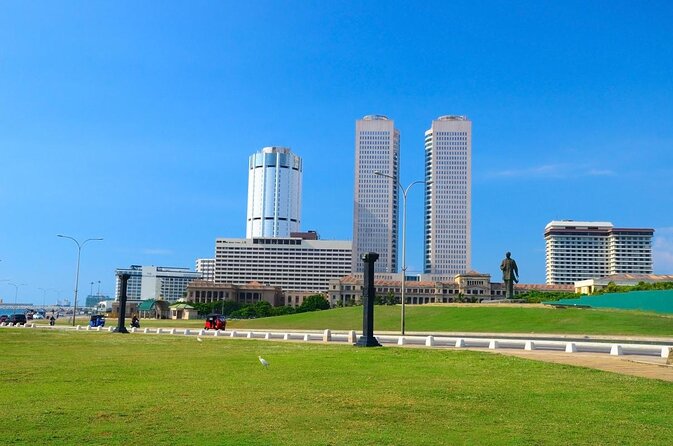
After Pettah, you’ll get a contrast at Galle Face Green. This long shoreline green has been a social meeting point for Colombo-dwellers for generations, with the British era credited for turning it into the place it remains today. It’s not just a scenic stop. It helps you understand why Colombo’s waterfront is where people gather—especially around late afternoon when the light is friendlier.
What to watch for in Pettah: wear shoes you can walk in and keep a light grip on your belongings. A short market visit is enough to feel the atmosphere, but it’s also the area where rushing can happen if you’re not ready for crowds and quick turns.
Zylen Tea Factory Outlet: a simple stop that turns into a souvenir
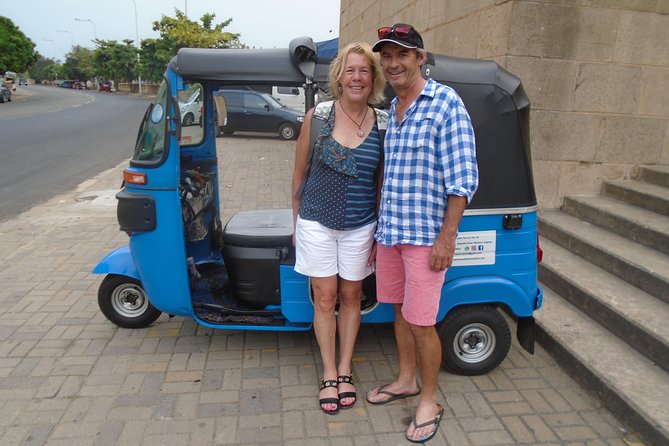
One of the most practical stops on this route is Zylen Tea, a Ceylon tea factory outlet where you can taste and buy tea. The value here is that you’re not just browsing a product—you’re connecting flavor to origin. If you’re a tea person, you’ll likely enjoy using this stop as a chance to pick something specific rather than guessing later at a supermarket.
This visit is timed (about 20 minutes), so you won’t have time for a long lesson. Still, it’s long enough to taste, compare options, and walk away with a few bag types you actually want to drink.
If you’re buying tea, bring a small bag so you don’t end up carrying it loose around the market area. Also, ask the guide (or staff) what’s best for everyday brewing versus stronger cups—small advice like that can make the purchase feel more personal.
Temples in Maradana and Captain’s Garden: history you can see with your own eyes
A standout on this route is Temple of Sri Kailawasanathan Swami Devasthanam Kovil, connected to Captain’s Garden in Maradana. It’s described as being built in the latter part of the 1700s, and it’s believed to be among the oldest kovils in Colombo. Even if you don’t read every sign, the age matters because you can often sense it in layout and construction.
The area’s setting adds an extra layer: it’s believed that earlier it was like an island, with the waters of Beira Lake around it. That kind of detail helps you imagine Colombo before today’s roads and development—something you don’t get from a quick photo alone.
Temple tip that works everywhere: move slower than you think you need to. Dress modestly, keep your phone use respectful, and let the guide handle any customs questions. The short time at each stop is helpful, but it’s still worth showing the place the proper attention.
Old Town Hall and the Edinburgh complex: colonial architecture with a purpose
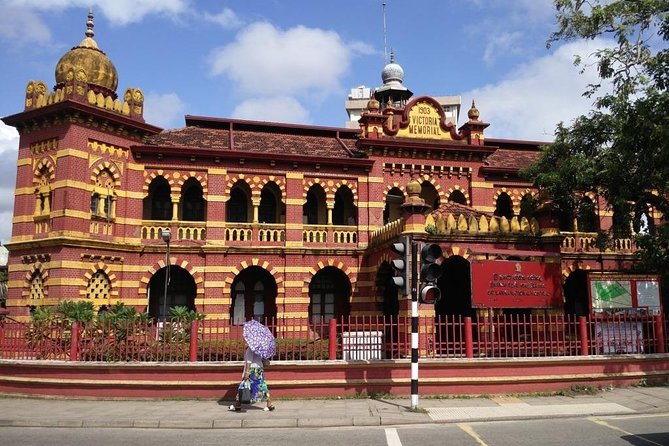
Old Town Hall is one of those places where a short visit works because you’re looking at design choices and city planning. The Town Hall area is tied to the Edinburgh Hall and the Edinburgh Market, described as opening alongside the main buildings. That means you’re seeing not just a structure, but the idea of how the city organized civic space and public activity.
This is also one of the stops where you might feel the value of a guide. Without context, it’s easy to see a historic-looking building and move on. With context, you start spotting why it was placed there and how it connected to public life.
Time-wise, you’re likely here for about 20 minutes. That’s enough for exterior views and a quick read of what makes it important, but not enough for a long interior exploration if the building access is limited.

The Red Mosque in Pettah plus Kayman’s Gate: seeing the city’s layers
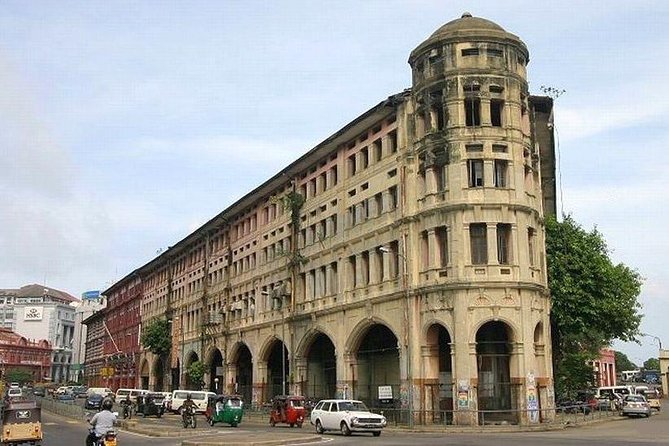
Pettah hides surprises, and this route includes one: the colorful mosque commonly referred to as Rathu Paliya (Red Mosque). It’s noted as being tucked away on the narrow 2nd cross street. That “hidden in plain sight” feeling is exactly why I like this kind of guided route—your car stops can’t tell you what’s down a cross lane without someone pointing it out.
Right after, Kayman’s Gate Bell Tower brings you back to the Fort-era story. Kayman’s Gate was an entrance to the former Colombo Fort, located at the foot of Wolvendaal Hill in the Pettah district. A free-standing bell tower like this is a physical reminder that Fort Colombo wasn’t just a concept—it was built, guarded, and entered through identifiable points.
The pairing works well: you get a street-level religious stop in Pettah, then you zoom into the edge of Fort history with a landmark tied to the city’s defenses.
Colombo Fort and Wolvendaal Church: power, trade, and Dutch-era Protestant architecture
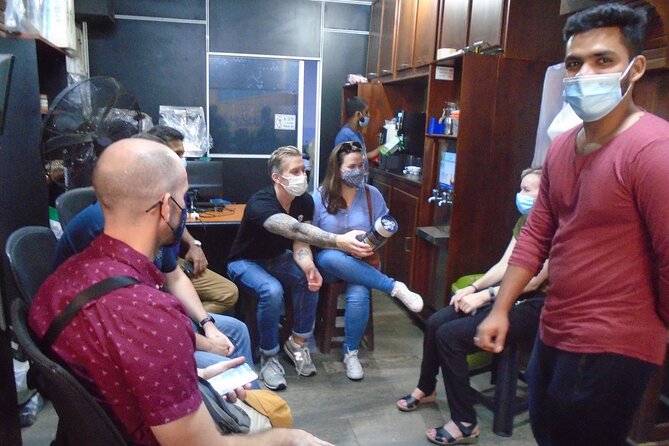
Colombo Fort is still called Fort for a reason. This is where you see the business district shaped by government buildings, banks, department stores, and major hotels. It’s a city-center core where colonial naming continues to echo in daily life.
Then you’ll likely move to Christian Reformed Church of Sri Lanka, also known as Wolvendaal Church (Wolvendaalse Kerk). This is highlighted as one of the most important Dutch Colonial-era buildings in Sri Lanka and as one of the oldest Protestant churches still standing. Dutch colonial architecture can feel surprisingly geometric and structured compared to many other styles around Colombo, and seeing it in person helps you connect what you learned from street scenes to what you see in civic buildings.
Admission here is described as included, which is a nice value add. It means you’re not paying extra or scrambling for tickets at the last minute for every major stop.
Gangaramaya Temple and Independence Square: spiritual intensity and national memory
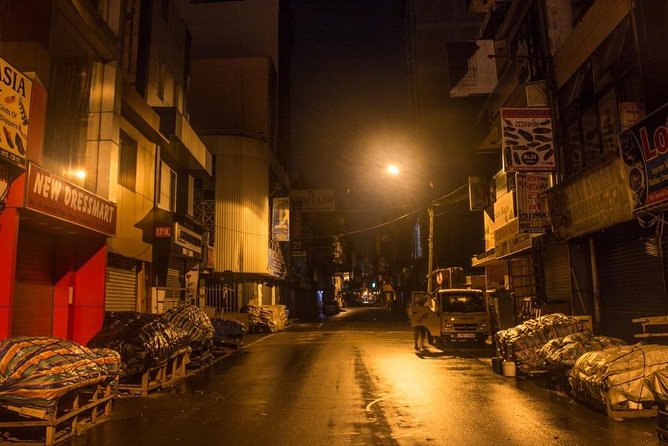
Gangaramaya Temple is one of Colombo’s key religious landmarks, and it’s included with admission. You’ll see a chetiya, a bo tree, an image house, Simamalaka, and a relic chamber connected to the Buddha and Arahat Seevali. That range of elements makes this temple more than a single-photo stop. It’s a whole layout of spiritual meaning, and the guide’s explanations can help you notice details you might otherwise miss.
The time is short (about 20 minutes), so your goal should be respectful viewing rather than trying to see everything at once. If you want the best experience, focus on one or two main features first, then let the rest reveal itself.
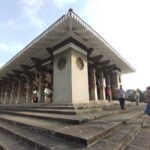
After that, Independence Square shifts the mood to national identity. The square is described as a place that reminds you of leaders who fought for independence, with colonial remnants dwindling over time. Independence Square is ideal for a quick pause and photos, especially if you like understanding how countries choose to commemorate turning points.
Port City Promenade, Colombo Lighthouse, and the Maritime Museum: the working waterfront
Colombo’s “tomorrow” is mixed into its waterfront. Port City Promenade is part of Port City Colombo, described as a multi-services special economic zone under construction on reclaimed land adjacent to Galle Face Green. Even if you’re not following investment news, this stop gives you a visual sense that Colombo is expanding in both physical and economic ways.
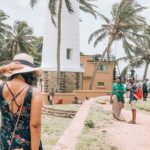
From there, the route reaches Colombo Lighthouse at Galbokka Point south of the Port of Colombo, operated and maintained by the Sri Lanka Ports Authority. A lighthouse is a straightforward stop, but it’s also a quiet chance to picture the maritime side of the city—ships, navigation, and the port’s ongoing role.
Next is Colombo Port Maritime Museum, also operated by the Sri Lanka Ports Authority. It’s located adjacent to the port, and it’s a practical stop for turning sightseeing into understanding. If you like cities with a strong harbor identity, this is where your time pays off. You get the “why” behind the port area rather than only seeing it.
This is also where I recommend you keep your expectations realistic: these are timed visits. Plan to look, read, and ask a couple of questions, then move on.
Town Hall and Viharamahadevi Park: a needed calm break
Two more stops round out the day with civic and green-space energy. The Town Hall of Colombo is described as headquarters of the Colombo Municipal Council and the office of the Mayor of Colombo, built in front of Viharamahadevi Park. If your day has been temples and markets, this area can feel like a breather.
Viharamahadevi Park (formerly Victoria Park) is highlighted as the oldest and largest park of the Port of Colombo, next to the National Museum. A park stop is useful in a half-day format because it gives you a place to reset. You’re not just running from place to place—you get one small pocket of space that makes photos and conversation easier.
Practical tips for making this 4-hour route feel worth it
Here’s how to set yourself up for a smooth experience on a compact city tour.
- Dress for temples and sun. Even if the car is air-conditioned, you’ll still be outside at multiple stops. Light layers help, and modest clothing is smart for religious sites.
- Bring small cash. Pettah is a market zone, and even when a stop doesn’t involve a ticket, purchases and snacks can happen.
- Plan for quick turns. Many stops are around 15–20 minutes. That means you should choose one or two “must focus on” points per stop to avoid feeling rushed.
- Use the guide for context. The biggest payoff of a private tour is understanding what you’re seeing—especially with Dutch colonial architecture and temple layout details.
- If you’re traveling with kids, tell the guide. One of the positive notes you can take from past experiences is that the pacing can work for mixed ages when the visit lengths stay short and explanations are handled at an appropriate level.
Pricing and value: why $70 per person can work (or not)
At $70 per person for about 4 hours, you’re paying for three things you’d otherwise assemble yourself: transport in comfort, a dedicated guide, and admission handling at selected sites. Several stops are marked as admission-free, while others specify admission included (like Old Town Hall, Christian Reformed Church of Sri Lanka, and Gangaramaya Temple).
If you were to do this on your own, you’d likely spend time figuring out routes, paying for transport repeatedly, and hoping you catch the right openings for ticketed sites. With a private car and a driver-guide, you’re buying time and structure. That’s especially valuable if Colombo is only one stop on a busy itinerary.
Where it might not be the best deal is if you already have a tight preference list and you’d rather hire only for a couple of neighborhoods. In that case, a shorter custom plan could be a better fit than covering temples, markets, and port area all in one go.
Who should book this Colombo highlights run
This tour is a good match if you want:
- a first-time orientation to Colombo in half a day
- a mix of market life, religious landmarks, colonial-era buildings, and the working-port viewpoint
- a private experience where you can ask questions without barriers
It may feel less ideal if you:
- hate short visits and want long museum time
- plan to spend hours shopping or bargaining in Pettah
- need very slow pacing at places of worship (the schedule is built for motion)
Should you book this Colombo City Tour by Car?
If you want a practical, well-rounded way to understand Colombo without exhausting yourself, I think this is a strong bet. The private format keeps it relaxed, the air-conditioned car is a real advantage in Sri Lanka’s heat, and the mix of Pettah, Fort-era landmarks, Gangaramaya, and the port area gives you a city picture that feels more complete than a single-neighborhood walk.
Book it if you like highlights with helpful context and you’ll be happy with short, well-chosen stops. Skip it or consider a different format if you’re the type who wants to linger deeply at just one or two places. For many people, though, this is exactly the kind of half-day plan that turns limited time into real understanding.
FAQ
How long is the Colombo City Tour by Car?
The tour runs for about 4 hours.
Is the tour private?
Yes. It’s a private tour/activity with only your group participating.
Is pickup offered, and do I get dropped off?
Yes. Pickup is offered, and hotel pickup and drop-off are part of the experience.
What is included on the tour?
You’ll visit major Colombo sights such as Pettah, Galle Face Green, Zylen Tea, temples and churches, Colombo Fort area landmarks, Independence Square, and port area stops including the Maritime Museum. Some admissions are listed as included, and others are free.
Do I need an admission ticket for every stop?
No. Several stops are listed as free, and a few stops are listed as admission ticket included.
Is there a tea stop?
Yes. There’s a Zylen Tea stop where you can taste and buy pure Ceylon tea from the factory outlet.
What kind of ticket do I get?
You’ll receive a mobile ticket.
Does the tour depend on weather?
Yes. The experience requires good weather.
What’s the cancellation policy timeframe?
Free cancellation is available up to 24 hours in advance for a full refund. Within 24 hours, the amount paid is not refunded.