Five days, Sri Lanka packed tight. This private circuit from Negombo strings together Buddhist and Hindu landmarks with smooth logistics, so you spend more time looking up and less time figuring out. I love the door-to-door transfers that keep each day calm, and I love seeing the Temple of the Sacred Tooth during your Kandy stop. One possible drawback: this is a fast-moving route, and with extra site entrance fees plus early starts for best views, you’ll want some flexibility.
The comfort here is real: an air-conditioned vehicle with an English-speaking driver/guide, plus free onboard Wi-Fi if you request it. You also get helpful extras that make long drives easier, like daily water bottles, seasonal fruit stops, and a king coconut break along the road.
At $400 per person, the best value is for people who want a guided, multi-city “greatest hits” itinerary without the stress of planning. If you prefer to wander slowly on your own, you may find the days a bit scheduled.
In This Review
- Key highlights worth planning around
- Why This Buddhist and Hindu Route Works So Well
- Price and Practical Inclusions You’ll Care About
- Day 1 Colombo: Arrival, Orientation, and a Low-Stress Start
- Day 2 Sigiriya and Dambulla Area: From Cricket Stadium to Rock Fortresses
- Day 3 Dambulla Caves, Kandy, Sacred Tooth, and a Cultural Dance Show
- Day 4 Tea Country to Nine Arches Bridge and Ravana’s Cave
- Day 5 Rawan Ella and Udawalawe Safari to Colombo
- Should You Book This Tour?
- FAQ
- Is pickup included for a tour based in Negombo?
- Are entrance fees included for temples and attractions?
- What meals are included during the 5 days?
- Is Wi-Fi available during the tour?
- What should I wear for temple visits?
- How physically demanding is the tour?
- What happens if weather is poor?
Key highlights worth planning around
- English-speaking driver/guide plus door-to-door transfers keeps your days organized, even across big distance jumps.
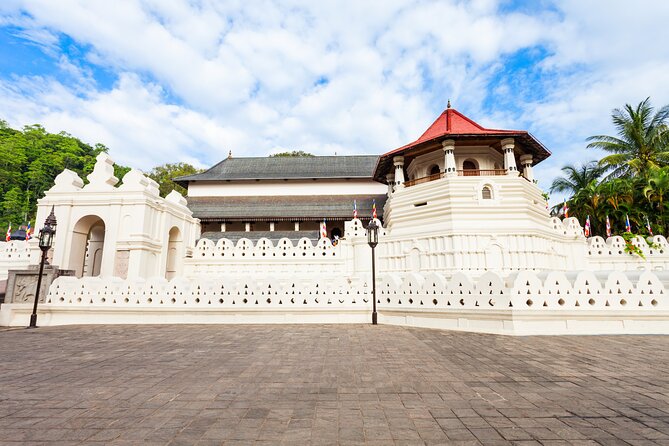
- Temple of the Sacred Tooth at Kandy gives you Sri Lanka’s biggest Buddhist relic site in a golden setting.
- Sigiriya and Pidurangala views are a huge payoff if you’re willing to handle steep stairs and uneven ground.
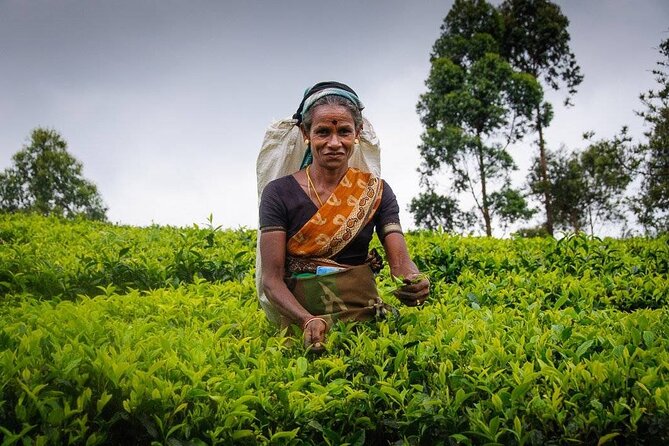
- Tea country stops (Damro Labookellie) with waterfalls and bridge scenery break up the cultural focus.
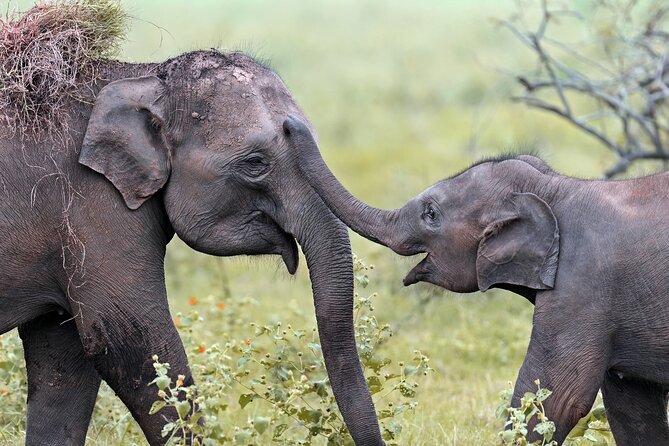
- Udawalawe National Park safari time adds wildlife to the mix, with animal-spotting opportunities in one concentrated window.
- Entrance fees are not included, so budgeting for tickets in advance makes the trip smoother.
Why This Buddhist and Hindu Route Works So Well
Sri Lanka can feel like a blur of names and legends, especially if you’re moving between regions every day. What makes this tour appealing is the structure: you get a car, a driver who can guide you in English, and a route that links major Buddhist and Hindu sites in a way that feels logical.
I like that the tour isn’t only temples. Yes, you’ll see famous holy spaces, but you’ll also get practical breaks and side stops that make the journey feel lived-in. A king coconut roadside pause, seasonal fruits on the road, and small cultural stops help the day breathe.
You’ll also get a useful mix of spiritual styles. Kandy brings the most famous Buddhist relic focus, while Dambulla adds cave-temple history and Hindu worship is visible too at places like Sri Muthu Mari Amman Kovil. That contrast helps you understand Sri Lanka as a place where different traditions share space, rhythms, and respect.
The other thing you feel quickly: comfort matters when you’re covering this much ground. The air-conditioned vehicle and the daily pick-up/transfer reduce fatigue, so you can actually enjoy the stops instead of just surviving them.
You can also read our reviews of more tours and experiences in Negombo.
Price and Practical Inclusions You’ll Care About
The headline price is $400 per person, and it’s easier to judge value when you match cost to what’s bundled. You get 4 nights accommodation, an air-conditioned vehicle, an English-speaking driver/guide, and 4 breakfasts plus 4 dinners. Daily water bottles and a set of roadside extras (like seasonal fruits and a king coconut) are included too.
You also get some tech comfort: free Wi-Fi onboard upon request, which is handy for quick messaging or keeping your maps/notes straight. And there’s a mobile ticket format, which is one less thing to print or misplace.
What’s not included is where you have to plan ahead. Site entrance fees and gratuities aren’t included, and you’ll likely pay extra for any optional activities. That’s normal in Sri Lanka, but you should budget for it so you’re not surprised mid-trip.
One more practical point: you’re encouraged to have a moderate physical fitness level, especially for Sigiriya’s stairs and any uneven terrain. If you’re bringing older knees, it’s smart to think about where you’ll take your time and where you’ll pace yourself.
Day 1 Colombo: Arrival, Orientation, and a Low-Stress Start
Your day begins with arriving at Bandaranaike International Airport. After you clear immigration and visa formalities and collect your baggage, you’re transferred onward. This first day is less about rushing from one landmark to another and more about getting you settled into the trip.
Colombo itself matters here because it’s Sri Lanka’s main port city on the west coast. You’re not just passing through; you get exposure to the city’s role as a gateway shaped by Portuguese, Dutch, and British trade history—an easy context-builder for the rest of the island.
The main “win” on Day 1 is how you start. With a transfer set up for you, you don’t lose hours trying to find transport after a flight. If you’re coming in from overseas (and especially if you’re traveling as a family), this reduces stress fast.
A small consideration: airport-to-city days can still feel long, because immigration lines and traffic are real. Build a little patience into your first evening plans.
Day 2 Sigiriya and Dambulla Area: From Cricket Stadium to Rock Fortresses
Day 2 leans into the cultural-and-historical side of the “triangle” around Dambulla and Sigiriya, then hits one of Sri Lanka’s top outdoor sights: Sigiriya.
You start in the wider Dambulla area with stops that include local heritage sites and quieter temples. There’s an old burial ground called Ibbankatuwa Ancient burial ground, plus Enderagala Wana Senasuna, a Buddhist temple in a calm setting. These aren’t the kind of stops that look impressive from a distance, but they help you slow down and notice how layered the region is.
The day also includes a surprising modern touch: the Rangiri Dambulla International Cricket Stadium. Even if you’re not a cricket fan, it’s an example of how everyday Sri Lankan life sits near ancient sites.
Then you get to the big payoff: Sigiriya. Before climbing, the Sigiriya Museum gives you a strong overview, including the cultural importance of the site beyond the rock itself. After that, you spend serious time at Sigiriya The Ancient Rock Fortress, with near-vertical walls rising from the plains and a flat-topped summit. You should expect stairs, sun, and plenty of steps—wear shoes you trust.
Right next to Sigiriya is Pidurangala Rock, which is often the better viewing choice because it offers sweeping angles over the Sigiriya rock. If you have the energy for early light, Pidurangala is a great place to aim for sunrise-style views.
The day ends with a cultural craft stop at Oak Ray Wood Carving, where you can browse carved ornaments and masks. This is a nice break from temples, but it can also turn into a shopping moment, so move at your pace and don’t feel pressured.
Day 3 Dambulla Caves, Kandy, Sacred Tooth, and a Cultural Dance Show
Day 3 combines cave temples, a Hindu temple stop, and Kandy’s most important Buddhist site. It’s a packed day, but it flows well because each stop builds a different piece of the story.
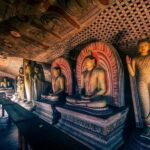
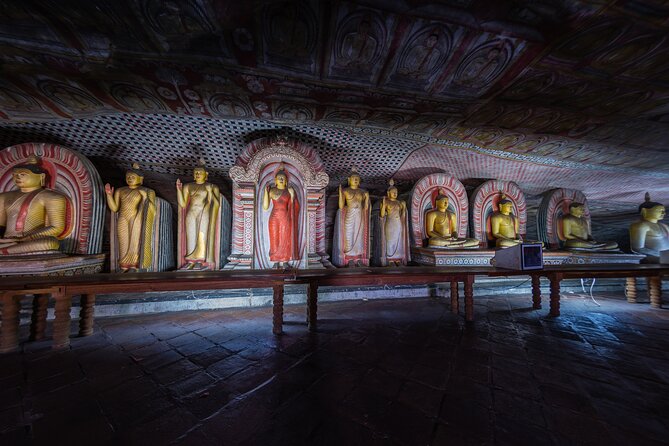
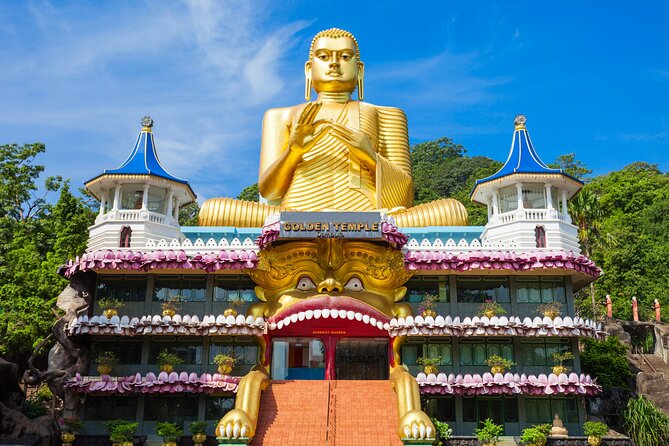
You begin with Dambulla Cave Temple, also known as Jumbukola Vihara. It’s a major historical Buddhist site, built into rock, and it’s the kind of place where you’ll want to take your time to look at the inside details rather than only photographing from the doorway. You then see Golden Temple of Dambulla, a shorter stop that still keeps you close to the same sacred complex atmosphere.
There’s also a Hindu stop: Sri Muthu Mari Amman Kovil, a temple linked to Mariamman, the fertility and rain goddess. It’s a helpful contrast to the Buddhist spaces, and it shows how temple life in Sri Lanka isn’t locked into one tradition. You’ll also see how both faiths use worship practices that can look different but feel similarly serious.
From there, you head to Kandy’s viewpoint and lake area. Kandy View Point is a quick climb to see the city from above, and Kandy Lake (also called Kiri Muhuda) sits in the heart of town. This area is busy with peddlers, so treat it like a photo stop, not a long wander unless you want to shop or chat.
Then comes the centerpiece: Temple of the Sacred Tooth Relic. This golden-roofed temple houses Sri Lanka’s most important Buddhist relic, a tooth of the Buddha. The guided feel matters here because temple procedures and guarded areas are part of the experience.
To close the day, you may attend a cultural performance at Kandy Lake Club, featuring Kandyan dance. If you’re choosing between resting and seeing it, I’d lean toward going at least for the first cultural set, because Kandyan dance is one of the most recognizable expressions of Sri Lanka’s performing traditions.
A practical note for Kandy temples: dress matters. You’ll be expected to cover shoulders and knees, and closed shoes help for comfort on stone and steps.


Day 4 Tea Country to Nine Arches Bridge and Ravana’s Cave
Day 4 is your change of pace. You still have strong sightseeing stops, but the mood shifts toward scenery, waterfalls, and the famous train/bridge photo energy around the hill country.
You start at Damro Labookellie Tea Centre and Tea Garden. This stop is designed to show you how the tea world works in Sri Lanka, with time through tea estates and a chance to walk among the bushes. It’s also a good place to cool down and reset after temple-heavy days.
Next is Devon Falls, a green waterfall stop along the Talawakele–Hatton route. It’s short in the schedule, but it’s a classic hill-country break—worth it if you want a break from crowds around major religious sites.
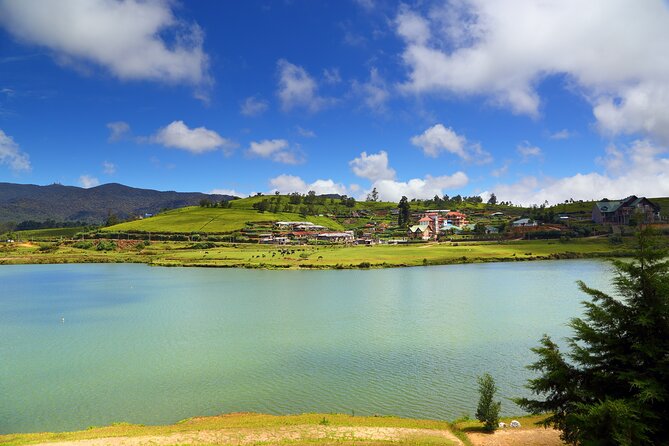
Then there’s Gregory Lake, built in 1873 and used for leisure and amusement. It’s a calmer pause where you can absorb the setting without needing to climb anything major.
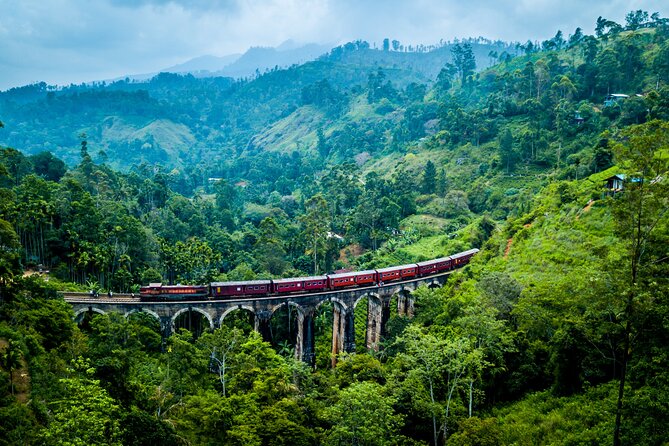
After that, you hit Nine Arches Bridge, a scenic spot with a 91-meter span and a 24-meter height. You’ll be surrounded by jungle and agricultural views, and the bridge itself is the reason you’re there—this is prime framing country for train-spotting style photos, even if you’re not timing a specific train.
You also stop at Ravana’s Cave near the Ella area. It’s not an all-day hike; it’s more about the story behind it and the quick visit. If you like legend-based landmarks, you’ll probably enjoy it. If you prefer strictly historical accuracy, just treat it as part myth, part roadside stop.
Wear layers. Hill-country weather can shift quickly, and you’ll be outside for parts of the day.
Day 5 Rawan Ella and Udawalawe Safari to Colombo
Day 5 adds wildlife to the mix, which is a smart balance after temples and tea country.
You begin with a stop at Rawan Ella Falls in the Badulla District. Legends connect Ravana to these falls, so it’s more story-and-sight than a major museum-type stop. It’s a nice way to start the day in nature before you go looking for animals.
Then you head toward Udawalawe National Park for the main wildlife window. The tour includes about 3 hours in the park, with the goal of spotting elephants alongside other animals. The list of wildlife you might see includes water buffalo, wild boar, spotted deer, sambur deer, jackal, black-naped hare, mongooses, and bandicoots.
A key safari tip from the tour rules: avoid strong scented perfume. Animals can be sensitive to smell, and this is one of those small things that can make your experience easier (and more respectful).
After safari time, you return toward Colombo, with a stop there around 4 hours. Colombo’s mix of cultures and port history helps tie the trip back together after all the inland sightseeing.
One practical consideration: safari days can be physically tiring, even when you’re comfortable in a vehicle. Plan for sun, dust, and a day that feels active.
Should You Book This Tour?
Book it if you want a guided, efficient route that covers major Buddhist and Hindu sites, plus hill-country scenery, and ends with a real wildlife experience at Udawalawe. This is especially good value if you’d rather pay for planning and transport than spend your days comparing routes and ticket options.
Skip or reconsider if you dislike tight schedules, extra paid entrance fees, or lots of walking on uneven terrain. Sigiriya and the viewpoints demand effort, and the itinerary is designed for people who want to see a lot.
One more reason to feel confident: multiple guides have been praised for making the trip smooth and on-time, including Krishant, Suren, Rai, and Chanaka Jayasingha. If you get a good guide, the difference shows up in pacing, explanations, and whether you feel rushed.
FAQ
Is pickup included for a tour based in Negombo?
Pickup is offered, and the experience includes door-to-door transfers each day.
Are entrance fees included for temples and attractions?
No. Entrance fees for sites are not included.
What meals are included during the 5 days?
You get breakfast for 4 days and dinner for 4 days.
Is Wi-Fi available during the tour?
Yes. Free Wi-Fi is available onboard upon request.
What should I wear for temple visits?
You should follow a dress code that covers shoulders and knees, and long pants and closed shoes are recommended.
How physically demanding is the tour?
The tour is for people with moderate physical fitness. Comfortable walking shoes are recommended.
What happens if weather is poor?
If the experience is canceled due to poor weather, you’ll be offered an alternative date or a full refund.