Six days, Sri Lanka’s best on one route. This is the kind of trip plan that keeps you moving, yet still gives you professional guiding at UNESCO sites and time for private jeep safaris where elephant sightings are the whole point.
I also like the way the route strings together big-ticket contrasts: ancient rock and ruined palaces, then caves and temple relics, then tea hills, then national parks, finishing with ocean air in Galle. One consideration: you pay most entry fees and safari jeep costs separately, and your accommodation plus meals are not included in the tour price.
In This Review
- Key highlights at a glance
- What this 6-day Sri Lanka route really feels like
- Colombo pickup and private driving: how you save real time
- Enter Sigiriya: the rock fortress that rewards patience
- Polonnaruwa by cycle: ruined-city sightseeing done the fun way
- Minneriya elephant safari: a late-day rhythm that fits wildlife
- Dambulla cave temple and a spice garden: religion plus art in one stop
- Kandy’s Temple of the Sacred Tooth Relic and lake views
- Tea-country day in Nuwara Eliya: altitude, plantations, and waterfall breaks
- Ella: Little Adam’s Peak, Nine Arches Bridge, and a Yala safari night
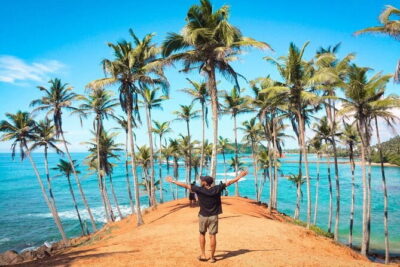
- Little Adam’s Peak viewpoint
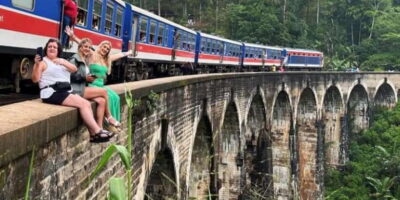
- Nine Arches Bridge
- Ravana Ella Falls
- Yala National Park private jeep safari
- Galle’s Dutch Fort and Sea Turtle Farm: history and conservation close together
- Stilt fishermen at sunrise or dusk
- Galle Dutch Fort
- Sea Turtle Farm in Galle Mahamodara
- Price and value: what $695.66 per group gets you
- Rough cost reality check (using listed fees)
- The human factor: guide service and how planning feels
- Who this Sri Lanka tour suits best
- Should you book this Sri Lanka highlights tour?
- FAQ
- What is the tour price and group size?
- Is pickup included?
- Are entry fees included?
- How much are the safari costs for Minneriya and Yala?
- What admission fees should I expect for the main UNESCO stops?
- Does the tour include the tea-country train ride?
- Can I cancel and get a full refund?
Key highlights at a glance
- UNESCO site guiding so you spend less time guessing and more time seeing
- Two elephant-safari windows (Minneriya late afternoon, Yala more wild-adventure style)
- Tea country train time from Nanuoya to Ella with your luggage handled
- UNhurried sea finish at Galle Dutch Fort plus a hands-on Sea Turtle Farm stop
- Private driving end-to-end, so you are not juggling buses and meeting points
What this 6-day Sri Lanka route really feels like
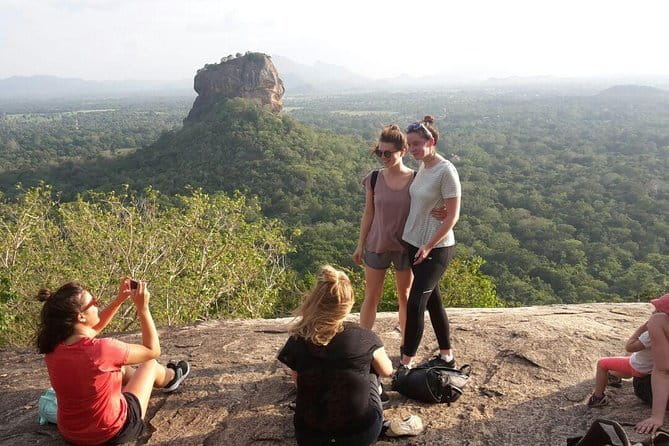
This tour is built around variety, not repetition. You start inland with ancient Sri Lanka icons, then shift into cultural stops in the hill country, then hit wildlife twice, and finally end by the sea in Galle.
That mix matters for your day-to-day mood. If you love big sights, you get them early: Sigiriya and Polonnaruwa do the heavy lifting on history. Then Dambulla and Kandy handle the Buddhist side and art. Tea country adds cooler air and gentler pacing. Wildlife days bring the suspense. And the last day slows down nicely with fort walls and turtle conservation.
The other thing I like: you travel in a private setup. That means you are not waiting around for strangers, and you can usually adjust your pace slightly with your driver guide during the long sightseeing runs.
You can also read our reviews of more tours and experiences in Colombo.
Colombo pickup and private driving: how you save real time
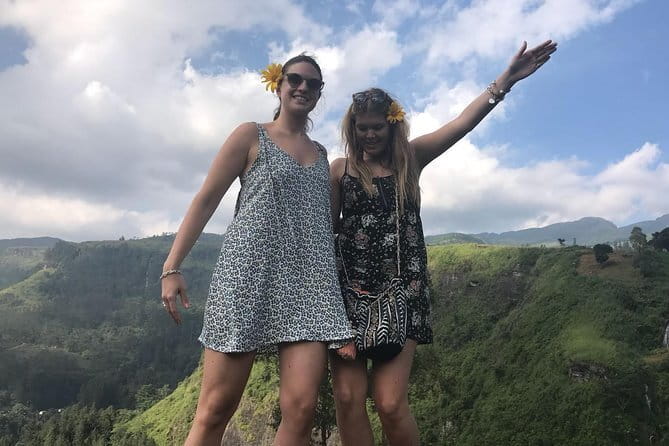
You begin in Colombo, with pickup offered. The tour is private, so your driver guide and vehicle are on your disposal for the full stretch, and that single detail changes the whole experience.
In practice, private driving is how you fit a lot into a short time without turning your trip into a full-time job. It also helps with transitions between sites, especially when you are moving from cultural landmarks to national parks to mountain towns.
A small but useful note: the tour includes fuel, expressway fees, and parking fees. You still pay your own accommodation and meals, but you avoid the annoying “who pays what” part for the vehicle side of things.
Enter Sigiriya: the rock fortress that rewards patience
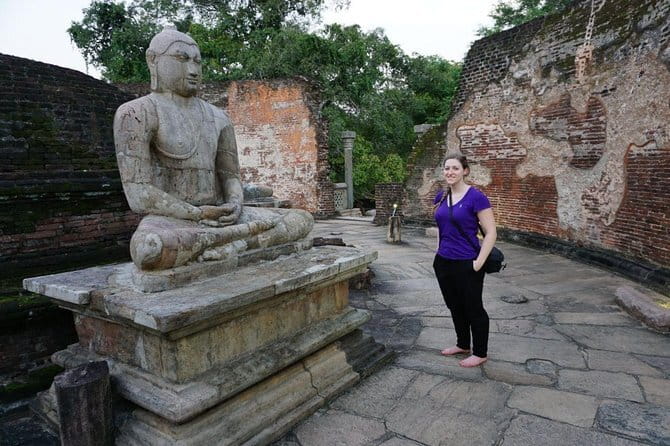
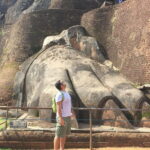
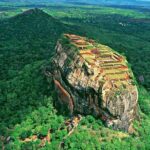
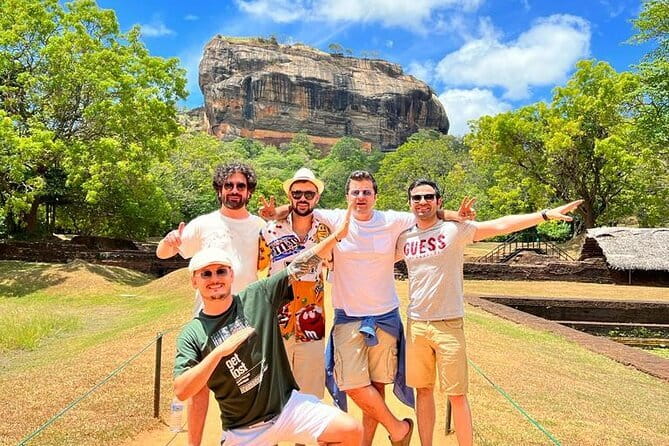
Sigiriya is famous for a reason. It is a UNESCO site tied to the ancient rock fortress tradition, and the way you see it here is structured rather than rushed. You are not just getting a viewpoint snap. You get access that covers the key areas, including the museum, water garden, terrace garden, boulder garden, lion’s feet, and the palace ruins on the summit.
Why this stop is worth it: Sigiriya works like a story. The water and terrace gardens give you context. Then the lion-feet area and the palace ruins help you understand how the site was meant to impress.
Practical advice for your visit:
- Wear shoes you trust on stone and uneven paths.
- Bring a hat and water. You will likely feel the heat more than you expect once you are up and walking between sections.
- If you are sensitive to stairs or steep segments, keep a slower rhythm. The summit areas can feel like a climb even when the trail is straightforward.
Entry fees are not included here. The tour lists USD 30 per adult (USD 15 per child) for Sigiriya.
Polonnaruwa by cycle: ruined-city sightseeing done the fun way
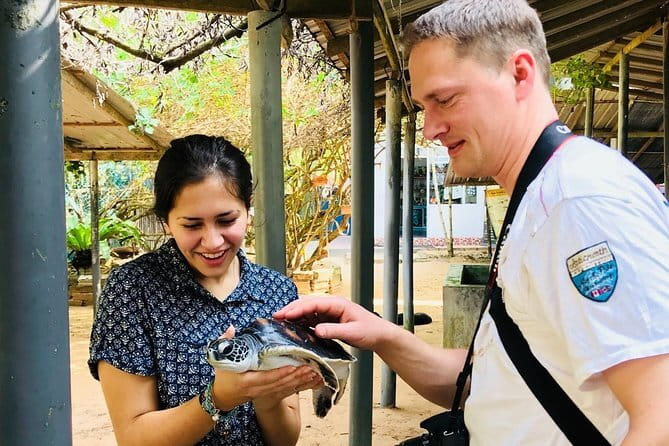
Next comes Polonnaruwa, another UNESCO stop and a major one for anyone who likes ancient city layouts. You travel there by cycle through the site area, which is a clever match for the ruins—you can cover distance without feeling like you are sprinting.
You get to see top features including the Royal Palace, Audience Hall, the Sacred Quadrangle, Shiva Devale, Pabalu Vehera, Rankot Vihara, Kiri Vihara, Lankatilaka Buddha Statue, and Gal Vihara with carved Buddha postures from a long granite slab.
Why the cycle approach works: Polonnaruwa is made for moving slowly. Ruins can look random if you visit only from one angle. When you ride between clusters, you start noticing how the parts relate.
Two realistic considerations:
- Cycle time means you should be comfortable riding on-site paths. If you feel unsteady on a bike, tell your driver guide early so you can adjust your pace.
- Plan to spend most of your energy on attention, not speed. The details matter here.
Entry fees are separate: USD 25 per adult (USD 12.5 per child).
Minneriya elephant safari: a late-day rhythm that fits wildlife
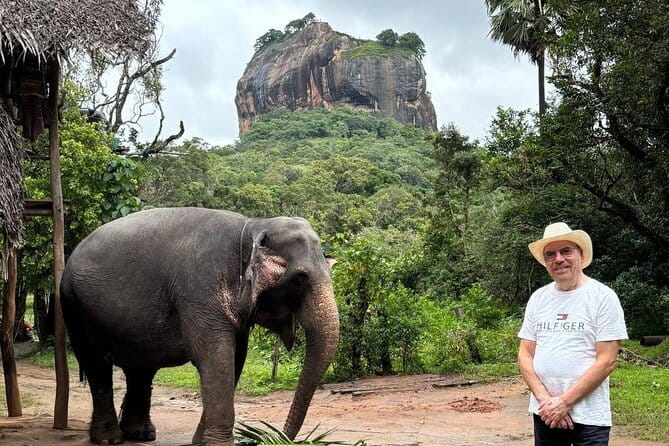
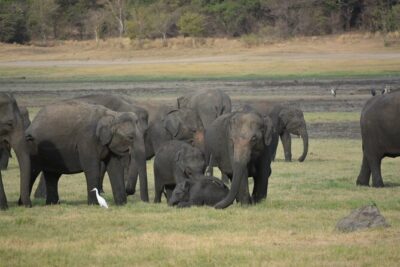
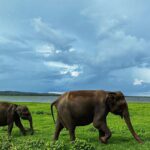
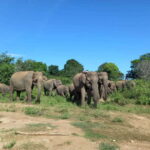
After lunch, you head to Minneriya National Park for a private jeep safari from 15:00 to 18:30. Minneriya is known as one of the largest meeting places for Asian elephants. The tour notes that huge herds, sometimes up to 300 elephants, can gather within a few square kilometers of the Minneriya lake.
This is where your schedule becomes smart. Late afternoon into early evening can be a good match for animal movement and viewing comfort—less midday heat, plus the light often helps spotting.
What you can expect:
- The safari is all-inclusive on the jeep side: USD 50 per adult and USD 25 per child is listed as the private jeep safari cost.
- You should expect variety, but elephants are the main act.
A tip that helps your chances: keep your attention broad. When elephants cluster near water, you can sometimes see more by watching the edges of where the herd gathers, not only the biggest group in the center.

Dambulla cave temple and a spice garden: religion plus art in one stop
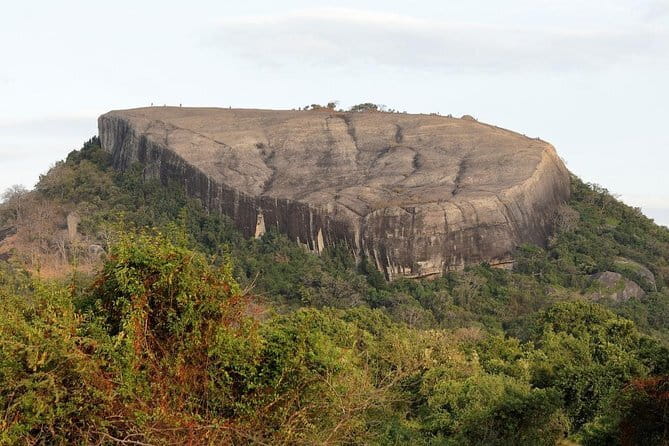
In the hill-country transition day, you start with Dambulla Cave Temple plus a spice garden stop en route. The cave temple is described as a complex of Buddhist image houses, with a rock ceiling that is one sweep of colorful frescoes, some said to date back over 2,000 years.
This is the kind of UNESCO visit where the context matters. Frescoes look impressive even as decoration, but once you know how old they are and how they connect to the tradition, the whole place lands differently.
Practical things to consider:
- Cave interiors can be cooler, but the sun outside can still be strong. Layering helps.
- Give yourself a little time at the images. It is tempting to rush, but slow viewing is where you see brushwork and detail.
Entry fees are separate: USD 10 per adult (USD 5 per child).
Kandy’s Temple of the Sacred Tooth Relic and lake views
After Dambulla, you move to Kandy for the Temple of the Sacred Tooth Relic (Sri Dalada Maligawa). The key point here is what the temple houses: the relic of the tooth of the Buddha, inside the royal palace complex of the former Kingdom of Kandy.
Why it matters: this is not just architecture. It is an active focal point of Buddhist reverence, so the experience is about atmosphere as much as sightlines.
Then you get time for views:
- You can see the whole city from a viewpoint stop
- Kandy Lake and city views are included as a separate scenic stop, with admission listed as free
Entry fees are separate: USD 12 per adult (USD 6 per child).
Tea-country day in Nuwara Eliya: altitude, plantations, and waterfall breaks

The route shifts to Nuwara Eliya, described as part of Sri Lanka’s tea country hills and sitting at 1,868 m (6,128 ft). That altitude is a built-in cue for what to pack: even when the sun is bright, evenings and shaded areas can feel cooler than the coast.
You spend time in:
- Damro Labookellie Tea Centre and Tea Garden, with an informative tea factory tour
- You learn about tea processing
- You also get plantation views and a chance to see tea picking as described
- The tour includes a tea tasting step
- Ramboda Waterfall for a short stop (109 m high is specifically noted, plus details about its formation and elevation)
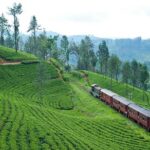
Then you head to Nanu Oya for a scenic train ride from Nanuoya to Ella. This is one of the most traveler-friendly parts of the trip because it turns a long drive into a slow scenic segment. Your driver guide is described as meeting you at Ella railway station with your luggage.
A few tips that keep this day from feeling like a checklist:
- Wear light layers you can add or remove quickly. Tea areas can swing by time of day.
- For the train, keep essentials close—phone, water, a thin rain layer if you tend to get surprised by weather.
Everything listed for these stops shows admission as free except the tea factory visit marked as free as well.
Ella: Little Adam’s Peak, Nine Arches Bridge, and a Yala safari night
After the train, the route focuses on classic “mountains plus postcard views” energy.
Little Adam’s Peak viewpoint
You hike up Little Adam’s Peak (listed at 1,141 m) for panoramic views. The walk goes through tea plantations, waterfalls, and paddy fields. It is specifically recommended as best in the morning when clouds roll in.
This is a good spot for a calm morning. It is active, but not described as a brutal climb. The best payoff is the view and the feeling of walking through tea country instead of just driving past it.
Nine Arches Bridge
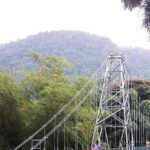
Next is Nine Arches Bridge, also called the Bridge in the Sky. It is a colonial-era railway viaduct, and you are allowed to walk on the bridge. It is one of those places that can look better in person than in photos—mostly because you get scale and texture.
Ravana Ella Falls
Then you stop at Ravana Ella Falls for about ten minutes. The tour notes it ranks among the widest falls in Sri Lanka.
Yala National Park private jeep safari
Later you head to Yala National Park with a private jeep safari listed as USD 50 per adult and USD 25 per child. The key wildlife note is that Yala has one of the world’s densest leopard populations, but you should not expect “leopards everywhere.” The tour states there are less than fifty.
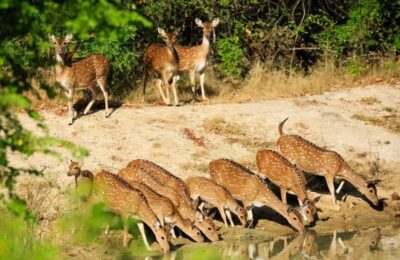
Still, the animal list is strong: elephants, sloth bears, sambar deer, spotted deer, wild boar, crocodiles, monkeys, and buffalo.
My practical advice: treat Yala as a wildlife lottery with a good chance of variety. You will probably see something, but you do not control the exact show.
Galle’s Dutch Fort and Sea Turtle Farm: history and conservation close together
You finish in the south with two very different experiences that actually complement each other.
Stilt fishermen at sunrise or dusk
First up: Stilt Fishermen Sri Lanka. This is described as the most traditional fishing method in southern Sri Lanka, called stilt fishing. The ideal times listed are sunrise and dusk, when it looks like art.
This timing matters. If you go at the wrong hour, you can still see the structures, but the atmosphere and the fishing activity are the point.
Galle Dutch Fort
Then you visit Galle Dutch Fort. The tour notes:
- Portuguese built the fort first in 1588
- Dutch fortified it from 1649 onward
Today it has a multi-ethnic and multi-religious population.
Admission is listed as free for this stop on the tour. Even with a short visit (about one hour), the fort walls and streets give you a sense of Sri Lanka’s coastal layers.
Sea Turtle Farm in Galle Mahamodara
Finally, you stop at Sea Turtle Farm Galle Mahamodara, described as focused on increasing turtle numbers. The process is explained clearly:
- They collect turtle eggs from the beach
- Rebury them in safer sands until they hatch
- Keep baby turtles for a couple of days before release
- They also house injured turtles and care for deformed or permanently injured turtles
This is the only stop where the tour mentions something extra emotional and memorable: you are allowed to hold a baby turtle and see an albino turtle.
It is a great end to the trip because it shifts you from watching nature to supporting conservation. You leave thinking about the ocean as a living system, not just scenery.
Price and value: what $695.66 per group gets you
The price is $695.66 per group (up to 7 people) for roughly 6 days. That group pricing is often where value shows up, especially if you travel with a family or a small group.
A simple way to think about it:
- If you fill 7 seats, your share is about $99 per person for the core tour.
- If you travel as a small group of 2, your share is about $348 per person for the core tour.
Now, what your money covers:
- Private transportation plus fuel, expressway fees, and parking
- Professional guiding at UNESCO sites
- The driver guide’s accommodation and food
What it does not cover:
- Your accommodation and all meals
- Entry fees for sites named in the itinerary
- Safari jeep entry/safari costs for the parks (Minneriya and Yala are specifically listed)
- Tips
Rough cost reality check (using listed fees)
For an adult, the listed paid entry items include:
- Sigiriya: USD 30
- Polonnaruwa: USD 25
- Dambulla: USD 10
- Temple of the Sacred Tooth Relic: USD 12
- Minneriya private jeep safari: USD 50
- Yala private jeep safari: USD 50
That totals USD 177 in listed paid items for an adult, plus you still have meals, accommodation, and tips.
So is it good value? For many people, yes—because the tour bundles the hard parts: private driving, UNESCO guiding, and the two major wildlife days with private jeep safari structure. If you are trying to travel ultra-budget and do everything with public transport, you might find cheaper options. But if you want less hassle and smarter timing, this one earns its keep.
The human factor: guide service and how planning feels
There’s a pattern in how this service gets described: people like the way planning stays smooth and how guides handle the day.
In past experiences shared with this provider, names come up:
- A driver guide Asoka is described as punctual and knowledgeable, and good at blending with the group.
- Planning by Menaka is described as seamless.
- A guide named Manjula is described as patient and making sure nothing key is missed.
You cannot treat that as a guarantee of your exact guide. But it does suggest what the operator focuses on: clear coordination and comfortable, people-friendly guiding.
Who this Sri Lanka tour suits best
This is a strong fit if you:
- Want a high-contrast highlight circuit without jumping through bus schedules
- Like UNESCO sites but also want real wildlife time
- Prefer a private vehicle for daily movement
- Are okay paying entry fees separately and building that into your budget
It may not be the best match if you:
- Want everything included with no extra spending
- Prefer very slow travel with lots of unstructured downtime
- Dislike the idea of multiple “sight hubs” in one week (ancient ruins, caves, temples, tea towns, parks, fort)
Should you book this Sri Lanka highlights tour?
I’d book it if your goal is to see Sri Lanka’s greatest hits in one organized arc, with private driving, UNESCO guiding, and two safari blocks that make elephant and leopard country feel realistic rather than just theoretical.
I’d think twice if you hate surprise costs at the gates, because entry fees and safari jeep costs are clearly separate. Also plan your expectations: this is a “see a lot” style trip, not a slow home-base vacation.
If you go in ready—comfortable shoes, budgeted entry fees, and a flexible mindset for wildlife randomness—you’ll come away with a trip that moves through Sri Lanka’s cultures, cliffs, tea fields, and wild places in one clean package.
FAQ
What is the tour price and group size?
The tour is priced at $695.66 per group, for up to 7 people.
Is pickup included?
Yes. Pickup is offered, and the tour focuses on your start point in Colombo.
Are entry fees included?
No. Entry fees for the sites listed in the route are not included. Safari costs and safari jeep fees are also not included.
How much are the safari costs for Minneriya and Yala?
Minneriya National Park has a private jeep safari listed at USD 50 per adult and USD 25 per child. Yala National Park has a private jeep safari listed at USD 50 per adult and USD 25 per child.
What admission fees should I expect for the main UNESCO stops?
The listed UNESCO-site fees include: Sigiriya (USD 30 adult / USD 15 child) and Polonnaruwa (USD 25 adult / USD 12.5 child). Dambulla (USD 10 adult / USD 5 child) and the Temple of the Sacred Tooth Relic (USD 12 adult / USD 6 child) are also listed as not included.
Does the tour include the tea-country train ride?
Yes. The scenic train ride from Nanuoya to Ella is included, and admission for this stop is listed as free.
Can I cancel and get a full refund?
Yes. You can cancel up to 24 hours in advance for a full refund.