Colombo by tuk-tuk hits fast. In about 4 hours, you get a tight loop of major sights without the hassle of hopping taxis all day. I especially like the flexible start time, so you can do it morning or evening, and the guiding style that turns short stops into useful context.
Two things I really appreciate: the friendly, practical city guidance (examples include guides such as Ahilan and Essam), and the smart mix of religious sites plus landmarks like Independence Memorial Hall and the Clock Tower. One drawback to plan for: several key attractions list admission as not included, so you may want a little extra cash or budget for tickets at a few stops.
In This Review
- Key highlights before you go
- A 4-hour Colombo tuk-tuk loop you can start morning or evening
- Where the tour begins: Gangaramaya Temple’s collections and architecture
- Temples and symbolism: the Shiva temple at Sri Kailawasanathan Swami Devasthanam Kovil
- Independence Memorial Hall: a fast, meaningful stop
- The Red Mosque, Jami Ul-Alfar Mosque, and how Colombo mixes faiths
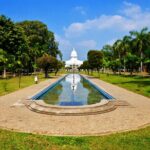
- Sambodhi Chaithya: a quiet stupa stop near the Maritime Museum
- Colombo Fort Clock Tower and the lighthouse area for skyline views
- The Lotus Tower viewpoint: modern Colombo with a tall, practical payoff
- Old Parliament Building: colonial-era politics in plain sight
- Viharamahadevi Park: green space, lake views, and a slower pace
- Ceylon Tea Supermarket: learn the tea process and try samples
- Pettah Market time: spices, local products, and the feeling of trade
- Old Town Hall: colonial architecture with a ticket check
- Galle Face Green: finish by the coast and reset your senses
- Colombo Lighthouse at Galbokka Point: a maritime ending
- Price and value: what $29 buys, and what you may still pay
- Guides, communication, and the small details that make it feel worth it
- Who this tour suits best
- A final decision: should you book this Colombo tuk-tuk tour?
- FAQ
- FAQ
- How long is the Colombo sightseeing tour by tuk-tuk?
- Can I choose the start time for the tour?
- Does the tour include pickup?
- Is this tour private?
- Are admission tickets included for all stops?
- How does the tour handle tickets for the attractions?
- What major areas are included in the route?
- Is cancellation free?
Key highlights before you go
- Choose morning or evening: the schedule is adaptable, so you can match your day.
- Short, efficient stop times: most sights are 10–20 minutes, keeping you moving.
- A mix of faith + colonial Colombo: temples, the Red Mosque, and British-era landmarks in one route.
- Great city views without detours: the Lotus Tower viewpoint and coastal finishing spot.
- Tea and local shopping stop: Ceylon Tea Supermarket plus time in Pettah market.
A 4-hour Colombo tuk-tuk loop you can start morning or evening
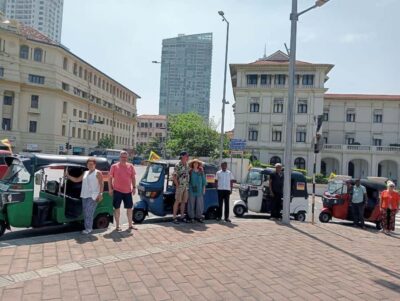
This is a classic Colombo “see the essentials” route, done the easy way: a tuk-tuk with a guide, paced for real life traffic and sight-seeing energy. The tour runs about 4 hours, and that timeframe matters. In Colombo, you can lose a lot of your day just figuring out routes and transfers, so having a planned loop is real value.
You can usually start whenever fits your plans, whether that means a morning orientation or an evening look at the city’s lights. That flexibility is handy if you’re also doing beach time, shopping, or a separate museum visit. You’ll also be in a private setup where only your group participates, which typically makes timing feel smoother (and questions easier).
If you like structure but not rigid schedules, this one hits a good middle ground: each stop is limited, so you get a taste of a place rather than spending half your day in line.
You can also read our reviews of more tours and experiences in Colombo.


Where the tour begins: Gangaramaya Temple’s collections and architecture
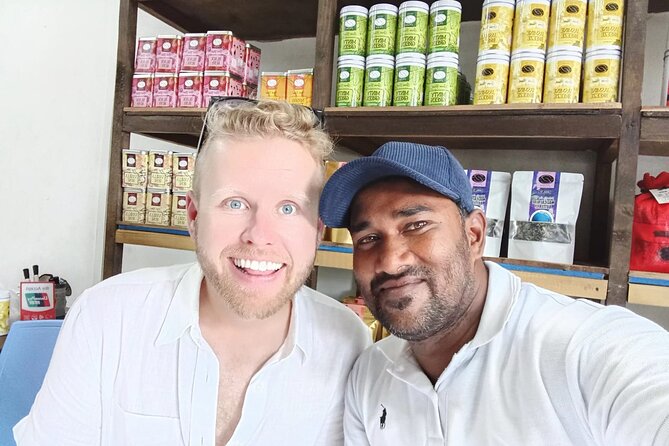
Your first major stop is Gangaramaya Temple, one of Colombo’s best-known Buddhist sites. You get about 20 minutes here, which is enough time to take in the architecture and understand why this temple is such a landmark. The tour framing focuses on its remarkable design and the wide collection of Buddhist artifacts, so you’re not just looking at buildings.
Admission is listed as not included, so keep that in mind. Still, as a first stop, it’s a strong opener because it sets Colombo’s religious and artistic tone before the tour shifts into colonial-era landmarks and modern city icons.
Practical tip: since admission may be separate, try to arrive with time to handle tickets without feeling rushed. That’s the big value of going with a guide here—your time stays efficient.
Temples and symbolism: the Shiva temple at Sri Kailawasanathan Swami Devasthanam Kovil
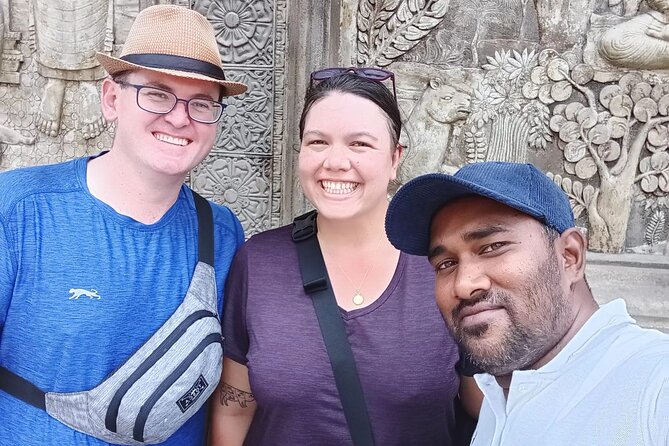
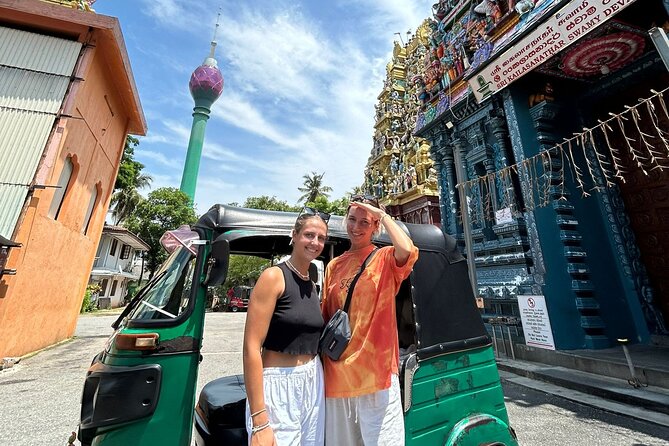
Next up is Temple Of Sri Kailawasanathan Swami Devasthanam Kovil, dedicated to Lord Shiva. Again, you’re given around 20 minutes. The key feature you’ll notice is the intricate Dravidian-style architecture, which can look very different from the Buddhist structures you’ve just seen.
Admission here is also listed as not included, so this is another stop where you may want to budget for tickets. The short visit time works well because Dravidian-style detail rewards attention, but the tour won’t trap you for hours. You’ll leave with impressions instead of a checklist.
If you’re traveling with a mix of interests—some into architecture, others into culture—this kind of pairing (Buddhist temple, then Hindu temple) is an easy way to get both viewpoints in one morning or evening.
Independence Memorial Hall: a fast, meaningful stop
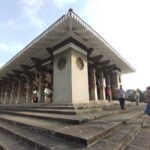
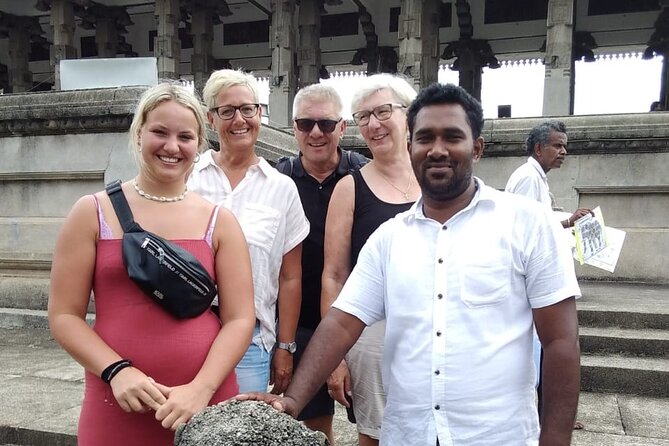
At Independence Memorial Hall, you get about 10 minutes and the admission is free. This is a monument meant to commemorate Sri Lanka’s independence, and the tour experience emphasizes its design and the surrounding gardens.
Why this is worth a quick stop: it gives you a political and historical anchor right in the middle of an otherwise visual route. It also tends to be a good break point if you’re feeling the heat or just want a pause that isn’t inside a museum.
The Red Mosque, Jami Ul-Alfar Mosque, and how Colombo mixes faiths
You then visit Jami Ul-Alfar Mosque, often called the Red Mosque, with its red and white striped exterior. This is one of the clearer “photo-getting” stops on the route, and you have about 15 minutes.
Admission is free, and the time is long enough to appreciate the exterior look and walk around at a comfortable pace. What I like about fitting this into the schedule: it shows Colombo as a city where different religious communities share the same urban space, not as separate “zones.”
Even if you’re not religious, it’s a useful cultural reminder. You see architecture, symbolism, and community identity without needing a museum ticket.

Sambodhi Chaithya: a quiet stupa stop near the Maritime Museum
Next is Sambodhi Chaithya, with about 10 minutes on the schedule and free entry. This is a serene Buddhist stupa stop that plays well after the mosque visit. You’re moving from city facades and monuments into something calmer and more contemplative.
Also, this stop is presented as connected to maritime heritage nearby, which makes the route feel less random. Instead of being only temples and colonial buildings, you get a hint of Colombo’s relationship to the sea and shipping.
Colombo Fort Clock Tower and the lighthouse area for skyline views
Stop 6 is built around the Colombo Fort Clock Tower, plus a stop by the lighthouse area. You get about 10 minutes total for this segment, and it’s free.
Two details make this stop more than just a quick photo:
- The Clock Tower is described as dating back to 1857.
- The lighthouse landmark area gives you a chance for panoramic views of the city and the Indian Ocean.
This is a strong mid-tour “reset.” You’ve looked at religious sites and memorials; now you look outward. If you enjoy urban viewpoints, this is where you’ll feel the city’s scale.
The Lotus Tower viewpoint: modern Colombo with a tall, practical payoff
Then comes Colombo Lotus Tower (about 20 minutes). This is your modern architecture contrast: the route labels it a tall South Asian structure, and you’ll get time at the observation deck for views over Colombo.
Admission is listed as not included, so again: plan for a ticket cost at this stop. Still, as a value move, it’s a smart inclusion. You can’t see everything from the street, and spending extra time in transit for a viewpoint elsewhere would likely blow the tour’s efficiency.
If your itinerary is short and you want a skyline anchor, this is the stop that usually delivers the biggest “aha” moment.
Old Parliament Building: colonial-era politics in plain sight
Next is the Old Parliament Building, with about 15 minutes and free entry. The focus is on the colonial-era nature of the building and what it tells you about Sri Lanka’s political heritage.
This is one of those stops that can feel brief—10 to 20 minutes is short by museum standards—but it works because it’s paired with other landmark types. You’re building a mental map of Colombo: religion, independence symbolism, maritime context, and then governance and power.
If you like architecture that’s tied to politics and public life, this one lands well.
Viharamahadevi Park: green space, lake views, and a slower pace
After the landmark density, the tour gives you a breather: Viharamahadevi Park for about 20 minutes. It’s free, and the description highlights lush green spaces and a tranquil lake.
This stop is useful because it’s not about paying for a ticket or listening to a long briefing. It’s where you refuel mentally. A quick walk here can make the rest of the city feel less overwhelming.
Ceylon Tea Supermarket: learn the tea process and try samples
You then head to Ceylon Tea Supermarket, with about 15 minutes and free admission. The point of this stop is educational and practical: you learn about Sri Lanka’s tea industry and watch the production process, plus you get complimentary tea samples.
This is one of my favorite “value” moves on the route because it’s a short factory-style stop that connects a major Sri Lankan export to what you can actually taste. Even if you’ve had tea before, it’s nice to see how it’s presented here, close to where it’s produced.
Pettah Market time: spices, local products, and the feeling of trade
Next is Pettah, with about 15 minutes and free entry. This is Colombo’s trading heart for many visitors. The tour description emphasizes discovering unique items, spices, and local products.
Because your time is limited, you’ll get the feel of the place rather than a full market tour. That’s fine. If you want a deeper shopping session, this stop is a great lead-in. You’ll leave with ideas for what to hunt for later.
Tip: keep your purchases light during the tuk-tuk portion. The tour pacing doesn’t assume you’ll be carrying heavy bags.
Old Town Hall: colonial architecture with a ticket check
You then visit the Old Town Hall, about 10 minutes, and admission is listed as not included. It’s described as a colonial-era building and the headquarters of the Colombo Municipal Council, with architecture and surrounding gardens as the main draw.
This stop can be a quick win if you enjoy civic buildings and British-era urban planning style. It also fits the tour theme: Colombo isn’t only temples and towers. It’s also how the city organized itself.
Again, the only real planning point is the ticket status.
Galle Face Green: finish by the coast and reset your senses
The last big public space stop is Galle Face Green, about 15 minutes and free entry. This is a promenade-style urban park along the coast, and you get Indian Ocean views plus a chance to relax.
Ending here makes sense. After temples, towers, and market streets, you get open sky and a calmer pace. It’s also a good moment to take a breath before you head back to your next plan.
Colombo Lighthouse at Galbokka Point: a maritime ending
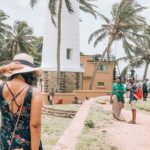
Finally, you reach Colombo Lighthouse, operated by the Sri Lanka Ports Authority, located at Galbokka Point south of the Port of Colombo along the waterfront. You get about 10 minutes, and admission is listed as free.
This ending ties back to the earlier maritime theme (Sambodhi Chaithya area) and makes the route feel cohesive: Colombo’s identity isn’t just in buildings, it’s also in ports, coastlines, and shipping history.
Price and value: what $29 buys, and what you may still pay
At $29 per person for a tour that lasts about 4 hours, this is priced for short-notice city coverage. The value comes from a few things you don’t get when you self-guide:
- A guide to connect what you’re seeing to context
- Pickup offered, which saves time and avoids the early confusion of where to start
- A planned route that covers big-name sights across neighborhoods
- A private format for your group (so you’re not stuck waiting on strangers)
There’s also a practical bonus: mobile ticket and near public transportation can help if you’re adjusting your day.
What might cost extra: admission is specifically noted as not included for several stops, including Gangaramaya Temple, Sri Kailawasanathan Swami Devasthanam Kovil, Colombo Lotus Tower, Old Town Hall, and Colombo National Museum. Other stops are listed as free, including Independence Memorial Hall, Jami Ul-Alfar Mosque, Sambodhi Chaithya, Clock Tower/lighthouse area, Old Parliament Building, Viharamahadevi Park, Ceylon Tea Supermarket, Pettah, Galle Face Green, and Colombo Lighthouse.
So the smartest money move is simple: expect that only some entries are paid. Keep a small buffer so ticketed stops don’t disrupt your pace.
Guides, communication, and the small details that make it feel worth it
One theme shows up in the experience: guide support matters. Ahilan, for example, is described as communicating well on WhatsApp ahead of time, even sending a photo of the port gate so you knew exactly where to meet. That kind of detail can save stress when Colombo streets and entry points can feel confusing.
Essam is also noted for friendly city guidance and clear history notes that help you understand what you’re looking at while you’re moving.
And there’s a practical perk: a clean tuk-tuk plus water is mentioned, which sounds small until you’re in the middle of a hot afternoon and you’re grateful you’re not hunting for a bottle mid-route.
Who this tour suits best
This tour is a strong fit if you:
- Have limited time and want to see a wide mix of Colombo highlights in one go
- Prefer guided context over wandering with no plan
- Like the idea of traveling by tuk-tuk rather than sitting in a car for hours
- Want a private experience where your group can ask questions and keep the pace
It’s also a good match if your day includes shopping and sea views, since it ends at the coast and includes a market stop along the way.
If you’re the type who wants to spend long hours inside major attractions, the short visit times might feel rushed. This tour is more about getting oriented and leaving with a strong first impression.
A final decision: should you book this Colombo tuk-tuk tour?
I’d book it if you want efficient sightseeing with real city context, and you like your day structured but not exhausting. The mix of temples, colonial-era landmarks, tea education, Pettah Market, and Galle Face Green gives you a balanced Colombo snapshot in about 4 hours.
Skip it only if you’re determined to do deep museum time or you strongly dislike paying entry fees at multiple stops. If that’s you, you can still cherry-pick sights later—but for a first swing through Colombo, this route is the easiest way to get bearings fast.
FAQ
FAQ
How long is the Colombo sightseeing tour by tuk-tuk?
It’s about 4 hours.
Can I choose the start time for the tour?
Yes. The schedule is adaptable, and you can kick off the tour at your preferred time in the morning or evening.
Does the tour include pickup?
Pickup is offered.
Is this tour private?
Yes. It’s listed as private, and only your group participates.
Are admission tickets included for all stops?
No. Some stops list admission as not included (for example Gangaramaya Temple and Colombo Lotus Tower), while others are free (like Independence Memorial Hall and Jami Ul-Alfar Mosque).
How does the tour handle tickets for the attractions?
You’ll receive a mobile ticket, and you’ll still need to account for admission where it’s listed as not included.
What major areas are included in the route?
The route covers major landmarks and neighborhoods such as Gangaramaya Temple, Independence Memorial Hall, the Red Mosque area, Colombo Fort Clock Tower area, Lotus Tower, Old Parliament Building, Viharamahadevi Park, Ceylon Tea Supermarket, Pettah, Old Town Hall, and ends at Galle Face Green and the Colombo Lighthouse area.
Is cancellation free?
Cancellation is free, and you can cancel up to 24 hours in advance for a full refund.