Colombo feels like two cities at once: old religious calm and fast-moving port energy. This private tour is a smart way to see a lot without wrestling with maps or taxis, and it’s door-to-door from your hotel or Colombo Port. I especially liked the guide-led stops (so you’re not just looking, you’re understanding), and I liked the comfort of an AC vehicle with bottled water. The main thing to watch is that several key entrances aren’t included, so budget a little extra for museums/temples.
You’re set up for a focused tour of Fort-area landmarks plus a handful of major cultural sights—parks, temples, churches, and a couple of shopping stops—over about 4 to 5 hours. You’ll get the sea-breeze start at Galle Face Green, then move into Colombo National Museum and the Buddhist and Catholic highlights, before finishing at places like Dutch Hospital and local craft/gem showrooms.
In This Review
- Key highlights you should care about
- Private Chauffeur Reality Check: What You Actually Get
- Galle Face Green to Old Parliament: Sea Promenade and the City’s Power Center
- Colombo National Museum in One Hour: Buddha Smiles and Colonial Collections
- Viharamahadevi Park: Flowering Trees, Benches, and Ceremonial Elephants
- Seema Malakaya Temple and Gangaramaya: Meditation on Water to Devotion at Full Volume
- Seema Malakaya Temple
- Gangaramaya (Vihara) Buddhist Temple
- Dutch Hospital Shopping Precinct: Colonial Lines, Thick Columns, and a Break You’ll Welcome
- Pettah’s Jami-Ul-Alfar Mosque and St Anthony’s Church: Religion, Art, and Real Atmosphere
- Jami Ul-Alfar Mosque
- St Anthony’s Church
- Lotus Tower and Independence Memorial Hall: Modern Ambition Beside Old Stone
- The Port City Scene: Dredges, Cost, and Lost Sea Views
- Laksala and Ceylon Sapphires: Shopping Stops That Actually Make Sense
- Laksala
- Ceylon Sapphires
- Timing and Comfort: How to Make This 4–5 Hour Route Feel Easy
- Who This Tour Suits Best (and Who Might Want Another Plan)
- Value for $30: Private Car Comfort vs Ticket Extras
- Final Decision: Should You Book This Colombo Highlights Tour?
- FAQ
- How long is the Colombo City Tour with Private Driver?
- What’s the price per person?
- Where can I be picked up?
- Do I get a mobile ticket?
- What’s included in the tour price?
- Are entrance tickets included for all stops?
- Are alcohol and gratuities included?
- Is this a private tour?
- What if weather is poor?
- Can I cancel for a full refund?
Key highlights you should care about
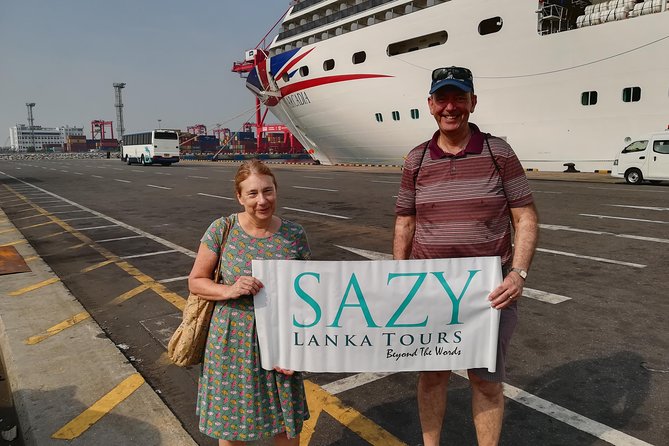
- Private pickup from hotel or Colombo Port means less hassle and fewer time-wasting detours.
- Short, well-spaced stops let you cover major landmarks in just 4 to 5 hours.
- Colombo National Museum + Buddhist temples gives you culture you’d miss if you only stuck to the beach areas.
- Fort-area colonial architecture shows up at Dutch Hospital and nearby government buildings.
- Handicrafts and sapphires stops make it easy to shop locally without wandering.
- AC vehicle and bottled water included for the heat and traffic reality.
Private Chauffeur Reality Check: What You Actually Get
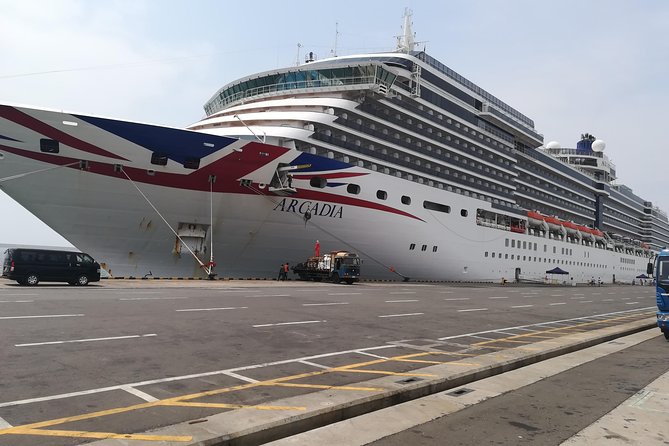
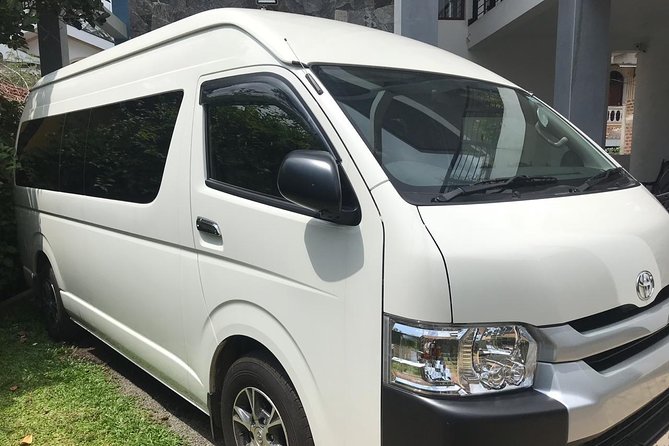
This is one of those Colombo tours that makes sense on a tight schedule. You’re paying for transportation plus a guide to connect the dots between sights—so instead of bouncing around on your own, you can relax in an air-conditioned vehicle and let someone else handle the route.
The tour is designed around a “hits list” of Colombo’s signature places, including Fort-area landmarks and major religious sites. In practice, the best part is that you can ask questions as you go—especially helpful for churches and temples, where the context changes how you see what’s in front of you.
One consideration: it’s not a slow, linger-all-day style experience. Many stops are brief (often 5–20 minutes), which is great for coverage, but you’ll want to choose what you want to slow down for once you’re there.
You can also read our reviews of more tours and experiences in Colombo.

Galle Face Green to Old Parliament: Sea Promenade and the City’s Power Center
You start with the ocean-city mood at Galle Face Green—a big open stretch where the sea used to matter as much as the cannons. The Dutch cleared the area centuries ago so the Fort could fire with a clear line, and today you get a more peaceful version: promenade life, kite flyers, bubble blowers, families, couples, and (especially Sunday evenings) food vendors along the surf.
From there, you move into the Fort zone for the Old Parliament Building, now the Presidential Secretariat area, facing the sea. It’s a useful stop because it anchors Colombo’s history in a very visible, “this is where the decisions happened” way—right in the Fort area near the President’s House and the General Treasury Building.
If you’re trying to understand Colombo fast, this opening sequence does the job: seafront public life first, then the government architecture next.
Colombo National Museum in One Hour: Buddha Smiles and Colonial Collections
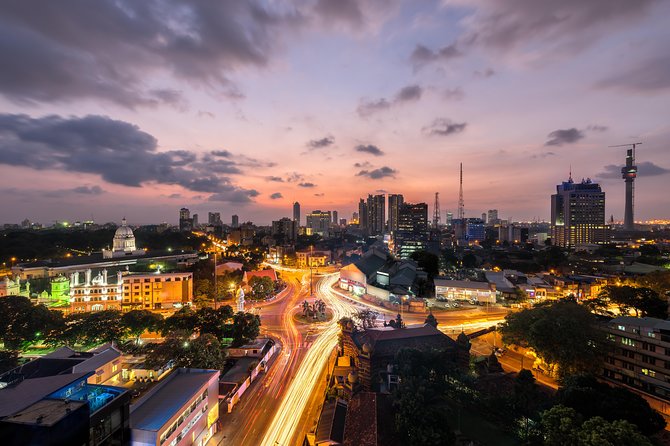
Colombo National Museum is the most “time well spent” stop on the tour for many people. As you enter, there’s a large 9th-century stone Buddha with an enigmatic smile—one of those images that makes you pause before the rest of the galleries pull you in.
The museum focuses on Sri Lanka’s cultural materials across time, including collections going back as far as 1877, plus colonial-era objects like swords, guns, and other period items. You’ll also see visual culture items like antique demon masks and 19th-century reproductions of English paintings featuring Sri Lanka.
Your practical note: the museum entrance is not included. If you want the full value of this tour, plan for that extra cost and give yourself permission to go at museum pace, even if your overall tour schedule is tight.
Viharamahadevi Park: Flowering Trees, Benches, and Ceremonial Elephants
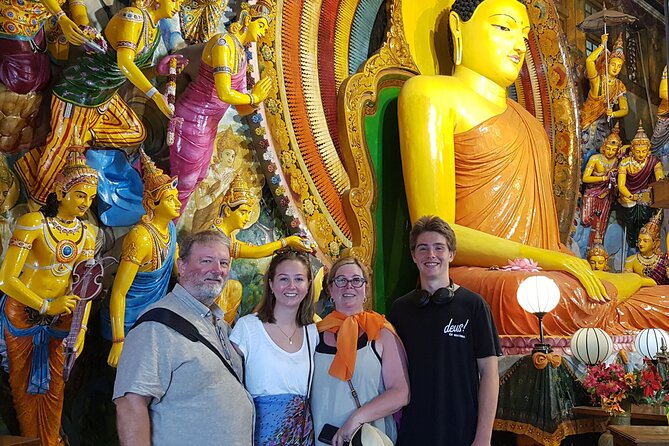
Next up is Viharamahadevi Park, Colombo’s biggest park. It used to be called Victoria Park, then renamed in the 1950s after the mother of King Dutugemunu. What makes it special is the greenery that turns into a show: the flowering trees are noted for blooming around March, April, and early May.
You might notice new landscaping and walkways plus comfy benches—often occupied by couples—and a playground area. The tour also mentions elephants used for ceremonies sometimes spending the night in the park and a chance you’ll see a snake charmer.
This stop works well as a break from museums and indoor temples. It’s also a good reset for photos and people-watching.
Seema Malakaya Temple and Gangaramaya: Meditation on Water to Devotion at Full Volume
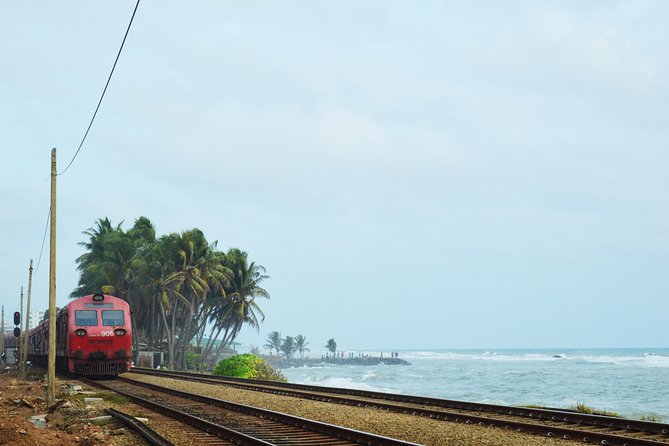
Colombo’s temple stops are where the tour earns its culture points.
Seema Malakaya Temple
Seema Malakaya Temple sits on an island on the east side of Beira Lake. It’s designed by Geoffrey Bawa (1985), and the pavilions are specifically highlighted: one area with Thai bronze Buddhas, another centered on a bodhi tree, plus Brahmanist images. At night, illumination is part of what makes this place memorable—but even in daylight, it’s photogenic and calm in a way that contrasts with Colombo’s traffic outside the compound.
Entrance isn’t included, and the stop is short, so if you care about soaking in details, this is one of the places where you’ll want to slow your steps once you arrive.
Gangaramaya (Vihara) Buddhist Temple
Then you go to Gangaramaya Temple, a bustling complex run by monk Galboda Gnanissara Thera. Here you’re not looking at quiet meditation only—you’re seeing Colombo’s living Buddhist public life. The complex includes a library and museum, plus lots of gifts and offerings brought by devotees.
One detail I’d file away: Gangaramaya has an elephant mentioned as Ganga, described as chained. It’s the kind of fact that changes how you interpret what you’re seeing, so don’t treat it as background.
If timing lines up with the religious calendar, this temple connects to major celebrations. It’s noted as the focus of the Navam Perahera on the February poya (full moon) day, and it’s also described as the centre for extravagant Vesak celebrations in Colombo.
Entrance isn’t included here either, so remember the “mostly free outdoors, paid indoors” pattern repeats.
Dutch Hospital Shopping Precinct: Colonial Lines, Thick Columns, and a Break You’ll Welcome
A change of pace comes at Dutch Hospital Shopping Precinct in the Fort. This colonial-era complex dates to the early 1600s and has been restored into a place for shops, cafes, and restaurants. The star feature is the arcades—especially the thick columns—plus that feeling of “you’re sheltered here,” even while you’re in the middle of Colombo.
The stop is short, but it’s a nice opportunity to reset your brain after temples and museums. It’s also one of the easiest places to buy something small without committing to a longer shopping crawl.
Pettah’s Jami-Ul-Alfar Mosque and St Anthony’s Church: Religion, Art, and Real Atmosphere
Colombo’s religious mix shows up hard in the next set of stops.
Jami Ul-Alfar Mosque
In Pettah, the Jami-Ul-Alfar Mosque grabs attention with its 1909 design and candy-striped red-and-white brickwork. There’s a practical reality here: guards usually let you in except during peak prayer times on Friday, and entrance for women may also be limited at other times. Afterward, you can grab coffee at halal cafes across the way.
This is one of those “look with respect” stops. You’re not there to treat it like a photo set. The architecture is the main draw, and the entrance rules are part of the experience.
St Anthony’s Church
Then you get St Anthony’s Church, which looks like a typical Portuguese Catholic church from the outside, but inside feels distinctly subcontinental. The atmosphere is described as having heaving queues of devotees making puja (offerings/prayers) to ornate statues, with special focus on a likeness of St Anthony believed to have miraculous qualities. People of many faiths are mentioned as part of the devotion.
This stop isn’t just about architecture. It’s about seeing how faith shows up in everyday movement—hands moving, people waiting, prayers in action.
Both of these are listed as free to enter, and both are excellent if you want Colombo’s “living culture” rather than only monuments.
Lotus Tower and Independence Memorial Hall: Modern Ambition Beside Old Stone
Next comes a sharp visual contrast: Colombo Lotus Tower. It’s a 350m tower with a bulbous top meant to resemble the lotus flower, set on Slave Island. It opened around 2018 (as stated), and the tour notes plans for telecommunications equipment plus a tourist observation deck and a restaurant at the base. It’s also noted as being financed by China—one of those development facts that adds context to the skyline.
Entrance isn’t included, and the stop is described as longer than some of the others, giving you time to take in the shape and imagine the view from the top.
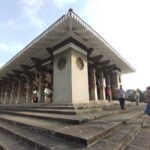
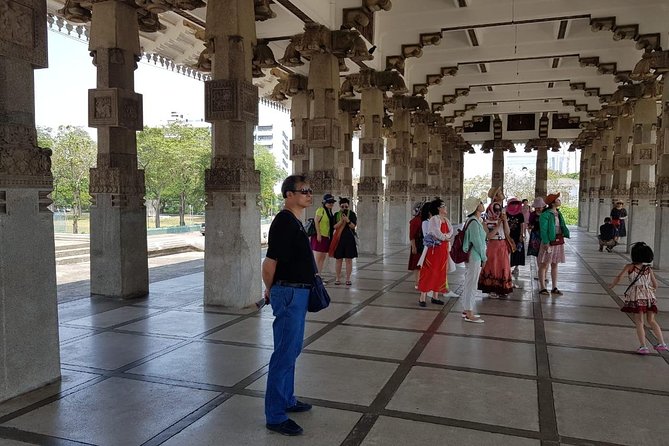
Then you head to Independence Memorial Hall—a huge stone building commemorating Sri Lanka’s independence from Britain in 1948. It’s loosely based on Kandy’s Audience Hall, and it’s now near buzz from the nearby Independence Square shopping mall.
This pairing helps you see Colombo’s story in two timeframes: colonial-era power and post-independence identity, plus the modern “growth” chapter popping up in between.
The Port City Scene: Dredges, Cost, and Lost Sea Views
If you look out over the Fort and Galle Face Green area, you may spot huge dredges working offshore—and this tour directly addresses what that means. The tour describes an enormous 269-hectare Port City expansion, financed by Chinese investors, with plans for commercial high-rises, condos, canals, and recreation areas.
The cautionary part is also spelled out: construction is already blocking views of the Indian Ocean and could potentially make Fort more “landlocked” in the future.
This is one of those stops that isn’t a monument, but it’s important. It helps you connect what you’re seeing on the ground to the city’s long-term shift—why Colombo can feel like it’s moving fast, even when parts of it still feel old and slow.
Laksala and Ceylon Sapphires: Shopping Stops That Actually Make Sense
Most tours toss in random shops. This one’s at least tied to official Sri Lanka identities.
Laksala
At Laksala (Sri Lanka Handicraft Board), you’re looking at a state-owned gift and souvenir boutique, described as promoting local handicrafts through showrooms across the island since 1964. For shopping value, this is a useful place to browse if you want items linked to traditional crafts rather than generic tourist trinkets.
Ceylon Sapphires
Then you visit Ceylon Sapphires, part of Sri Lanka’s famous gem economy. Sri Lanka is described as a major exporter of precious stones, with the gem industry in existence for over 2,500 years. The stop also references how the sapphire became famous globally through Princess Diana’s engagement ring.
This is short, but it gives you the story behind the stones and helps you understand why Colombo remains a “shopping stop” for visitors even when the city isn’t a classic beach resort.
Timing and Comfort: How to Make This 4–5 Hour Route Feel Easy
The tour is built for a half-day window. In a place like Colombo, that’s a big deal—traffic and distances can eat your schedule fast if you’re driving yourself.
The included AC vehicle and bottled water reduce the day’s friction. Then the route’s structure does the rest: sea promenade, museum, park, temples, Fort architecture, then quick religion stops, tower/memorial, and shopping. You’re not asked to do deep hikes or long transfers.
Your best strategy: go into the tour deciding which two stops matter most to you—then use the short stops as context and photo breaks, not as items you must study for an hour.
Who This Tour Suits Best (and Who Might Want Another Plan)
This is a great match if you:
- want a guided introduction to Colombo’s highlights in a short time
- care about religious and cultural context, not just landmarks
- value safety and convenience enough to skip the navigation and taxi guessing
It’s also a good option if you’re working around cruise-ship timing, since the tour is described as offering return coordination without stress in the same day.
A possible mismatch if you:
- want long time at every stop (temples, museums, shopping)
- hate paying extra for museum/temple entrances
- want a deeper walking tour focused on one neighborhood only
Value for $30: Private Car Comfort vs Ticket Extras
At $30 per person for about 4 to 5 hours, the value is mostly in what you avoid: transport stress. The tour includes an AC car and bottled water, plus a guide to provide context and route planning.
Where your actual spending may rise is entrance fees. Several big stops list tickets as not included—especially the Colombo National Museum, plus Seema Malakaya, Gangaramaya, and Colombo Lotus Tower. By contrast, Viharamahadevi Park, Dutch Hospital precinct, and multiple church/mosque stops are free.
So the deal is: you’re likely paying for “private guidance + comfortable coverage,” while the paid attractions are where you’ll spend extra. If you’re fine with that trade, this tour becomes a clean, efficient way to see Colombo.
Final Decision: Should You Book This Colombo Highlights Tour?
Yes, if you want an organized introduction to Colombo that feels safe, comfortable, and sensible—even if you only have a half-day. The stops line up well: Galle Face Green for the sea energy, the National Museum for context, temples/churches for living culture, and Fort colonial architecture for atmosphere, with local handicrafts and sapphire shopping as helpful add-ons.
If you hate entrance fees or you want to linger at major sites for hours, you might feel rushed. In that case, look for a longer version or build your own day around just one or two anchors.
FAQ
How long is the Colombo City Tour with Private Driver?
It runs about 4 to 5 hours.
What’s the price per person?
The price is $30.00 per person.
Where can I be picked up?
Pickup is offered at your city hotel or at Colombo Port (with door-to-door transit included).
Do I get a mobile ticket?
Yes, a mobile ticket is included.
What’s included in the tour price?
An air-conditioned vehicle and bottled water are included.
Are entrance tickets included for all stops?
No. Some key sights list admission as not included, including the Colombo National Museum, Seema Malakaya Temple, Gangaramaya Temple, and Colombo Lotus Tower. Other locations are marked as free.
Are alcohol and gratuities included?
No. Alcoholic beverages and gratuities are not included.
Is this a private tour?
Yes. It’s a private tour/activity, so only your group participates.
What if weather is poor?
If the experience is canceled due to poor weather, you’ll be offered a different date or a full refund.
Can I cancel for a full refund?
Yes. You can cancel up to 24 hours in advance for a full refund. Within 24 hours, the amount you paid is not refunded.