Firewood, family, and real Sri Lankan flavor. This Nilaveli cooking class feels personal from the moment you meet Nimali Dinushika and her family in their own home. I love that it’s hands-on, not a performance, and you learn how these dishes actually fit into daily life.
I also like the focus on practical skills—like making the batter and steaming rhythm for string hoppers and learning how the spice mix works. You’ll spend your time cooking a good spread of staples, then sit down to eat what you made.
One heads-up: if you want fish or chicken curry, there’s an extra 2000 LKR per person, and seafood dishes cost extra depending on what you request.
In This Review
- Key highlights worth your attention
- Arriving in Nilaveli: where your cooking starts
- A real wood-stove kitchen changes the whole feel
- The 5-hour flow: cooking time, then your meal
- What you’ll cook: rice, curry, hoppers, and sweets
- Rice and curry: the backbone
- Hoppers, string hoppers, and pittu: the starch game
- Rotti and milk rice: comfort food styles
- Sweets and curry powder: where flavor gets repeatable
- Choosing your curry: budget for chicken, fish, and seafood extras
- The family part: why this feels like more than a cooking class
- Practical advice that helps you have an easy day
- Cost and value: what $22 really covers
- Who this is best for (and who might want a different plan)
- Should you book Cook with Nimali in Nilaveli?
- FAQ
- How long is the cooking class in Nilaveli?
- What is the price per person?
- Where do I meet for the class?
- What dishes will I learn to cook?
- Is fish or chicken curry included in the base price?
- Are seafood dishes an extra cost?
- What’s included in the price?
- What should I bring?
- What language is the class taught in?
- Can I cancel for a refund?
Key highlights worth your attention
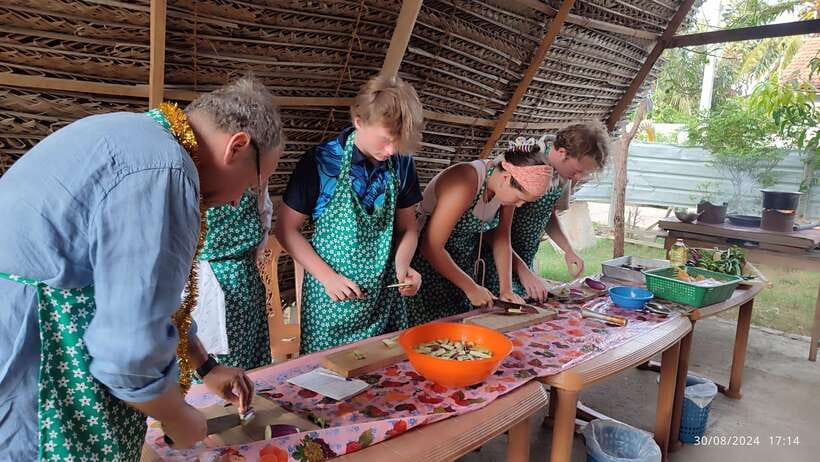
- Meet Nimali Dinushika in her family home and learn how her household cooks Sri Lankan food
- Cook the traditional way with firewood and wood stoves for more authentic results
- Practice a full menu of Sri Lankan staples like rice and curry, hoppers, string hoppers, pittu, rotti, and milk rice
- Learn curry powder and Sri Lankan sweets so you can recreate flavors later
- Choose some of what goes on your plate (with fish/chicken/seafood priced as extras)
- Finish with a meal in the home setting, plus water and refreshments during the experience
Arriving in Nilaveli: where your cooking starts
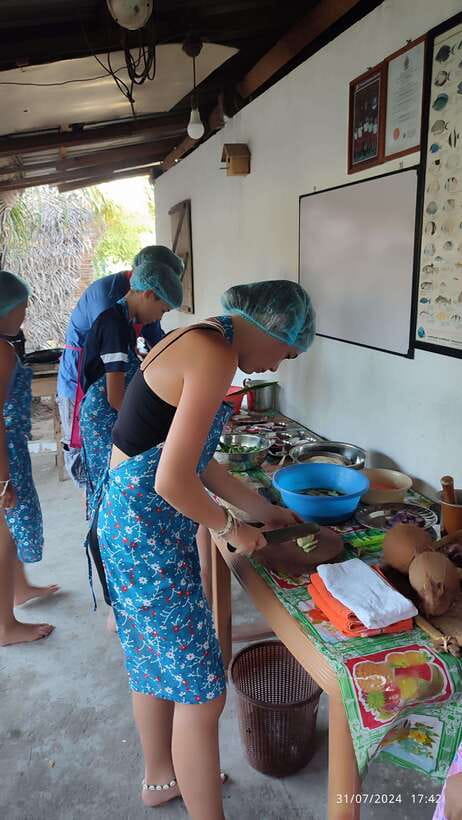
Nilaveli is a laid-back corner of Sri Lanka’s Eastern Province, and this class keeps things equally grounded. You’ll meet at Pigeon Island Tours, right where you’ll also find The Rice and Curry seafood. From there, you’ll be guided into Nimali Dinushika’s home kitchen setup.
Plan for a relaxed pace, because this isn’t a quick tasting. The total time is about 5 hours, and the structure is usually heavy on cooking and then lighter as you move toward eating. If you can, come with a calm attitude—this works best when you’re happy to get a little hands-on and slightly warm.
You can also read our reviews of more tours and experiences in Trikunamalaya.


A real wood-stove kitchen changes the whole feel
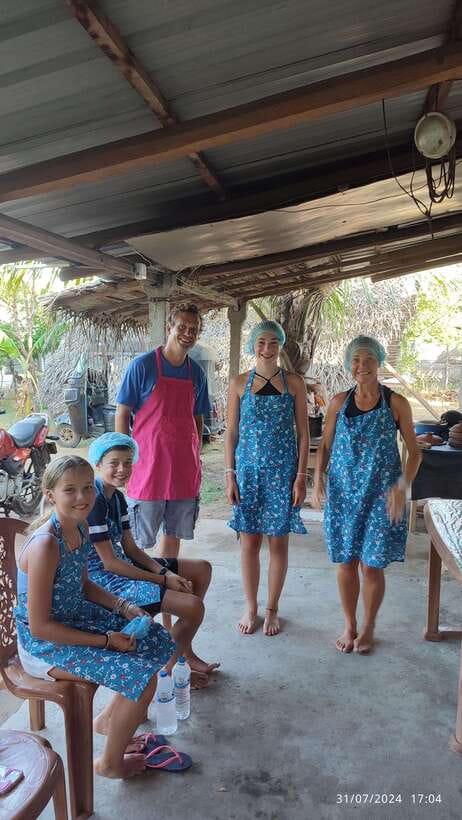
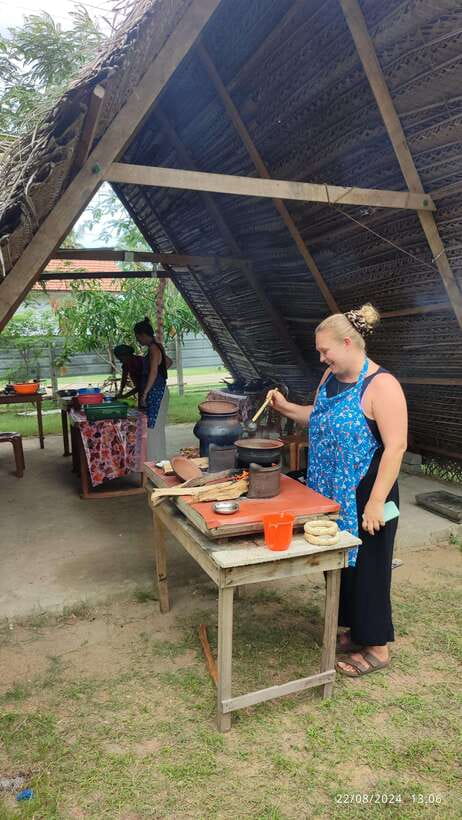
You’ll cook using firewood and wood stoves, not just modern equipment. That matters more than it sounds. Firewood heat tends to run differently than a gas burner, so you learn timing, flame control, and how Sri Lankan cooking often adapts to real household conditions.
You also get a sense of how families cook when ingredients are seasonal and the kitchen is simple but highly functional. The included cooking ingredients and personal cooking equipment help you participate without feeling like you’re waiting around for someone else to do the work.
If you’re the type who likes learning the “why” behind a technique, this part is a treat. You’re not just watching steps—you’re experiencing the heat, the pace, and the practical decisions that shape the final flavor.
The 5-hour flow: cooking time, then your meal
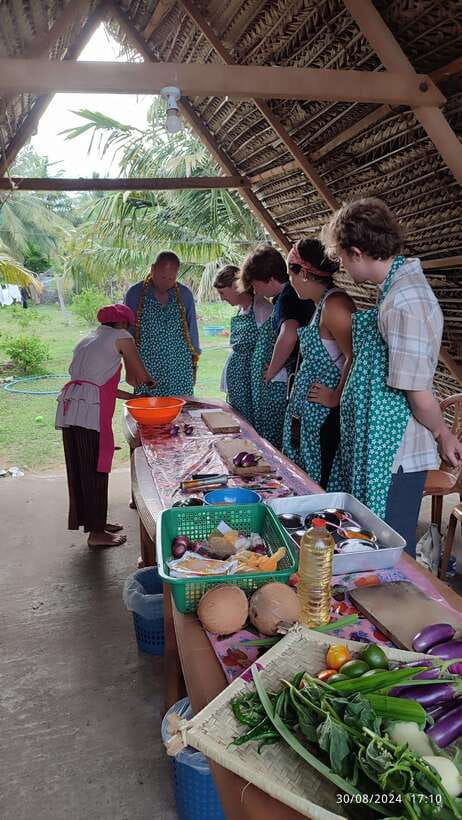
Here’s the rhythm you should expect. First you’ll connect with Nimali and her family, and you’ll get oriented to what you’ll cook and the ingredient logic behind it. Then the class moves into active cooking—mixing, assembling, and preparing dishes with the tools and stove setup used at home.
Your hands-on portion is typically around 4 hours, followed by about 1 hour to dine. That time shift is important. It’s when everything comes together: you stop thinking about steps and start enjoying the flavors you learned to build.
You’ll also have water and refreshments included, which helps a lot if you’re cooking under warm conditions and moving between tasks.
What you’ll cook: rice, curry, hoppers, and sweets
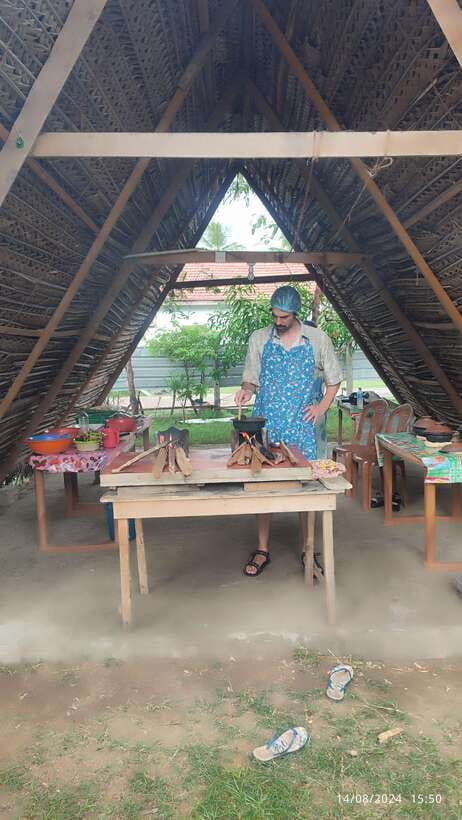
This class covers a lot more than one signature dish. The core list includes rice and curry, string hoppers, hoppers, pittu, rotti, and milk rice. You’ll also make Sri Lankan sweets and learn about curry powder.
In plain terms: you’ll build a meal like a Sri Lankan family would build dinner. That includes learning how sides and staples work together—so you’re not just leaving with recipes, you’re leaving with a flavor system.
Rice and curry: the backbone
Rice and curry is the center of Sri Lankan eating, and you’ll learn how to prepare it as part of the full table. Curry here isn’t just one pot—it’s a mix of textures, spice, and balance, often paired with a starch that absorbs sauce differently.
Hoppers, string hoppers, and pittu: the starch game
If you’re curious about Sri Lankan staples, this is the portion that clicks for a lot of people. You’ll learn string hoppers and hoppers (both made from batter), plus pittu, which is also centered on steamed cooking.
The practical value: once you understand how batter consistency and steaming timing affect the result, you can troubleshoot at home instead of following a recipe blindly. In this setting, you also learn how families manage repeated small steps while keeping the kitchen moving.
Rotti and milk rice: comfort food styles
Rotti rounds out the meal with a different texture and cooking approach than the hopper-style items. Milk rice adds a sweet, comforting note to the plate—useful for getting the full range of Sri Lankan flavors in one sitting.
Sweets and curry powder: where flavor gets repeatable
You’ll learn how to make Sri Lankan sweets and curry powder. Even if you only cook at home occasionally, curry powder is one of those things that changes how your whole pantry performs.
Sweets also matter, because Sri Lankan home cooking often finishes a meal with something comforting, not just tea and a snack. This hands-on element is one reason the class feels satisfying—your learning doesn’t stop at savory.
Choosing your curry: budget for chicken, fish, and seafood extras
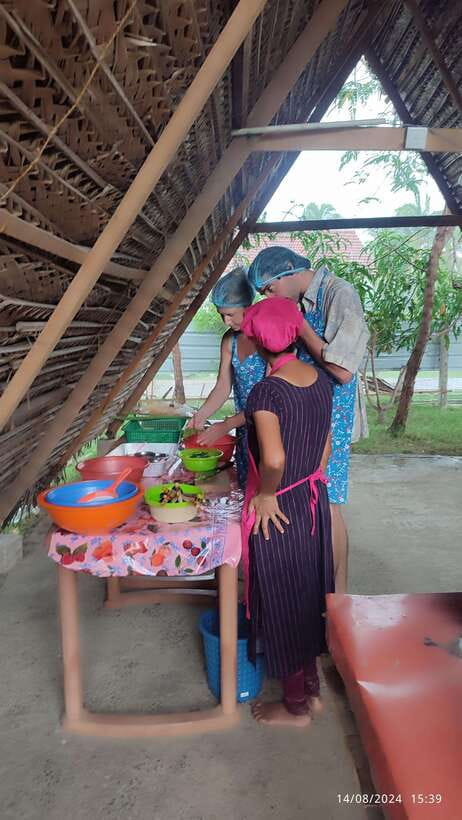
The class is priced at $22 per person, and it includes ingredients, recipes, traditional cooking methods, and dining. But the menu has add-on logic for certain proteins.
If you want fish or chicken curry, you’ll pay 2000 LKR per person. Seafood dishes are also extra, depending on what you request. That means the “$22” experience can stay exactly that price if you’re fine with the standard options, but it can rise quickly if you plan to load your plate with seafood.
If you’re budgeting, decide early what matters most:
- If you mainly want the technique—rice, hoppers, pittu, curry powder—you’ll likely be happy keeping protein simple.
- If seafood is your priority, ask what you can order in advance so there are no surprises.
The family part: why this feels like more than a cooking class
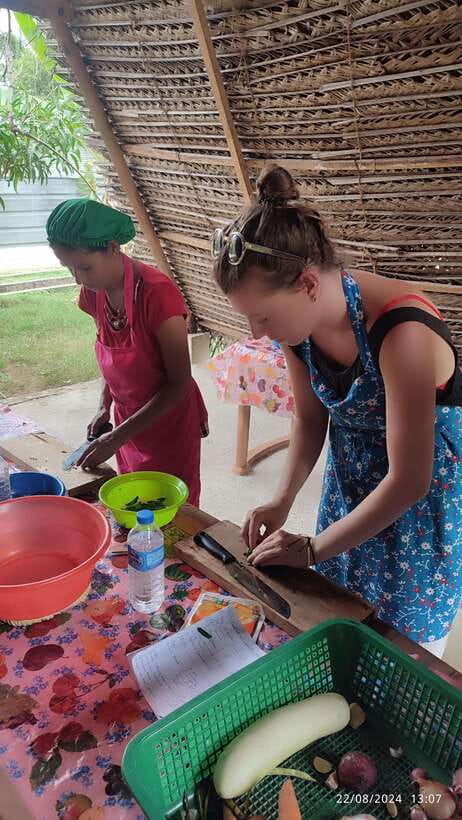
This class isn’t staged in a classroom. You’re cooking in a traditional Sri Lankan home setting, and the host shares not only recipes but also the context of daily cooking—what ingredients matter, how spices get used, and how families think about meals.
Nimali Dinushika and her family guide you through the process as a couple, so the vibe stays warm and personal. That tone matters when you’re learning hands-on. You don’t just get instructions—you get reassurance while you try.
If you’re traveling solo or you’re shy in group settings, this can still work well because the focus stays on the tasks at hand and the family interaction feels natural.
Practical advice that helps you have an easy day
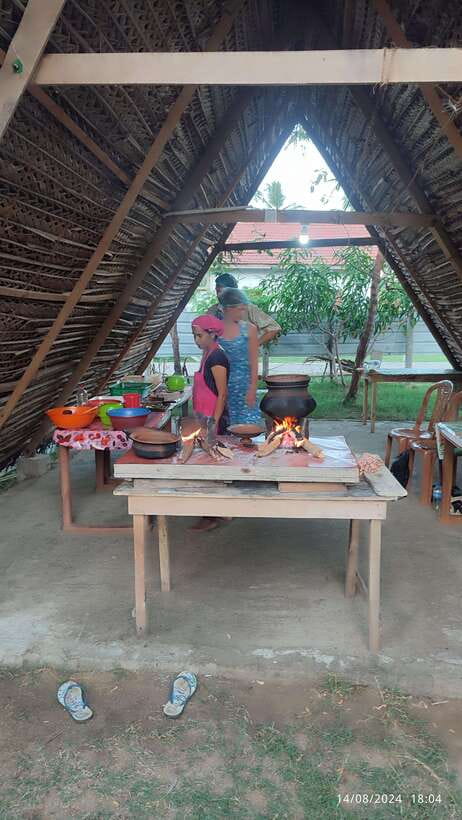
A little prep makes this kind of class smoother.
Bring:
- a hat
- sunscreen
- comfortable clothes you don’t mind getting a bit warm or messy
Wear clothes suitable for cooking, because you’ll be standing and moving around during the hands-on portion. Also, skip smoking—alcohol and drugs aren’t allowed either. Pets aren’t allowed, so plan for a distraction-free visit.
And if you have dietary restrictions or allergies, tell the host in advance. The experience explicitly asks you to inform them of dietary restrictions and allergies ahead of time, which is exactly what you want for a safe and enjoyable session.
Cost and value: what $22 really covers
At $22 per person for a ~5-hour experience, the value is in the combination:
- you cook with wood stoves and firewood, using traditional methods
- ingredients are included
- you get recipes for traditional dishes
- personal cooking equipment is provided
- water and refreshments are included
- you sit down for dining as part of the experience
The parts you should expect to pay extra for are protein add-ons—fish/chicken curry and seafood. Also note that hotel pickup and drop-off aren’t included, and there’s no shopping tour.
So the value equation looks like this: you’re paying not just for food, but for instruction, tools, ingredients, and the meal. If you’ve ever taken cooking classes where you chop for 10 minutes and then eat something else—this is different. Here you learn staples you can actually recreate, including curry powder and sweets.
Who this is best for (and who might want a different plan)
This is a strong match if you:
- want an authentic, home-style approach to Sri Lankan cooking
- like learning techniques, not just eating finished food
- enjoy the idea of cooking multiple staples in one go
- want a family-hosted experience where you can ask questions during the process
It’s less ideal if:
- you have significant food allergies (the activity notes it’s not suitable for people with food allergies)
- you’re traveling with very young kids (not suitable for children under 2 years)
- you’re counting every rupee and want no protein add-ons (fish/chicken/seafood can add cost)
Also, the class is conducted in English (with Singhalese support), so if you want language clarity, this is usually workable.
Should you book Cook with Nimali in Nilaveli?
I think you should book this if you want more than a souvenir meal. The value comes from cooking traditional dishes using firewood and wood stoves, learning curry powder and Sri Lankan sweets, and spending hours in a real home kitchen instead of a studio.
Book it with a simple plan: decide ahead of time whether you want chicken/fish/seafood so your budget stays where you want it. If you’re comfortable with that—and you can eat what’s prepared with your dietary needs in mind—you’ll leave with techniques you can use, plus a dinner that feels earned.
FAQ
How long is the cooking class in Nilaveli?
The experience lasts 5 hours.
What is the price per person?
It costs $22 per person.
Where do I meet for the class?
You meet at Pigeon Island Tours, near The Rice and Curry seafood outlet.
What dishes will I learn to cook?
You’ll prepare a variety of Sri Lankan dishes, including rice and curry, string hoppers, hoppers, pittu, rotti, and milk rice. You’ll also learn about Sri Lankan sweets and curry powder.
Is fish or chicken curry included in the base price?
If you want fish or chicken curry, there is an extra charge of 2000 LKR per person.
Are seafood dishes an extra cost?
Yes. Seafood dishes cost extra per person depending on what you request.
What’s included in the price?
Included are the authentic cooking experience, use of traditional wood stoves and cooking methods, ingredients for cooking, recipes, personal cooking equipment, water and refreshments, and dining.
What should I bring?
Bring a hat, sunscreen, and comfortable clothes suitable for cooking.
What language is the class taught in?
The class is conducted in English, with Singhalese support from the instructor.
Can I cancel for a refund?
Yes. Free cancellation is available up to 24 hours in advance for a full refund.